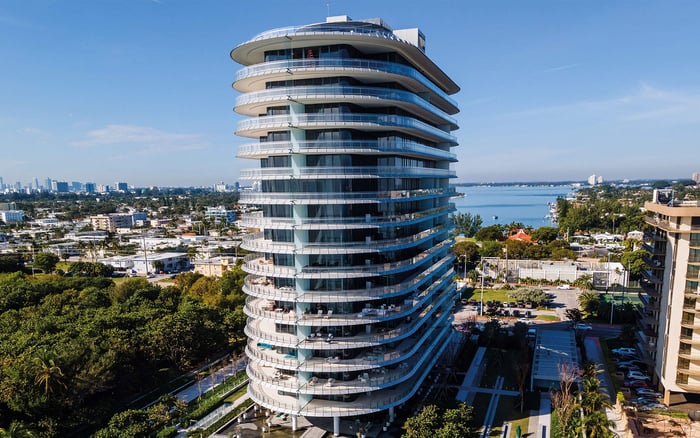
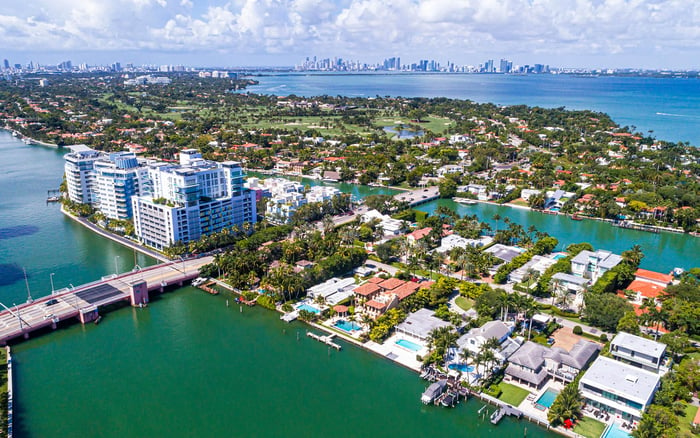
For high-net-worth buyers who are frequently in flight, a South Florida residence should be structured as both a lifestyle asset and a multigenerational plan.

For a buyer who travels weekly, South Florida is not merely a place to land between flights. It can become the family’s gathering point, the residence adult children associate with continuity, and the property that staff and advisers must keep ready while the principal is elsewhere. That combination makes the pre-contract period unusually consequential.
The planning question is not only whether the view, floor plan, and neighborhood feel right. It is whether the ownership structure, access rules, insurance approach, family-use expectations, and future transfer plan can work together. A buyer evaluating The Residences at 1428 Brickell, for example, may want a business-centered Miami base that also fits family governance, household staffing, and long-term succession goals.
Domicile is an adviser-led subject, not a cosmetic label attached to a closing. Buyers who maintain homes, business ties, family obligations, or advisers in more than one jurisdiction should coordinate legal, tax, and personal records before making assumptions about how a South Florida residence will be treated.
Weekly travel makes that review especially important. A principal who moves between Miami, Palm Beach, private aviation, and other residences needs a disciplined system for calendars, records, household operations, and adviser communication. The residence should support the story the buyer intends to tell through documents and behavior.
Homestead planning belongs in the same conversation. Buyers should review title, family structure, marital planning, and intended use before the deed is finalized. The goal is to avoid a mismatch between how the property is owned and how the family expects it to be protected, used, or transferred.
South Florida buyers often focus on asset protection, tax efficiency, and privacy, but the title decision should also account for family realities. Spouses, minor children, adult children, trusts, marital agreements, creditors, and future liquidity needs can all influence the right structure.
For some families, simple individual or spousal ownership may be appropriate. For others, the planning team may evaluate a trust, entity, or other structure. The correct answer depends on the buyer’s broader estate plan, financing needs, privacy concerns, reporting obligations, and how the residence will actually be used.
The key is sequencing. These questions should be addressed before contract deadlines, not after closing. Once deposits are posted, financing is arranged, and title instructions are issued, late-stage restructuring can become inefficient or disruptive.
Intergenerational wealth planning often involves trusts, entities, or carefully documented family transfer strategies. A South Florida residence can be part of that architecture, but it should not be planned in isolation from operating businesses, art, aircraft, charitable commitments, or other family assets.
Families considering a long-term heirloom residence, such as The Perigon Miami Beach, should decide who may use the property, who approves guests, who pays expenses, who manages vendors, and how disputes will be resolved. Those rules can be as important as the legal documents because they determine whether the asset remains a pleasure or becomes a family burden.
Documentation matters as well. Acquisition records, improvement invoices, appraisals, insurance files, association materials, and governance records should be organized from the start. Weekly travelers are especially vulnerable to fragmented recordkeeping because household decisions are often delegated while the owner is in transit.
A frequently absent owner should stress-test the residence as an operating platform. A full-service condominium may simplify security, package handling, maintenance access, guest arrival, and storm preparation. A single-family estate may provide privacy and control, but it can require a more robust staff and vendor protocol.
Association rules deserve close attention. Buyers should review policies for deliveries, contractors, guests, service elevators, pets, renovations, access authorization, and staff coordination. These rules may be reasonable, but they need to fit the owner’s actual life, especially when adult children, household staff, chefs, drivers, security personnel, or medical support may need access while the owner is away.
Location logic matters too. Brickell can suit buyers who move between meetings, aviation, and international departures. Miami Beach offers a more resort-oriented rhythm. Sunny Isles Beach can appeal to buyers who prioritize oceanfront scale, including residences such as Bentley Residences Sunny Isles. Boca Raton and West Palm Beach may better suit families whose schools, clubs, physicians, and multigenerational routines are farther north, including buyers considering The Residences at Mandarin Oriental Boca Raton or The Ritz-Carlton Residences® West Palm Beach.
South Florida condominium diligence should go beyond the unit itself. Buyers should review association documents, budgets, reserve discussions, insurance materials, maintenance history, capital projects, and rules that affect family use. The goal is to understand both the lifestyle experience and the long-term carrying obligations.
This review is not only about avoiding surprise costs. It is about determining whether the residence can be held through family transitions, storms, travel schedules, renovation needs, and changing household requirements. A property that appears simple on purchase day may become complicated if staffing, access, insurance, or association communications are not organized.
Insurance should be priced early. Coastal ownership can involve wind, flood, deductibles, renewal timing, and coverage coordination, and those details can materially affect carrying costs. Weekly travelers should also identify who receives notices, who can authorize emergency work, and who prepares the residence when the owner is out of town.
The strongest acquisitions begin with a coordinated conversation among the real estate adviser, estate counsel, tax adviser, insurance adviser, lender if any, and family office or chief financial officer. The questions should be practical: who will own the property, who can use it, who can approve vendors, who prepares it before a storm, who receives association notices, who pays expenses, and how the residence may move within the family over time.
For weekly travelers, the answer is rarely one document. It is a system. The purchase contract, deed, trust or entity documents, marital planning, insurance program, household protocol, and association communications should all tell the same story. South Florida rewards that preparation with exceptional lifestyle value, but the buyer who treats planning as a post-closing errand risks turning a trophy residence into an administrative burden.
Why should weekly travelers plan before buying in South Florida? Their residence may need to function as a home, family meeting point, operating base, and long-term wealth-planning asset while they are frequently away.
Is the ownership structure only a legal detail? No. Ownership structure can affect family use, adviser coordination, financing, privacy, transfer planning, and household decision-making.
Why does domicile planning require coordination? Buyers with multiple residences or business ties should make sure their records, behavior, and adviser guidance are consistent before relying on assumptions.
When should homestead and title questions be reviewed? They should be reviewed before contract deadlines and title instructions, when changes are easier to coordinate.
Should a trust or entity always own the residence? Not always. The right structure depends on the broader estate plan, financing needs, privacy goals, family use, and adviser recommendations.
What family-use rules should be clarified? Families should decide who may use the residence, invite guests, approve vendors, pay expenses, and handle conflicts.
Why is recordkeeping important for an heirloom residence? Organized records support cleaner administration, future planning, insurance review, and family decision-making over time.
What should condo buyers review beyond finishes and amenities? They should review association documents, budgets, reserves, insurance materials, maintenance history, capital projects, and access rules.
Why does travel frequency affect property selection? A frequently absent owner needs reliable security, staff access, vendor protocols, notice handling, and emergency preparation.
What is the best way to shortlist comparable options for touring? Start with location fit, delivery status, and daily lifestyle priorities, then compare stacks and elevations to validate views and privacy.
For a confidential assessment and a building-by-building shortlist, connect with MILLION.
If branded residences are on your mind — as a home or as an allocation — we would be glad to share what we are seeing, privately.
Begin a quiet conversation