A buyer-focused editorial on Waldorf Astoria Residences Downtown Miami, examining why structural ambition matters in the Downtown luxury market and how discerning purchasers can read architectural distinction with discipline when public specifics remain limited.

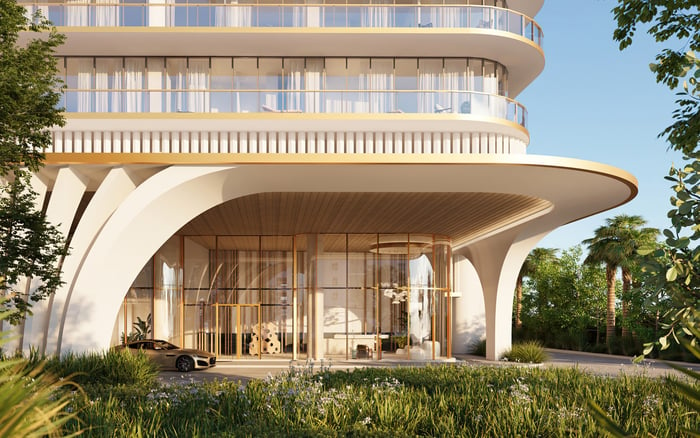
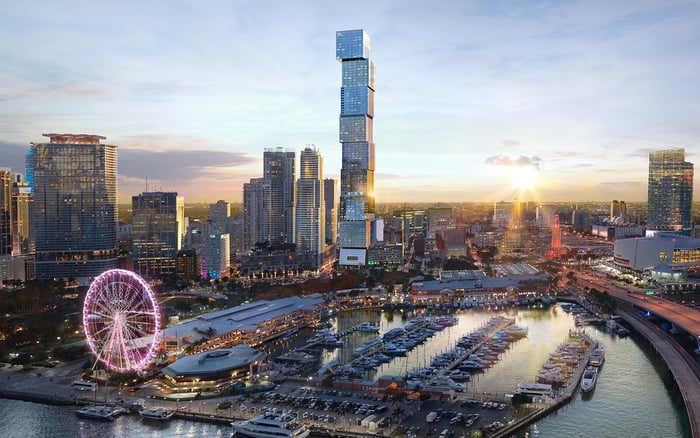
Waldorf Astoria Residences Downtown Miami has already entered the conversation as one of the most visually distinctive residential statements in the urban core. Even without relying on a catalog of technical specifications, the project’s importance is clear: it represents a level of structural ambition that has become central to how elite buyers assess new construction in Downtown.
For years, Miami luxury was often framed through waterfront positioning, service pedigree, and interior finish. Those factors still matter, but the most sophisticated purchasers now look one layer deeper. They ask whether a tower contributes something lasting to the skyline, whether its form feels inevitable rather than theatrical, and whether its architectural presence can support enduring value. In that context, Waldorf Astoria Residences Downtown Miami is best understood not simply as another branded residence, but as part of a broader shift toward buildings whose identity is inseparable from their structure.
Within the Downtown market, that distinction matters. Buyers at this level are rarely purchasing square footage alone. They are acquiring a relationship to the city, to visibility, and to architectural authorship. Projects that project confidence through form tend to command a different tier of attention than towers that rely only on amenity language.
Structural innovation is not only an engineering concept. In luxury real estate, it is also a language of confidence. A building that appears to challenge convention signals design seriousness, construction complexity, and a willingness to pursue a more exacting standard. That does not automatically make it the right purchase for every buyer, but it does change the lens through which the asset is judged.
At the top end of the market, a memorable profile can influence how a residence is perceived years after launch. Distinctive architecture often helps a building remain legible in a fast-changing skyline, especially in a city where new inventory competes aggressively for relevance. For purchasers considering New Project and New-construction opportunities, that visibility can matter nearly as much as finishes or hospitality branding.
The best buyers, however, resist the temptation to confuse spectacle with substance. A structurally expressive tower should invite more careful questions, not fewer. How will the form translate to day-to-day living? Will the arrival sequence, circulation, privacy, and views feel composed rather than compromised? Does the building’s visual idea seem durable enough to hold prestige over time? Those are the questions that separate a merely noticed tower from a true landmark.
Downtown is no longer a secondary consideration for buyers who once concentrated almost exclusively on Miami Beach, the Grove, or select enclaves in Brickell. The district now attracts purchasers who want international energy, a commanding skyline address, and proximity to business, culture, and waterfront movement without sacrificing brand-level polish.
That evolution can be seen across the neighborhood’s luxury pipeline. The conversation around Aston Martin Residences Downtown Miami helped establish the idea that automotive-grade design identity could carry real residential appeal in the urban core. Casa Bella by B&B Italia Downtown Miami reinforced the appetite for globally recognized design language. More recently, Faena Residences Miami Downtown Miami has continued the shift toward experiential, brand-conscious living that is as much about cultural positioning as it is about ownership.
In that company, Waldorf Astoria Residences Downtown Miami occupies a particularly compelling place. The name carries heritage, but the project’s deeper appeal lies in the way it intersects hospitality symbolism with a bold skyline proposition. For some buyers, that combination is the core of its allure: a residence that seeks both international recognition and architectural memorability.
For a purchaser considering an ultra-prime residence in Investment terms, the first step is to look past launch excitement. Distinctive architecture can create a premium halo, but premium pricing holds best when the building also meets the practical demands of ownership at a high level.
That means assessing the full residential proposition. In a project defined by visual originality, buyers should pay close attention to floor plan efficiency, privacy between neighboring homes, the feel of vertical transportation, and how common spaces support discretion. A landmark profile can attract attention, but at this level the more meaningful luxury is often invisible: quiet arrivals, composed staffing, a strong service culture, and homes that feel calm above the city.
It is also wise to compare the project against other design-forward addresses in South Florida rather than only against direct neighborhood peers. In Brickell, for example, The Residences at 1428 Brickell speaks to a buyer who values a refined financial-district setting and a highly polished residential narrative. In Edgewater, Aria Reserve Miami reflects a different expression of waterfront vertical living. These comparisons help clarify whether Waldorf Astoria Residences Downtown Miami aligns with a purchaser’s preferred balance of skyline drama, neighborhood rhythm, and long-term use.
In South Florida, iconography has become a market force in its own right. The towers that command the most attention are often those that give the public a shorthand image for aspiration. Yet the most enduring luxury buildings do more than photograph well. They create a strong private experience for residents while preserving scarcity of identity.
That is where Waldorf Astoria Residences Downtown Miami becomes especially compelling as an editorial subject. Its significance is not merely that it participates in the city’s upward momentum. It suggests that Miami’s high-rise future will be defined by towers willing to express structural character as part of their residential promise.
For buyers, this has practical implications. A highly recognizable building can support status, ease of explanation in the global market, and stronger emotional attachment among owners. Those advantages matter in Pre-construction and long-hold decision-making. They also matter when a buyer wants a residence that feels inseparable from Miami’s contemporary identity rather than simply located within it.
Luxury buyers often feel pressure to act quickly when a project captures the market’s imagination. The better approach is measured conviction. In a development of this profile, interest may be driven by design, brand resonance, or the desire to secure a residence in a future landmark. All are legitimate motivations, but none should replace disciplined review.
The most successful purchasers define their intent first. Is the residence meant to function as a primary urban base, a pied-a-terre with strong service expectations, or a long-horizon portfolio asset? The answer changes everything from acceptable floor plan tradeoffs to preferred exposure and tolerance for market cycles.
In that sense, Waldorf Astoria Residences Downtown Miami belongs to a class of luxury opportunities where emotional appeal and analytical rigor must coexist. The buyers who tend to be happiest are those who appreciate the building’s statement while remaining exacting about the daily life it will deliver.
Every cycle produces a handful of developments that sharpen the ambitions of the market around them. Waldorf Astoria Residences Downtown Miami appears to be one of those projects. It strengthens the idea that Miami luxury is no longer defined only by beachfront exclusivity or bayfront serenity. It is also being shaped by metropolitan height, form-driven identity, and a more global understanding of architectural prestige.
That shift is significant for High-floors buyers in particular. The appeal of elevated living in Miami has matured. Today’s purchaser often wants more than views. They want a home embedded in a building with cultural recognition, a form that reads as singular, and a location that reflects the city’s international confidence.
For the Downtown buyer, that makes Waldorf Astoria Residences Downtown Miami more than an address to watch. It is a symbol of where the district is headed and of how structural expression is becoming part of the language of value.
What makes Waldorf Astoria Residences Downtown Miami notable? Its distinction lies in its design-forward presence and the way it contributes a recognizable architectural identity to Downtown.
Is this article focused on verified technical specifications? No. It focuses on buyer interpretation, market context, and the role of structural expression in luxury positioning.
Why does structural innovation matter in luxury real estate? It can shape skyline recognition, buyer perception, and the long-term prestige of a residence when paired with strong livability.
Is Downtown a serious option for ultra-luxury buyers now? Yes. Downtown increasingly appeals to buyers seeking an urban, globally oriented residential experience.
How should buyers compare this project with others? They should weigh architecture, privacy, service culture, neighborhood fit, and the quality of everyday residential use.
Does a bold exterior always mean a better investment? Not necessarily. Distinctive design helps, but enduring value depends on execution, operations, and owner experience.
Who is most likely to be drawn to this kind of residence? Buyers who value architectural identity, branded prestige, and a visible place within Miami’s evolving skyline.
What should purchasers study most carefully? Floor plans, arrival experience, privacy, circulation, and how the building’s concept translates into actual living quality.
How does this fit within the broader Miami luxury market? It reflects a shift toward towers whose form and brand identity are central to their market appeal.
Why is Waldorf Astoria Residences Downtown Miami important right now? It symbolizes a moment when Miami luxury is being defined as much by architectural ambition as by location and amenities.
If you'd like a private walkthrough and a curated shortlist, connect with MILLION Luxury.
If branded residences are on your mind — as a home or as an allocation — we would be glad to share what we are seeing, privately.
Begin a quiet conversation