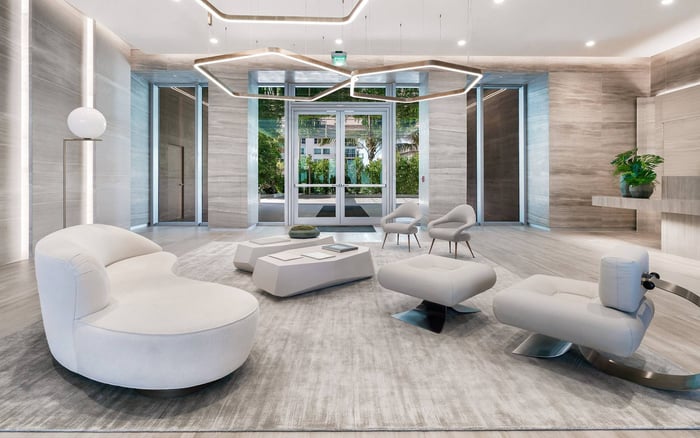
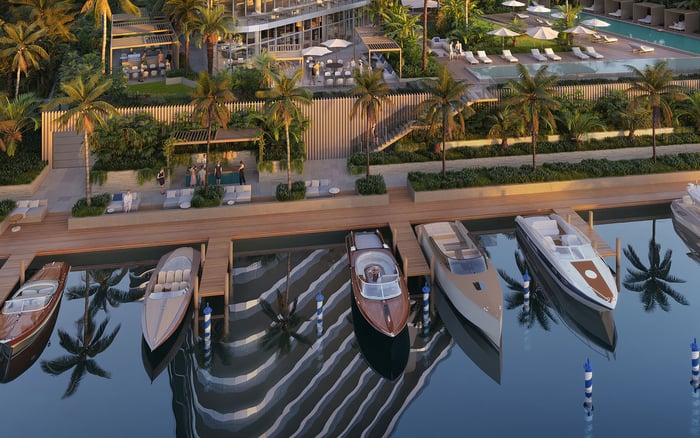
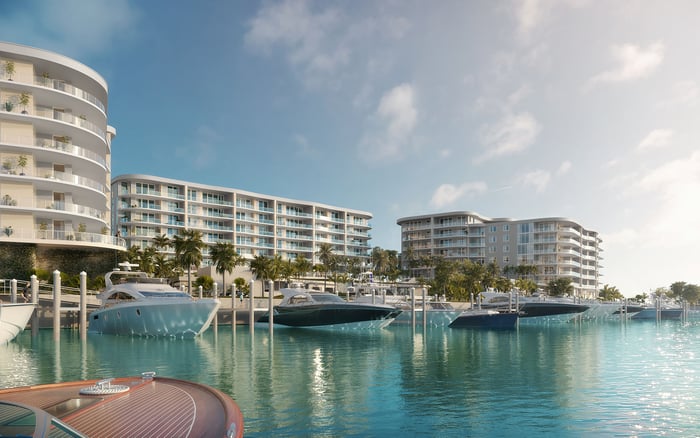
A buyer-oriented comparison of W Pompano Beach Hotel & Residences and Forté on Flagler West Palm Beach for full-time owners evaluating boating convenience, bridge clearance, dockage diligence, and hurricane planning before committing to a South Florida residence.
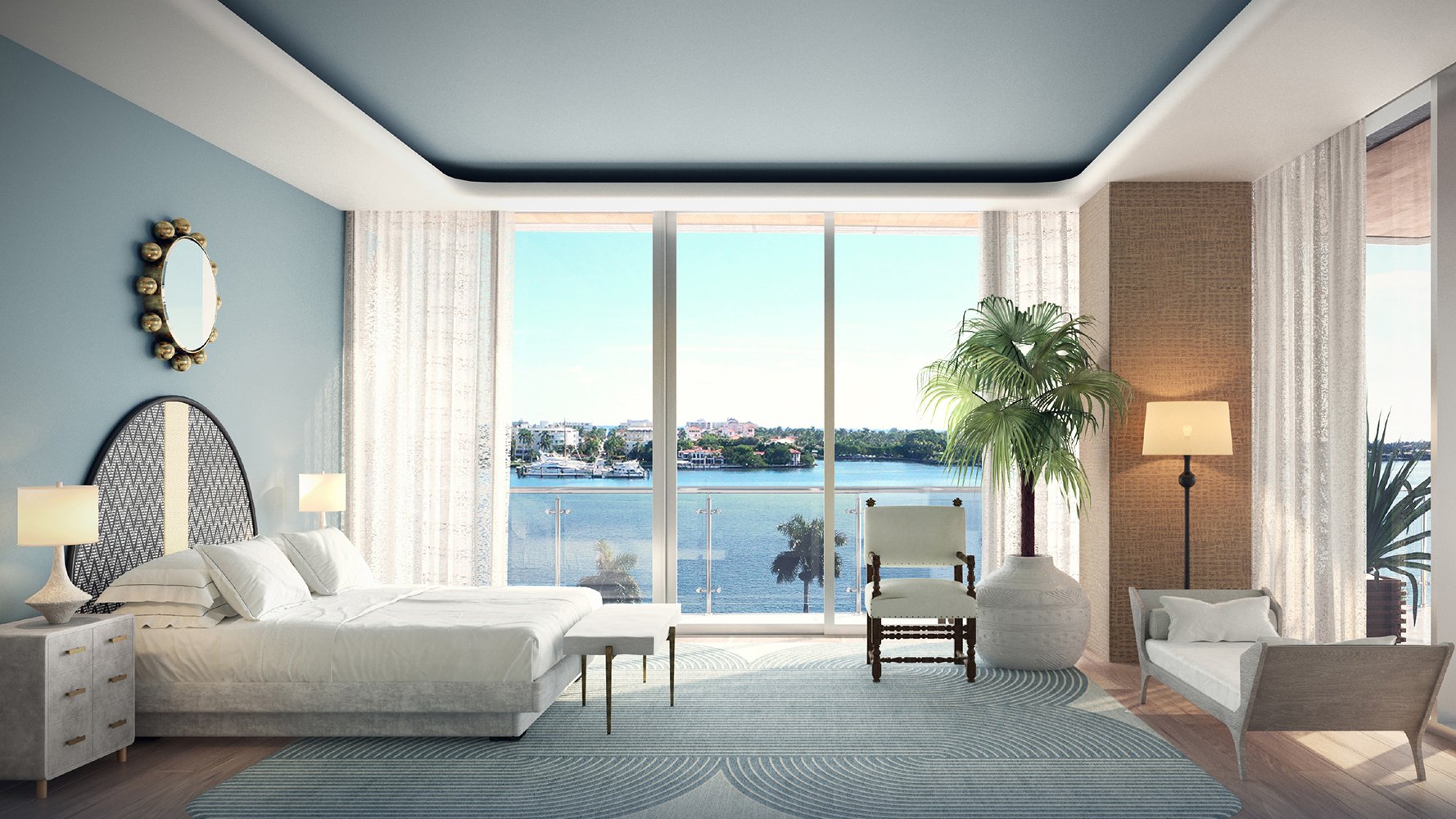
For seasonal buyers, a beautiful residence can be assessed through view, service, finishes, and ease of arrival. For a full-time owner with a boat, the standard is more exacting. W Pompano Beach Hotel & Residences is the Pompano Beach project in this comparison, while Forté on Flagler West Palm Beach is the West Palm Beach project. Both invite a lifestyle conversation, but the purchase decision should rest on verifiable operating details, not waterfront language alone.
In search shorthand, this may appear to be a Pompano Beach versus West Palm Beach decision. In practice, the more important question is whether each residence supports the owner’s daily pattern. A primary resident may need reliable dockage, a predictable route to open water, clear storm protocols, and insurance assumptions tested before closing. The right answer is rarely found in a single amenity description. It is assembled from documents, site visits, marine review, and direct questions to the association, developer, property management, and local dockage providers.
The first layer is simple: where will the vessel actually live? A buyer should distinguish among on-site slips, nearby private marinas, transient dockage, yacht clubs, dry storage, and off-site arrangements. Each option changes the ownership experience. Walking to the boat, driving to a marina, waiting for launch service, or relying on seasonal slip availability are not equivalent forms of convenience.
Before treating either W Pompano Beach Hotel & Residences or Forté on Flagler West Palm Beach as boating-friendly, ask for written confirmation of dockage access, slip ownership or lease terms, vessel size limits, beam restrictions, utility availability, guest-use rules, commercial restrictions, and whether any slips are separately deeded, licensed, or merely available through a third party. If a slip is not part of the residence, the buyer should underwrite the boat plan separately from the condominium plan.
Bridge clearance deserves the same discipline. The relevant question is not whether a route appears convenient on a map. It is whether the vessel, with antennas, outriggers, tower, arch, or tender equipment, can move safely under the bridges on the intended route and at the intended tide. If opening bridges are involved, the owner should understand schedules, restricted hours, lockout periods, local traffic patterns, and how those factors affect early departures or late returns.
For a full-time owner, hurricane planning is not a seasonal chore delegated at the last moment. It is part of the residence’s operating system. Buyers should ask how the building communicates storm notices, what the association requires for balcony furniture and exterior items, how elevators and access systems are managed before and after a storm, and what backup power, if any, supports essential building functions.
Boat planning requires a parallel review. Owners should confirm haul-out options, marina storm policies, lines and fendering requirements, insurance deadlines, evacuation timing, and whether local dockage providers accept the vessel type and size during named-storm conditions. A beautiful residence loses practical value if the owner is still improvising a storm plan when watches are posted.
Insurance belongs in the same conversation. Wind, flood, condominium association coverage, unit-owner coverage, deductibles, loss assessment exposure, and boat insurance should be reviewed together. The goal is not to eliminate risk, which is impossible in coastal South Florida. The goal is to know which risks are borne by the association, the unit owner, the vessel owner, and the marina or storage provider.
The disciplined buyer should build a side-by-side ownership file for W Pompano Beach Hotel & Residences and Forté on Flagler West Palm Beach. One column should cover the residence lifestyle: services, parking, guest access, pets, storage, building rules, and everyday arrival. A second should cover boating: dockage, marina agreements, bridge route, inlet route, service vendors, fuel access, and after-hours procedures. A third should cover storm readiness: building specifications, association rules, insurance, evacuation logistics, and vessel protection.
The most useful comparison may not be the most glamorous. It may be the one that reveals which property requires fewer assumptions. If one option offers a stronger residence but a less certain boat plan, the buyer can still proceed, but only with a clear off-site solution. If another option has a more convenient marine rhythm but less clarity around building operations, those issues should be resolved before contract deadlines expire.
For full-time owners, convenience is cumulative. It is the ease of leaving home before sunrise, returning after dinner, securing the boat before a storm, and knowing who is responsible when a procedure matters. In that sense, boating convenience and hurricane planning are not secondary topics. They are central to how the residence will actually live.
Is W Pompano Beach Hotel & Residences the Pompano Beach option in this comparison? Yes. W Pompano Beach Hotel & Residences is the Pompano Beach project being compared here.
Is Forté on Flagler West Palm Beach the West Palm Beach option in this comparison? Yes. Forté on Flagler West Palm Beach is the West Palm Beach project in this comparison.
Should buyers assume either project includes a private boat slip? No. Slip rights, availability, size limits, and legal structure should be verified in writing before purchase.
What is the most important bridge-clearance question? Confirm whether the specific vessel can clear every bridge on the intended route in real operating conditions.
Do opening bridges change the ownership experience? They can. Schedules, restrictions, and traffic patterns may affect departure times and return windows.
Should inlet access be reviewed separately from dockage? Yes. Dockage may be convenient while the route to ocean access still requires separate marine diligence.
What hurricane questions should a condominium buyer ask? Ask about association storm rules, communication procedures, backup systems, access after storms, and insurance structure.
What should boat owners confirm before hurricane season? Confirm haul-out options, marina storm policies, insurance requirements, and a written plan for securing the vessel.
Why does full-time ownership require more diligence than seasonal use? A full-time owner relies on the residence, marina plan, and storm procedures as everyday infrastructure.
Can a buyer compare the two projects without final marine details? Yes, but the cleanest decision comes from separating residence quality from dockage, routing, and storm-readiness assumptions.
For a confidential assessment and a building-by-building shortlist, connect with MILLION.
If branded residences are on your mind — as a home or as an allocation — we would be glad to share what we are seeing, privately.
Begin a quiet conversation