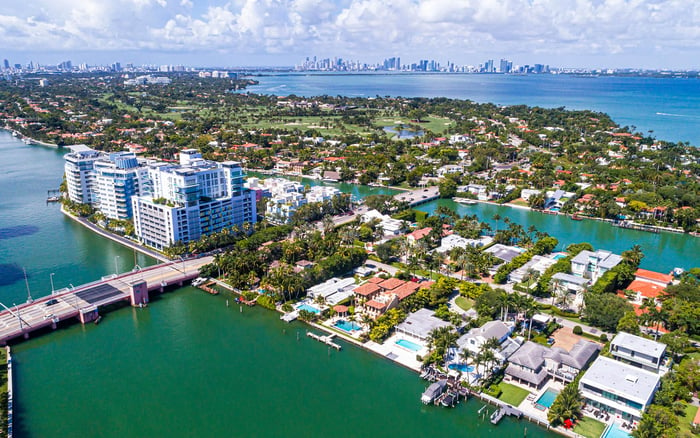
For private-club members relocating or expanding their South Florida footprint, the most elegant purchase is rarely judged by views alone. It is the residence that reconciles school strategy, club life, family rhythm, and domicile intent before the contract is signed.

For many private-club members, buying in South Florida is not a single real estate decision. It is a choreography of family priorities, school planning, club access, domestic routine, and long-term domicile intent. The residence may be oceanfront, golf-adjacent, or minutes from a marina, but its real value is measured by how precisely it supports the way a household intends to live.
That is especially true for families evaluating private-school placement while considering a more permanent South Florida base. Admissions calendars, student commutes, driver logistics, club dining patterns, and weekday travel can matter as much as floor plans. A tower with extraordinary amenities can still be the wrong fit if the morning route is impractical. A quieter address can become more compelling when it places the family’s school, club, and daily services within a graceful radius.
This is a private-school, lifestyle, and buyer’s guide conversation as much as it is a property search.
Private-school planning rewards early organization. Before choosing a residence, buyers should understand where the children may realistically attend, how admissions timing aligns with a move, and whether the family expects to be in South Florida for the full academic year, a defined season, or a transitional period. Those distinctions can shape everything from location to furnishing strategy.
A family focused on Miami’s urban core may weigh the convenience of Brickell, Coconut Grove, Coral Gables, and Miami Beach differently depending on school commute and after-school activities. For example, a buyer drawn to residential privacy and village character might consider The Village at Coral Gables if the daily routine benefits from proximity to established neighborhood infrastructure. Another family may prefer a waterfront or coastal orientation, but only after testing the weekday drive at realistic hours.
The key is sequencing. Select the educational targets first, identify the practical commute range second, and then study residences that make sense inside that map. The most polished purchase process begins with the family calendar.
Domicile should be treated as a serious planning matter, not a decorative label attached to a second home. At its simplest, domicile involves where a person intends to make a permanent home, supported by consistent conduct. For buyers with residences, club memberships, business interests, or family obligations in more than one state, alignment matters.
A South Florida purchase can support a domicile strategy only if the buyer’s broader life reflects that intention. The residence should be suitable for real use, not merely occasional visits. Family routines, school enrollment, professional patterns, important records, memberships, and everyday decisions should be reviewed with qualified legal and tax advisors before relying on any conclusion.
This is where private-club members should be especially careful. Club use can help demonstrate lifestyle gravity, but it can also reveal inconsistency if the family’s actual center of life remains elsewhere. A beautiful home is one element. The complete picture is built through repeatable habits.
Private clubs often anchor the social geography of South Florida. A buyer may begin with a preferred view corridor, then realize that the club, school, tennis schedule, golf calendar, and trusted service providers all point to a different address. The right property reduces friction without diminishing privacy.
In Coconut Grove, the appeal often lies in a softer residential rhythm, mature streetscapes, and access to both city and bay. Residences such as Four Seasons Residences Coconut Grove may appeal to buyers who want refined services while remaining close to a neighborhood environment. In Miami Beach, the calculation may be more coastal, with beach access, dining, and club proximity shaping the family’s weekly pattern. A buyer considering The Perigon Miami Beach should still test school routes and club routines before being seduced by the shoreline alone.
The most successful searches avoid false choices. Privacy and access can coexist, but only when the buyer studies the full week, not just the weekend.
Boca Raton and West Palm Beach often attract buyers seeking a more northerly South Florida rhythm, with private-club life, coastal living, and family structure all playing central roles. The decision is rarely about whether one market is better. It is about which setting best fits the school plan, club membership, airport preferences, and desired pace.
In Boca Raton, a family evaluating private-school options may place a premium on predictable daily movement and proximity to club-centered life. The Residences at Mandarin Oriental Boca Raton can enter the conversation for buyers who want a polished residential experience within a city known for its established luxury routines.
West Palm Beach may appeal to families whose orbit includes Palm Beach, cultural engagements, waterfront living, and a more northerly club network. For buyers studying that corridor, The Ritz-Carlton Residences® West Palm Beach can be considered within a broader review of school access, seasonal patterns, and long-term residential intent.
Before making an offer, private-club members should build a practical alignment file. This is not about creating clutter. It is about confirming that the purchase supports the life the family intends to live.
Start with school timing, including applications, interviews, grade availability, transportation, and extracurricular demands. Then review the expected weekly geography: school drop-off, club lunches, golf or tennis, marina access, medical care, dining, airport transfers, and household staffing. A home that looks ideal on a map can feel inefficient once a family lives the school year in real time.
Next, discuss domicile planning with advisors before closing. The questions are personal and technical: where the family will spend time, where key records should be maintained, how existing homes will be used, and whether the South Florida residence is substantial enough for genuine year-round life. These issues should not be solved casually after the deed records.
Finally, consider resale logic. A residence aligned with schools, clubs, privacy, and services may hold deeper appeal than one selected only for trend value. In the ultra-premium market, elegant utility is often the quietest form of luxury.
The families who navigate South Florida best tend to make fewer impulsive decisions. They do not buy first and solve the school later. They do not assume club proximity automatically means weekday convenience. They do not treat domicile as a branding exercise. They align the household before they align the furniture.
For private-club members, that discipline creates confidence. It allows a family to choose between Miami Beach, Boca Raton, West Palm Beach, Coconut Grove, Coral Gables, and other luxury enclaves with a clear sense of purpose. The result is not simply a beautiful address. It is a home that behaves correctly inside the family’s life.
Should private-school planning happen before a home search? Yes. School targets and commute realities should shape the search area before a buyer becomes attached to a specific residence.
Can a South Florida home support domicile planning? It can be part of the picture, but domicile depends on consistent intent and conduct that should be reviewed with qualified advisors.
Do club memberships matter when choosing a neighborhood? Yes. Club location, usage patterns, and family routines can materially affect which address feels practical during the week.
Is an oceanfront residence always best for families? Not necessarily. The best choice is the home that balances views, school access, privacy, transportation, and daily convenience.
How should buyers compare Miami Beach with mainland neighborhoods? They should test real commute patterns, school routes, club access, and evening routines rather than relying only on lifestyle appeal.
Why do Boca Raton and West Palm Beach attract club-oriented families? Both can suit buyers seeking a structured luxury routine, though the right fit depends on schools, clubs, travel, and family pace.
Should domicile questions be handled after closing? Ideally, no. Buyers should address planning considerations before closing so the residence and household conduct are aligned.
Can a seasonal home work for private-school families? It depends on the school plan and family schedule. A seasonal pattern may not suit every admissions or domicile objective.
What is the biggest mistake buyers make? Choosing the most glamorous property before studying the ordinary weekday demands of school, clubs, staff, and transportation.
Who should be involved in the planning process? A buyer should coordinate real estate guidance with legal, tax, school, and family office advisors where appropriate.
To compare the best-fit options with clarity, connect with MILLION.
If branded residences are on your mind — as a home or as an allocation — we would be glad to share what we are seeing, privately.
Begin a quiet conversation