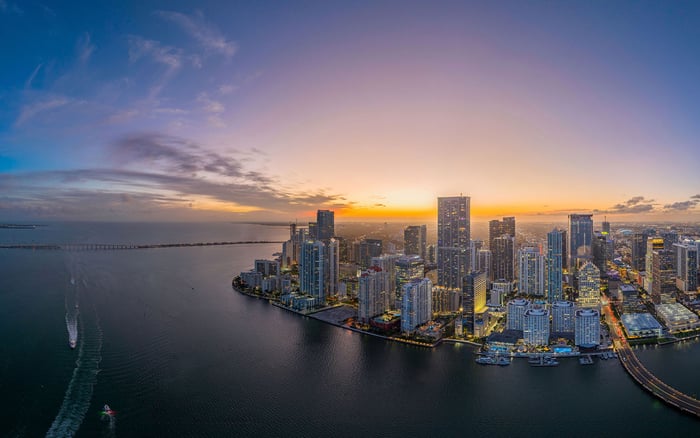
A practical ownership guide for Brickell buyers evaluating art installation, freight access, and climate-controlled storage before closing at Viceroy Brickell or Colette Residences Brickell.

For full-time owners, the most consequential details of a Brickell residence are not always visible from the balcony, kitchen, or primary suite. They often sit within the back-of-house sequence: the loading dock, service corridor, freight elevator, residence entry, installer access protocol, and storage plan that determine whether a home can function as both a private sanctuary and a serious collecting environment.
That is the practical lens through which buyers should evaluate Viceroy Brickell and Colette Residences Brickell. The question is not simply whether the residence offers the scale, light, and wall space to support art, rare objects, wine, watches, rare books, or design furniture. The sharper question is whether the building’s daily operating rules can support the owner’s lifestyle after closing.
At Colette Residences Brickell, art installation, freight access, and climate-controlled storage should be treated as pre-closing due diligence. Buyers with major works or collectible assets should verify service-elevator dimensions, loading access, and move-in procedures directly with the appropriate sales or management team. For Viceroy Brickell, the same discipline applies: do not assume that a luxury address automatically resolves the logistics of museum-scale ownership.
These questions are especially relevant in Brickell, where new-construction and pre-construction towers attract buyers who view a residence as both an investment and a private gallery, whether it is a penthouse with a terrace or a pied-a-terre used around Art Basel season.
A private collection does not arrive abstractly. It arrives crated, insured, scheduled, and carried through a sequence of spaces that may be less glamorous than the finished living room but far more decisive.
For Colette Residences Brickell buyers planning large artworks, sculpture, specialty furniture, or fragile collectible assets, the freight path should be mapped before closing. That means confirming whether oversized pieces can pass through the loading dock, service corridors, freight elevator, turn radiuses, door openings, and final residence entry path. A work that fits inside the residence may still fail the building approach if one part of the sequence is too narrow, too low, or restricted by operating policy.
Owners should distinguish between the one-time move-in and the life of the collection. A full-time residence may require art rotation, seasonal furniture staging, new acquisitions, conservation visits, photography, appraisal work, framing, or reinstallation after renovations. The better question is not, “Can the building handle move-in?” It is, “Can the building support the way I will live with this collection for years?”
This is where discretion meets planning. The smoothest installations are usually the least visible to neighbors, staff, and guests because the owner’s team has already aligned the schedule, paperwork, elevator protection, insurance certificates, and building rules before the crate reaches the dock.
Buyers at Colette Residences Brickell should confirm whether freight or service-elevator use requires reservations, certificates of insurance, deposits, restricted installation hours, or advance crew approval. These details can affect everything from closing-week move-in timing to the installation of a single important painting.
High-value art owners should also ask whether installers must be approved vendors and whether building-specific protection is required for floors, walls, elevators, lobby areas, service corridors, and common spaces. A polished stone corridor, custom elevator cab, or protected threshold may require a particular covering system or supervision procedure. Those requirements are not obstacles when known early. They become obstacles when discovered after an installer has been booked.
For Viceroy Brickell buyers, the same checklist should be applied directly to the project team, management, or condominium documents before finalizing assumptions. The objective is not to burden the purchase process with excessive detail. It is to avoid discovering after closing that a prized work can only be moved during limited hours, that extra insurance paperwork is required, or that a preferred installer is not permitted without additional approval.
Owners should keep written notes of these answers and preserve relevant communications. Final condominium rules and operating policies can evolve as a building is delivered, managed, and turned over. The most sophisticated buyers document the practical promises and procedures that matter to their ownership experience.
In South Florida, climate is not a background condition. It is part of the ownership equation. Humidity, heat, continuous air conditioning, backup power, storm preparation, and post-storm recovery procedures should be discussed by any owner planning to keep climate-sensitive assets in the residence or nearby storage.
At Colette Residences Brickell, buyers with high-value art, wine, rare books, watches, couture, archival photography, design objects, or other collectibles should evaluate whether private storage, assigned storage, or third-party climate-controlled storage is the right solution. These are different categories. Private in-residence storage may provide convenience, but it may not be appropriate for every medium or collection type. Assigned building storage may be useful for household items, but owners should confirm its climate conditions before using it for sensitive pieces. Third-party climate-controlled storage may be preferable for overflow, rotation inventory, or objects requiring specialized handling.
Backup power and storm procedures deserve special attention. An owner should ask what happens during hurricane preparation, temporary building closures, extended power interruptions, or post-storm recovery. For many collections, the risk is not the dramatic event itself but the hours or days when humidity, temperature, access, and response protocols are uncertain.
The right plan usually involves coordination among the owner, interior designer, installer, insurer, building management, and storage provider. Each party sees a different part of the risk. Together, they can create an installation and storage plan that suits the residence without compromising the collection.
For a full-time owner, back-of-house access is not merely operational. It is part of the ownership experience. A residence that functions as a private gallery requires more than beautiful walls. It requires predictable access for vetted professionals, sufficient scheduling flexibility, and a building culture that understands discretion.
This is especially important in Brickell, where many owners balance personal residence, entertaining, business travel, and long-term asset stewardship. A collector may want to rotate works before a private dinner, receive a new acquisition after an auction, remove a piece for conservation, or coordinate a designer refresh without disrupting the building. Those needs should be anticipated, not improvised.
The best preparation is plainspoken. Ask for the freight rules. Ask about storage. Ask who approves installers. Ask how the building handles protection, insurance, deposits, and restricted hours. Ask how policies may change as operations mature. Then decide whether the residence supports not only the life you want to present, but the life required to maintain it properly.
Should art installation be discussed before closing at Colette Residences Brickell? Yes. Buyers should treat installation, freight access, and storage as pre-closing diligence, especially for large works or sensitive collectibles.
What should owners verify about freight access? They should confirm loading access, service-elevator dimensions, corridor clearances, entry paths, and move-in procedures with the sales or management team.
Do oversized artworks require special planning? Yes. A work may fit inside the residence but still fail the loading dock, elevator, corridor, or residence entry sequence.
Are one-time move-in logistics enough to review? No. Full-time owners should also plan for recurring needs such as art rotation, furniture staging, maintenance, appraisal, and conservation visits.
Can installers use the freight elevator freely? Owners should confirm whether reservations, certificates of insurance, deposits, restricted hours, or building approval are required.
Should owners ask about approved vendors? Yes. Buildings may require approved crews or specific protection for floors, walls, elevators, service corridors, and common areas.
What climate issues matter most in Brickell? Humidity control, continuous air conditioning, backup power, storm preparation, and post-storm recovery procedures are central concerns.
Is assigned storage suitable for art or wine? Not automatically. Owners should confirm whether private, assigned, or third-party climate-controlled storage best suits each asset type.
Do these questions also matter for Viceroy Brickell? Yes. Buyers should verify the same operating details directly before relying on assumptions about freight access or collection storage.
Who should coordinate the art logistics plan? The owner, designer, installer, insurer, building management, and storage provider should align before important pieces arrive.
For a tailored shortlist and next-step guidance, connect with MILLION.
If branded residences are on your mind — as a home or as an allocation — we would be glad to share what we are seeing, privately.
Begin a quiet conversation