A buyer-focused guide to evaluating Hallandale Beach and Pompano Beach through smart-home readiness, privacy safeguards, and service responsiveness.
For the South Florida luxury buyer, the most persuasive residence is no longer judged by view, ceiling height, amenity deck, or private elevator arrival alone. Increasingly, the real test is whether the home behaves intelligently, discreetly, and reliably once daily life begins. Smart-home readiness, data privacy, and service responsiveness have moved from afterthoughts to central buying criteria.
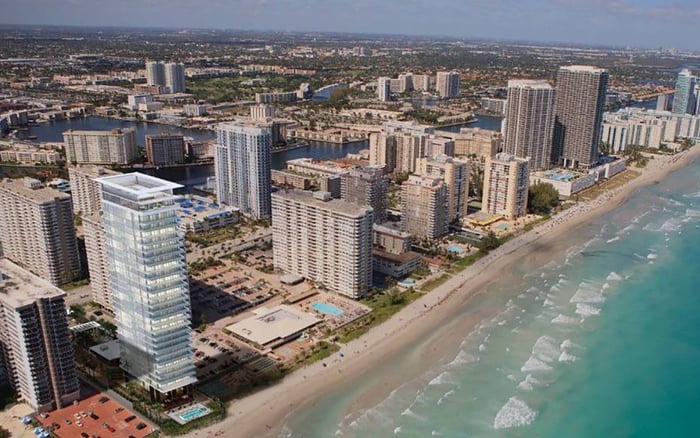
That shift is especially relevant in Hallandale Beach and Pompano Beach, two Broward coastal markets that invite different buying styles. Hallandale Beach often appeals to purchasers who want proximity, privacy, and a quieter residential rhythm near the water. Pompano Beach speaks to buyers watching an evolving coastal profile and seeking a residence that can support a modern, connected lifestyle from the beginning.
The question is not simply whether a home has touchscreens, motorized shades, or app-based entry. The better question is whether the home can be maintained, updated, secured, and serviced without friction. In a luxury residence, technology should disappear into the architecture. It should not become a second job.
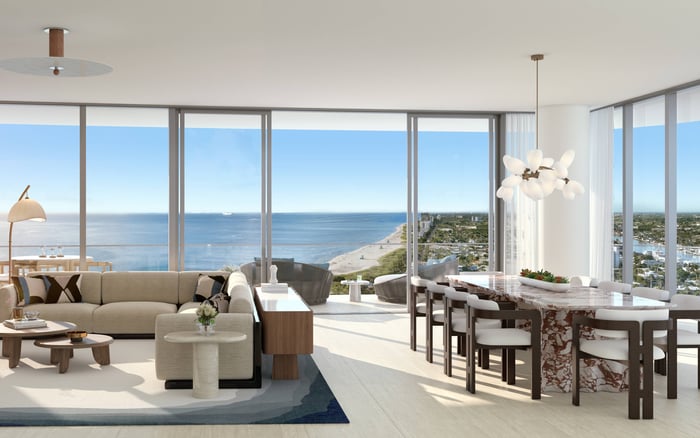
Hallandale Beach is often best read through the lens of controlled comfort. A buyer here may be seeking an oceanfront lifestyle, a seasonal base, or a residence that allows family and guests to move easily between beach, marina, club, and city. In that setting, smart-home readiness is most valuable when it protects privacy and simplifies ownership.
Begin with infrastructure. Ask whether the residence has structured wiring, robust wireless coverage, clear equipment locations, and sensible access for technicians. A beautiful home can feel surprisingly fragile if its network equipment is tucked into an overheated closet, if rooms lose signal, or if every system depends on a single vendor relationship that is difficult to transfer.
Privacy deserves equal weight. Buyers should understand who controls cameras, access logs, building apps, visitor credentials, package systems, and in-residence automation accounts. Before closing, account ownership should be transferable, default credentials should be removed, and permissions should be reviewed. The more sophisticated the home, the more important it becomes to distinguish convenience from exposure.
Service responsiveness is the third pillar. In Hallandale, where many owners may use a residence seasonally or as a second home, the ability to resolve issues quickly matters as much as the specification sheet. A residence that allows remote diagnostics, clear maintenance protocols, and dependable building communication can preserve the calm luxury buyers are actually purchasing.
Pompano Beach invites a slightly different conversation. Buyers often approach it with an eye toward freshness, design evolution, and the promise of a more contemporary coastal setting. Here, new-construction and ultra-modern preferences frequently overlap with expectations for seamless technology.
The opportunity is to evaluate smart-home readiness before finishes distract the eye. A residence may photograph beautifully, but the buyer should still ask how lighting scenes are programmed, whether climate zones are intuitive, how shade controls are organized, and whether the system can be expanded without invasive work. A good setup allows future upgrades. A weak one locks the next owner into compromises.
For Pompano Beach buyers, service responsiveness should be defined in practical terms. Who answers when a system fails on a Friday evening? Is there a building team, a preferred integrator, or a documented process for warranty and post-closing support? Are replacement components proprietary, or can qualified professionals service them? The point is not to avoid technology. It is to avoid dependency without accountability.
Data privacy also becomes more important as buildings add digital conveniences. Entry systems, amenity reservations, license plate access, package notifications, and in-home controls can all create data trails. The luxury buyer should ask for clarity on what is collected, who can see it, and how permissions are changed when staff, guests, tenants, or family members rotate in and out.
A well-advised buyer should treat smart systems with the same seriousness as mechanical systems. The inspection period should include a practical review of the network, access controls, automation, security devices, entertainment distribution, lighting, shades, thermostats, and any building-level applications that touch the residence.
The most revealing question is simple: what happens when the owner is not there? If the air conditioning needs adjustment, if a leak sensor sends an alert, if a door code must be changed, or if a guest requires access, the answer should be straightforward. Luxury is not the presence of an app. Luxury is the absence of confusion.
Documentation matters. Buyers should request a schedule of connected devices, warranty information, installer contacts, account-transfer instructions, and any recurring service obligations. If the seller cannot explain the system, a specialist should. If no one can explain it, that uncertainty belongs in the negotiation.
Cyber hygiene is part of ownership now. At closing, passwords should change, admin rights should be reassigned, cameras should be audited, and remote users should be removed. For high-profile buyers, the review should be even more exacting, with attention to guest networks, staff access, children’s devices, and any equipment that records audio or video.
In both Hallandale Beach and Pompano Beach, the building experience can either strengthen or weaken a smart residence. A private home may be elegantly configured, but if the building’s access, valet, package, elevator, maintenance, and amenity systems are slow to respond, the overall experience suffers.
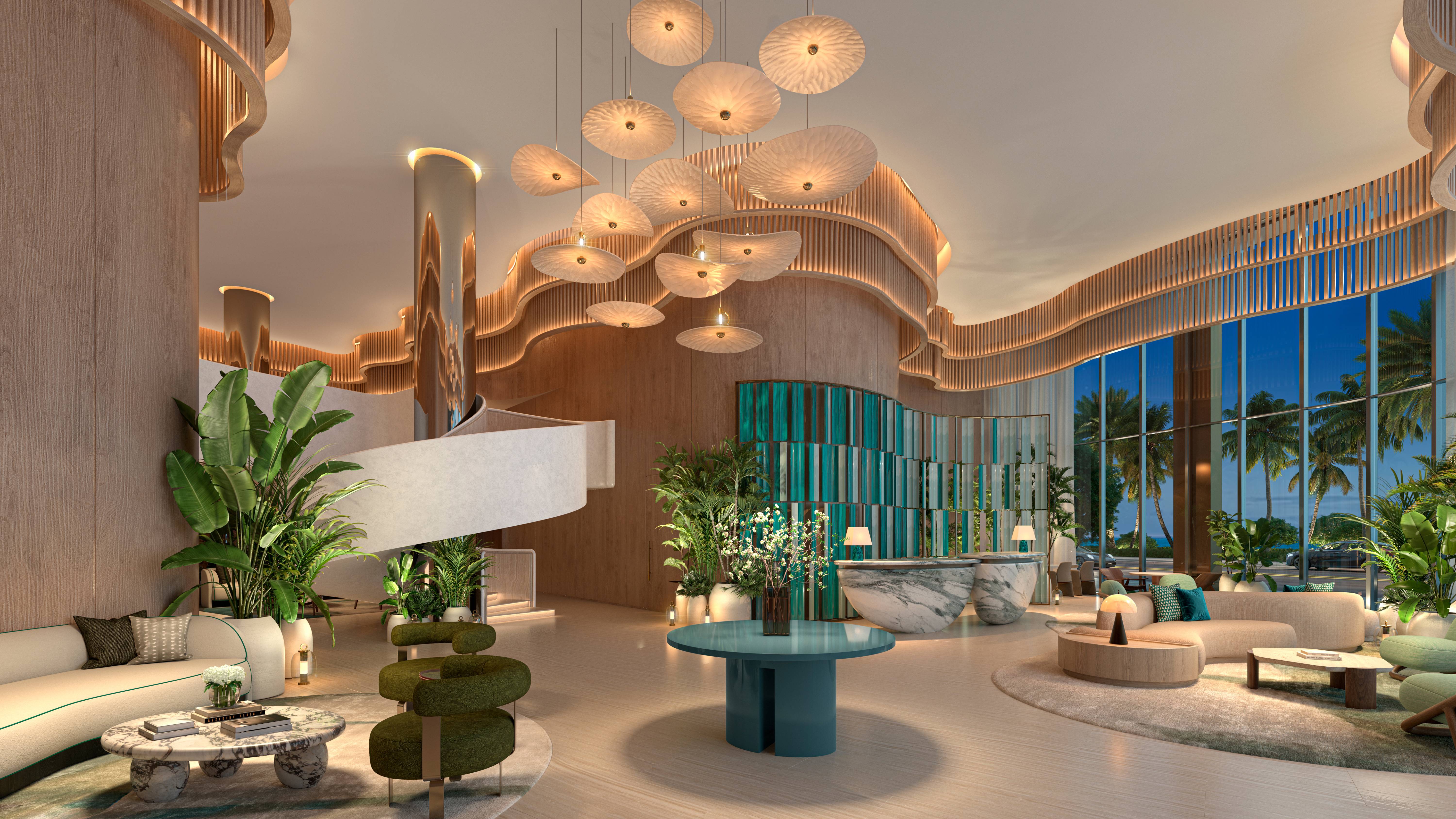
Buyers should listen carefully during showings. How does the front desk handle visitors? How are service providers admitted? Are residents asked to use multiple apps for simple requests? Is communication proactive or reactive? A polished lobby is welcome, but an organized service culture is more durable.
This is where investment judgment becomes personal. A residence with resilient technology and responsive service may protect more than convenience. It can protect time, privacy, and the long-term satisfaction of ownership. The buyer shorthand may be Hallandale, Pompano Beach, oceanfront, new construction, ultra-modern, and investment, but the deeper measure is how calmly the home performs after the closing dinner is over.
Hallandale Beach is compelling for buyers who prize discretion, established coastal habits, and a residence that can function smoothly during absences. Pompano Beach is compelling for buyers who want to align modern design with an increasingly connected way of living. Neither choice is automatically superior. The better purchase is the one whose systems, privacy posture, and service model match the owner’s lifestyle.
For a primary residence, prioritize daily usability. For a seasonal home, prioritize remote monitoring and trusted service access. For a family residence, prioritize permissions, guest profiles, and network segmentation. For a pied-à-terre, prioritize simplicity, lock-and-leave reliability, and a management structure that does not require constant owner intervention.
The elegant answer is restraint. The best smart home is not the one with the most features. It is the one where the features are legible, secure, maintainable, and quietly aligned with the way the owner lives.
Is smart-home readiness now essential in Hallandale Beach and Pompano Beach? For luxury buyers, it is increasingly part of the ownership standard. The priority is reliable infrastructure, not gadget volume.
What should I ask before buying a connected residence? Ask who controls the accounts, how systems transfer at closing, and who services them after purchase. Documentation should be clear.
Why does data privacy matter in a condominium or residence? Access systems, cameras, apps, and automation can create sensitive records. Buyers should know who can view, store, or change that information.
Is Hallandale Beach better for privacy-focused buyers? It can be a strong fit for buyers who value discretion and a controlled coastal routine. The specific building and service model still matter most.
Is Pompano Beach better for modern smart-home features? It may appeal to buyers seeking a fresher connected lifestyle. The key is confirming that systems are expandable, supported, and easy to use.
Should a smart-home specialist join the inspection process? For a high-value connected residence, yes. A specialist can identify weak networks, hidden dependencies, and account-transfer risks.
What is the biggest mistake buyers make with smart homes? They focus on visible devices rather than infrastructure. Wiring, network strength, documentation, and service access are often more important.
How should seasonal owners think about responsiveness? They should prioritize remote monitoring, clear building communication, and trusted access for service providers. Speed and accountability are essential.
Can smart-home systems affect resale appeal? Well-planned systems can support buyer confidence, while confusing or outdated systems can create hesitation. Simplicity and transferability help.
What is the best purchase strategy for these two markets? Compare lifestyle first, then test the residence as a living system. The winning home should protect privacy, time, and peace of mind.
If you'd like a private walkthrough and a curated shortlist, connect with MILLION.
If branded residences are on your mind — as a home or as an allocation — we would be glad to share what we are seeing, privately.
Begin a quiet conversation