A buyer-focused comparison of wellness scale, air and water disclosure gaps, amenity access, guest policies, and leasing questions at two Miami Beach residences.
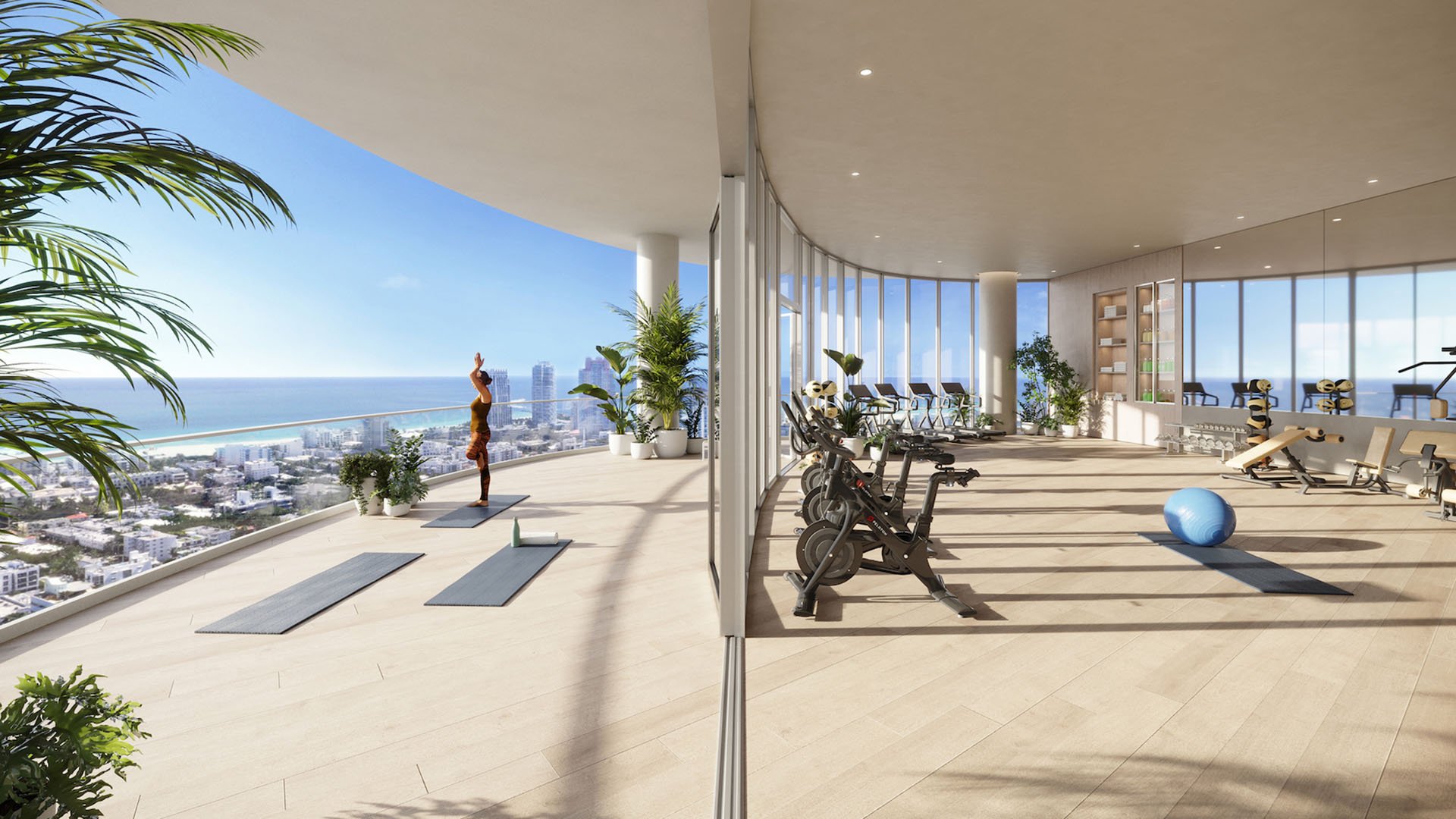
At first glance, Five Park Miami Beach and The Ritz-Carlton Residences® Miami Beach appear to address the same luxury priority: convenient wellness within a private residential setting. Yet their programs differ meaningfully in scale and composition.
Five Park presents a broad, club-oriented ecosystem spanning fitness, spa, outdoor recreation, social spaces, a private beach club, and an adjacent park. The Ritz-Carlton Residences offers a more concentrated collection centered on spa, fitness, poolside leisure, and contemplative outdoor space. Neither public program fully answers the technical or operational questions that define the everyday resident experience.
The most consequential wellness details are often operational, not visual.
For buyers, the comparison should extend beyond amenity count. Capacity, ventilation, water treatment, reservations, guest privileges, and leasing restrictions can shape convenience as much as architecture or service.
Five Park, at 500 Alton Road, advertises more than 50,000 square feet of amenities. Its wellness lounge includes private training areas, exercise bikes, an outdoor workout zone, a yoga deck, and a juice bar. In-house personal training and wellness coaching add a staffed dimension for residents seeking guided routines rather than equipment access alone.
Separate men’s and women’s spa lounges incorporate saunas and dedicated massage or treatment spaces. Outdoors, adult and family pools, hammocks, a hot tub, and landscaped relaxation areas extend the program across active and restorative uses.
The residents-only Canopy Club on the 26th floor adds private dining, lounges, cocktail bars, wellness activities, and a signature spa. Beyond the tower, a three-acre park provides another layer of open space. Its mature and native trees are intended to help absorb carbon dioxide and toxins, while the landscape is designed to retain up to approximately 90% of stormwater runoff that previously reached Biscayne Bay.
This breadth supports a lifestyle built around choice. It does not, by itself, establish how many residents can use a class, treatment room, pool deck, or training area during peak periods.
The Ritz-Carlton Residences® Miami Beach takes a more concise approach. Its on-site spa includes a steam room, sauna, and treatment suite, complemented by a state-of-the-art fitness center. The outdoor program combines a resort pool, whirlpool spa, private poolside cabanas, and meditation garden.
Social and recreational amenities include a poolside grill, private barbecue and dining area, club room, virtual golf, billiards, and a cinema-style screening room. The proposition is less expansive than Five Park’s club-and-park framework, but it integrates wellness with leisure and residential hospitality.
Buyers extending their Miami Beach comparison may also examine Setai Residences Miami Beach and The Perigon Miami Beach. The same discipline applies: compare current governing documents and operating rules, not project positioning alone.
Neither property’s public fact sheet specifies HVAC filtration ratings, fresh-air delivery rates, humidity-control standards, or dedicated in-residence air-purification systems. The Ritz-Carlton materials also do not identify indoor-air monitoring technology.
That gap is not evidence that either building lacks relevant systems. It means buyers cannot confirm performance from public-facing amenity descriptions. In South Florida, where heat and humidity make mechanical design particularly important, the distinction warrants careful attention.
A due-diligence request should include mechanical schedules, applicable MERV ratings, outside-air design information, humidity-control specifications, and maintenance responsibilities. Buyers should also clarify whether filtration is centralized, located within each residence, or divided between common and private systems. Replacement intervals, filter costs, and access responsibilities can affect both performance and ownership convenience.
The available property materials do not identify building-wide domestic-water filtration, water softening, ultraviolet treatment, or standard point-of-use drinking-water filtration at either residence. Again, nondisclosure is not proof of absence.
Buyers should request water-system schematics and a written explanation of treatment from the point of building entry through delivery within the residence. The review should identify any central filtration, softening, ultraviolet process, or in-unit equipment, along with filter-change schedules and service responsibilities. If a buyer expects filtered drinking water at specific fixtures, that expectation should be verified rather than inferred from the wellness narrative.
Physical amenity scale and usable capacity are different measures. Five Park’s public descriptions do not state class-size limits, staff-to-resident ratios, treatment-room lead times, or guest-access quotas. Public materials for The Ritz-Carlton Residences do not state spa reservation rules, fitness capacity, or resident guest limits.
Before purchase, buyers should obtain the latest house rules and amenity reservation policies. Key questions include whether fitness classes require advance booking, how cancellations are handled, whether spa treatments carry separate charges, and whether prime-time reservations are limited. Buyers should also establish how many guests may accompany a resident, which spaces permit guests, and whether residents receive priority during busy periods.
These details are especially relevant to households that entertain frequently or occupy seasonally. A generously designed facility can still feel constrained when guest access is narrow or reservations are difficult to secure. Conversely, a smaller program may function elegantly when scheduling and access are closely managed.
Rental marketing for Five Park has shown sampled monthly asking rents from $7,500 to $45,000, but does not publish minimum lease terms or the number of leases permitted annually. The Ritz-Carlton’s public amenity materials likewise do not state minimum lease duration or annual lease-frequency limits.
An asking rent does not establish that a proposed tenancy is permissible. Rental eligibility requires a review of the current condominium declaration, amendments, house rules, application procedures, and any approval requirements. Buyers should separately confirm applicable Miami Beach zoning, licensing, and enforcement provisions. Short-term rentals should not be assumed permissible without confirming property eligibility and licensing.
For an investment purchase, this document review is essential. It should also address tenant access to wellness amenities, guest privileges, fees, deposits, and any restrictions that differ from owner occupancy.
Five Park offers the broader wellness canvas, combining extensive indoor amenities, staffed coaching, multiple aquatic and relaxation settings, the Canopy Club, a private beach club, and park integration. The Ritz-Carlton Residences presents a tighter spa-and-fitness proposition supported by poolside, meditation, and social amenities.
The better fit depends on intended use. A resident who values variety, programmed wellness, and multiple settings may favor Five Park’s scale. A buyer drawn to a more compact residential hospitality environment may prefer The Ritz-Carlton program. In both cases, the decisive information resides in technical schedules and current operating documents.
This is the distinction that rigorous buyer’s guides should preserve: an amenity may be beautifully conceived, yet its daily value depends on air, water, staffing, access, and rules. Buyers should make offers with a clear plan to review those points rather than treating marketing descriptions as substitutes for governing documents.
For confidential guidance on comparing South Florida’s most distinctive residences, connect with MILLION.
If branded residences are on your mind — as a home or as an allocation — we would be glad to share what we are seeing, privately.
Begin a quiet conversationFive Park advertises more than 50,000 square feet of amenities, including wellness, social, aquatic, and private club spaces.
Its program includes in-house personal training and wellness coaching alongside private training and exercise areas.
Five Park has separate men’s and women’s spa lounges with saunas and dedicated massage or treatment spaces.
The residence offers a spa with steam room, sauna, and treatment suite, plus a fitness center, resort pool, whirlpool spa, cabanas, and meditation garden.
No. The available fact sheets do not specify filtration ratings, fresh-air rates, humidity standards, or dedicated in-residence purification.
No building-wide filtration, softening, ultraviolet treatment, or standard point-of-use system is identified in the available property materials.
No. It represents a public disclosure gap, so buyers should request technical documents before drawing conclusions.
The available materials do not state key details such as class capacity, spa lead times, staff ratios, or guest quotas.
No. Buyers should confirm minimum terms and annual lease-frequency limits in current condominium documents and house rules.
No. Rental permission requires confirmation under condominium rules as well as applicable Miami Beach zoning, licensing, and enforcement requirements.