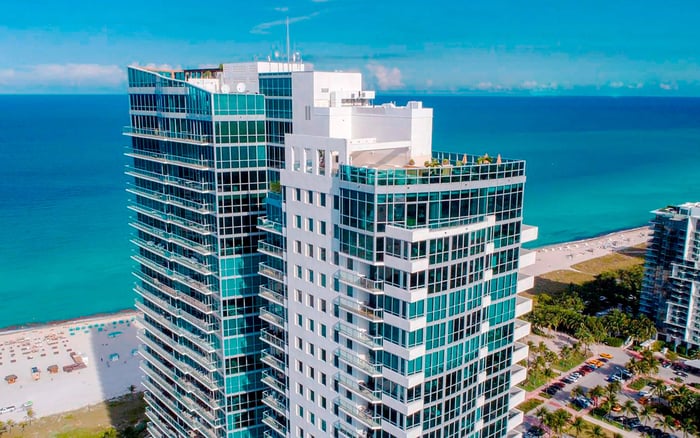
A disciplined Miami Beach ownership plan separates homestead eligibility from travel-day tracking, gives residence managers clear responsibilities, and establishes storm authority before an owner leaves town.

A Miami Beach residence should make seasonal living feel effortless. Behind that ease, three distinct matters require separate attention: where the owner establishes permanent residence, who oversees the property during absences, and who may act when a storm threatens. Treating them as a single concierge function invites confusion. A well-maintained home does not establish tax eligibility, and possession of a key does not confer authority to commission emergency work.
For a buyer considering 57 Ocean Miami Beach, the useful starting point is an ownership brief, not an assumed service standard. Set out anticipated personal use, whether the home is intended as a permanent residence, who will coordinate advisers, and how decisions will be made when the owner is unavailable. These are recommended planning steps, not claims about any project's services.
For Miami-Dade homestead eligibility, the property must be the applicant's permanent residence as of January 1. The applicant must also hold legal or equitable title on that date. Ownership alone-or an extended winter stay-is insufficient. When title is held in a trust, trust documentation is requested as part of the application process.
Florida's permanent-residency statute for homestead has no universal 183-day qualification rule. A calendar showing that many days in Florida is not a guarantee. Intent to establish permanent residence is a factual determination initially made by the property appraiser, not a residence manager or family-office administrator.
Relevant evidence may include Florida identification, vehicle and voter registrations, tax records, bank statements, utility records, and a Declaration of Domicile. The objective is an accurate record of actual circumstances, not a collection of documents assembled to imply a residence arrangement that does not exist.
Federal and other-state income-tax residency questions require separate advice. Ask the appropriate tax advisers to identify the applicable counting rules, then give the manager a narrowly defined recordkeeping role. An occupancy log is a recommended way to preserve arrival and departure information; it cannot determine legal residency.
January 1 is the eligibility anchor; March 1 is generally the homestead application filing deadline. The dates serve different purposes. Preparing an application in February does not replace the requirement to have established permanent residence as of January 1. Nor does the filing deadline imply a blanket requirement for every owner to submit a fresh application annually.
A useful internal calendar has three tracks: occupancy, tax-adviser review, and property operations. Before year-end, consider reviewing intended use and title documentation with advisers. Ahead of an applicable filing deadline, confirm that application materials are ready. Before departure, agree on access, inspections, and emergency contacts.
When evaluating Faena House Miami Beach, buyers can incorporate this calendar into due diligence by asking which owner documentation, vendor access arrangements, and departure procedures need confirmation. The answers should come from the relevant governing documents and responsible parties, not assumptions based on a property's positioning.
The first $25,000 of the homestead exemption applies to all property taxes, including school-district taxes. The additional exemption applies to qualifying assessed value above $50,000 and excludes school-district taxes. These exemptions reduce taxable value; they do not reduce the tax bill dollar for dollar.
Save Our Homes limits annual increases in a qualifying homestead's assessed value to the lower of 3% or the Consumer Price Index. This is an assessment limitation, not a ceiling on the total tax bill. Preserve that distinction when budgeting rather than assuming the final bill can rise by no more than 3%.
Renting a claimed homestead or ceasing to use it as a permanent residence may affect eligibility. Seek advice on the consequences before changing the home's use. A manager's availability to coordinate a rental does not resolve the owner's exemption position.
For an absentee owner, residence oversight can encompass inspections, vendor coordination, and preparation for seasonal use. The arrangement's quality depends on clarity: what is included, what requires approval, and how completion is documented. The recommended scope distinguishes routine observation from specialist work and legal or tax decisions.
Consider specifying inspection frequency, access permissions, maintenance escalation, and a reporting format suited to the household. Ask for dated observations, a record of authorized work, and prompt notice of unresolved issues. These are suggested management practices, not prescribed municipal requirements.
At Setai Residences Miami Beach, as with any condominium under consideration, ask where private residence management ends and association responsibility begins. Confirm that boundary through applicable documents and approvals. Do not assume a private management agreement confers authority over common elements or exterior storm protection.
Address storm preparation before conditions become active, rather than waiting for a storm to approach. Potential activities include property inspections, roof preparation, water-intrusion prevention, board-up services, and household emergency planning. Not every activity is appropriate or authorized for every residence, particularly within a condominium.
A written storm protocol is a recommended way to translate an owner's preferences into usable instructions. Have counsel and the relevant property representatives review permissions where appropriate. Consider identifying:
A primary decision-maker and a backup contact if the owner cannot be reached.
Approved tasks, spending limits, and work requiring additional consent.
Vendor access arrangements and any association approvals to confirm.
A communication plan for preparation, unresolved concerns, and follow-up.
The protocol should distinguish permission to coordinate from permission to perform work. Neither should be assumed to override building rules, official emergency instructions, or safety constraints. Include a process for communicating when access or an inspection cannot safely proceed.
For buyers assessing The Perigon Miami Beach, the useful question is not simply whether someone can watch the residence. It is who may authorize each proposed protective measure and which approvals must be obtained first. Confirm those arrangements rather than inferring them from branding.
The strongest arrangement preserves clear roles: the owner sets preferences, advisers address legal and tax questions, the residence manager carries out an agreed scope, and association representatives clarify building-level procedures. Maintain a concise master calendar and contact sheet, while keeping sensitive supporting records appropriately controlled.
Revisit the plan when ownership, occupancy, rental intentions, or management arrangements change. The aim is not more administration. It is a carefully managed residence, without confusion between operational convenience, legal eligibility, and emergency authority.
For a considered approach to Miami Beach ownership, explore MILLION.
If branded residences are on your mind — as a home or as an allocation — we would be glad to share what we are seeing, privately.
Begin a quiet conversationNo. Florida's permanent-residency statute does not establish a universal 183-day homestead qualification rule; permanent residence is a factual determination initially made by the property appraiser.
The applicant must hold legal or equitable title and have established permanent residence at the property as of January 1. Ownership or seasonal occupancy alone is insufficient.
The application generally must be filed with the county property appraiser by March 1. That deadline does not mean every owner must submit a fresh application annually.
Evidence may include Florida identification, vehicle and voter registrations, tax records, bank statements, utility records, and a Declaration of Domicile. Those records should accurately reflect the owner's circumstances.
Yes. Miami-Dade requests trust documentation when title is held in a trust, and the applicant must satisfy the relevant title and permanent-residence requirements.
No. It limits annual increases in a qualifying homestead's assessed value to the lower of 3% or the Consumer Price Index, rather than capping the total tax bill.
Yes. Renting the property or ceasing to use it as a permanent residence may affect eligibility, so obtain advice before changing its use.
A manager can help maintain accurate occupancy records but does not decide homestead eligibility. Federal and other-state income-tax residency questions require separate professional advice.
Consider naming primary and backup contacts, approved tasks, spending limits, vendor access arrangements, and a communication plan. These are recommended management practices, not stated municipal requirements.
That authority should not be assumed. Confirm applicable governing documents, approvals, and the boundary between private residence management and association responsibilities before authorizing work.