A parcel-level guide to evaluating view durability, zoning envelopes and nearby construction around Delano and Faena House, with practical diligence steps for discerning Miami buyers.
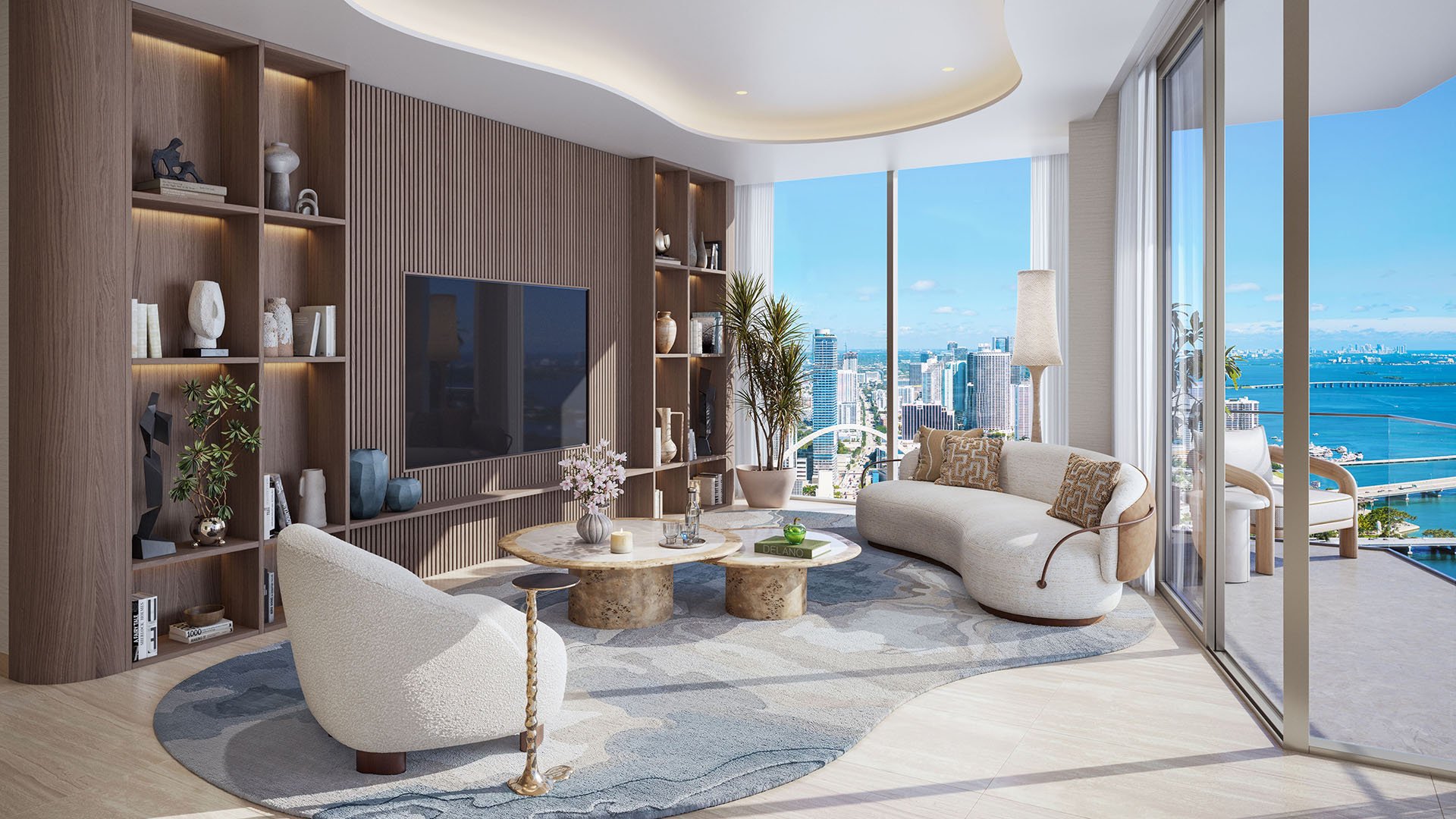
In South Florida luxury real estate, a view is both an emotional asset and a material component of value. Yet “protected view” is often used more broadly than the underlying legal documents warrant. A residence may command an extraordinary outlook today without holding a private right that prevents lawful construction on another parcel tomorrow.
That distinction is especially important when comparing Delano Residences & Hotel Miami with Faena House Miami Beach. Buyers should not conflate the branded Delano residential offering with the historic Delano Miami Beach hotel at 1685 Collins Avenue. The renovation timing and massing considerations outlined here concern the historic oceanfront hotel; any separate residence or development carrying the Delano name still requires parcel-specific diligence.
Faena House, by contrast, is a completed condominium at 3315 Collins Avenue. Its floor-to-ceiling glass and broad Atlantic Ocean and Biscayne Bay outlooks make exposure analysis especially important. Direct ocean views, lateral exposures to the north and south, and westward bay views should be evaluated as distinct assets rather than treated as a single panoramic promise.
A remarkable outlook today is not, by itself, a private guarantee against tomorrow’s construction.
Zoning regulates development through height, floor area, setbacks, and the treatment of historic structures. Those controls shape what may be built, but they do not grant an individual owner an automatic guarantee that a particular sightline will remain unobstructed.
Meaningful private protection would generally need to appear in a recorded instrument applicable to the relevant properties, such as an easement, covenant, or comparable restriction. Marketing language, a sales-gallery rendering, and the current absence of a neighboring tower are no substitute for that recorded right.
This is why Oceanfront and Waterview residences require more than a horizon check from the terrace. Buyers should map the unit’s view cone against neighboring lot lines, existing structures, and plausible building envelopes. Even when the beach preserves the immediate eastern foreground, a lawful tower to the north or south may affect oblique water views, sunrise angles, privacy, and the perceived breadth of the panorama.
The same discipline applies across Miami Beach. A buyer comparing Setai Residences Miami Beach or Shore Club Private Collections Miami Beach should distinguish an open-water outlook from lateral corridors over privately controlled land.
Faena House sits between two significant Faena District hotel properties. Faena Hotel is at 3201 Collins Avenue to the south; the Aman and Versailles redevelopment is at 3425 Collins Avenue to the north. Neighboring-parcel analysis is therefore central to any residence whose value depends on a diagonal or lateral view.
The northern exposure has the clearest identified construction context. The Aman Miami Beach plan was financed as a two-building project comprising a restored 16-story Versailles tower and a new 16-story building. The 2023 plan contemplated a 56-key hotel and 23 luxury condominiums, supported by a $242.4 million construction loan.
A 2020 proposal sought to increase allowable height at the Versailles site from 203 feet to 250 feet. That figure should not be treated as a universal-or necessarily current-limit. Its greater significance is procedural: parcel-specific amendments can materially alter a nearby development envelope. Southern and oblique views also warrant attention because future changes at the Faena Hotel parcel could affect a different set of sightlines.
For Design & Architecture enthusiasts, Faena House’s glass-forward form makes this analysis particularly nuanced. A direct eastern view over the beach may behave differently from a north-facing terrace edge, a southward coastline perspective, or a westward bay vista. Floor level alone does not resolve the question. Orientation, balcony depth, neighboring massing, and the point from which a resident experiences the room all matter.
The Faena District Overlay modifies the underlying RM-3 framework around the 3200 to 3400 blocks of Collins Avenue. Its provisions have permitted reduced setbacks and established separate requirements for tower portions above 50 feet. One version included a minimum four-foot side-lot setback for oceanfront properties. Such a rule governs spacing; it does not preserve a broad lateral corridor for every neighboring residence.
Historical materials also contain different height figures. The ordinance creating the overlay set a 220-foot maximum for new construction in underlying RM-3 areas, while another overlay document states a 210-foot maximum for oceanfront lots. Buyers should therefore establish the currently controlling code, exact parcel classification, and any site-specific approvals rather than select the most favorable number from an older document.
Miami Beach Ordinance 2026-4795 adds another layer. It provides a 5,000-square-foot floor-area bonus for qualifying oceanfront properties in the overlay that are at least 65,000 square feet and contain a contributing historic structure. The related land-use change authorizes intensity bonuses within the overlay’s RM-3 category.
This is an incremental bonus, not an unrestricted development right. It is tied to qualifying lot size and historic status, so it does not automatically attach to every property or condominium in the district. Nor can its potential visual effect be inferred from square footage alone. Placement, setbacks, tower configuration, and approved plans determine how added area may register from a specific residence.
The historic Delano Miami Beach at 1685 Collins Avenue is undergoing a complete, major renovation rather than replacement by a ground-up tower. A late-2025 reopening was announced, while a 2026 redevelopment completion target was also listed. Those dates may refer to different phases, but both warrant reconfirmation as schedules evolve.
Renovation language should not be read as proof that every exterior dimension, rooftop element, or sightline will remain unchanged. The available descriptions do not establish that all massing will remain static. Nor do they identify the ownership, entitlements, or active applications for the parcels immediately north and south of the hotel.
Equally important, the Faena Overlay should not be projected southward onto the Delano site. It governs the Faena District around the 3200 to 3400 blocks, not the separate property at 1685 Collins Avenue. Each Delano-related purchase therefore requires its own zoning, survey, and adjacent-parcel review. This is a core principle for Buyer’s Guides: brand affiliation does not replace legal and spatial diligence.
Begin with a current boundary and location survey identifying the subject parcel, neighboring lots, and existing improvements. Then request approved site plans, elevations, and renderings for relevant adjacent properties, carefully distinguishing conceptual materials from final approvals.
Next, obtain a zoning verification letter or qualified land-use analysis addressing height, floor area, setbacks, historic constraints, bonuses, and prior parcel-specific legislation. Search for pending applications, amendments, and appeals rather than relying solely on the code’s base envelope.
Review title and recorded documents for easements, covenants, or agreements that actually burden neighboring land. If a protected corridor is material to the purchase, counsel should confirm its scope, duration, enforceability, and beneficiaries. Condominium documents should also be reviewed for disclaimers concerning views, construction disturbance, and changes beyond the association’s control.
Finally, test each principal room and terrace separately. Photograph the direct, lateral, and westward axes; plot them against neighboring envelopes; and consider both construction-period disruption and the completed condition. The objective is not to eliminate all change. It is to understand which portion of the premium rests on durable geography, which depends on regulation, and which remains exposed to discretionary approvals.
For discreet guidance on evaluating Miami’s most consequential residential purchases, connect with MILLION.
If branded residences are on your mind — as a home or as an allocation — we would be glad to share what we are seeing, privately.
Begin a quiet conversationNo. Marketing language and an existing open outlook do not by themselves prevent lawful construction on neighboring land.
Buyers should distinguish direct Atlantic views, lateral north and south corridors, and westward Biscayne Bay views.
Faena Hotel at 3201 Collins Avenue is to the south, and the Aman and Versailles redevelopment at 3425 Collins Avenue is to the north.
The 2023 plan involved a restored 16-story Versailles tower and a new 16-story building, with a 56-key hotel and 23 condominiums.
Published historical documents contain both figures. Buyers should verify the currently controlling code and parcel-specific approvals.
Not necessarily. A setback regulates building placement but does not automatically preserve a broad private sightline.
It is an incremental floor-area bonus for qualifying oceanfront properties meeting specified lot-size and historic-structure conditions.
It should not be assumed to apply. The overlay covers the Faena District around the 3200 to 3400 blocks, while Delano is at 1685 Collins Avenue.
No. Public descriptions characterize a major renovation, but they do not establish that every exterior element or sightline will remain unchanged.
Request current surveys, approved plans, zoning verification, recorded easements, condominium documents and pending land-use applications.