Guest suites can add flexibility to a multigenerational residence, but they should not be treated as guaranteed bedrooms. At St. Regis® Residences Sunny Isles, rates and operating terms are to be set by the condominium association, while several important booking details remain publicly unspecified. Buyers should size the residence around essential occupants and verify the governing documents before relying on suite availability.
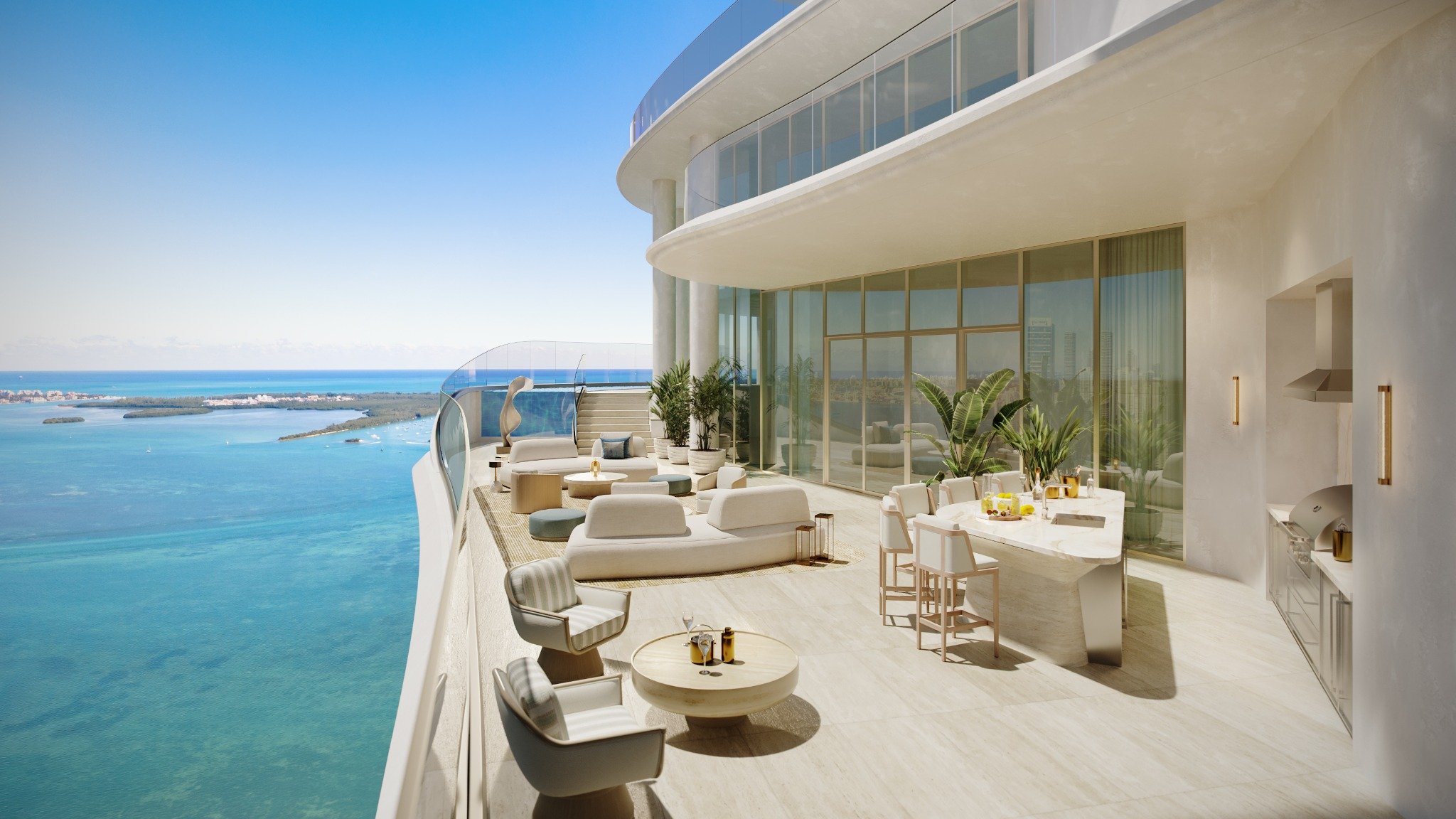
For a family buying a South Florida home that may host grandparents, adult children, caregivers, and grandchildren simultaneously, a guest-suite program can appear to be an elegant extension of the residence. At St. Regis® Residences Sunny Isles, however, the prudent interpretation is narrower: the suites are common amenities, with rates, terms, and conditions to be established by the condominium association.
That distinction matters. The suites are not individually owned residences, nor are they presented as publicly bookable hotel rooms. Ownership may provide an owner and the owner's guests with access to the program, but the information currently disclosed does not establish a guaranteed reservation, a complimentary stay, or defined priority over another owner.
A guest suite is best treated as valuable overflow, not a guaranteed bedroom.
Within MILLION's Buyer's Guides coverage of Branded Residences, this is the practical lens for a Pre-Construction purchase in Sunny Isles Beach: buy enough private space for everyone who must be accommodated, then regard the shared suites as supplemental capacity.
The clearest disclosed framework is that guest suites will be offered to residence owners and their guests at rates and under conditions set by the association. Current details do not establish an owner-priority hierarchy, an advance-booking window, a maximum stay, a waitlist mechanism, or a cancellation policy. Buyers should therefore not assume an “owners first” sequence, first-come-first-served access, or a special holiday lottery.
This uncertainty matters most during high-demand family periods. If several generations traditionally gather on the same dates each year, the residence itself should accommodate the essential overnight occupants. A suite may still serve an additional couple, an adult child seeking privacy, or a caregiver, but relying on it for indispensable holiday capacity creates an availability risk that current disclosures do not resolve.
The same principle applies when comparing nearby options such as Bentley Residences Sunny Isles, The Ritz-Carlton Residences® Sunny Isles, and Muse Residences Sunny Isles Beach. The useful comparison is not simply whether a building mentions guest accommodations, but whether its current governing documents define access, costs, duration, service, and enforcement with enough precision for the family's actual visiting pattern.
Descriptions conflict on the scale of the guest-suite inventory: figures range from nine suites with housekeeping service to 10 or 12 suites per tower. Those numbers should not be blended into an estimate. A buyer should confirm the final count for the relevant tower in the current offering and condominium documents.
The distinction is material in a two-tower development. A total project count, a per-tower count, and a count available to a particular association are not interchangeable. Buyers should also determine whether reservations can cross tower lines, whether any suites may be taken out of service operationally, and how occupancy limits are applied. These points remain unanswered and belong on the pre-contract diligence list.
“House rules” may sound procedural, but for multigenerational visits, they shape the entire hosting plan. Request the current provisions governing who may reserve, how guests are registered, how far in advance a booking may be made, maximum stay length, cancellation deadlines, occupancy limits, taxes, fees, and payment timing. Ask whether the owner must remain in residence while guests use a suite and how access credentials are issued.
Housekeeping is advertised, although its operating scope is not defined. Confirm cleaning frequency, linen and towel service, turnover standards, gratuities, incidental charges, and whether additional service can be requested. A family traveling with young children, an older relative, or a caregiver may have different expectations for daily service, bedding configuration, proximity, and privacy.
Also verify the declaration and association rules governing residence leasing. The development is presented as entirely residential, without a hotel component or short-term stays, supporting a more private setting for owners and personal guests. That positioning, however, should not substitute for the final legal restrictions, definitions, and enforcement provisions applicable to the residence.
Standard residences are planned at approximately 1,950 to 4,680 square feet, while Sky Villas and penthouses are planned from roughly 6,600 to more than 10,000 square feet. The broader offering spans two- to five-bedroom residences, giving families a meaningful range for separating quiet sleeping zones from shared gathering spaces.
Begin with a non-negotiable occupancy plan. Identify who must always have a private bedroom, which family members can share, whether a caregiver requires dedicated space, and whether older visitors need to avoid internal crowding. Then test the floor plan for bathroom access, circulation, dining capacity, and the relationship between bedrooms and social areas. Treat the guest suites as a convenience outside that core calculation.
This approach may carry a higher acquisition cost than choosing a smaller plan and expecting common suites to absorb every gathering. It also creates a more dependable family base. The residence remains under the owner's control; the common suite inventory remains subject to availability, charges, and evolving association rules.
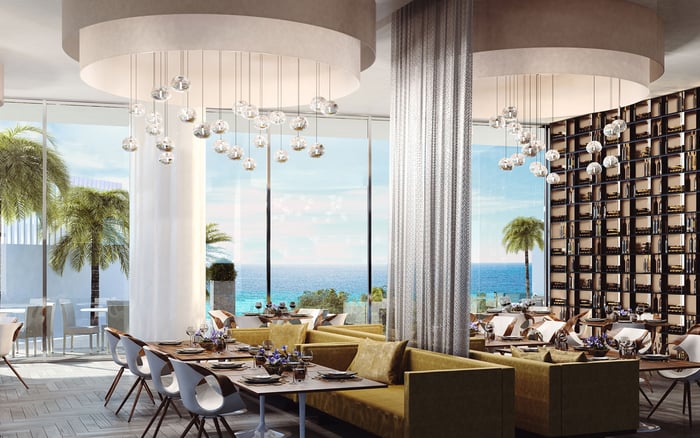
The appeal for multiple generations extends well beyond bedrooms. The private residential resort is conceived with more than 70,000 square feet of wellness, fitness, dining, and entertainment amenities. Family-oriented features include a children's and teens' club, three ocean-facing pools, a kids' splash area, a dog park, and a pet spa.
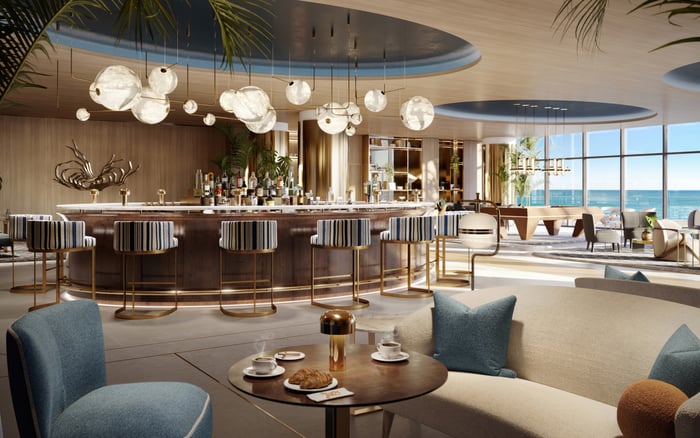
Adults can move among private dining, a wine vault, a cognac room, a golf simulator, art or workshop space, billiards, cards, and lounges. Wellness spaces are planned with treatment areas, sauna, steam and hammam experiences, fitness facilities, and outdoor terraces. Private beach facilities, cabanas, beach service, a beach bar and grill, and in-residence dining can help a large family spend time together without requiring every generation to follow the same schedule.
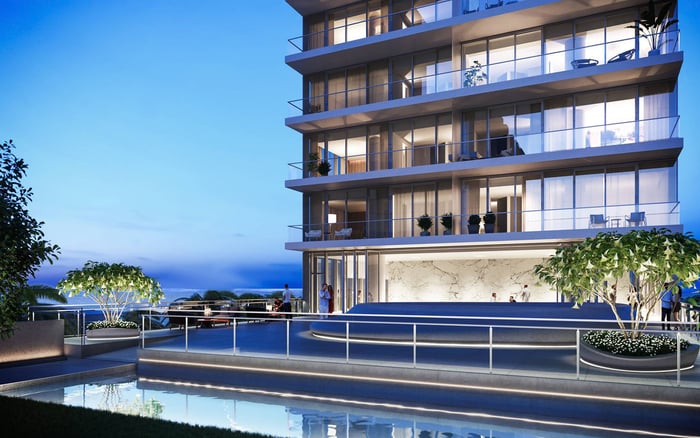
Oceanfront scale also shapes the setting: the two towers occupy approximately 4.7 acres with 435 linear feet of oceanfront at 18801 Collins Avenue. Yet amenity depth should be evaluated separately from sleeping certainty. A rich program can elevate the visit, but it does not determine who receives a guest suite on a sought-after weekend.
Before committing, ask for the latest guest-suite schedule, rules, fee structure, and any available draft operating policies. Confirm the inventory for the specific tower and request written clarity on reservation priority, booking windows, stay limits, waitlists, cancellations, guest registration, housekeeping, occupancy, taxes, and ancillary charges.
Finally, model at least two visits: a normal family weekend and the largest recurring holiday gathering. If the residence works for essential occupants in both cases, the suite program becomes what it should be: a gracious layer of flexibility rather than a structural dependency.
For discreet guidance on evaluating the residence, documents, and multigenerational fit, connect with MILLION.
If branded residences are on your mind — as a home or as an allocation — we would be glad to share what we are seeing, privately.
Begin a quiet conversationAccess is intended for residence owners and their guests, but use is not automatically free. Rates, terms, and conditions are to be established by the condominium association.
Public materials do not establish a specific priority hierarchy. Buyers should confirm the current policy in the association documents.
The suites are presented for residence owners and their guests, not as hotel rooms available to the general public.
Published figures conflict, citing nine, 10 per tower, or 12 per tower. Confirm the final inventory for the applicable tower in current documents.
Housekeeping is advertised, but frequency, linen service, gratuities, and related operating details are not publicly defined.
No specific advance-booking window is established in the available public material. The association's current rules should control.
Families should treat the suites as supplemental accommodation because availability is not guaranteed. Essential occupants should fit within the purchased residence.
Confirm nightly rates, taxes, fees, cancellation charges, housekeeping costs, gratuities, and payment timing with the current association materials.
The development is marketed as entirely residential, without a hotel component or short-term stays. Final leasing restrictions should still be verified in the governing documents.
Focus on reservation priority, booking windows, maximum stays, occupancy, guest registration, cancellations, housekeeping, access, and whether the owner must be present.