Onda provides the clearer public picture of privacy-oriented elevators and managed arrival points. Bay Harbor Towers calls for direct management confirmation before buyers compare staff, guest, delivery, and elevator protocols.
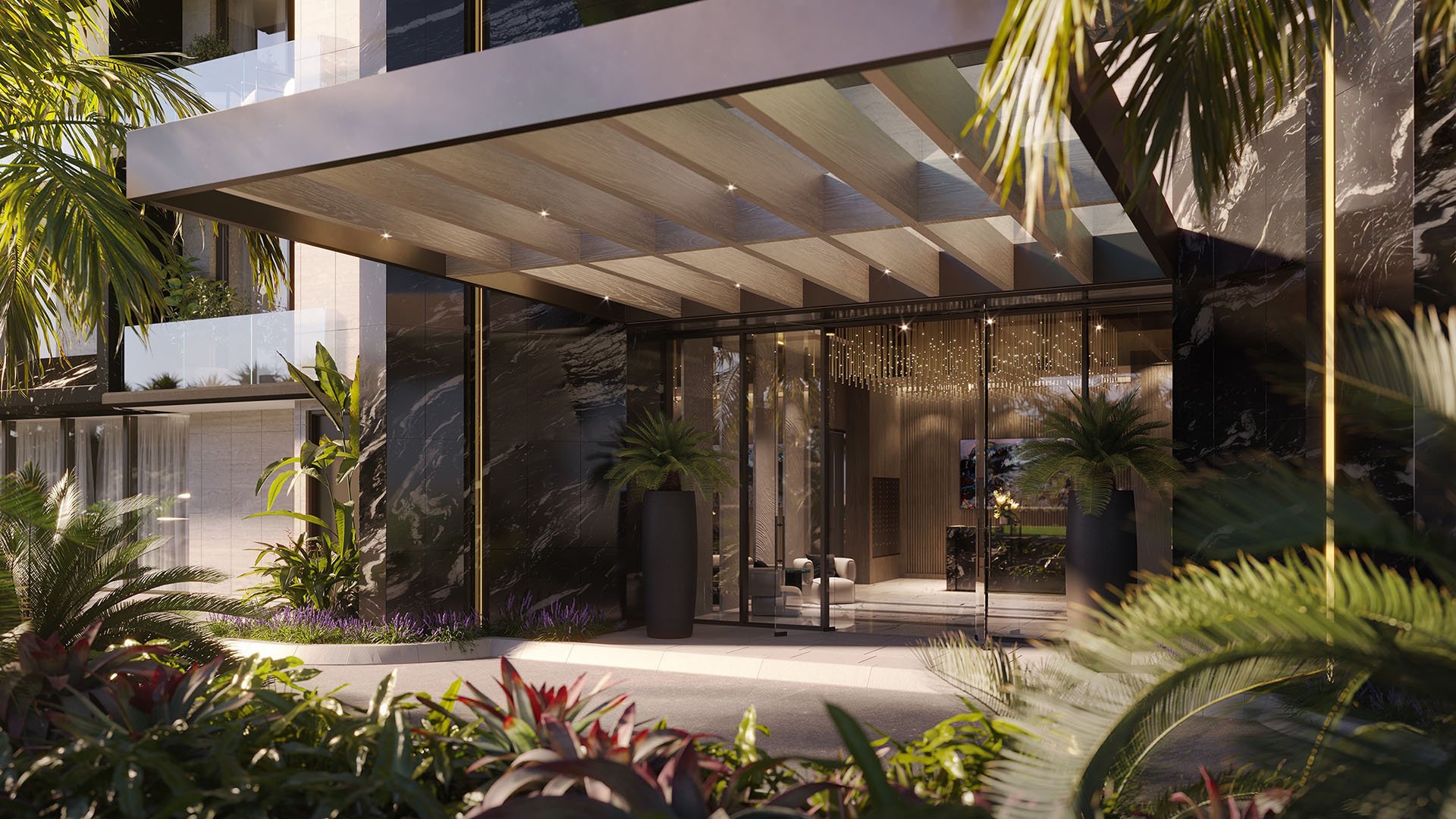
In a luxury condominium, privacy begins well before the residence door. The sequence from curb, garage, or dock to elevator and private threshold shapes how often an owner encounters visitors, vendors, deliveries, and household staff. It also reveals whether a building's service language translates into a discreet daily routine.
The comparison between Onda Bay Harbor and Bay Harbor Towers is therefore less about counting amenities than understanding circulation. Onda presents a substantially more detailed picture of its arrival infrastructure. At Bay Harbor Towers, key operating questions remain unresolved, making direct confirmation with management essential.
True residential privacy depends on the full journey from arrival point to front door.
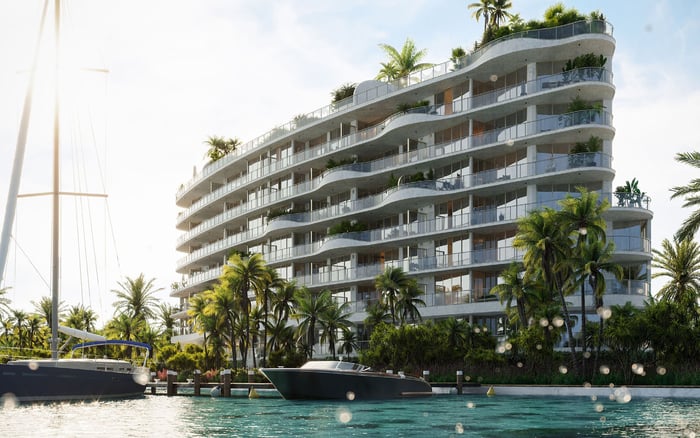
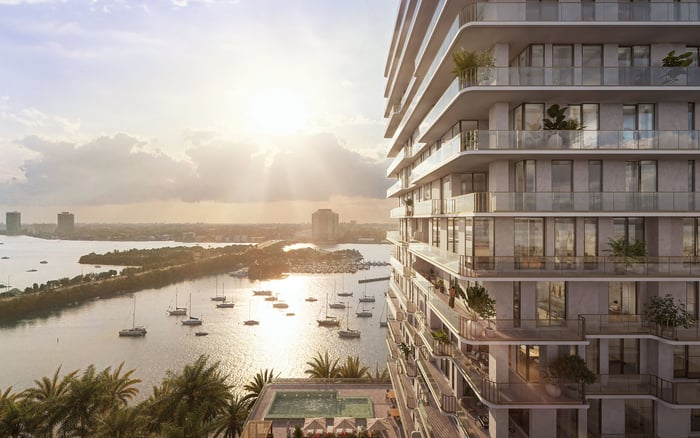
Onda is a completed, eight-story boutique condominium at 1135 103rd Street with 41 residences. Designed by Arquitectonica, its program comprises two- to four-bedroom homes and four penthouse suites. Standard residences span approximately 1,809 to 3,535 square feet, while penthouses reach approximately 5,073 square feet.
Private and semi-private high-speed elevators are the clearest differentiator in this comparison. They signal a more privacy-oriented approach than a conventional public elevator core, but the terminology requires scrutiny. The details do not establish that every home has a fully exclusive elevator landing. Exclusivity may vary by residence or stack, so buyers should confirm the precise elevator and vestibule configuration for the unit under consideration.
With only 41 residences, Onda also offers a lower-density circulation environment than a large conventional tower. Residence count alone, however, does not reveal how many homes share a particular landing. Floor plans, elevator diagrams, credential rules, and an in-person arrival test remain more instructive than assumptions based solely on density.
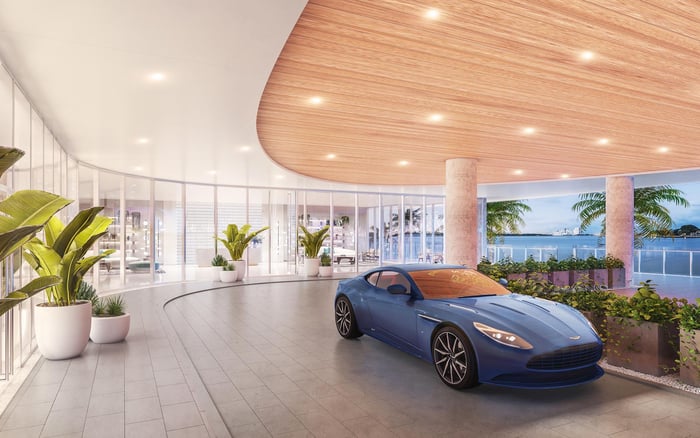
Onda's arrival infrastructure includes a covered valet drop-off, 24-hour valet, personal parking spaces, and a fully enclosed garage. The building also offers front-desk reception, 24-hour security, video surveillance, personalized concierge service, an integrated digital concierge, and secured residential storage.
Together, these features create several potential checkpoints before a visitor reaches a residential floor. Yet a checkpoint is not the same as a documented permission system. The details do not confirm app-issued guest passes, timed vendor credentials, floor-restricted elevator access, or the exact handoff among valet, reception, and elevator. Fiber-to-the-home connectivity supports the building's infrastructure but does not establish any particular access-control function.
For buyers assembling a broader Bay Harbor Islands shortlist, Alana Bay Harbor Islands and La Maré Bay Harbor Islands can be considered alongside the two principal properties. The same discipline should apply to each: compare the lived arrival sequence and current rules rather than relying on amenity labels alone.
Household-staff circulation is often where an elegant plan either performs beautifully or exposes friction. A buyer employing a housekeeper, private chef, caregiver, personal assistant, or property manager should establish where each person enters, parks, checks in, waits, and gains access to the appropriate floor.
At Bay Harbor Towers, it remains unclear whether a dedicated service elevator or separate route exists for household staff, vendors, and deliveries. Nor is it established whether elevator credentials are permanent, temporary, or controlled by floor. That uncertainty should not be interpreted as proof that residents and staff share the same route. It simply means the operating model must be confirmed with condominium management and against current governing rules.
Onda's private and semi-private elevator language offers more insight into resident arrival, but it does not fully resolve staff-routing questions. Buyers should ask whether scheduled personnel use a designated entrance, whether large deliveries follow a service path, and whether move-ins or contractor visits are restricted to particular elevators or hours. These are operational questions that cannot be settled by sales language alone.
Visitor management should be examined as a sequence. How is a guest announced? Who authorizes entry? Can the guest proceed independently, or must the resident meet them? Does authorization extend only to the residence, or also to shared amenities?
At Onda, the front desk, valet, security, surveillance, and digital-concierge features could support layered visitor control. The shared program includes a rooftop pool deck, fitness center, yoga studio, spa, massage rooms, steam room, and sauna, making amenity permissions another relevant consideration. Current procedures for guest registration, elevator release, amenity access, and after-hours arrivals still require direct confirmation.
At Bay Harbor Towers, detailed visitor procedures, guest-parking protocols, elevator credential rules, and floor-specific permissions remain unspecified. Buyers accustomed to staffed residences in Miami Beach should avoid importing expectations from another property. Staffing levels, technology, and condominium policies can differ materially even when two buildings occupy the same premium market.
Onda's private marina accommodates 14 boat slips, adding a waterfront arrival point to its street, valet, and garage approaches. For owners who move between car and boat, that flexibility can be meaningful. It also introduces a distinct security sequence.
The details do not explain how a visitor arriving by boat is verified, whether dock access connects directly to residential circulation, or how marina guests are routed to reception and the elevators. A buyer considering a slip should walk the complete path from dock to residence and ask how crew, captains, service technicians, and invited guests are handled.
The strongest comparison begins with the exact residence, not only the building. Ask management to identify whether the elevator landing is private or shared, how many residences use the relevant vestibule, and which credentials release the destination floor. Request current procedures for guests, household staff, food delivery, packages, contractors, and large-format deliveries.
Then test every likely arrival mode. Arrive through valet, resident parking, the lobby, and, where relevant, the marina. Observe where identification occurs, whether waiting areas are discreet, and how the route intersects with amenity traffic. Confirm what happens after hours and when several visitors or vendors arrive at once.
Finally, review current condominium rules rather than treating marketing terminology as an operating guarantee. Private and semi-private describe a design intention, but management practices, elevator programming, staffing arrangements, and access permissions determine the everyday experience. In this comparison, Onda offers the more legible framework; Bay Harbor Towers requires a more document-led inquiry before conclusions can be drawn.
For discreet guidance on comparing Bay Harbor Islands residences and confirming building protocols, connect with MILLION.
If branded residences are on your mind — as a home or as an allocation — we would be glad to share what we are seeing, privately.
Begin a quiet conversationNot necessarily. Onda is marketed with private and semi-private high-speed elevators, so landing exclusivity may vary by residence or stack.
Onda is an eight-story boutique condominium with 41 residences, including four penthouse suites.
Yes. Its published offering includes 24-hour security, video surveillance, and 24-hour valet service.
The available property information does not establish whether Bay Harbor Towers has a dedicated service elevator. Buyers should confirm directly with management.
The disclosed details do not fully establish dedicated staff routes. Current entry, credential, elevator, and scheduling procedures require management confirmation.
Onda identifies potential control points including valet, front-desk reception, security, surveillance, and a digital concierge. Exact guest authorization and elevator-release procedures are not publicly detailed.
No detailed guest-parking protocol is established in the available profile. Buyers should request current rules and after-hours procedures.
Yes. Onda has a private marina with 14 boat slips, creating an additional waterfront arrival point.
The publicly disclosed marina details do not explain guest verification or routing from the dock to residential elevators. Management confirmation is necessary.
Buyers should walk each relevant route from valet, garage, lobby, and marina to the residence. They should also verify guest, staff, delivery, amenity, and after-hours access procedures.