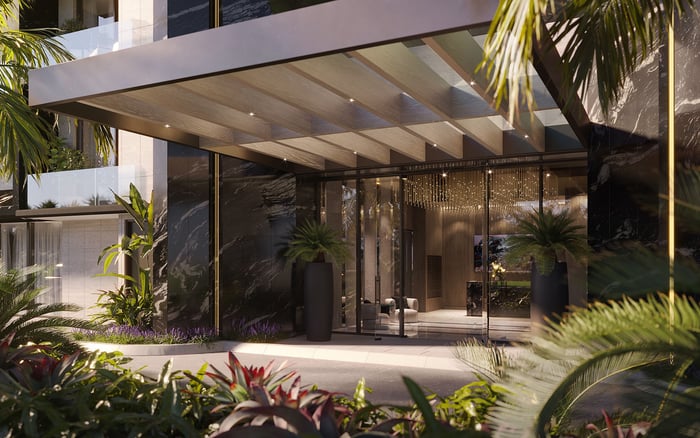
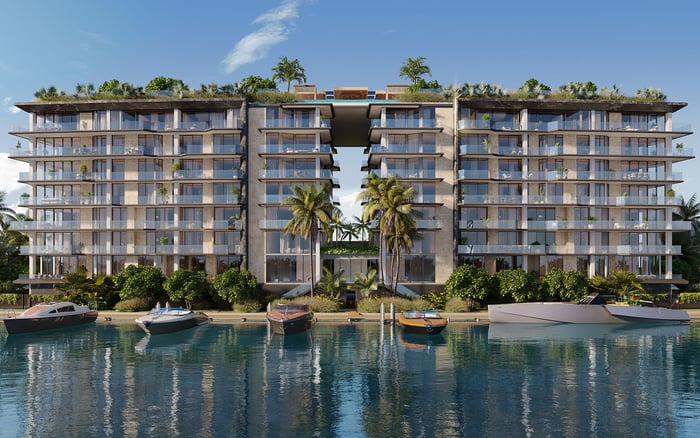
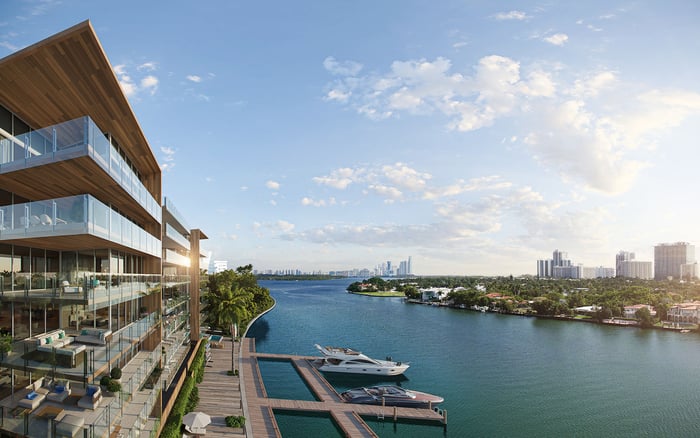
A family-focused comparison of Onda Bay Harbor and Bay Harbor Towers, examining advertised services, household privacy, caregiver access, parking, and the practical checks behind a reliable private-school routine.
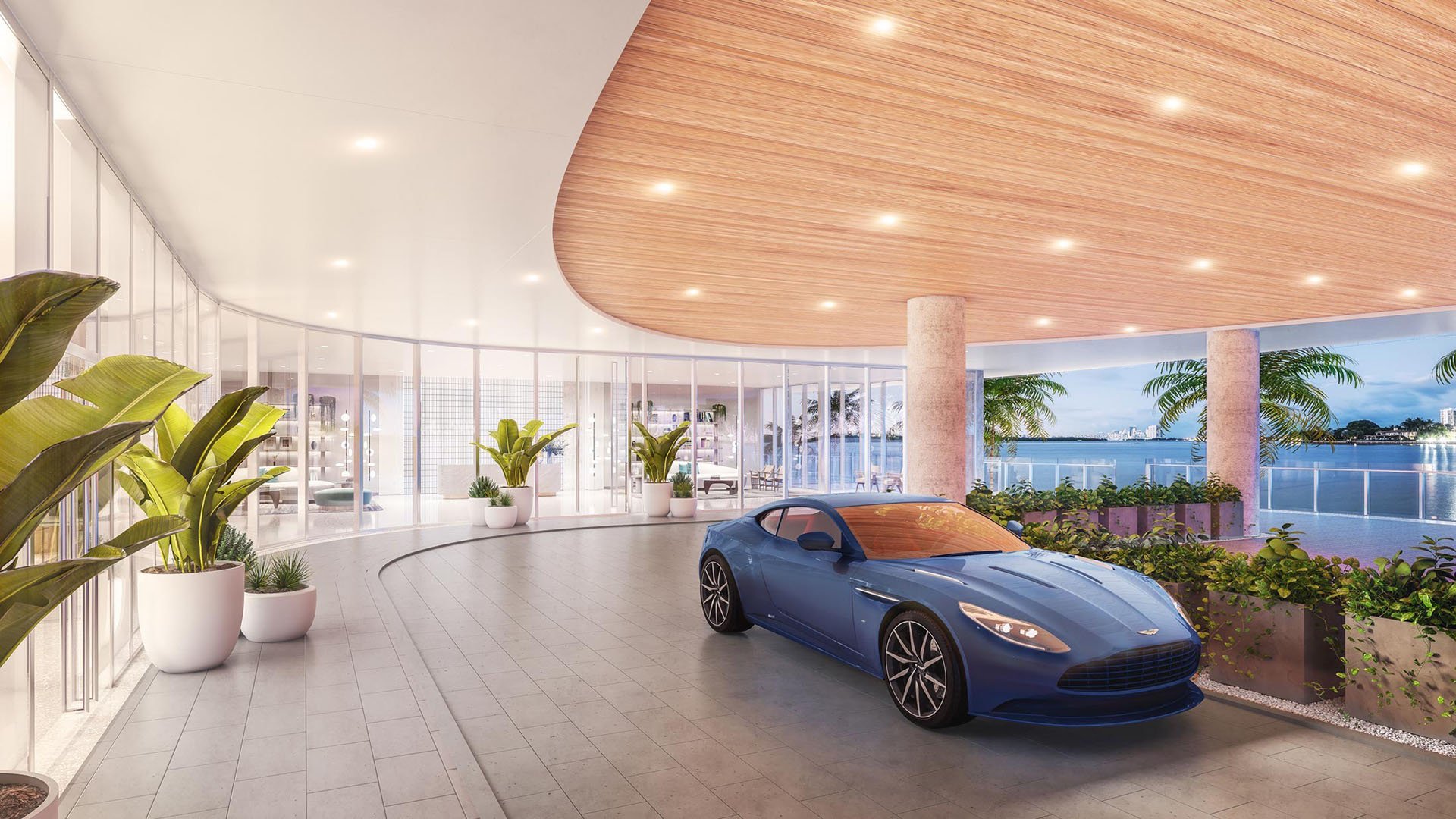
For a family choosing a bayfront residence, privacy is more than a quiet terrace. It means receiving a caregiver without interrupting a meeting, leaving for school without a parking complication, and returning to a home where bedrooms remain separate from household activity. Service matters most when it makes those transitions predictable.
Onda and Bay Harbor Towers offer compelling settings for that comparison. Both are eight-story bayfront projects in Bay Harbor Islands, with advertised staffing and waterfront amenities. Neither a concierge desk nor a relatively small residence count, however, establishes how smoothly a household will function. The decisive comparison comes down to the apartment, the access policy, and the morning departure.
At 1135 103rd Street, Onda Bay Harbor comprises 41 two-, three-, and four-bedroom residences plus four penthouse suites. Approximately 300 feet of bay frontage gives the waterfront a substantial presence, but frontage is not a measure of internal privacy.
At 10141 E Bay Harbor Drive, Bay Harbor Towers is advertised with 44 flow-through residences. That configuration warrants a closer look for families seeking distinct living zones, although flow-through design alone does not establish bedroom separation, acoustic performance, or a discreet route for household staff.
For either address, trace three paths on the actual floor plan: a child moving from bedroom to breakfast, a caregiver arriving with supplies, and a guest entering the living room. Note where those paths cross. Check bedroom doors, bathroom access, laundry placement, and whether a working parent can close off a genuinely separate room.
During a visit, assess corridor activity and sound at the residence entrance. A smaller building is not automatically quieter, and a waterfront orientation does not establish how much activity reaches a particular terrace.
Onda advertises 24-hour valet and security, personalized concierge services, and secured residential storage. Its advertised digital concierge platform may help with household coordination, but it does not confirm recurring caregiver authorization or child-release procedures.
Bay Harbor Towers advertises a 24/7 receptionist, concierge, and valet. These service commitments warrant review, but they do not replace a written explanation of who can enter, when, and under whose authority.
Before committing, ask management to walk through a realistic weekday: a nanny arriving before the parents leave, a replacement caregiver covering an afternoon, and a tutor visiting while a parent is away. Establish whether recurring permissions are available, how identity is checked, how access is withdrawn, and what happens outside routine hours.
Keep building entry separate from permission to collect a child. Confirm school authorization directly with the school and building procedures directly with management. Neither property should be assumed to supervise handoffs. Families employing overnight staff should also obtain occupancy rules rather than infer permission from an available den.
One advertised Onda residence includes two tandem parking spaces, storage, and a den or office. This is a unit-specific example, not a building-wide allocation or proof of caregiver accommodation. Tandem parking deserves particular attention when adults and caregivers leave on different schedules: test how each vehicle would be retrieved rather than assuming independent access.
Onda also advertises EV charging and valet service. Bay Harbor Towers advertises covered parking with EV charging, but a caregiver's parking entitlement still requires confirmation.
Request the allocation attached to the apartment, along with rules for staff vehicles, visitor stays, charging, and loading. Walk the route with the equivalent of your daily load: stroller, school bags, sports kit, and groceries. Ask how car seats and a last-minute vehicle change would be handled. Valet is a convenience; a reliable family routine requires clarity about the entire departure sequence.
The school-run comparison begins with the family's chosen campus and timetable, not a generalized claim that either building is convenient to private education. Neither address should be selected on an assumed commute, bus stop, admissions advantage, or pickup arrangement.
Test the journey from the actual building entrance at the intended departure time. Include vehicle retrieval, loading children, the drive, and the school's arrival queue. Repeat for afternoon pickup and an extracurricular return. A map estimate cannot establish whether one adult can manage two different dismissal times.
Ask the school about caregiver identification, substitute pickup permissions, late collection, and any transportation service it actually offers. Then align those requirements with building entry and parking arrangements. The local Ruth K. Broad Bay Harbor K-8 Center is a separate public-school consideration, not evidence of private-school access.
For buyers also considering Alana Bay Harbor Islands, apply the same departure-to-classroom test rather than transferring assumptions between neighborhood addresses.
Onda's advertised amenities include a rooftop pool, lounge, summer kitchen and bar, Technogym-equipped fitness center, indoor yoga studio, and spa with steam and sauna facilities. These spaces merit consideration for households seeking recreation close to home, subject to current availability and usage rules.
Bay Harbor Towers advertises a 55-foot rooftop infinity-edge pool and a 50-foot indoor heated saltwater lap pool. Its rooftop amenities include a sunset jacuzzi, cabanas, loungers, and outdoor cooking and dining areas. A wellness spa, owners' lounge, news café, and beach club access are also advertised; beach club terms require separate confirmation.
For family use, ask about operating hours, age restrictions, guest allowances, and whether caregivers may accompany children. Do not equate pool access with supervised recreation. Walk the routes to the relevant amenities and review barriers and supervision expectations before deciding how independently older children could use shared spaces.
Onda's advertised marina capacity varies between 14 and 15 slips. Confirm the current configuration and the rights attached to any contemplated purchase. Its waterfront amenities also include advertised ocean access through Haulover Inlet and a water-sports launch dock with equipment available. Bay Harbor Towers advertises a private 13-slip marina with ocean access through Haulover Inlet and water-sports equipment storage.
For either property, clarify slip availability, access permissions, guest boarding, and equipment rules. Marina access adds another circulation route to inspect; it establishes neither greater privacy nor heavier visitor traffic.
The practical verdict remains conditional. Onda merits attention for its advertised service, rooftop recreation, and range of residence sizes. Bay Harbor Towers merits attention for its flow-through residences and indoor and rooftop pools. Neither has a demonstrated advantage in caregiver access or private-school logistics without household-specific checks. Favor the apartment whose layout, parking rights, and written operating rules support an ordinary Tuesday as convincingly as a waterfront weekend.
Explore South Florida residences with MILLION to refine a shortlist around your family's daily priorities.
If branded residences are on your mind — as a home or as an allocation — we would be glad to share what we are seeing, privately.
Begin a quiet conversationOnda is at 1135 103rd Street, and Bay Harbor Towers is at 10141 E Bay Harbor Drive. Both are bayfront addresses in Bay Harbor Islands.
Both are eight-story projects. Onda is described as having 41 residences plus four penthouse suites, while Bay Harbor Towers advertises 44 flow-through residences.
Neither has an established privacy advantage from residence counts or layouts alone. Compare the specific apartment's bedroom separation, entry routes, and sound conditions.
Onda advertises 24-hour valet and security, personalized concierge services, secured residential storage, and a digital concierge platform. Specific caregiver permissions require confirmation.
Bay Harbor Towers advertises a 24/7 receptionist, concierge, and valet. Families should confirm how these services handle recurring caregivers and visiting household staff.
Recurring caregiver authorization is not established for either building. Obtain written rules covering identification, permissions, access withdrawal, and after-hours arrivals.
No building-wide entitlement is established. Two tandem spaces and a den or office appear in one advertised residence and should not be generalized.
A reliable comparison requires the chosen campus, actual school hours, and timed journeys from each entrance. Do not assume bus service, pickup arrangements, or an admissions advantage.
Onda advertises a rooftop pool with lounge and summer kitchen facilities. Bay Harbor Towers advertises a 55-foot rooftop infinity-edge pool and a 50-foot indoor heated saltwater lap pool.
Onda's advertised marina capacity varies between 14 and 15 slips, while Bay Harbor Towers advertises 13 slips. Confirm the current configuration, availability, slip rights, and access rules before purchase.