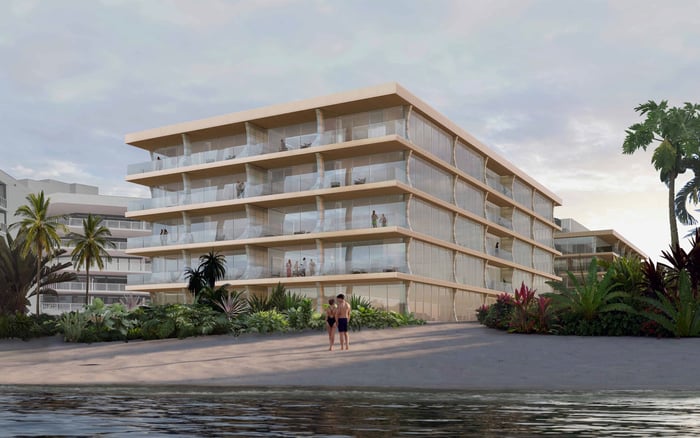
Palm Beach and Boca Raton should be compared through three collector-focused lenses: cultural fit, fine-art delivery logistics, and the residence’s capacity to support installation and care. The decisive choice depends on verified building procedures rather than city reputation alone.

For an art-focused buyer, choosing between Palm Beach and Boca Raton is not simply a contest between destinations. It is a decision about how collecting fits into daily life: attending exhibitions, receiving crated works, accommodating specialist installers, hosting culturally engaged guests, and living with art at an architectural scale.
The best collector’s residence connects cultural access with disciplined art logistics.
Cultural proximity shapes the rhythm of ownership, but the building determines whether important works can arrive, move through service areas, enter an elevator, clear a corridor, and reach the intended installation point. A compelling location cannot compensate for a delivery route that is too constrained or operating rules that conflict with a collection’s needs.
Palm Beach may appeal to buyers who want culture to feel closely integrated with their residential and social routines. That preference is personal, so buyers should map the places they expect to visit and test the journey from each prospective home at the times they would ordinarily travel.
A buyer considering Palm Beach Residences should look beyond the location label. The essential questions concern the residence itself: how deliveries are scheduled, where crates are received, whether handlers have a protected route, and which restrictions apply to drilling, anchoring, lighting, or wall reinforcement.
For buyers open to West Palm Beach as part of the same broader search, Mr. C Residences West Palm Beach belongs in a comparable due-diligence process. Art readiness should never be inferred from geography or presentation alone; it depends on how a particular property supports the practical life of a collection.
Buyers should also consider how frequently they expect to host curators, advisers, installers, or guests. Arrival flow, privacy, parking arrangements, service access, and the ease of moving between public and private spaces can be as relevant as proximity to cultural destinations.
Boca Raton may suit buyers who prefer to assess cultural access within a broader pattern of residential, commercial, and educational destinations. Rather than relying on a general impression, a buyer can create a personal itinerary and compare actual travel patterns from shortlisted residences.
In Boca Raton, Alina Residences Boca Raton and Glass House Boca Raton may enter an art-minded property search. Neither a project name nor a polished arrival sequence resolves the collector’s central concerns. Buyers should request building-specific answers before judging suitability for valuable, oversized, heavy, or fragile works.
The right Boca Raton residence should be evaluated against the buyer’s actual collection and anticipated acquisitions. A home that works for framed pieces may not accommodate large sculpture, unusually deep crates, or works requiring specialist lighting and structural support.
Fine-art freight capability cannot be judged from a city name alone. Even when specialist handlers can serve a location, the final approach to a residence may determine whether delivery is straightforward. Vehicle access, loading configuration, elevator availability, door clearances, corridor turns, protective procedures, and management approvals all require direct verification.
Before purchasing, ask management for a written account of loading procedures, service-elevator dimensions, weight limits, corridor widths, turning radii, protective requirements, contractor access, delivery hours, and required insurance documentation. Confirm whether these rules apply consistently or can change according to the scale and timing of a delivery.
Inspect the proposed path from the delivery vehicle to the installation wall. A generous room is irrelevant if a crate cannot clear the loading area, elevator door, or final turn. For sculptural work, ask qualified professionals to assess floor loading and installation requirements. For light-sensitive works, evaluate glazing, direct exposure, and options for controlling illumination.
Temporary logistics also matter. Buyers should ask whether crates and packing materials may remain onsite, where they can be held, and how removal is coordinated. If a specialist crew needs extended access, verify elevator reservations, work-hour restrictions, protection requirements, and approval procedures in advance.
The interior plan should be reviewed as a working environment for art rather than only as a furnished presentation. Ceiling height, uninterrupted wall area, natural-light exposure, lighting flexibility, floor construction, climate control, electrical placement, and circulation can influence what can be displayed and how comfortably it can be maintained.
Buyers planning substantial installations should involve appropriate advisers before closing or beginning alterations. Management permissions, building documents, and the residence’s physical conditions should be reviewed together. Assumptions based on renderings, photographs, or model units are not a substitute for measurements and written confirmation.
Storage deserves equal attention. A collector may need space for packing materials, display rotations, archival items, equipment, or works awaiting installation. If the residence lacks suitable capacity, the buyer should determine whether an acceptable offsite arrangement fits the broader ownership plan.
Begin with cultural habits. Identify the institutions, galleries, events, and social settings that matter personally, then compare how naturally each prospective home supports those routines. The most useful measure is not the number of destinations on a map but how comfortably they fit the buyer’s expected schedule.
Next, test logistics. Request a supervised and measured walk-through of the full delivery route. Review management requirements for handlers, contractors, insurance, elevator reservations, protective materials, deposits, and installation work. Ask for written answers wherever a condition could affect an important acquisition.
Finally, examine the residence through the collection’s likely evolution. Consider not only current pieces but also the scale, media, and installation complexity of future purchases. A property that supports the collection today should ideally offer enough flexibility for tomorrow.
Palm Beach and Boca Raton each deserve evaluation through the buyer’s own cultural routine, collection profile, and operating expectations. Neither should be selected on reputation alone when freight access, architectural compatibility, and management procedures can determine whether a residence truly serves the art.
The most sophisticated purchase aligns three layers: a South Florida setting that feels natural, a logistics plan capable of careful handling, and a home whose architecture and operating rules respect the collection.
For discreet guidance in comparing collector-oriented residences across Palm Beach County, connect with MILLION.
If branded residences are on your mind — as a home or as an allocation — we would be glad to share what we are seeing, privately.
Begin a quiet conversationBuyers should compare cultural fit, daily travel patterns, freight logistics, architectural compatibility, and building procedures.
No. Suitability depends on the individual property’s physical conditions, management rules, and delivery procedures.
The inspection can identify constraints between the delivery vehicle and installation point, including doors, elevators, corridors, and turns.
Buyers should verify dimensions, weight limits, reservation procedures, operating hours, and protection requirements.
Rules for contractors, insurance, drilling, anchoring, elevator use, deposits, and working hours may affect an installation.
They should obtain measurements for the entire delivery path and confirm that the intended display area can support the work.
They influence natural-light exposure and the buyer’s ability to control illumination around sensitive works.
Yes. They should confirm whether crates and packing materials may remain onsite and how their removal must be coordinated.
The buyer can map personally important destinations and test realistic travel patterns from each shortlisted residence.
Verified property conditions should break the tie, especially delivery access, installation flexibility, storage, and management procedures.