A practical, design-led guide to the Miami residence profiles that best serve families managing school routines, sports equipment, luggage, seasonal wardrobes, and private daily logistics.
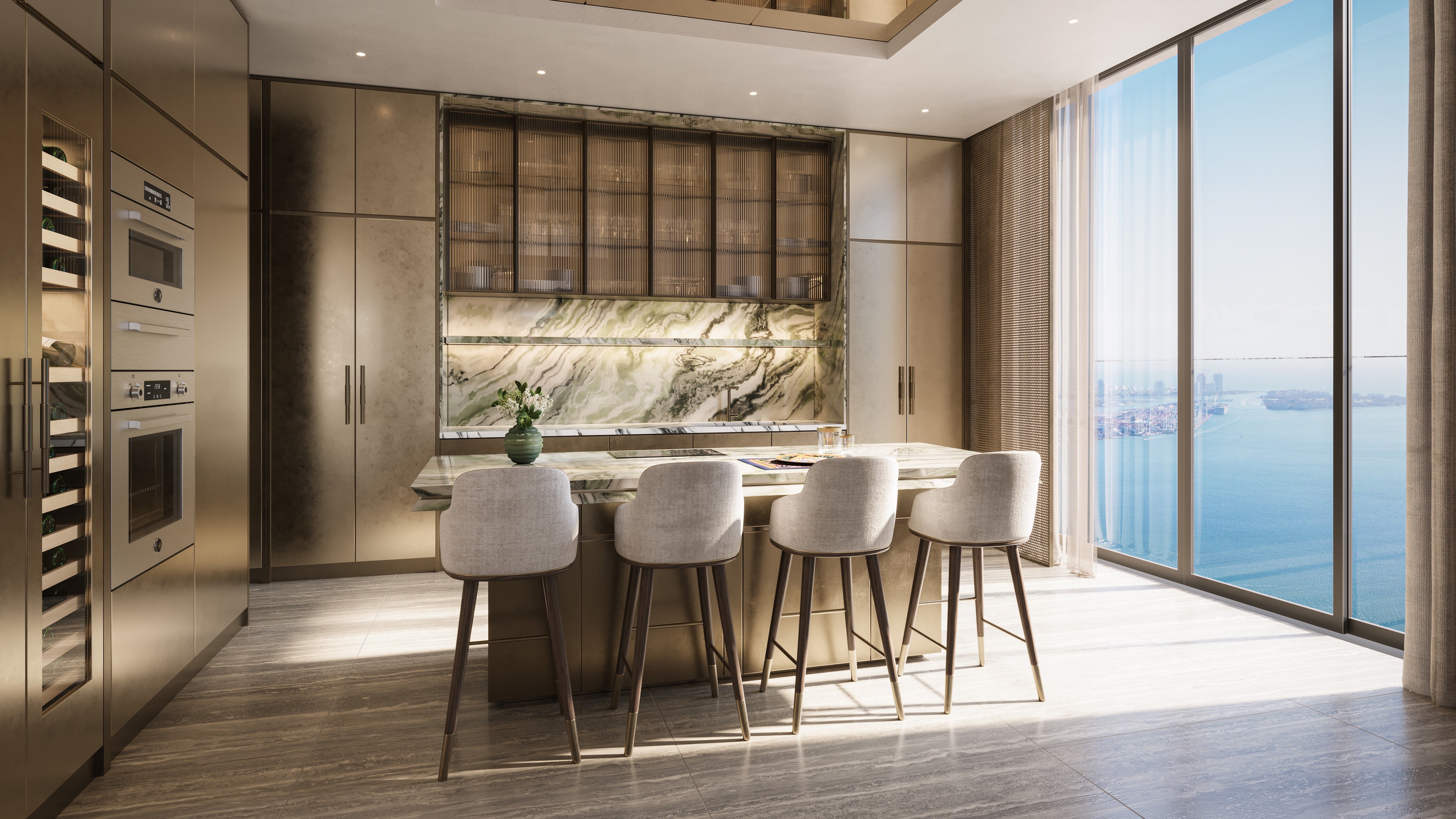
For families buying at the top of the Miami market, storage is no longer a back-of-house afterthought. It is part of how a residence performs. School bags, tennis racquets, golf shoes, beach toys, uniforms, scooters, ski luggage, stroller systems, guest linens, holiday pieces, and resort wardrobes all need a place to disappear without disturbing the calm of the home.
The most successful family residences are not simply large. They are disciplined. They separate arrival from entertaining, sports from formal living, and travel inventory from daily closets. In a city where one week can include school drop-off, boat time, a charity dinner, a tournament, and a flight north, storage often determines whether a home feels serene or constantly in motion.
This is especially relevant for buyers moving between dense urban neighborhoods, waterfront enclaves, and private residential islands. Miami Beach, Brickell, Coconut Grove, Sunny Isles, Fisher Island, and private-school routines may point to different daily rhythms, but the storage question remains the same: can the residence absorb real life beautifully?
1. Full-floor family residence - private arrival and secondary storage zones
A full-floor residence is often the strongest fit for families who want privacy and order in equal measure. Its advantage is circulation. When elevator arrival, service access, the bedroom wing, and entertaining areas are distinct, family items can move through the home without crossing the formal living experience.
For storage, the ideal version includes a generous entry sequence, space for built-ins near the family arrival point, oversized bedroom closets, and a dedicated area for luggage or seasonal inventory. This profile suits families who host frequently but do not want school and sports life visible from the main salon.
2. Large waterfront condominium - equipment-friendly coastal living
Waterfront living brings its own storage demands. Beach gear, paddle equipment, fishing items, towels, sunscreen, waterproof bags, and casual footwear need a system that feels effortless. A large waterfront condominium works best when it offers both in-residence storage and convenient building-level support for coastal routines.
The most livable plans give families a practical path from water or pool back to the residence without dragging wet gear through formal rooms. Look for service corridors, laundry adjacency, durable secondary entries, and closets deep enough for equipment that does not fold neatly.
3. Townhouse-style residence - vertical separation for active households
A townhouse-style residence can be highly effective for families who want separation by function. One level can handle arrival, mudroom-style storage, garage adjacency, or casual family use, while upper levels remain calmer and more private. For households with teenagers, caregivers, or frequent guests, this structure can make daily life easier to manage.
Storage quality depends on the stair and landing design. Wide landings, under-stair storage, utility rooms, and flexible dens can become essential family infrastructure. The best townhouse-style homes avoid wasted vertical space and turn transitional areas into useful compartments.
4. Large corner residence - wardrobe depth and divided bedroom wings
Corner residences often appeal to families because they can provide more light, better separation, and a stronger sense of residence-like proportion. From a storage perspective, the advantage is usually found in bedroom placement and wall depth. A divided plan can give children, guests, and parents independent closet zones rather than forcing everything into one central corridor.
This profile is particularly useful for families who travel often. Each bedroom can maintain its own luggage, school, and sport rhythm, while the primary suite can support a more refined wardrobe program. Buyers should study whether the plan offers enough full-height walls for millwork, not just glass and views.
5. Estate-style condominium or private-island residence - long-stay family inventory
For families using Miami as a principal home or long-season residence, estate-style living demands more than attractive closets. The home must manage extended inventory: formalwear, children’s seasonal clothing, guest bedding, sports collections, pantry overflow, holiday décor, and luggage for international travel.
This profile works best when the residence includes discreet service areas, generous laundry capacity, staff-friendly circulation, and enough storage outside the primary closets to protect the elegance of the main rooms. It is the category for buyers who want the feeling of a private estate with the security and amenity layer of a managed residence.
A floor plan should be reviewed like a day in the life. Where do children enter after school? Where does a wet swimsuit go? Where are backpacks placed before dinner? Can golf clubs, tennis bags, and luggage be stored without using a bedroom as a utility room? Does the laundry room support a real family schedule, or is it merely decorative?
Luxury buyers often focus first on view corridors, ceiling heights, terraces, kitchens, and primary suites. Those elements matter, but storage reveals whether the residence will still feel composed after six months of use. A beautiful home with insufficient concealed capacity can quickly become visually crowded.
The most important storage is often near movement points. Entry closets, service entries, laundry rooms, bedroom corridors, parking access, and elevator vestibules should be studied carefully. If every useful closet is located far from where items naturally arrive, the home will require constant correction.
Brickell families often prioritize school-day efficiency, parking access, elevator speed, and compact but highly organized storage. In a vertical neighborhood, the residence must work harder because there may be less tolerance for overflow. Closets, private storage rooms, and service pathways become critical.
Miami Beach buyers usually add beach and resort storage to the family equation. Towels, sandals, pool items, sun protection, and casual entertaining pieces need their own logic. A residence may be formal and glamorous, but the best ones still acknowledge sand, salt, and weekend guests.
Coconut Grove often attracts buyers who want a more residential rhythm, with school, boating, parks, and family dining woven into daily life. Storage needs may be broader here, especially for bikes, strollers, outdoor gear, sports bags, and pets. The ideal plan feels relaxed but deeply organized.
Sunny Isles and private-island addresses can introduce longer stays, larger wardrobes, and more frequent hosting. These buyers often need storage that behaves more like an estate program than a simple apartment closet package. Luggage rooms, overflow wardrobes, and well-planned service spaces become meaningful differentiators.
The difference between adequate storage and exceptional storage is usually design intelligence. Full-height millwork can make a hallway work harder. A bench with drawers can transform an entry. A secondary refrigerator or utility closet can remove pressure from the show kitchen. A linen room can preserve bedroom closets for clothing rather than household goods.
For sports families, vertical storage matters. Racquets, clubs, helmets, beach umbrellas, scooters, and folding chairs do not fit gracefully into shallow closets. For travel-heavy families, luggage storage should be measured honestly. Large suitcases, carry-ons, garment bags, and ski cases require volume, not just shelf count.
For school routines, the most useful solutions are often simple: a daily drop zone, charging drawers, uniform storage, shoe containment, and proximity to laundry. When these pieces are integrated into the architecture, the residence feels calm even when the household is busy.
Before signing, families should ask where every category of life will live. School. Sports. Beach. Travel. Guests. Pets. Holiday décor. Formal entertaining. Staff or service needs. If an answer requires using a formal bedroom, a visible hallway, or the main living room, the plan may be less family-ready than it appears.
It is also worth thinking about change. Young children become athletes, teenagers accumulate equipment, grandparents visit, and travel patterns evolve. The best Miami residences can adapt without renovation. Flexible rooms, deep closets, utility walls, and underused secondary spaces can become the quiet luxuries that protect long-term comfort.
In the ultra-premium segment, storage is not about having more things. It is about preserving the atmosphere that made the home desirable in the first place. The right residence lets a family live fully, travel often, entertain beautifully, and still return to rooms that feel composed.
What type of Miami residence is best for family storage? Full-floor, townhouse-style, and estate-style residences often offer the clearest separation between formal living and practical family zones.
Should storage influence a luxury condo purchase? Yes. Storage affects daily comfort, resale appeal, and whether the home remains orderly as family routines expand.
What storage matters most for school-age children? Look for drop zones, bedroom closets, laundry proximity, shoe storage, and places for backpacks and devices.
How should sports equipment be evaluated? Measure for depth and height, not just closet count, because many sports items are bulky or awkwardly shaped.
Is a larger residence always better for storage? Not necessarily. A smaller plan with intelligent built-ins can outperform a larger home with poorly placed closets.
What should frequent travelers prioritize? Dedicated luggage storage, wardrobe overflow, service access, and laundry capacity are especially important.
Do waterfront residences need different storage? Yes. Beach, pool, boating, and outdoor gear require durable, accessible areas away from formal rooms.
Are private storage rooms enough? They help, but daily-use storage should still be inside the residence or immediately near the family arrival path.
How can buyers test a floor plan? Walk through a normal weekday and weekend, assigning a place for every bag, shoe, suitcase, towel, and uniform.
Why does storage feel more important in Miami? Miami living blends school, travel, sports, beach time, and entertaining, so a residence must manage many lifestyles at once.
If you'd like a private walkthrough and a curated shortlist, connect with MILLION.
If branded residences are on your mind — as a home or as an allocation — we would be glad to share what we are seeing, privately.
Begin a quiet conversation