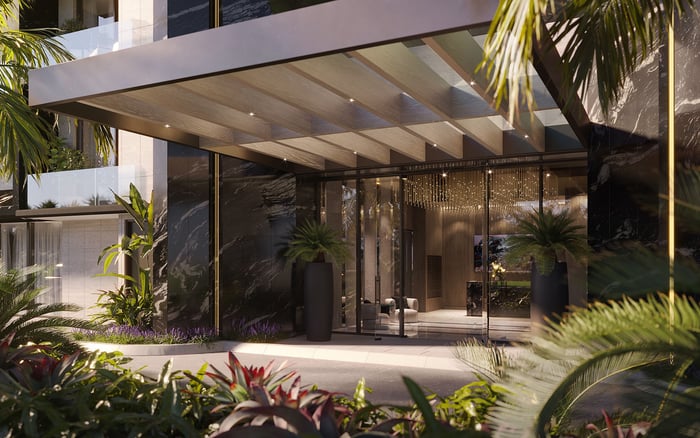
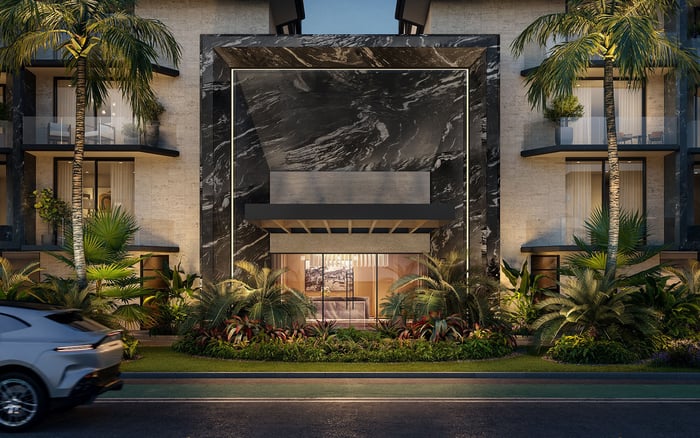
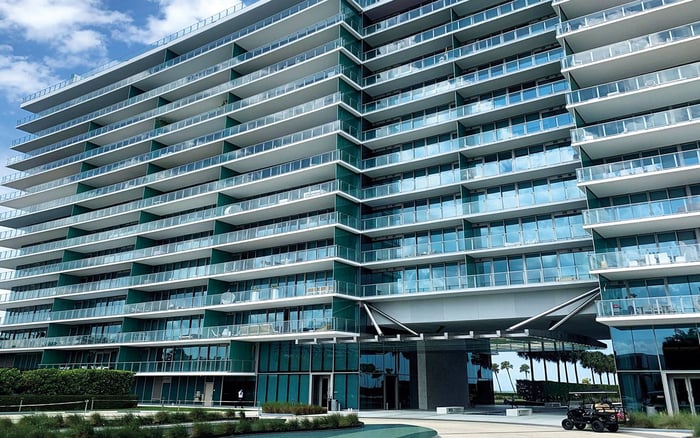
A lifestyle-first editorial on why Tula Residences fits buyers who view North Bay Village as a patient, long-hold waterfront play defined by scarcity, connectivity, and evolving prestige.
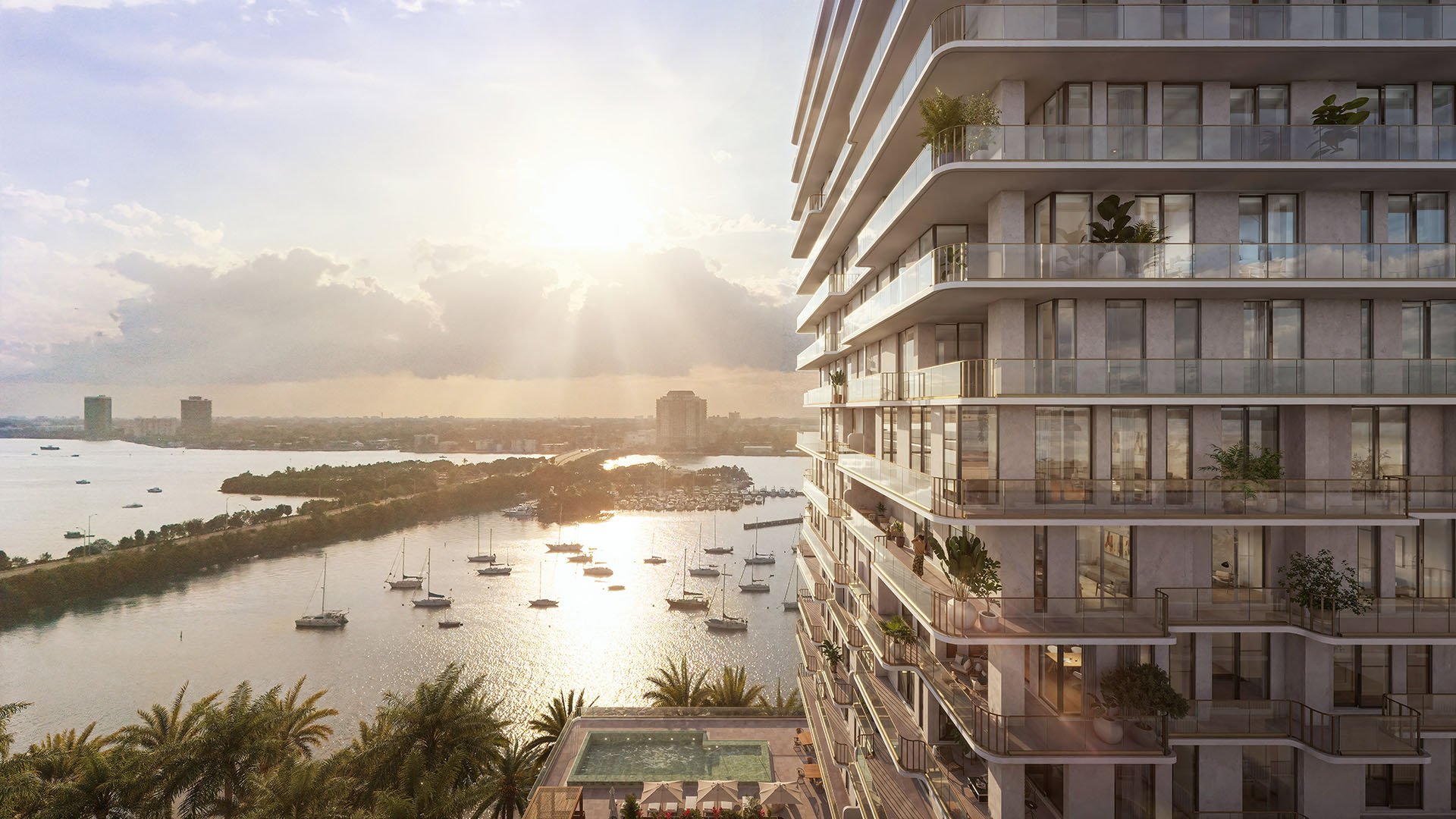
For a certain kind of South Florida buyer, North Bay Village is not a passing fascination. It is a deliberate lifestyle decision. Set across islands in Biscayne Bay between Miami and Miami Beach, the municipality offers a nuanced value proposition: proximity without sacrificing privacy, and waterfront living without the full exposure of a more saturated beachfront address.
That balance is what makes Tula Residences North Bay Village worth considering through a long-horizon lens. The case is not built on speculative promises or exaggerated projections. It rests on something more durable: constrained geography, bay-oriented living, and a location that remains close to the urban core while preserving a distinctly residential feel.
For buyers with a patient eye, North Bay Village reads as a place where daily quality of life and future neighborhood evolution can coexist. That matters because the strongest luxury purchases are rarely driven by a single moment in the market. They are driven by whether a place still feels compelling years after the contract is signed.
Scarcity in South Florida is often discussed too loosely. In North Bay Village, it is unusually literal. This is a compact island city with limited land and mostly built-out waterfront edges. There are only so many opportunities to create new bayfront residences, and that finite physical setting gives the market a different character than neighborhoods with broader development footprints.
For long-term buyers, scarcity matters because it influences more than inventory. It shapes atmosphere. Smaller municipalities with visible water, boating access, and tight geographic boundaries often develop a stronger sense of place over time. The experience feels more curated, more intentional, and less interchangeable.
That is one reason boutique product tends to resonate here. A buyer considering Tula is not necessarily looking for the largest amenity deck in the region or the most theatrical arrival sequence. More often, the appeal lies in lower-density ownership and a residential cadence that feels calmer than Miami’s more vertical districts.
The same logic helps explain interest in neighboring projects such as Pagani North Bay Village, Continuum Club & Residences North Bay Village, The Ritz-Carlton Residences® North Bay Village, and Shoma Bay North Bay Village. Together, these projects suggest that the market increasingly sees the municipality as an address worthy of design attention and long-range confidence.
Without leaning on overly specific claims, Tula is best understood as a boutique luxury proposition within a waterfront-oriented setting. That framing alone says quite a bit. In a market where scale is often mistaken for substance, boutique can stand as its own luxury category.
For owner-users, the appeal is straightforward. The best homes are not simply investment vehicles. They are places that improve the rhythm of life. North Bay Village offers bay views, direct water adjacency, and a central position near Miami Beach, Downtown Miami, and major employment centers. In practical terms, that means a buyer can maintain access to dining, culture, business, and travel corridors while living somewhere that feels set apart.
This is especially relevant for second-home purchasers and full-time residents who want a calmer home base without defaulting to a suburban model. The municipality’s identity remains rooted in waterfront living, yet it is not isolated. That combination of privacy and connectivity is increasingly difficult to find in South Florida at a level that still feels intimate.
Sophisticated buyers know the difference between a credible long-term thesis and a sales narrative. Here, the stronger argument is not a promised return or a dramatic short-term pricing story. It is the durable appeal of the setting itself.
Bayfront environments have a way of retaining relevance because they deliver a daily experience people consistently value: open views, boating access, shifting light over the water, and an emotional sense of removal from the city even when the city is only minutes away. In South Florida, those qualities often support premium positioning over time because they are not easy to replicate.
North Bay Village also carries the additional dimension of redevelopment interest and civic momentum. That does not mean every project will perform identically, nor does it guarantee any particular appreciation path. It does mean the municipality is being discussed less as an overlooked pocket and more as an evolving waterfront enclave with a clearer identity.
For an investment-minded buyer, that distinction matters. The best long-game neighborhoods are often the ones where the lifestyle proposition is already sound before the prestige cycle fully matures.
One useful way to read Tula is in relation to broader South Florida luxury trends. Waterfront buyers are increasingly sorting themselves into more specific lifestyle lanes. Some want the spectacle and social density of Miami Beach. Others want a marina-forward rhythm in a quieter enclave. Still others prioritize architectural intimacy over brand-heavy scale.
North Bay Village occupies a compelling middle position. It does not attempt to be South of Fifth, Surfside, or Bal Harbour. Instead, it offers a different kind of luxury: central, water-bound, and residential.
Tula fits into this context as a more discreet expression of the same underlying thesis: North Bay Village is no longer merely convenient. It is becoming intentional.
For buyers who care about waterfront living and future resale logic, that is meaningful. A market with multiple high-quality entries often creates more than competition. It creates comparability, visibility, and a stronger sense that a neighborhood is establishing its own luxury vocabulary.
A long-game purchase in North Bay Village should be judged on fundamentals, not theatrics. First is the location itself. Being between Miami and Miami Beach is not just convenient on a map. It shapes everyday optionality. Residents can move between business districts, cultural hubs, and shoreline leisure with relative ease.
Second is the built environment. In a small municipality, every new residential project contributes to the broader perception of the place. Buyers should think about how a project aligns with the area’s future identity, not simply its current brochure appeal.
Third is liquidity. Long-term confidence is stronger in markets where asking prices and resales are visible enough to establish clearer benchmarks. In a compact waterfront city, that transparency can help buyers understand how view orientation and water adjacency influence value over time.
Finally, there is the emotional test. Does the address feel restful? Does it offer enough separation from the noise of greater Miami while keeping its advantages close? With Tula, that may be the most persuasive question of all. The project’s appeal is not that it promises everything. It is that it appears calibrated for buyers who already know what they want.
North Bay Village works best for buyers who believe luxury is becoming more selective. Not every affluent purchaser wants maximal scale, endless activity, or an address built around constant visibility. Many want a home that holds its appeal through repetition, season after season, because the fundamentals are right.
That is where Tula enters the conversation. The project sits within a municipality defined by water, limited supply, and meaningful regional access. It benefits from a location that feels both insulated and relevant. And it speaks to a buyer who understands that in South Florida, some of the best long-term decisions are less about chasing the loudest district and more about identifying the most durable one.
Is North Bay Village a good fit for long-term luxury buyers? It can be, especially for buyers who value waterfront living, limited land supply, and central access to Miami and Miami Beach.
What is the main appeal of Tula Residences? Tula may appeal to buyers seeking a boutique, lower-density luxury experience in a bay-oriented setting.
Why does scarcity matter in North Bay Village? The municipality is small and largely built out along the waterfront, which supports a more finite supply dynamic.
Is this more of a lifestyle play or a pure investment play? The stronger case is lifestyle-led, with investment logic tied to enduring location fundamentals rather than short-term speculation.
How connected is North Bay Village to the rest of Miami? It is centrally positioned near Miami Beach and Downtown Miami, supporting relatively easy movement across key parts of the urban core.
Does Tula compete with larger branded projects? It appears to occupy a different lane, appealing more to buyers who prefer discretion and boutique scale over larger-format luxury towers.
What kind of buyer tends to favor this area? It often suits owner-users and second-home buyers who want privacy, water views, and urban access in one setting.
How should buyers think about resale in North Bay Village? They should focus on core drivers such as waterfront positioning, view quality, neighborhood evolution, and overall market visibility.
Is North Bay Village more private than Miami Beach? In many ways, yes. It generally offers a more residential atmosphere while remaining close to larger surrounding districts.
What is the smartest lens for evaluating Tula? View it as a long-hold lifestyle asset, where the everyday experience of the location is central to its lasting appeal.
For a discreet conversation and a curated building-by-building shortlist, connect with MILLION.
If branded residences are on your mind — as a home or as an allocation — we would be glad to share what we are seeing, privately.
Begin a quiet conversation