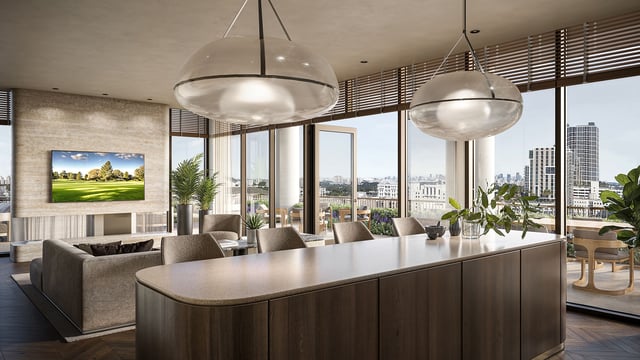
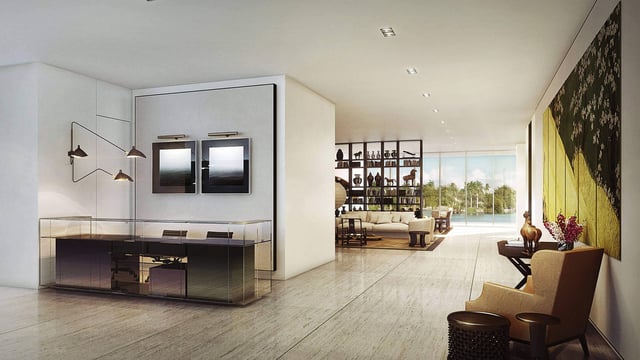
Tula Residences North Bay Village vs The Ritz-Carlton Residences® North Bay Village: intimate scale or branded service in North Bay Village?
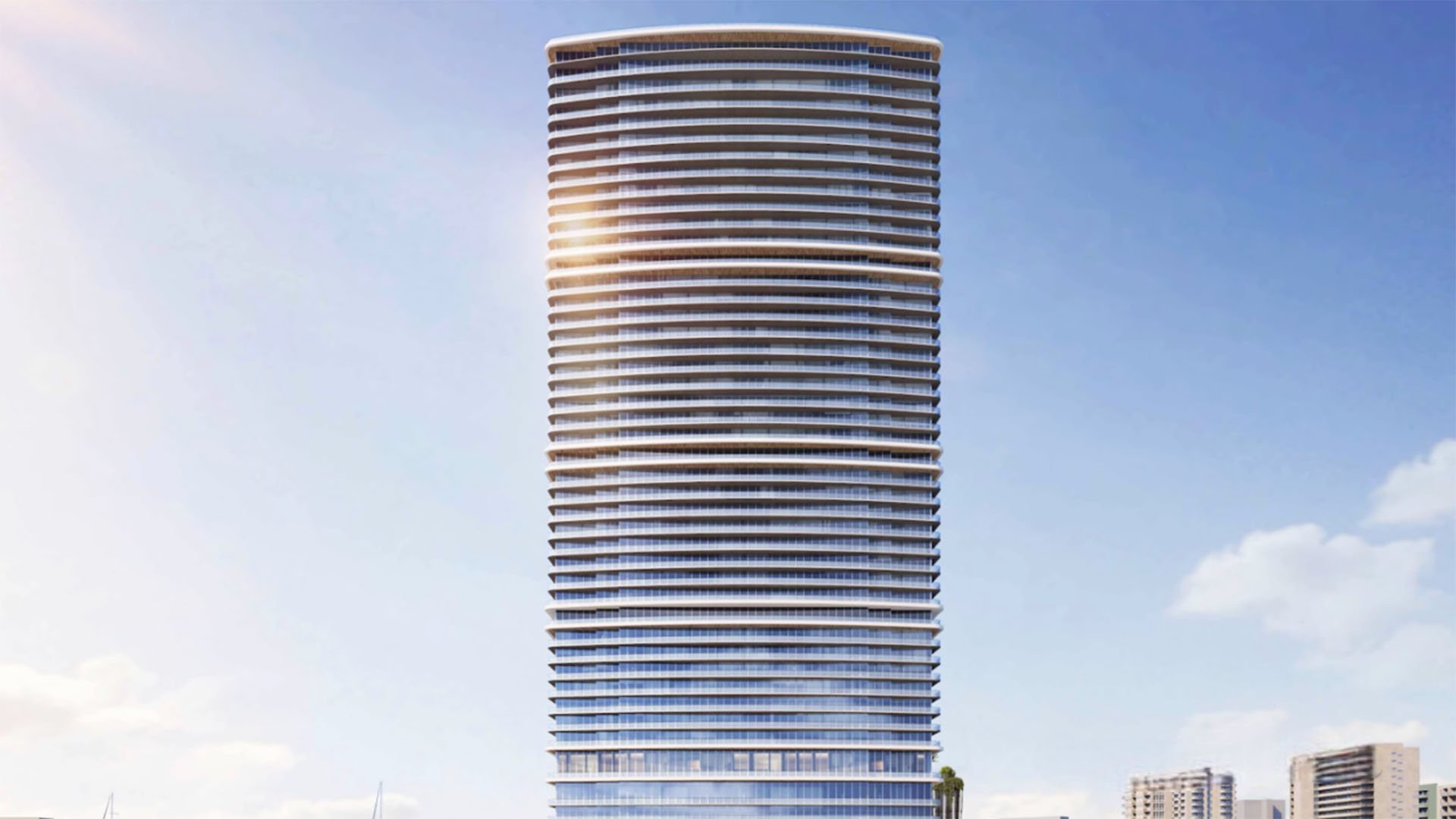
Quick Summary
- Tula favors Boutique scale, design identity, and a lower waterfront entry
- Ritz-Carlton emphasizes branded service, larger scale, and hotel-style ease
- Pricing, residence mix, and amenity depth separate the two clearly
- In North-bay-village, the real choice is privacy versus service density
The North Bay Village luxury question
In North-bay-village, buyers are making a more nuanced decision than simple waterfront access. The sharper question is what kind of luxury ownership they want to wake up to. At Tula Residences North Bay Village, the appeal is intimate scale, contemporary design, and a residential rhythm that feels independent rather than institutional. At The Ritz-Carlton Residences® North Bay Village, the proposition is different: a branded bayfront address with hospitality-caliber service woven into daily life.
Both projects sit within North Bay Village’s evolving waterfront story, where the market has moved beyond legacy stock toward more polished, design-conscious homes. Nearby projects such as Continuum Club & Residences North Bay Village and Pagani North Bay Village reinforce that broader repositioning. Yet Tula and Ritz-Carlton speak to very different buyer psychologies.
Scale sets the tone
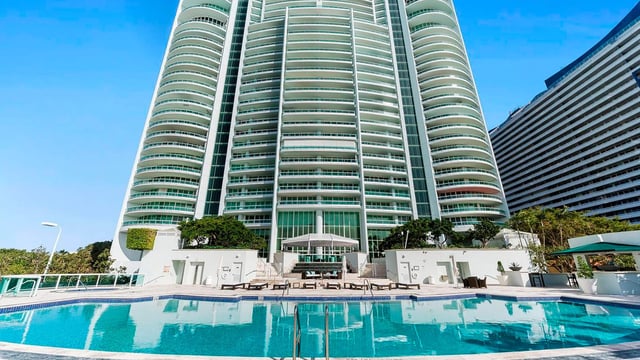
Tula is the smaller of the two, with roughly 60 residences. That matters more than the number itself. A building of that scale creates a quieter cadence, fewer neighbors, and a more contained common-area experience. For many buyers seeking a Boutique bayfront home, that is not a compromise. It is the point.
The Ritz-Carlton Residences® North Bay Village, by contrast, is materially larger at about 111 residences. That increased scale supports a broader service platform and a more layered arrival experience. It also changes the social texture of ownership. Residents are buying into a more active ecosystem, one that feels closer to a hotel-inflected private residence club than a classic condominium.
This is where the comparison becomes useful. If your definition of luxury begins with discretion and a sense of belonging to a smaller community, Tula has a clear edge. If your definition begins with staffing, consistency, and the reassurance of a global hospitality standard, Ritz-Carlton begins to justify its premium.
Residence mix and who each project attracts
Tula’s residence mix is notably flexible, with studio, one-bedroom, and two-bedroom layouts ranging from about 535 to more than 1,400 square feet. That gives the project a wider entry path for buyers pursuing a stylish primary residence, a waterfront pied-à-terre, or a more measured Investment in a neighborhood with upward luxury momentum.
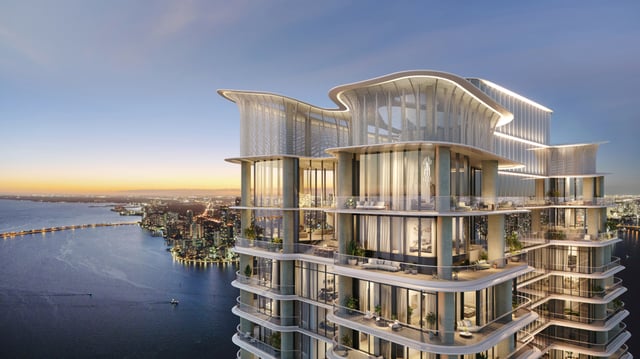
The Ritz-Carlton Residences® North Bay Village aims further upmarket in both composition and expectation. Residences range from one-bedroom to three-bedroom layouts, with penthouses above that. The profile is more conventionally luxury in the South Florida sense: larger footprints, a stronger emphasis on prestige, and a clearer appeal to buyers who prioritize branded finishes and full-service living over value-sensitive entry.
For a market where many buyers are balancing second-home use with longer-term portfolio strategy, that distinction matters. Tula can speak to the purchaser who wants water, design, and efficiency without crossing into seven-figure branded territory. Ritz-Carlton speaks to the buyer who sees service and brand affiliation as core components of value rather than extras.
Pricing and where value begins
The economic spread between the two projects is one of the clearest differences. Tula’s public-facing pricing has been framed in the mid-$400,000s to above $900,000, placing it at a meaningfully lower point of entry. In a waterfront submarket, that creates a rare proposition: design credibility, completed inventory, and bay exposure without the capital intensity that usually accompanies branded ownership.
Ritz-Carlton starts at about $1.2 million, with penthouses rising above $5 million. That gap is substantial, and it should be interpreted properly. Buyers are not merely paying for square footage or location. They are paying for an operating model, a service culture, and the cachet of a name that carries weight well beyond Miami-Dade.
For some purchasers, that premium will feel entirely rational. For others, especially those focused on elegant day-to-day living rather than hotel-style ritual, Tula may present the more compelling value equation.
Amenities: residential ease versus hospitality choreography
Tula’s amenity package is focused and livable: a rooftop Pool, fitness center, social lounge, co-working space, curated art, and resident gathering areas. The overall impression is contemporary rather than theatrical. The emphasis is on giving residents the essentials of luxury ownership in a building that remains personal in scale.
At Ritz-Carlton, the amenity proposition moves into a different category. Concierge, housekeeping, room service access, spa-oriented features, dining components, premium fitness, valet, and hotel-style vehicle services create a more choreographed lifestyle. This is branded hospitality translated into private ownership.
That distinction will resonate differently depending on buyer habits. A resident who values frictionless arrivals, service staff, and a polished sense of occasion may prefer Ritz-Carlton immediately. A resident who wants their home to feel like a home, not an extension of a hotel ecosystem, may find Tula more appealing.
The contrast is visible across South Florida’s branded and non-branded landscape. In places like The Ritz-Carlton Residences® Miami Beach or St. Regis® Residences Brickell, service is part of the identity itself. Tula sits closer to a design-led residential model, where architecture and atmosphere do more of the talking.
Design language and emotional appeal
Tula’s architectural identity is tied to Kobi Karp, and that design connection supports its art-forward, contemporary posture. The appeal here is subtle. Buyers are not stepping into a globally branded interior language. They are stepping into a building with a more local point of view, one that can feel fresher to buyers who prefer individuality over institutional polish.
Ritz-Carlton makes the opposite move, intentionally. Branded interiors and hotel-grade finishes are part of the attraction. The residence becomes an extension of a hospitality standard that many buyers already understand and trust. For those coming from other branded homes or five-star travel patterns, that familiarity can be enormously powerful.
Neither approach is inherently superior. But they create different emotional environments. Tula feels more personal. Ritz-Carlton feels more serviced. One offers intimacy. The other offers assurance.
Waterfront living and everyday practicality
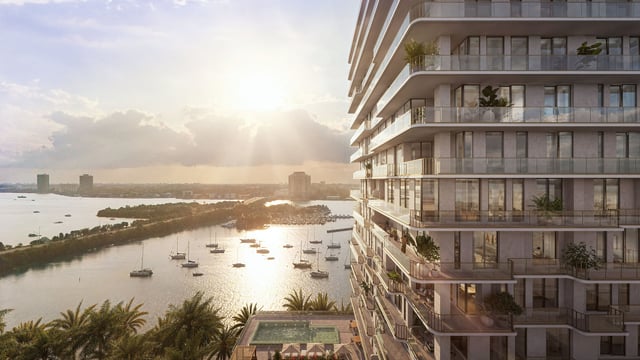
Both buildings benefit from direct waterfront positioning, which is central to North Bay Village’s luxury appeal. Tula is associated with bay views and smaller-scale waterfront access elements, including a more neighborhood-oriented relationship to the shoreline. Its appeal is intimate and composed.
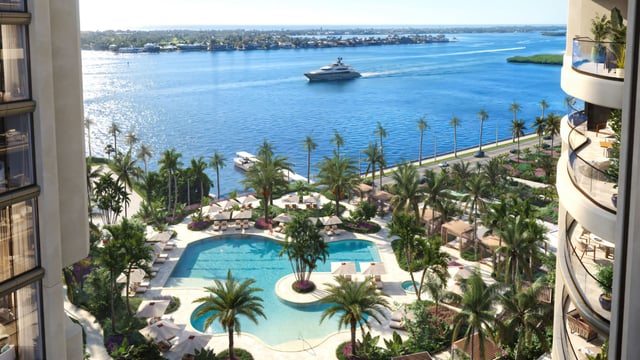
Ritz-Carlton embraces a grander bayfront reading, with a more formal arrival sequence and public-facing elements integrated into the experience. That sense of entry is part of what branded buyers often want. It creates the feeling that every return home is an event.
Practical details also reinforce the divide. Tula is described as including parking, a straightforward advantage in daily use. Ritz-Carlton extends into valet and hotel-style vehicle support, which is convenient but also emblematic of its broader identity.
Both projects are completed and available for purchase, which makes this comparison more immediate than many pre-construction debates. The finer points, including exact inventory, HOA structure, and certain use rules, remain part of the deeper diligence process. But the broad positioning is already clear.
Which buyer fits each address
Choose Tula if your priorities center on efficient luxury, contained scale, modern design, and a lower threshold to waterfront ownership. It is especially attractive for buyers who want a refined home in North-bay-village without paying a premium for a global service brand.
Choose Ritz-Carlton if you value hospitality as part of residential life itself. If concierge access, valet, branded interiors, and the comfort of a known service standard are essential to your definition of luxury, the premium starts to make sense quickly.
In other words, this is not really a battle between two comparable condos. It is a choice between two distinct philosophies of ownership. Tula offers edited luxury with a local, Waterview sensibility. Ritz-Carlton offers service-rich prestige with unmistakable brand gravity. In a market increasingly filled with polished new inventory and Resale alternatives, that clarity is what makes the decision easier.
FAQs
-
Is Tula Residences North Bay Village the more affordable option? Yes. Its entry pricing sits well below The Ritz-Carlton Residences® North Bay Village, making it the lower-cost path into luxury waterfront ownership.
-
Is The Ritz-Carlton Residences® North Bay Village larger than Tula? Yes. Ritz-Carlton has about 111 residences, while Tula has roughly 60, giving Tula a more intimate scale.
-
Which building has the stronger Boutique feel? Tula does. Its smaller size, design-led identity, and residential tone create a more boutique ownership experience.
-
Which project offers more hotel-style service? The Ritz-Carlton Residences® North Bay Village. Its appeal centers on concierge-led, hospitality-driven living.
-
Are both projects completed? Yes. Both are presented as completed and available for occupancy and purchase.
-
Does Tula offer smaller residences than Ritz-Carlton? Yes. Tula includes studio layouts and more compact one- and two-bedroom options, while Ritz-Carlton begins with larger one-bedroom residences and expands upward.
-
Which project is better for buyers focused on Investment value? It depends on the strategy. Tula offers a lower entry basis, while Ritz-Carlton may appeal to buyers who value brand-backed positioning.
-
Is parking handled differently at the two buildings? Yes. Tula is associated with included parking, while Ritz-Carlton adds valet and hotel-style vehicle services.
-
Do both properties have waterfront exposure? Yes. Both are bayfront or direct waterfront offerings within North Bay Village’s luxury corridor.
-
What is the simplest way to choose between them? Decide whether you want independent, design-led intimacy or branded, full-service living. That is the real dividing line.
For a tailored shortlist and next-step guidance, connect with MILLION.

Million Luxury
Million Luxury
Welcome to MILLION, an exclusive luxury real estate boutique nestled in the heart of South Florida’s most desirable locations. Specializing in high-end properties, we provide a sanctuary for discerning clients including top Fortune 500 executives, affluent families, celebrities, and professional athletes from across the globe. At MILLION, we understand the unique demands of our elite clientele and offer a seamless blend of confidentiality and personalized attention. Our commitment to privacy is unwavering; we ensure that every transaction and interaction is handled with the utmost discretion and according to stringent confidentiality protocols. Our concierge service embodies the pinnacle of white-glove care, offering tailored assistance that transcends traditional real estate support.