A discreet buyer’s framework for comparing five prominent Surfside residential names, with emphasis on privacy, low-density living, circulation, service and due diligence.
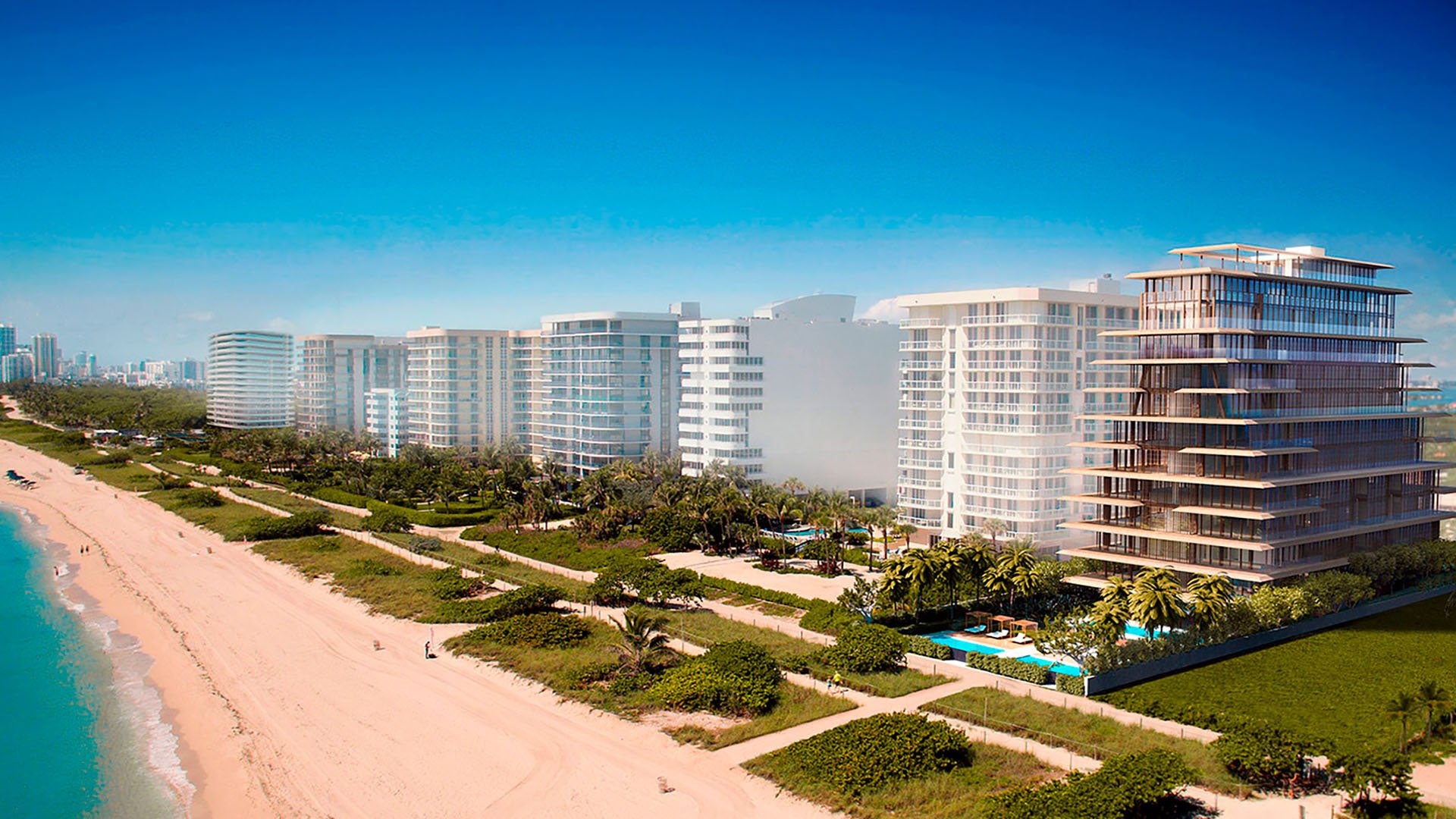
For privacy-focused buyers, Surfside’s appeal extends beyond its quieter atmosphere. The more consequential question is how a residence manages visibility, movement and service. A building may appear intimate in photographs yet function as a highly social environment. Conversely, a recognizable address may preserve discretion through well-planned arrival sequences, controlled circulation and thoughtful separation of resident and service activity.
Low-density living requires a more nuanced assessment than unit count alone. Buyers should examine how many residences share each elevator landing, whether amenity routes intersect with primary entrances, how guests are received and where deliveries move through the property. Floor plans, association documents and in-person tours at different times can reveal whether privacy is structural or merely stylistic.
This shortlist identifies five Surfside names that belong in a focused search. It is not a substitute for reviewing current condominium documents and inventory or conducting professional due diligence. Rather, it offers a disciplined starting point for buyers who place quiet enjoyment above spectacle.
1. Arte Surfside: first privacy review
Arte Surfside deserves the first position on a privacy-oriented itinerary. The essential next step is to assess the residence under consideration, including its approach from the street, route from parking to entry, elevator experience and relationship to shared spaces.
Buyers should request current plans and governing documents before reaching conclusions about density. Particular attention should be paid to guest access, service protocols and any routes that may bring household staff, deliveries or visitors through resident-facing areas.
2. Eighty Seven Park Surfside: boundary-focused review
Eighty Seven Park Surfside is a logical second candidate for buyers evaluating discretion along the Surfside and Miami Beach edge. Its place on this list underscores the importance of reviewing not only the building, but also the immediate context visible from the specific residence.
During a private showing, compare daytime and evening conditions. Sightlines, elevator sharing, corridor exposure and the distance between private interiors and common amenities should all be assessed from the exact home rather than inferred from the building name.
3. Fendi Château Residences Surfside: service-focused review
Fendi Château Residences Surfside enters the ranking as a candidate for buyers who want privacy to coexist with a polished residential experience. The decisive inquiry is operational: how access is controlled, how requests are handled and whether service remains attentive without feeling intrusive.
A serious review should include written policies governing guests, vendors, staff access, renovations and deliveries. These details shape everyday discretion more directly than finishes alone, particularly for an owner who travels frequently or maintains household support.
4. The Surf Club Four Seasons Surfside: hospitality-focused review
The Surf Club Four Seasons Surfside merits consideration by buyers drawn to a service-rich setting but unwilling to compromise personal boundaries. The central task is to understand how the residential experience relates to each shared or hospitality-oriented component.
Ask for a precise explanation of arrival options, amenity access, visitor handling and resident-only areas. Buyers should also walk the full route from vehicle arrival to the front door, noting where recognition, waiting or interaction may occur.
5. Ocean House Surfside: residence-specific review
Ocean House Surfside completes the shortlist as a building best evaluated at the level of the individual residence. Privacy can vary meaningfully by orientation, floor, proximity to circulation and the placement of neighboring entries.
The most useful comparison is practical: enter as a resident would, observe acoustic conditions and map every routine movement from parking, lobby and amenities. This approach anchors the decision in lived experience rather than broad assumptions about boutique or oceanfront positioning.
A first tour should focus on choreography. Where does a vehicle pause? Who can see the arrival? Is there a waiting point? Does the elevator open into a shared corridor, a limited-access vestibule or another configuration? Buyers considering Arte Surfside can use these questions to structure a showing without presuming that every residence offers the same experience.
The second pass should examine operational privacy. Request a clear account of guest registration, package handling, contractor access and overnight staffing. At Fendi Château Residences Surfside, as at any luxury condominium, the relevant issue is how current rules and procedures apply to the buyer’s specific household pattern.
A third review should address the relationship between the residence and its amenities. At The Surf Club Four Seasons Surfside, buyers should distinguish between spaces they expect to use regularly and routes they would prefer to avoid. The same discipline applies when assessing Ocean House Surfside. Privacy is experienced through repeated daily movements, not a brochure headline.
For buyers broadening the geographic comparison slightly, Eighty Seven Park Surfside offers another reference point for evaluating arrival, outlook and circulation. The purpose is not to assume equivalence, but to clarify which tradeoffs are acceptable.
The strongest privacy assessment combines physical inspection with documentary review. Current floor plans can clarify shared walls, elevator relationships and service access. Condominium declarations, rules and recent meeting materials can illuminate guest procedures, leasing policies, renovation controls and planned work. Insurance, financial and legal review should remain with qualified advisers.
The central principle is simple: verify the exact residence, not just the building. A low floor and a high floor can present different exposure. An attractive terrace may introduce sightline questions. A celebrated pool may sit directly along a route the owner expects to use daily. Each feature belongs in a privacy map tailored to the household.
Schedule more than one visit when possible. A quiet weekday showing may not reveal evening arrivals, weekend amenity use or delivery patterns. Enter through every permitted route, pause outside the residence and listen, then stand at key windows and outdoor areas to assess neighboring sightlines.
Bring the people who understand the household’s routines. Depending on the purchase, that may include a security adviser, architect, attorney or property manager. Their role is not to complicate the decision, but to translate an elegant presentation into a realistic picture of daily life.
What does low-density living mean in a Surfside condominium? It can mean limited shared circulation, fewer interactions and a quieter residential rhythm, but buyers should verify the exact configuration.
Is a smaller building automatically more private? No. Arrival design, staffing, elevator access, sightlines and operating policies may matter as much as overall scale.
Should buyers compare individual residences within the same building? Yes. Floor, orientation, neighboring entries and proximity to amenities can materially change the privacy experience.
Why is elevator access important? Elevator programming and landing design influence how often residents encounter guests, staff, vendors or neighbors.
How should a buyer assess arrival privacy? Walk the complete route from vehicle arrival to the residence, noting visibility, waiting areas and access controls.
Do amenities reduce privacy? Not necessarily. Their location, access rules and relationship to residential circulation determine their practical effect.
Which documents should be reviewed? Review current plans, condominium documents, rules and relevant meeting materials with qualified legal and financial advisers.
When is the best time to tour? Multiple visits at different times can provide a more representative view of traffic, staffing, sound and amenity use.
Can oceanfront exposure affect discretion? It can. Buyers should inspect views in both directions and consider neighboring buildings, shared spaces and exterior sightlines.
What is the final step before choosing a building? Compare the exact residence, current policies and daily circulation with the household’s nonnegotiable privacy requirements.
To compare the best-fit options with clarity, connect with MILLION.
If branded residences are on your mind — as a home or as an allocation — we would be glad to share what we are seeing, privately.
Begin a quiet conversation