A buyer-focused guide to evaluating winter ownership at La Maré, with practical due-diligence questions about service, dining, arrivals, guests, amenities, and waterfront use.

Buyers evaluating La Maré Bay Harbor Islands for winter use should focus on how the property’s current procedures fit their personal schedule. The relevant questions concern what assistance is available, when requests can be made, and which arrangements remain the owner’s responsibility.
Peak-demand conditions should be treated as a due-diligence scenario rather than an assumption. A prospective owner can ask management how arrivals, visitors, deliveries, transportation, and outside vendors are handled during the intended occupancy period. Written answers provide a firmer basis for planning than general descriptions.
Buyers should confirm the current service scope, staffing hours, response procedures, and process for arranging third-party assistance. This review can clarify whether residence preparation, deliveries, transportation coordination, housekeeping, or dining support is available and whether advance notice or an additional charge applies.
The same questions should be asked of every property under consideration. Buyers comparing Bay Harbor Islands projects may review Alana Bay Harbor Islands, but they should evaluate each building’s documents and procedures independently.
A practical diligence checklist should identify who accepts instructions, when requests may be submitted, how vendors are approved, and which services require reservations. Owners can then build an arrival plan around confirmed procedures.
Dining plans may involve restaurant reservations, grocery provisioning, catered meals, private chefs, or cooking at home. Before relying on any arrangement, an owner should ask whether management assists with it and what notice, authorization, insurance, loading, elevator, and delivery procedures apply.
Hosted meals warrant particular attention because several parties may need access within a limited window. Buyers can ask how food deliveries, culinary vendors, household staff, and waste removal are handled, as well as whether service-hour limits apply.
The Well Bay Harbor Islands may be included in a broader comparison, but dining support and vendor access should be verified separately for each building. The objective is to match documented procedures with the owner’s preferred degree of planning and spontaneity.
Guest access affects the ownership experience before visitors reach the residence. Prospective owners should review current provisions for registration, identification, host presence, overnight occupancy, vehicle arrival, parking, and amenity use.
Different procedures may apply to personal guests, household staff, drivers, private chefs, and other vendors. Buyers should ask management to explain each category and should compare the response with the governing documents.
Another project that buyers may review is Onda Bay Harbor. Comparisons should focus on the buyer’s expected hosting pattern rather than on an assumed neighborhood standard.
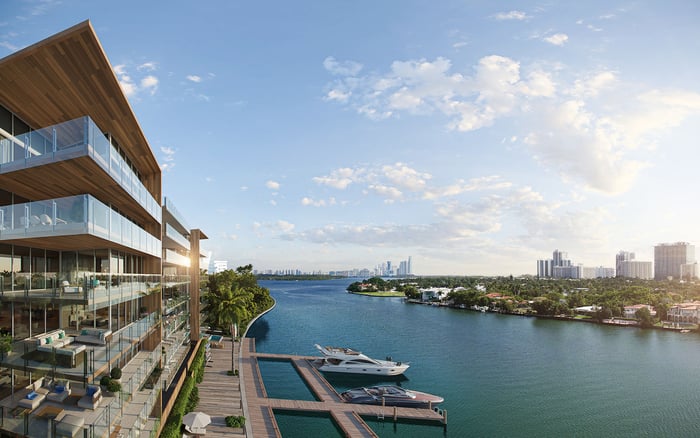
A water-facing setting should not be treated as proof of access to boating or other waterfront facilities. Any planned use must be checked against current documents, availability, operating rules, and separate agreements.
Buyers should ask whether access is assigned, reserved, shared, or subject to additional terms. Vessel limitations, guest use, service access, reservation procedures, and potential charges should also be confirmed before a purchase decision.
This review belongs alongside diligence on title, parking, amenities, and ownership costs. The appropriate property depends on the buyer’s intended use and the terms that can be verified in writing.
A disciplined review starts with the latest available governing documents, management policies, service information, and fee schedule. Buyers should identify what is included, what must be reserved, and what may carry a separate charge. Rental, guest, parking, and amenity questions should be resolved through current documentation.
It is also useful to map a complete arrival: owners, family members, vehicles, luggage, food deliveries, staff, and invited guests. Management can then explain how each step would be handled under current procedures. This exercise may reveal where advance coordination is required.
The goal is not to assume a particular level of service. It is to determine whether the documented operating model aligns with the buyer’s winter routine, privacy preferences, hosting plans, and waterfront expectations.
What should a buyer verify about winter service? Ask for the current service scope, staffing hours, request procedures, notice periods, and any separate charges.
Should peak-demand service levels be assumed? No. Buyers should ask management how requests are handled during their intended occupancy period and seek written confirmation.
What arrival details deserve advance planning? Review procedures for residents, vehicles, luggage, deliveries, staff, and invited guests.
How should dining arrangements be evaluated? Confirm whether assistance is available and what rules govern reservations, deliveries, caterers, and private chefs.
Can an owner assume outside vendors will be admitted? No. Authorization, insurance, access, elevator, loading, and service-hour requirements should be verified.
Which guest rules should be reviewed? Check registration, identification, host-presence, occupancy, parking, and amenity-access provisions.
Is guest parking guaranteed? It should not be assumed; current vehicle-arrival and parking procedures should be confirmed with management.
Does a waterfront setting establish boating access? No. Access, availability, reservations, vessel limitations, guest use, and fees require separate verification.
Which materials should guide the purchase review? Use the latest available governing documents, management policies, service information, and fee schedule.
How can a buyer compare Bay Harbor Islands projects? Apply the same diligence checklist to each property and compare documented procedures with the buyer’s intended use.
For a tailored shortlist and next-step guidance, connect with MILLION.
If branded residences are on your mind — as a home or as an allocation — we would be glad to share what we are seeing, privately.
Begin a quiet conversation