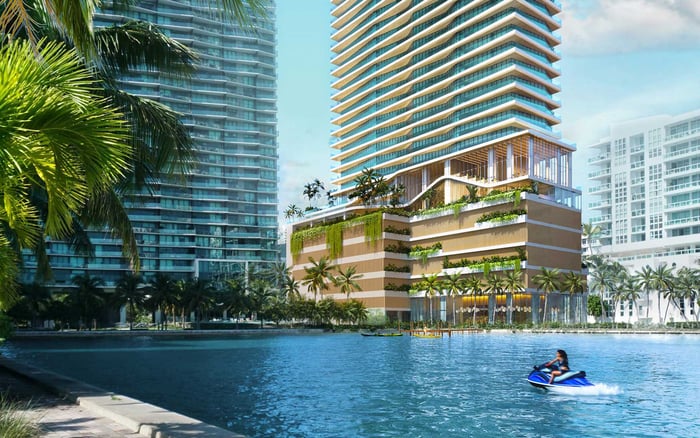
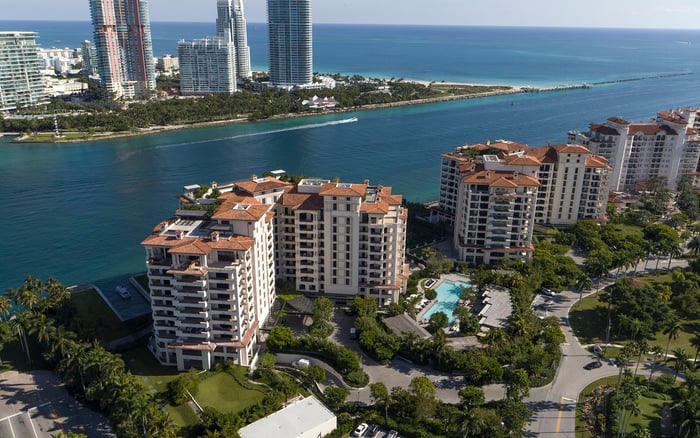
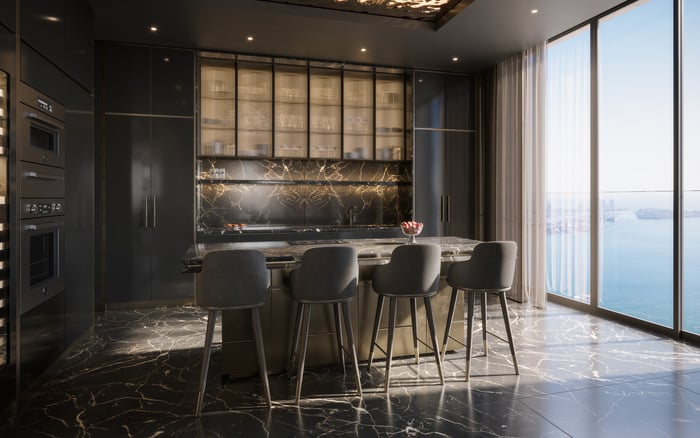
A discreet buyer’s guide to South Florida residence types where elevator privacy, abbreviated corridors, and calmer daily circulation shape true luxury.
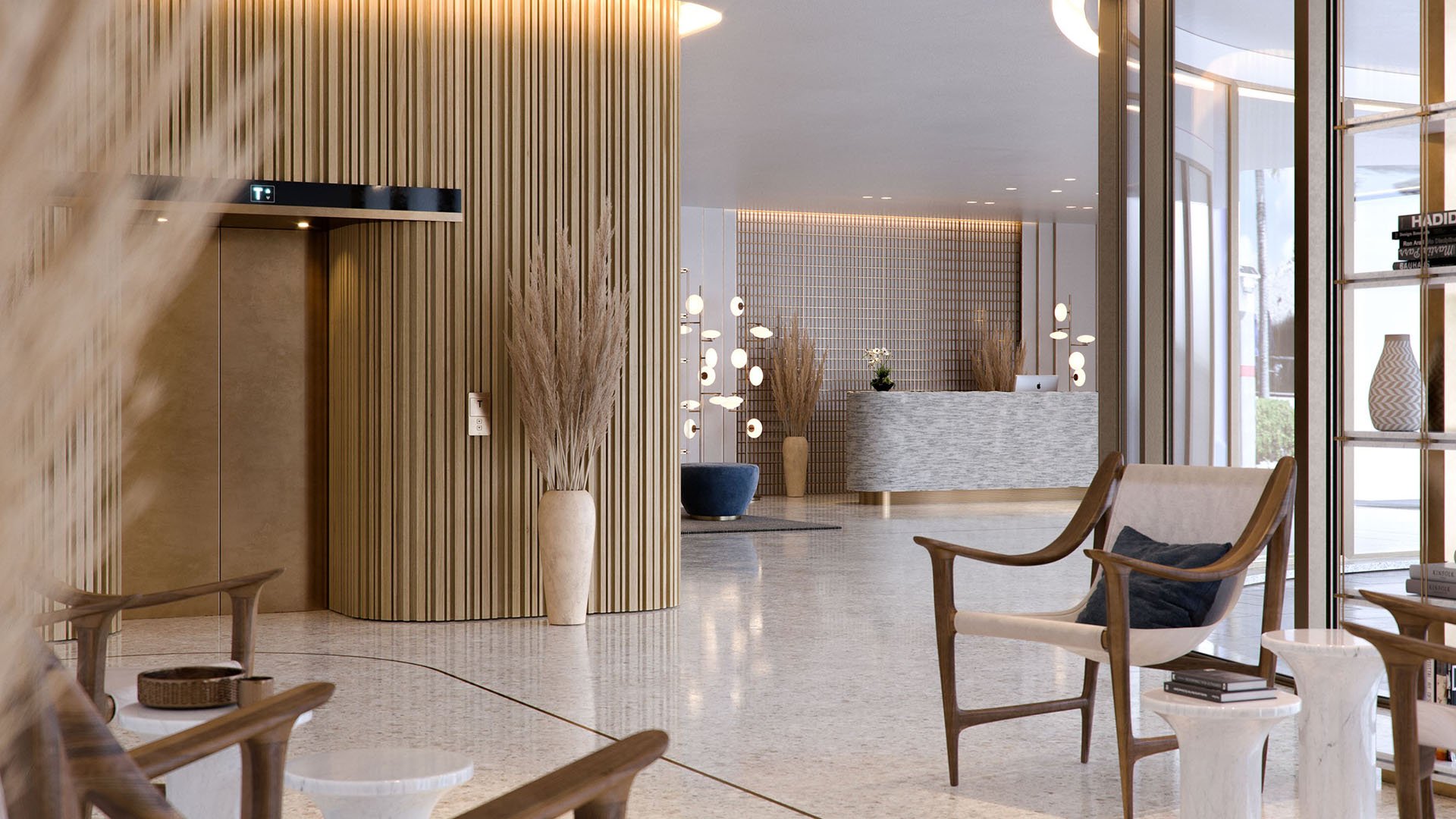
In South Florida’s most refined residential conversations, privacy is no longer defined only by gates, views, or a doorman’s discretion. It is also measured in the moments between arrival and the front door: the hush of the elevator, the number of steps along a corridor, the proximity of neighboring entries, and whether the building feels composed at the hours one actually lives there.
For buyers who value calm, these details are not fussy. They are structural to daily life. A quiet elevator bank can make a return from dinner feel private rather than public. A short corridor can reduce incidental encounters, soften acoustic spillover, and create a more residential mood. In a market where waterfront outlooks, branded services, and resort amenities often dominate the first impression, circulation becomes the quieter test of whether a home truly suits its owner.
This is especially relevant for buyers comparing Brickell convenience with Miami Beach discretion, Sunny Isles height with Surfside restraint, and Fisher Island seclusion with boutique intimacy. Each setting can offer a different version of privacy, but the best fit is usually found in the plan, not the brochure language.
1. Direct-entry condominium residence - private elevator arrival
A direct-entry residence is often the cleanest answer for buyers who want to avoid long common corridors. The elevator opens into a private or semi-private arrival sequence, making the transition from building to home feel intentional rather than shared.
The appeal is both practical and atmospheric. Groceries, luggage, guests, and late arrivals move through fewer public thresholds. For buyers who entertain discreetly or maintain a high-profile schedule, this layout can feel less like a convenience and more like a baseline requirement.
2. Boutique low-density residence - fewer shared thresholds
A boutique building can be compelling when its scale supports calmer movement. Fewer residences often mean fewer doors per floor, fewer elevator stops, and a more composed sense of arrival, although each building must be assessed on its own plan.
The important distinction is not size alone. A small building with awkward circulation may feel less private than a larger building with disciplined floor plates. Still, for buyers who dislike hotel-like hallways, low-density design often creates a more residential rhythm.
3. Corner residence on a limited-access floor - shortened corridor exposure
A corner residence can reduce the feeling of corridor life when the entry is positioned away from heavy foot traffic. The ideal arrangement places the door near an elevator landing or in a low-traffic wing, limiting the number of neighbors passing by.
This type of home appeals to buyers who want the benefits of a full-service tower without the sensation of living along a busy interior passage. The right corner plan can combine view, light, and a quieter approach to the entry.
4. Townhouse-style or villa residence - elevator-light daily living
Some buyers solve the elevator question by choosing a townhouse-style or villa residence, particularly when daily life can unfold across private stairs, internal circulation, or a dedicated entry. This can be useful for owners who want autonomy without leaving a serviced residential setting.
The tradeoff is personal. A townhouse-style plan may offer a more private threshold, but it should still be evaluated for garage access, guest arrival, service circulation, and noise transfer. The best examples feel independent without sacrificing polish.
5. Penthouse or upper-floor residence - controlled circulation
A penthouse or upper-floor residence can provide a calmer arrival when access is limited and the floor is not overloaded with entries. The value lies less in height alone and more in how the elevator, lobby, and front door relate.
For some buyers, the psychological distance from busier amenity levels and parking transitions is meaningful. The strongest upper-floor plans create a sense of pause before the residence, with minimal corridor length and a clear separation from shared activity.
The best evaluation begins before the front door opens. Stand in the elevator lobby and listen. Note whether mechanical sound, door chimes, service movement, or conversation carries into the arrival space. Then walk the corridor at an unhurried pace. If the path feels long during a showing, it may feel longer after travel, late dinners, or repeated daily use.
Door placement matters. A residence with its entry directly opposite another door can feel less private than one with a more discreet approach. A corridor that turns once may feel calmer than a straight, exposed run. Lighting also changes perception: soft, residential lighting can make a short passage feel gracious, while bright commercial lighting can make even a good plan feel institutional.
Buyers should also ask how household staff, deliveries, pets, and guests circulate. A beautiful front-door arrival loses some of its elegance if every routine function uses the same narrow threshold. In the most resolved residences, service and private life have been considered separately, even when the building footprint is compact.
For a buyer who travels frequently, the priority may be a frictionless return: minimal corridor, reliable elevator access, and a calm threshold. For a family, the question may be whether children, guests, and pets can move comfortably without turning the entry into a staging area. For a collector or frequent host, the arrival may need to feel ceremonial, with privacy preserved until the door opens.
In South Florida, lifestyle also shapes the circulation test. A waterfront owner may care about the path from car to residence after boating or beach time. An urban buyer may care about moving from valet or garage to home without crossing busy amenity zones. A seasonal resident may care most about a residence that feels serene immediately after arrival from the airport.
This is why quiet elevators and short corridors should be considered alongside view, terrace depth, ceiling height, and amenity programming. They are not decorative preferences. They influence how a residence feels twice a day, every day.
The most sophisticated homes often reduce unnecessary movement. They do not require a resident to pass a long sequence of doors, turn through anonymous hallways, or share every arrival with the building at large. They compress the public portion of the journey, then expand into private space.
That compression is a form of luxury. It gives the owner control over exposure, sound, and pace. It also supports the feeling that the residence begins before the front door, whether through a private elevator vestibule, a short gallery-like passage, or a low-density floor where the shared realm is deliberately brief.
In a region known for spectacle, this is a subtler metric. It will not always appear first in a listing conversation, but discerning buyers notice it quickly. The door opens, the corridor disappears, and the home feels removed from everything that came before.
What makes an elevator feel quiet in a luxury residence? Buyers should pay attention to mechanical noise, door chimes, vibration, and how much sound carries into the lobby or residence entry.
Are private elevators always better than shared elevators? Not always. A well-planned shared elevator with limited stops and a short corridor can feel more composed than a poorly executed private arrangement.
Why do short corridors matter for privacy? Short corridors reduce exposure to passing neighbors, delivery movement, and ambient sound before reaching the residence.
Is a boutique building the best option for this preference? Boutique scale can help, but the floor plate, elevator placement, and number of entries per level are more important than size alone.
Should buyers test elevator and corridor conditions at different times? Yes. A building can feel very different during morning departures, evening returns, and weekend amenity hours.
Can a high-rise residence still feel private? Yes. Privacy depends on access control, elevator programming, floor density, and the distance from shared activity zones.
What should pet owners consider? Pet owners should study the route from residence to outdoor areas, including elevator waits, corridor length, and lobby exposure.
Do penthouses always have shorter corridors? No. Some do, but others share longer passages, so the specific floor plan should be reviewed carefully.
How can buyers compare two similar residences? Walk from arrival point to front door in each building and compare noise, distance, visibility, and the number of shared thresholds.
Is this a resale concern as well as a lifestyle concern? Yes. Quiet arrival and efficient circulation can support long-term desirability among privacy-minded luxury buyers.
For a tailored shortlist and next-step guidance, connect with MILLION.
If branded residences are on your mind — as a home or as an allocation — we would be glad to share what we are seeing, privately.
Begin a quiet conversation