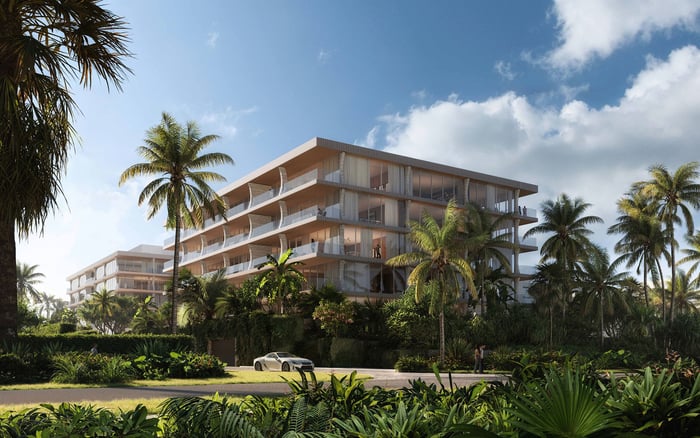
A discreet guide to the South Florida residence profiles that best serve international owners who prioritize lock-and-leave ease, governance, privacy, and practical management.

For a global buyer, a South Florida residence is not simply a place to arrive. It is a home that must perform beautifully while the owner is elsewhere. The right property should feel effortless from another time zone, supported by clear building communication, dependable service standards, intuitive access, and a governance culture that does not turn simple ownership into a series of surprises.
That requirement changes how a buyer should read the market. Views, design pedigree, and address prestige still matter, but convenience becomes the decisive luxury. A residence that is easy to secure, maintain, prepare, and enjoy on arrival may ultimately feel more valuable than a more dramatic property that demands constant supervision.
For international owners comparing Brickell, Downtown, Aventura, Surfside, Doral, and coastal enclaves across South Florida, the strongest choice is usually the one that reduces friction. That means reviewing not only the residence, but also the rhythm of the building, the clarity of association rules, and the owner experience during long absences.
1. Full-service waterfront condominium - lock-and-leave simplicity
The full-service waterfront condominium remains the benchmark for international-owner convenience because it concentrates daily oversight within a managed vertical environment. For the buyer who visits seasonally or on short notice, the appeal is not merely the water view. It is the ability to leave with confidence and return to a residence that can be readied with minimal complication.
This profile is strongest when the building culture is organized, access procedures are clear, and owner communications are consistent. Buyers should focus on staffing depth, package handling, vendor access, guest procedures, and the practical steps required to prepare a unit before arrival.
2. Branded or hospitality-led residence - service consistency
A branded or hospitality-led residence can suit buyers who want the emotional ease of hotel-style standards without giving up the privacy of ownership. The value lies in a predictable service language: arrival, reception, amenities, valet coordination, housekeeping options where available, and a more polished front-of-house experience.
This profile is especially attractive to owners who move between several homes and prefer familiar systems. The essential question is whether the service platform is substantive in daily life, not merely impressive in marketing. A serious buyer should examine what is included, what is optional, and how requests are handled when the owner is abroad.
3. Boutique low-density building - privacy and fewer moving parts
A boutique building can be ideal for an international buyer who values discretion over constant activity. Fewer residences can mean a calmer arrival experience, quieter shared spaces, and a more personal sense of recognition among building staff and residents. In markets such as Surfside or select bayfront pockets, that restraint can be a meaningful luxury.
The tradeoff is that smaller buildings may operate differently from large amenity towers. Buyers should understand staffing schedules, maintenance protocols, reserve planning, and how the building handles emergencies after hours. Convenience is strongest when privacy is matched by professional operations.
4. Residence with flexible occupancy strategy - controlled optionality
Some international owners want a residence primarily for personal use, while others may want the option to offset carrying costs through approved rental structures. This is where rules matter. Long-term rentals, minimum lease periods, guest registration, application approvals, and local restrictions should be understood before any emotional commitment.
This profile suits the buyer who views the property as both a second home and a long-range investment. The key is discipline. Optionality is only convenient when it is lawful, permitted by the association, and operationally realistic. If the rental program requires constant intervention, it may weaken rather than strengthen the ownership experience.
5. Managed single-family or estate-style residence - autonomy with support
For buyers who prefer land, privacy, and control, a managed single-family residence can work beautifully if the support structure is strong. This profile offers independence, but international owners should not underestimate the operational responsibility of a private property in South Florida’s climate.
The convenience version of this choice includes a trusted local management plan, routine inspections, storm preparation, landscape oversight, security coordination, and clear vendor relationships. Without those systems, autonomy can become administration. With them, the home can deliver the privacy of an estate while remaining manageable from abroad.
International-owner convenience is not a single amenity. It is a layered experience that begins before contract and continues long after closing. The most practical residences share a few traits: clear governance, experienced building staff, reasonable approval processes, and a physical design that does not punish absence.
For condominium buyers, the association documents are not secondary reading. They define how the property may be used, who may access it, what work may be done, and how quickly ownership changes or leases can be approved. For house buyers, the parallel discipline is a property management plan with real accountability.
The best South Florida ownership experiences tend to feel quiet. The elevator works, the arrival is smooth, the residence has been prepared, the air conditioning has been monitored, deliveries are handled, vendors are coordinated, and the owner’s privacy is protected. None of this is theatrical, but all of it is luxury.
A sophisticated buyer can narrow the field before arriving in South Florida by asking practical questions first. How is access handled for family members, guests, household staff, and vendors? What is the building’s process for deliveries during the owner’s absence? How are maintenance issues escalated? Are there restrictions on leasing, pets, renovations, or guest stays that would affect the owner’s plans?
The answers can be more revealing than a rendering or view corridor. A striking residence with rigid procedures may be wrong for an owner who travels often. A quieter building with disciplined operations may be the more luxurious choice because it protects time, privacy, and certainty.
Buyers should also consider the human rhythm of each location. Brickell and Downtown may appeal to owners who want immediate urban energy. Aventura can offer a practical northern Miami-Dade base. Surfside may feel more residential and discreet. Doral can suit buyers who prioritize inland convenience. The correct answer depends less on reputation than on how the owner will actually live.
Before choosing any residence, international buyers should clarify their personal use pattern. Will the home be occupied several months per year, or only during school holidays and key social seasons? Will family members use it independently? Will the residence need to be rentable, or is it purely private? Will staff, drivers, assistants, or household managers require recurring access?
These questions help separate beautiful properties from workable ones. They also make negotiations more focused. A buyer who understands the desired ownership pattern can evaluate a residence with discipline, asking whether the property supports that life with grace.
At the top of the market, convenience is not about removing responsibility entirely. It is about designing ownership so that responsibility is anticipated, delegated, and controlled.
What is the most convenient residence type for an international buyer? A full-service condominium is often the simplest starting point because access, staffing, and shared maintenance are centralized.
Should international owners prioritize branded residences? They can be compelling when the service platform is meaningful, consistent, and aligned with how the owner plans to use the home.
Are boutique buildings practical for absentee owners? Yes, if the building has clear procedures, dependable management, and adequate staffing for the owner’s expected needs.
Can a single-family home work for an overseas owner? It can, but only with a strong local management plan covering inspections, vendors, security, and storm preparation.
Why are association rules so important? They control leasing, guests, renovations, approvals, pets, and other details that directly affect day-to-day convenience.
Is rental flexibility always an advantage? Not necessarily. It is useful only when permitted, financially sensible, and easy to manage without constant owner involvement.
Which South Florida areas suit international owners? Brickell, Downtown, Aventura, Surfside, and Doral can each make sense depending on lifestyle, access needs, and privacy preferences.
What should buyers review before closing? They should review governance documents, insurance context, reserves, access procedures, leasing rules, and maintenance responsibilities.
How can owners prepare a residence before arrival? They should arrange cleaning, climate checks, deliveries, groceries, security review, and any service appointments in advance.
What makes a residence feel truly effortless? Clear communication, reliable service, privacy, and predictable procedures turn ownership into a pleasure rather than a project.
To compare the best-fit options with clarity, connect with MILLION.
If branded residences are on your mind — as a home or as an allocation — we would be glad to share what we are seeing, privately.
Begin a quiet conversation