A buyer-focused look at the condo amenities that matter when a South Florida residence is intended for daily life, not only winter weekends or entertaining.
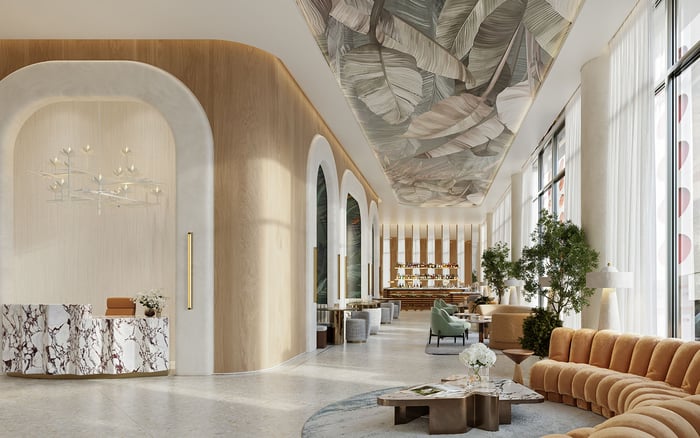
In South Florida, luxury condominium amenities can be visually irresistible. A sculptural lobby, sunset-facing lounge, dramatic tasting room, or resort-style deck can create an immediate impression. Yet full-time ownership asks a more exacting question: what will still matter on a Tuesday morning in August, after the guest suite has emptied and the season has moved elsewhere?
For primary residents, the most valuable amenities are not always the most theatrical. They are the spaces and services that reduce friction, protect privacy, support health, absorb deliveries, welcome family and friends without disrupting the home, and allow the residence to function as a true household. The distinction is subtle but important. Seasonal staging is designed to impress. Full-time infrastructure is designed to endure.
That lens is especially useful for buyers comparing neighborhoods with very different rhythms. Brickell may reward efficiency and vertical convenience, while Coconut Grove may emphasize calm, wellness, and connection to landscape. In Miami Beach, the question may be how easily a building balances resort energy with domestic quiet. A buyer considering The Residences at 1428 Brickell, for example, should evaluate not only the visual signature of the amenities, but also how the building supports daily work, guests, wellness, and service flow.
1. Wellness suites - practical recovery and routine
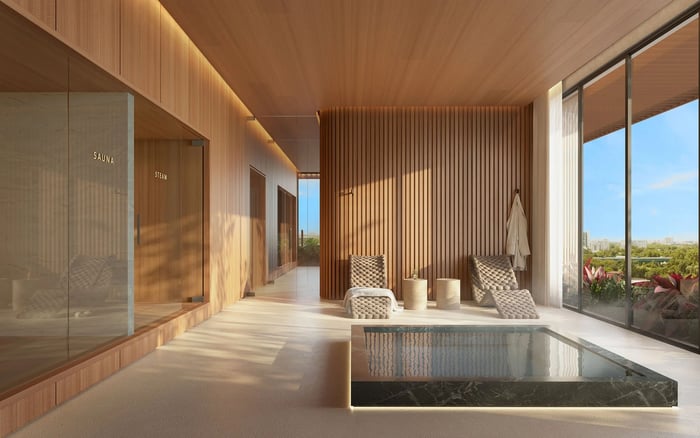
A serious wellness amenity is not defined by how photogenic the spa appears. It is defined by whether residents can use it consistently without treating it as an appointment-worthy event. Full-time buyers should look for spaces that support routine movement, stretching, recovery, grooming, and quiet decompression.
The best version feels private, calm, and close enough to use before work or after travel. It should reduce the need for outside memberships rather than simply replicate a hotel spa aesthetic. Pool access can be part of this equation, but the larger value lies in daily repeatability.
2. Flexible work and meeting rooms - the new household extension
For full-time residents, a condominium is no longer only a place to retreat. It is often a place to work, take calls, host advisers, review plans, or manage a business remotely. A meaningful work amenity gives owners options beyond the kitchen island and beyond a crowded café.
The distinction is privacy. A beautiful lounge may photograph well, but a true full-time amenity offers acoustic comfort, seating that works for more than 20 minutes, and enough separation to make professional use feel appropriate. This is particularly important in dense urban settings, where the building itself becomes an extension of the residence.
3. Service, storage, and delivery infrastructure - the invisible luxury
The most underrated full-time amenity is operational. Package handling, service access, bicycle or beach gear storage, climate-sensitive holding areas, valet flow, and move-in logistics rarely lead a brochure, but they shape daily satisfaction.
A seasonal owner can forgive inconvenience. A full-time resident encounters it repeatedly. The real question is whether the building can absorb modern household volume without turning the lobby into a loading zone. Balcony life, beach days, family visits, and frequent travel all create objects that need to be stored, moved, cleaned, and retrieved gracefully.
4. Pet-forward design - not just pet tolerance
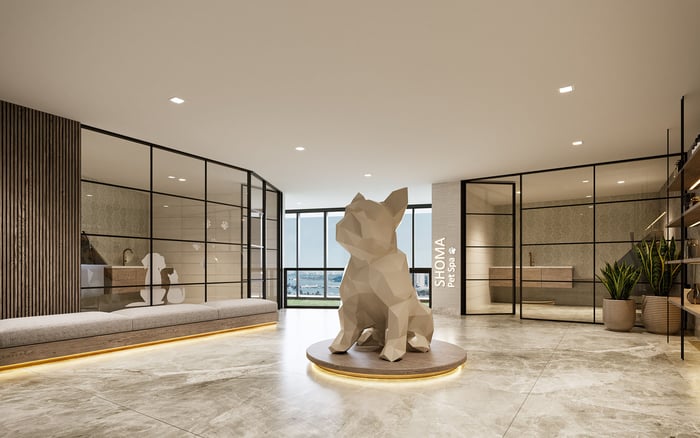
Pets are part of full-time life for many luxury buyers, and the difference between a pet-permitted building and a pet-considered building is substantial. A useful pet amenity should make daily routines easier while preserving the refinement of shared spaces.
That may mean convenient relief access, grooming support, clear circulation, and building rules that are practical rather than merely decorative. Pets should not feel like an afterthought squeezed between valet and the service corridor. When handled well, pet design supports both owners and neighbors.
5. Guest and entertaining spaces - hospitality without household disruption
Seasonal staging often celebrates entertainment, but full-time living requires hospitality with boundaries. Owners benefit when they can host family, visiting friends, colleagues, or private dinners without surrendering the calm of the residence itself.
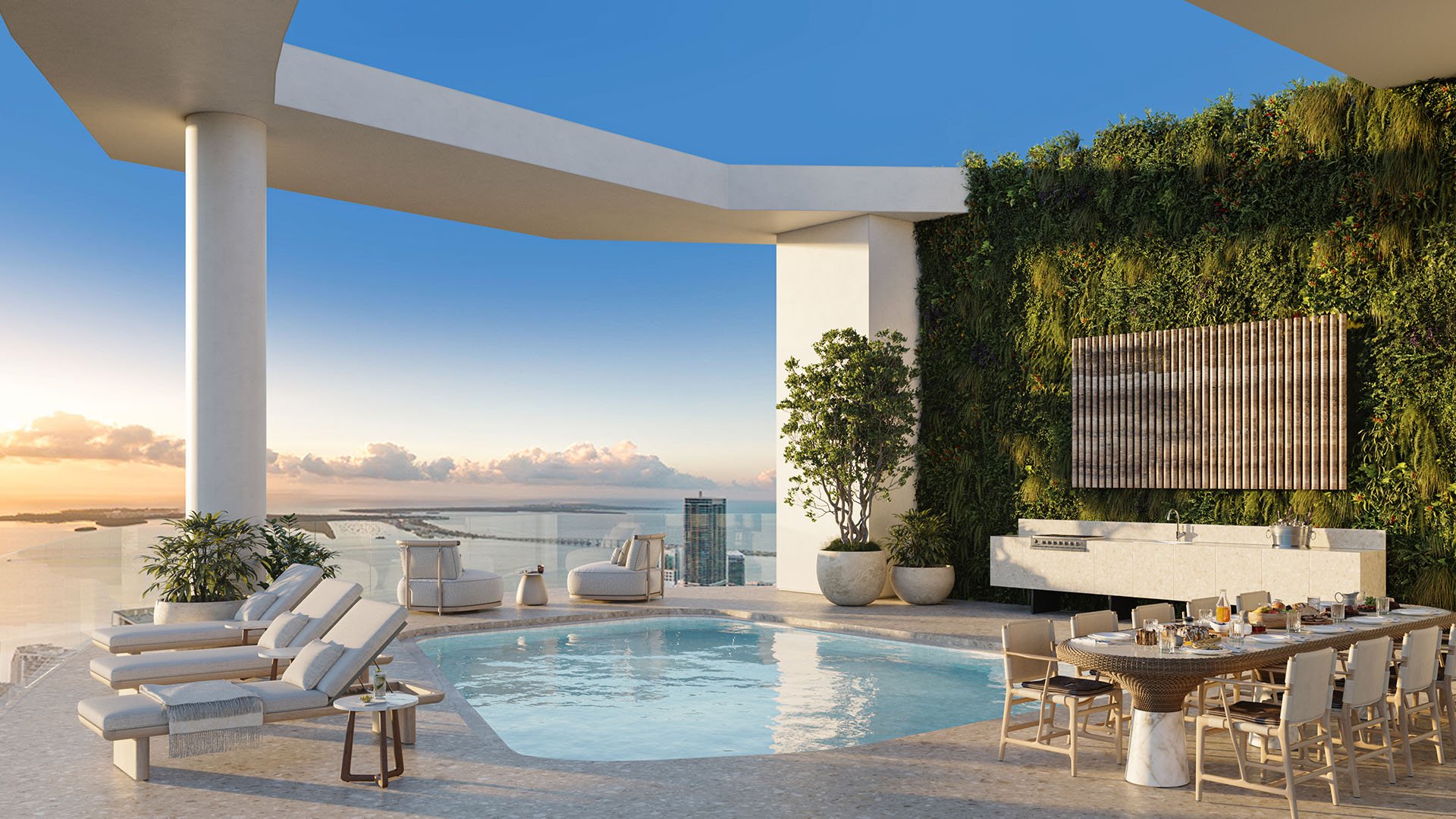
The strongest entertaining amenities are not just large. They are well managed, bookable, serviceable, and acoustically respectful. A dining room, terrace, lounge, or media space should allow gracious hosting while keeping the private home private. Terrace design matters most when it can be used naturally, not only admired from a rendering.
Amenity value changes by location. In Brickell, convenience and privacy often take precedence because the pace is vertical and business-oriented. Buyers may assign greater importance to valet performance, work rooms, package handling, and wellness spaces that can be used between meetings. A high-rise lifestyle rewards amenities that compress time.
In Coconut Grove, the full-time test may be quieter. Buyers often look for a sense of retreat, shaded arrival, wellness, family functionality, and a softer transition between indoors and outdoors. When comparing residences such as The Well Coconut Grove, the question becomes whether wellness is integrated into everyday life rather than presented as a separate branded moment.
On the oceanfront, amenities must reconcile beauty with practicality. Miami Beach living can be intensely seductive, but full-time owners still need thoughtful service routes, storage for beach equipment, privacy after high-traffic weekends, and calm spaces away from the spectacle. Beach access is valuable only when the return path, cleanup, and storage are equally considered.
In Sunny Isles, many buyers are drawn to scale, views, and resort-level presence. Yet full-time livability still depends on the same fundamentals: easy arrival, reliable staff flow, usable wellness, family-friendly spaces, and quiet areas that do not feel like extensions of a hotel lobby. Residences such as St. Regis® Residences Sunny Isles invite buyers to distinguish between brand glamour and the more personal question of daily comfort.
Seasonal staging tends to overvalue the occasional. A dramatic party room may be memorable, but how often will it be used? A cinematic lounge may help sell the atmosphere, but does it support reading, calls, or quiet conversation? A large pool deck can feel impressive, but daily livability depends on shade, circulation, towel service, seating comfort, and the ability to use the space without ceremony.
Full-time buyers should also be wary of amenities that are too generalized. A room labeled flexible can become underused if it lacks acoustic planning, service access, or clear rules. A wellness suite can become decorative if the equipment mix is narrow or the setting feels exposed. Investment value is not only about visual luxury. It is also about whether future buyers will recognize that the building works well as a residence.
The more expensive the home, the more important this becomes. At the top of the market, owners are not simply buying square footage. They are buying time, discretion, ease, and the confidence that the building will not add complexity to already complex lives.
Before being persuaded by a showpiece amenity, walk mentally through an ordinary week. Where do deliveries go? Where does a trainer meet you? Can a guest arrive without passing through your private living room? Is there a place for a confidential call? Can children, visiting parents, staff, and pets move through the building without awkwardness?
This is where luxury becomes architectural rather than cosmetic. The amenity program should support a household ecosystem. It should recognize that full-time owners entertain, work, recover, travel, receive services, care for pets, host family, and still want privacy at the end of the day.
The best South Florida condominiums make this feel effortless. They do not announce utility loudly. They embed it in arrival sequences, staff coordination, room placement, elevator logic, reservation systems, and the quiet choreography of daily life. Buyers comparing coastal and urban options, including The Ritz-Carlton Residences® Pompano Beach, should treat the amenity tour as a living audit rather than a design presentation.
What makes a condo amenity useful for full-time living? It should solve a recurring daily need, such as wellness, work, storage, pets, hosting, or service flow.
Are large entertainment spaces always valuable? Not necessarily. They matter most when they are private, well managed, easy to reserve, and respectful of residents.
Is a pool enough to define a strong amenity program? No. A pool is valuable, but full-time living also depends on shade, service, storage, wellness, and daily comfort.
Why is storage so important in South Florida condos? Beach gear, luggage, deliveries, sports equipment, and seasonal items can quickly affect how comfortably a home lives.
Should buyers prioritize wellness amenities? Yes, if the spaces are convenient, private, and designed for regular use rather than occasional presentation.
Do pets change the way a buyer should evaluate a building? Absolutely. Pet routines affect elevator use, service areas, outdoor access, and the daily rhythm of the household.
How should Brickell buyers think about amenities? Brickell buyers often benefit from amenities that save time, support work, and make vertical living feel efficient.
Does balcony design matter for full-time ownership? Yes. A usable balcony can extend daily living, but only if furniture, shade, wind, and privacy are considered.
What role does a terrace play in luxury living? A terrace can support dining, entertaining, and quiet outdoor time when it is comfortable and practically arranged.
How can buyers separate lifestyle theater from real function? Ask how often each amenity will be used in an ordinary week, then evaluate privacy, convenience, and management.
If you'd like a private walkthrough and a curated shortlist, connect with MILLION.
If branded residences are on your mind — as a home or as an allocation — we would be glad to share what we are seeing, privately.
Begin a quiet conversation