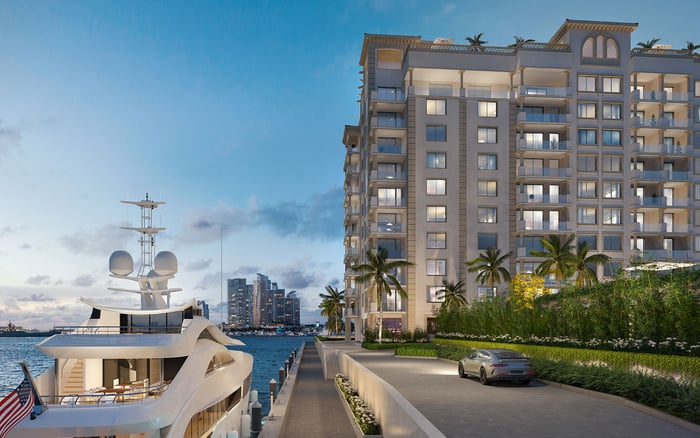
A discreet buyer’s guide to evaluating stormwater drainage, association preparedness, building design, and long-term ownership questions on Fisher Island.
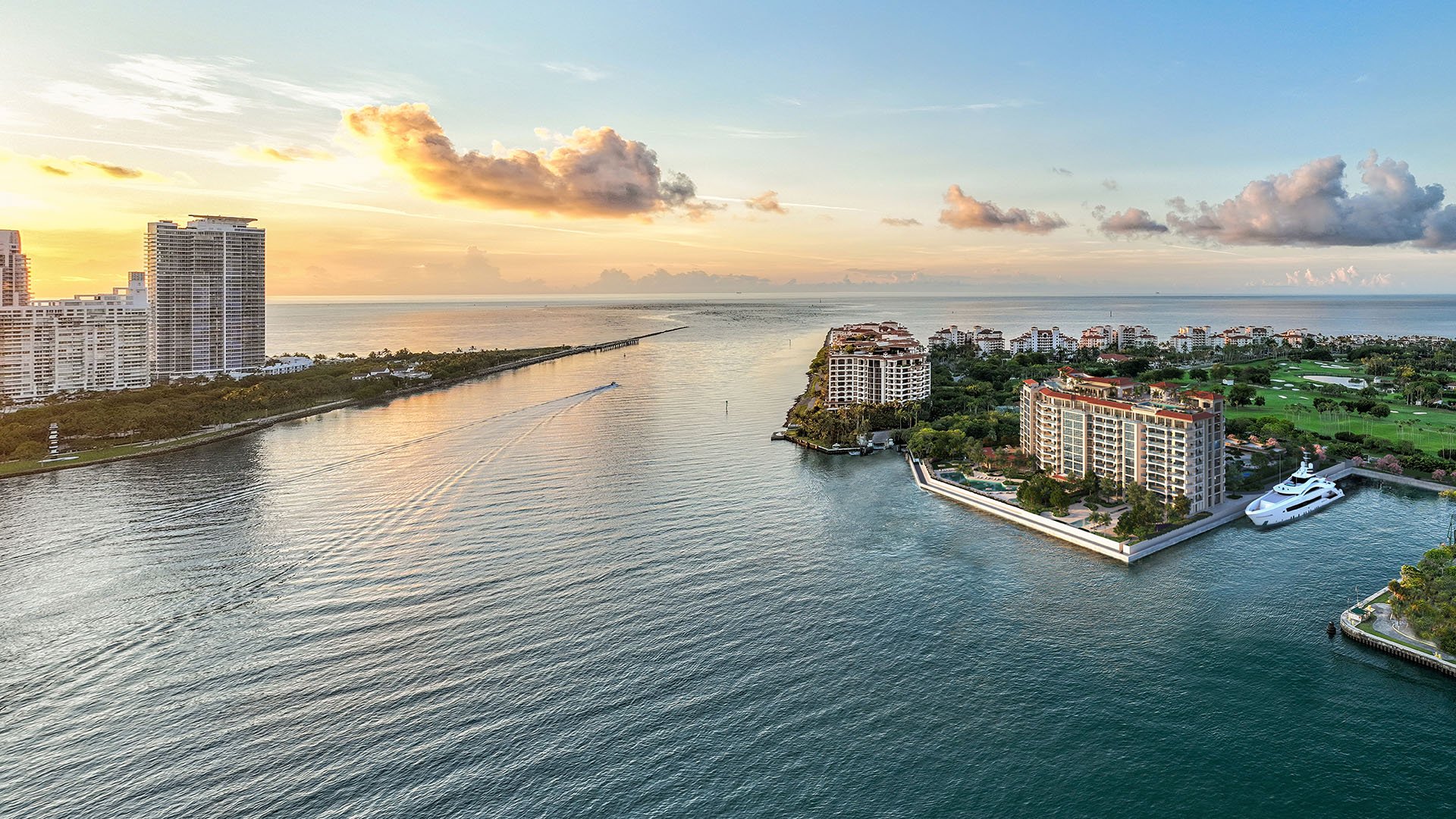
On Fisher Island, luxury is often expressed through privacy, service, architecture, water views, and arrival. For a serious buyer, especially one considering a long-term hold, stormwater drainage belongs in the same conversation as finishes, exposure, staff flow, and club access. It is not a pessimistic topic. It is a stewardship topic.
The most sophisticated buyers do not stop at whether a residence is beautiful. They ask how it performs. How does water move during a heavy rain? Where does it collect? Which areas are designed to shed it quickly, and which depend on maintenance, pumps, slopes, drains, or landscape detailing? A polished lobby and a flawless terrace can coexist with practical questions about catch basins, garage entries, garden grades, and service corridors.
This is especially relevant in a market where buyers may compare very different ownership formats. A waterfront condominium, a villa, and a private estate each place responsibility in different hands. When reviewing Palazzo del Sol, for example, the drainage discussion may focus on building systems, common areas, and association protocols. When considering estate-style living, the conversation becomes more site-specific, extending to driveways, lawns, pool decks, and private mechanical areas.
The best drainage due diligence starts with a plain question: where does the water go? The answer should be understandable, documented where possible, and consistent with what you can observe on site. Buyers should ask their advisors to walk the arrival sequence, from ferry or private transport to the building or home entrance, then continue through garage levels, pedestrian paths, service doors, gardens, terraces, and pool areas.
Look closely at the relationship between hardscape and landscape. A beautifully paved motor court should have a visible logic for moving water away from thresholds. A garden should be evaluated not only for planting and lighting, but also for grading and soil performance. Garage ramps, storage areas, and lower-level service spaces deserve particular attention because they often reveal how a property handles water under pressure.
For buyers comparing Palazzo del Sol Fisher Island with other residential options, the question is not which address sounds most prestigious. The question is which ownership setting offers the clearest answers, the strongest maintenance culture, and the most transparent path for future capital planning.
In a condominium or managed residential setting, the association’s role is central. A buyer should ask how drainage infrastructure is inspected, how often drains are cleaned, who is responsible for maintenance, and what records exist for recent work. These are not adversarial questions. In a high-end building, they are part of normal due diligence.
Ask whether the property has written storm-preparation procedures. Ask who makes decisions before, during, and after significant rain events. Ask how residents are notified if access patterns, service entries, or garage operations are affected. A luxury building should not rely on informal memory alone. It should have a calm, repeatable process.
At Palazzo della Luna, or at any similarly positioned Fisher Island condominium, a buyer should understand which systems serve the whole property and which items remain the owner’s responsibility. This distinction matters for insurance conversations, future assessments, renovation plans, and everyday comfort.
A property tour can reveal as much about drainage as it does about design. After admiring the view, look down. Where are the drains? Are they placed at logical low points? Do planters have a clear way to release water? Are terrace thresholds protected? Are outdoor kitchens, cabanas, and pool decks detailed so that water moves away from living areas rather than toward them?
On a site with marina, garden, and waterfront exposures, surface water can behave differently from one side of the property to another. Wind, paving, shade, soil, and landscape density all influence how quickly an area dries. This is why buyers should tour more than once when possible, including after recent rain if scheduling allows.
The language may feel technical, but the principle is elegant: excellent real estate should be graceful under ordinary stress. Fisher Island buyers who already evaluate privacy, gated-community protocols, marina convenience, and oceanfront views should add drainage performance to the same checklist.
A condominium buyer should focus on association governance, building systems, garage design, terrace detailing, maintenance reserves, and the history of common-area repairs. The goal is to understand how shared infrastructure is monitored and funded.
A villa buyer should go further. Ask about roof drainage, courtyard slopes, exterior drains, planter systems, irrigation controls, and the transition between private and shared areas. Villas often create a hybrid responsibility profile, which can be elegant but requires clarity.
An estate-home buyer should be the most granular. At The Links Estates at Fisher Island, the due diligence lens may extend to lot grading, driveway drainage, pool-deck pitch, landscape retention, generator placement, and mechanical rooms. The larger the private footprint, the more the buyer should understand how water moves from every surface.
Luxury buyers often assemble an excellent advisory team for contracts, tax, lending, and interiors. Drainage deserves its own technical attention. A qualified inspector, engineer, architect, or owner’s representative can help convert impressions into useful questions.
Ask the team to review visible grading, roof drainage, terrace drains, garage entries, mechanical elevations, exterior doors, and any signs of repeated moisture. Ask whether renovation plans could affect drainage. A new outdoor kitchen, enlarged terrace, privacy wall, planter, or pool feature can change how water moves. Even beautiful work can create problems if it interrupts the original drainage logic.
Buyers considering The Residences at Six Fisher Island should approach the review with the same discipline they would bring to art storage, wine rooms, or smart-home infrastructure. The goal is not to diminish the romance of the acquisition. It is to protect it.
Stormwater diligence is ultimately about confidence. A residence with a clear drainage story is easier to own, easier to manage, and easier to explain when the time comes to resell. Buyers at this level understand that discretion and liquidity are connected. Future purchasers may ask the same questions, and a well-documented answer can support a smoother transaction.
The strongest position is not necessarily the newest, largest, or most expensive residence. It is the one where the buyer understands the asset. On Fisher Island, that means understanding views and service, but also thresholds, slopes, drains, maintenance culture, and decision-making authority.
A refined purchase process should leave no important practical question unasked. In that sense, stormwater drainage is not a niche concern. It is part of the modern luxury standard.
What should a Fisher Island buyer ask first about stormwater drainage? Start by asking where water is intended to go during heavy rain, then request a walkthrough of drains, slopes, garage entries, terraces, and landscaped areas.
Is drainage more important for a house than a condominium? It matters for both, but responsibility differs. Condominiums often rely on shared systems, while homes and villas may involve more private-site responsibility.
Should buyers review association records? Yes. Ask for available records related to drainage maintenance, inspections, repairs, procedures, and any planned capital work affecting common areas.
Can a beautiful landscape affect drainage? Yes. Plantings, soil, planters, walls, and paving can influence how water moves and how quickly outdoor areas dry after rain.
Are garage areas part of drainage due diligence? They should be. Garage ramps, lower-level storage, service areas, and mechanical spaces can reveal how a property handles water movement.
Should a buyer tour after rainfall? If practical, yes. A post-rain visit may show ponding, slow-drying areas, staining, or maintenance patterns that are not visible on a perfect day.
Who should evaluate drainage for a luxury buyer? A qualified inspector, engineer, architect, or owner’s representative can help assess visible conditions and identify questions for the seller or association.
Can renovations create drainage issues? They can. Changes to terraces, planters, walls, pools, kitchens, or paving may alter how water moves across a property.
Does drainage affect resale confidence? It can. Clear documentation, sound maintenance, and well-understood responsibilities help future buyers evaluate the property with greater confidence.
Is stormwater diligence compatible with a luxury buying experience? Absolutely. The most refined acquisitions combine beauty with performance, privacy with preparedness, and design with long-term stewardship.
When you're ready to tour or underwrite the options, connect with MILLION.
If branded residences are on your mind — as a home or as an allocation — we would be glad to share what we are seeing, privately.
Begin a quiet conversation