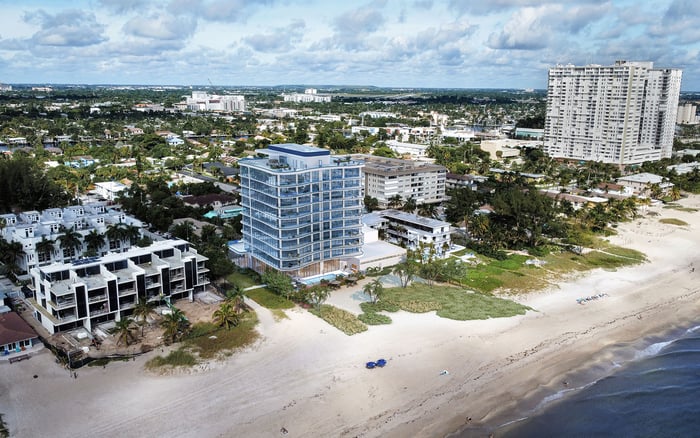
A refined due-diligence framework for testing whether a Hillsboro Beach water view, and the premium attached to it, can withstand neighboring redevelopment.
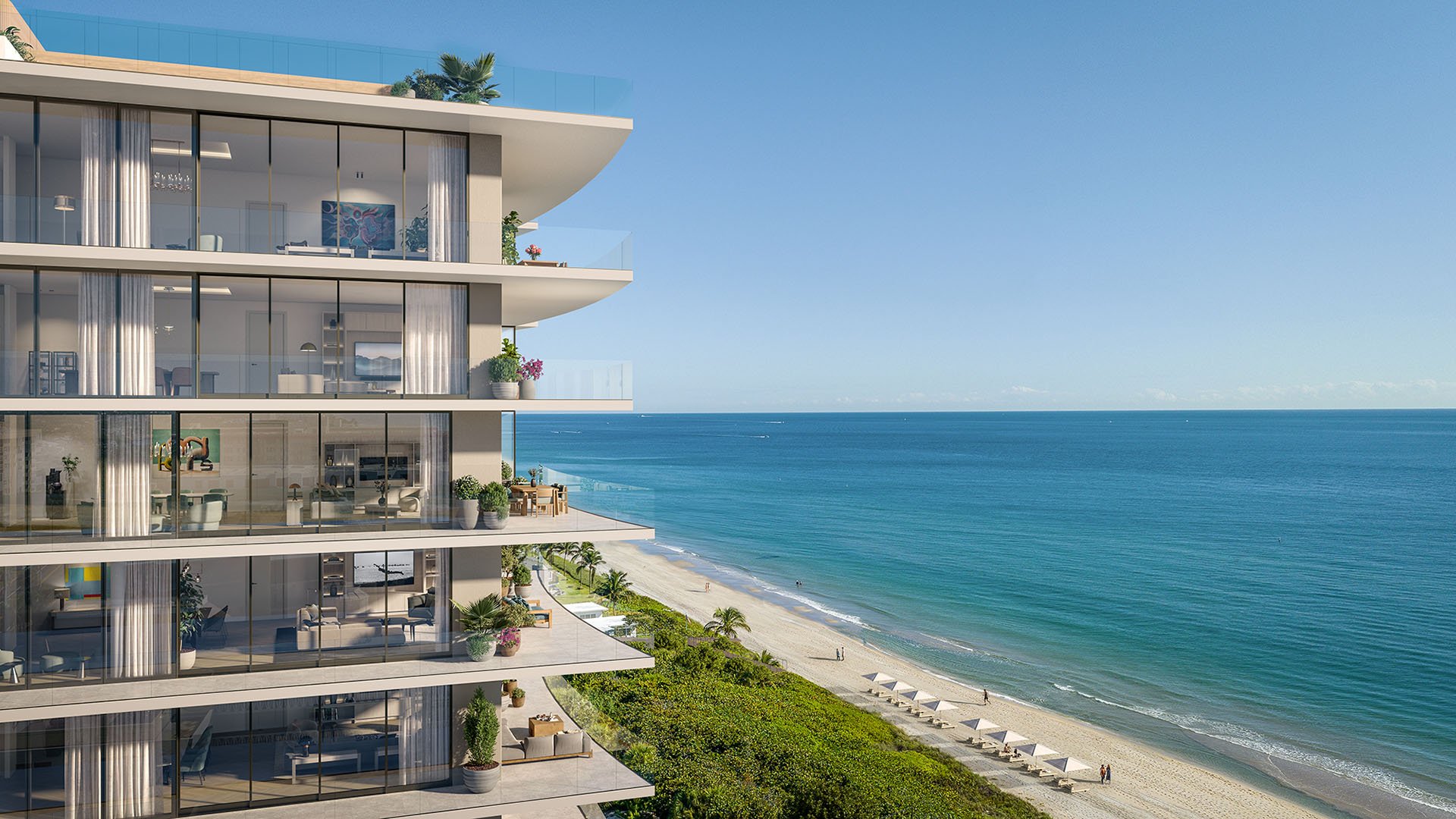
In Hillsboro Beach, a residence may derive much of its emotional and financial appeal from a long Atlantic horizon, a layered Intracoastal outlook, or a carefully framed water corridor. Yet the view presented during a showing is only a snapshot. A disciplined buyer must also ask what the neighboring land could support tomorrow.
That distinction matters when evaluating an oceanfront estate, a condominium residence, or a waterfront property whose outlook crosses another parcel. The structure next door may be modest, underbuilt, vacant, or positioned to preserve an unusually open angle. None of those conditions, by itself, establishes that the view will remain unchanged.
The correct question is not what stands next door, but what the parcel may legally become.
This buyer-focused framework treats the view as both an amenity and a due-diligence subject. The same approach applies whether considering Rosewood Residences Hillsboro Beach or assessing a private home elsewhere in Hillsboro Beach.
Begin by identifying every parcel that intersects the sightline, not merely the lots sharing a boundary. For an angled ocean view, the relevant property may sit beyond the immediate neighbor. For an Intracoastal outlook, property across the water may also shape the long-term visual field.
Confirm the zoning designation for the subject property and each relevant neighbor. Then review permitted uses, setbacks, placement rules, and any applicable site-plan requirements. Maps and planning materials are useful starting points, but they do not replace parcel-specific interpretation by qualified professionals.
Lot dimensions alone do not reveal the practical building envelope. A careful review should consider the rules and recorded rights that may shape placement, height, massing, elevated construction, additions, terraces, landscaping, and accessory structures. The analysis should distinguish what exists today from what may be permitted after redevelopment.
Give additional scrutiny to vacant, oversized, underbuilt, or multifamily-zoned neighboring properties. Their existing improvements may not reflect their full redevelopment potential. A land-use professional can help model a conservative scenario and a more intensive plausible scenario without assuming that either will occur.
Permit and planning records can indicate whether a neighboring parcel is moving from theoretical capacity toward an active proposal. Request available applications, issued permits, site plans, revisions, inspections, variances, and other approvals that may affect nearby land.
The inquiry should extend beyond the principal building. Potential changes to grade, landscaping, paving, drainage, shoreline features, docks, seawalls, or accessory improvements may influence a sightline or its visual foreground. Qualified professionals should determine which local or state reviews may apply to a particular proposal.
A permit file is not a promise that work will proceed exactly as shown. Plans may change, approvals may lapse, and a parcel may remain dormant. Conversely, the absence of an active file does not establish that the property lacks future potential. Permit history and legal capacity should therefore be considered together.
Coastal rules may shape construction, excavation, rebuilding, and shoreline work in Hillsboro Beach. Their relevance depends on the parcel and the proposed work, so buyers should confirm the applicable requirements rather than relying on assumptions made during a showing.
These controls should not be treated as a private view easement. Even when a project complies with applicable rules, changes to height, elevation, massing, landscaping, or site configuration may alter a neighboring outlook. Regulation may constrain development without eliminating obstruction risk.
Buyers comparing Hillsboro Beach with nearby Broward coastal offerings such as Armani Casa Residences Pompano Beach or The Ritz-Carlton Residences® Pompano Beach should not assume that every water-facing residence carries the same exposure. Floor elevation, orientation, intervening parcels, and the potential envelope around each sightline require separate review.
A credible valuation separates the view into components: water type, angular breadth, floor or site elevation, foreground quality, privacy, orientation, and obstruction probability. A narrow water view through neighboring structures should not be priced like an open Atlantic panorama. Likewise, a view with credible redevelopment exposure deserves different treatment from one supported by recorded rights or site geometry that makes obstruction less likely.
Request comparable sales that distinguish direct water frontage from partial, oblique, or potentially obstructed outlooks. Then stress-test the purchase price under several qualitative scenarios: the current view, a partially reduced view, and a materially altered view. This exercise does not predict an outcome; it shows how much of the acquisition rationale depends on an assumption that may not be legally protected.
When evaluating an alternative such as Waldorf Astoria Residences Pompano Beach, repeat the parcel and sightline analysis rather than transferring a premium from another property type or location.
A thorough diligence file combines municipal, land-use, survey, title, and valuation review. Qualified professionals can help confirm zoning and setbacks, inspect available permits and site plans, review recorded easements and deed restrictions, identify variances, assess coastal constraints, and evaluate potential changes to drainage or grade. A current survey should be read alongside title materials so visual assumptions can be compared with recorded rights.
Ask whether any view corridor is supported by an easement, restriction, or other recorded instrument. If no such protection is identified, treat the sightline as an amenity exposed to change and price the uncertainty accordingly. Counsel should determine suitable contract timing, access, and protections for the transaction.
No single document answers the entire question. Zoning materials frame potential capacity, permit files may reveal activity, coastal rules may shape feasibility, and title records may identify private rights. Read together, they turn a beautiful outlook from a sales impression into a measured risk decision.
For discreet guidance on Hillsboro Beach acquisitions and view-sensitive due diligence, connect with MILLION.
If branded residences are on your mind — as a home or as an allocation — we would be glad to share what we are seeing, privately.
Begin a quiet conversationNo. Zoning may limit development, but a compliant project or site change could still alter a sightline.
An angled ocean or Intracoastal view may cross multiple properties, so a more distant parcel could affect its breadth or quality.
Review zoning, setbacks, permitted uses, site-plan requirements, variances, permits, and recorded rights with qualified professionals.
Available applications, permits, site plans, revisions, inspections, variances, and related approvals may indicate active planning or work.
Not necessarily. Coastal controls may shape development, but they should not be assumed to create a private view easement.
Lot dimensions and current improvements do not necessarily reveal the practical development envelope or every restriction affecting it.
Yes. Changes involving grade, landscaping, drainage, docks, seawalls, or accessory improvements may affect a sightline or its foreground.
Consider view width, elevation, orientation, foreground quality, privacy, and obstruction exposure instead of applying a broad premium mechanically.
Vacant, oversized, underbuilt, or multifamily-zoned parcels may warrant added review because existing conditions may not reflect redevelopment potential.
Recorded easements, deed restrictions, and other title instruments may affect development rights, and qualified counsel should interpret their scope.