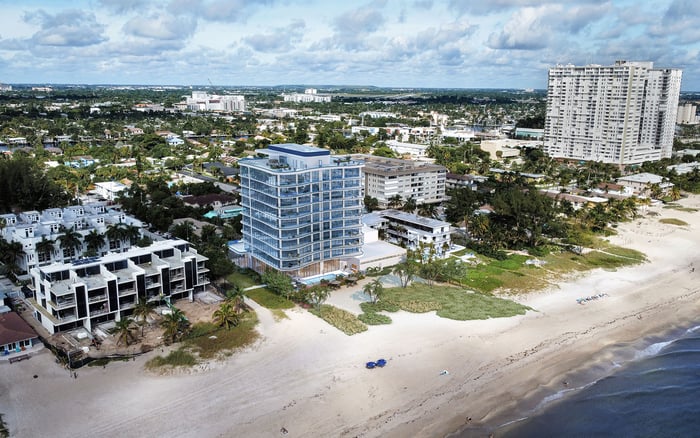
A title policy can protect ownership at closing, but it is not a warranty for how a condominium association will govern, budget, insure or assess its owners in the future.

At Waldorf Astoria Residences Pompano Beach, the appeal begins with an Oceanfront setting and the service vocabulary of Branded Residences. Yet the legal architecture of condominium ownership deserves the same scrutiny as the physical architecture. A title policy is central to a well-structured acquisition, but its purpose is narrower than many buyers assume.
Florida title insurance generally addresses covered defects affecting ownership as of the policy date. Depending on the policy and circumstances, these may include an undisclosed lien, a public-record error, prior-deed fraud or an improperly recorded instrument. The policy does not ordinarily serve as a continuing warranty for every financial or governance event arising after closing.
That distinction is particularly important in Pompano Beach, where a purchaser may compare several luxury condominium formats, including Armani Casa Residences Pompano Beach. Branding, amenities and waterfront presentation can shape a buyer's decision, but the declaration, bylaws, budget and insurance structure define a separate category of risk.
A clean title does not guarantee a predictable condominium balance sheet.
A title policy does not guarantee association solvency, cap assessment increases or oversee future decisions by the condominium board. Board composition, elections, rule amendments, guest policies and other lawful governance choices are ongoing association matters-not defects in the title to an individual residence.
For a buyer, this means ownership can be valid and insurable even if a future board adopts a rule the owner dislikes, changes an operating policy or approves an expensive project. The policy is not designed to preserve a particular management philosophy, service model or amenity program.
The treatment of common-area artwork illustrates why documents control. Artwork shown or installed in common areas may be removed before turnover and belongs to the association only if the developer conveys it in writing. The broader lesson extends beyond artwork: marketing imagery and expectations are not substitutes for documented ownership rights and binding obligations.
This principle applies throughout Broward luxury real estate. Buyers evaluating The Ritz-Carlton Residences® Pompano Beach should likewise distinguish the residence's title from the association's future authority, finances and operational decisions.
Regular or special condominium assessments newly imposed after a buyer takes title are generally not title-insurance claims. If an association later requires funds for structural work, reserve funding, deferred maintenance or a capital improvement, the resulting charge ordinarily belongs to the unit owner under the governing documents.
A condominium endorsement addresses a different issue. The ALTA 4.1 Condominium, Current Assessments endorsement concerns assessment matters existing at the policy date. It should not be read as a promise that the association will never impose a future charge. Buyers should ask the title agent which endorsements will be issued, precisely what each covers and which exceptions remain.
The potential source of a later assessment also matters. An association might face ordinary maintenance costs, reserve needs or an uninsured portion of property damage. If damage exceeds the master policy's limits, the association may allocate the shortfall among owners. None of these future outcomes becomes title risk merely because the obligation is collected through an assessment.
Loss-assessment protection under an owner's HO-6 policy occupies a separate lane from title insurance. Florida unit-owner residential property policies must include at least $2,000 of property loss-assessment coverage for assessments resulting from the same covered direct loss. Broader limits may be available, but policy language, deductibles and exclusions govern the outcome.
In general, loss-assessment coverage may respond when an owner's share of an association assessment arises from a covered loss to commonly owned property. It generally does not pay simply because the association needs more money. Maintenance, reserve shortfalls and excluded causes of loss ordinarily fall outside the protection.
That distinction can shape responsibility for major expenditures. Structural integrity reserve shortfalls, milestone-inspection work and maintenance-driven structural repairs ordinarily are not covered when no sudden covered loss caused the expense. Routine roof replacement, repaving or painting does not become an insured loss simply because owners receive an assessment. Flood-related assessments also generally sit outside ordinary loss-assessment coverage unless separate flood protection applies to the underlying loss.
A project such as W Pompano Beach Hotel & Residences may present a different ownership and operating context, but the analytical discipline remains consistent: distinguish title coverage, association insurance and the owner's policy rather than assuming one product fills every gap.
The practical response is coordinated due diligence. Buyers should review the current declaration, articles, bylaws and rules delivered with the transaction. Particular attention should be paid to the association's assessment authority, borrowing powers, amendment thresholds, developer-control rights, turnover provisions and allocation of common expenses.
The financial review should be equally precise. Examine the projected budget, reserve strategy and any available explanation of anticipated capital obligations. Public-facing project materials may not contain the final association budget, complete reserve plan or every governance provision, so the operative transaction documents should guide the analysis.
Insurance warrants its own review rather than a paragraph within the title discussion. Ask for the master-policy limits, wind and flood arrangements, deductibles and the formula used to allocate uninsured costs. Then have an insurance adviser explain how the proposed HO-6 policy treats loss assessments, covered perils, exclusions and applicable sublimits. A high headline limit carries less meaning if the triggering event falls outside coverage.
Legal counsel can focus on provisions governing developer control, turnover, amendments, special assessments, association borrowing and responsibility for master-policy deductibles. The title agent can separately explain policy exceptions and available condominium endorsements. These reviews are complementary, not interchangeable.
A sophisticated purchase decision distinguishes three questions. Is the buyer receiving insurable ownership? What powers and obligations follow from membership in the association? Which losses, deductibles and assessment scenarios are insured? Title insurance principally addresses the first. Documents, financial diligence and carefully selected coverage address the others.
For Waldorf Astoria Residences Pompano Beach, that distinction does not diminish the proposition. It clarifies it. Confidence comes from understanding both the elegance of the offering and the legal and financial framework that continues after the closing documents are signed.
For discreet guidance on South Florida luxury condominium opportunities, connect with MILLION.
If branded residences are on your mind — as a home or as an allocation — we would be glad to share what we are seeing, privately.
Begin a quiet conversationGenerally, no. A regular or special condominium assessment newly imposed after the policy date is ordinarily the owner's obligation.
It generally addresses covered title defects existing at the policy date, such as undisclosed liens, record errors, prior-deed fraud or improperly recorded instruments.
No. Association finances and future budget decisions are outside the ordinary purpose of title insurance.
No. Lawful decisions concerning rules, elections, guests and association operations are governance matters rather than title defects.
It concerns current assessment issues existing at the policy date. It is not a guarantee against assessments imposed later.
It may pay when the assessment results from a covered loss to commonly owned property, subject to the policy's limits, deductibles and exclusions.
Generally, no. Reserve deficiencies and ordinary maintenance costs usually do not arise from a covered direct loss.
Normal roof replacement, repaving or painting is generally not covered merely because the association assesses owners for the expense.
Review the declaration, articles, bylaws and rules, focusing on assessment authority, borrowing, amendments, developer control and common-expense allocation.
Examine master-policy limits, wind and flood protection, deductibles, uninsured-cost allocation and the terms of the buyer's proposed HO-6 coverage.