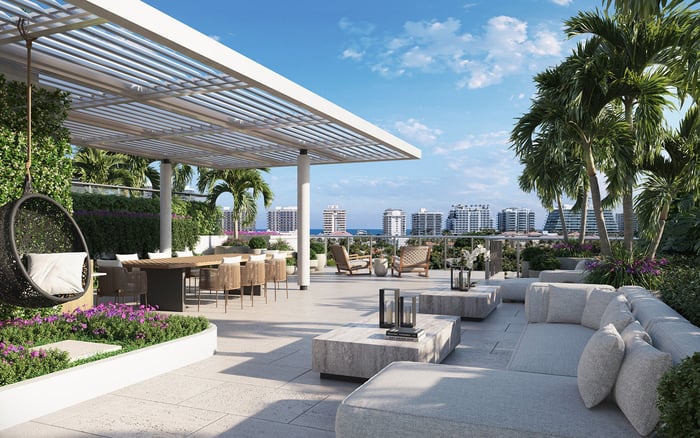
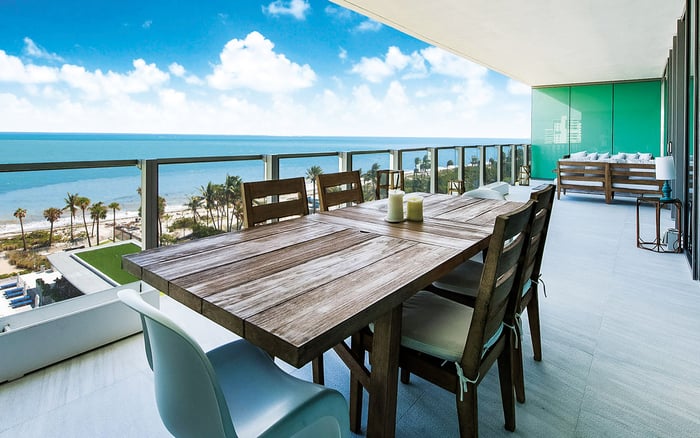
A discreet buyer’s guide to five Miami-area residences and enclaves that speak to bay-view living while keeping distance from the intensity of the Downtown core.

In Miami, the bay-view conversation often begins with the skyline. It does not have to end there. For certain buyers, the most compelling residence is not the one closest to Downtown’s towers, but the one that frames Biscayne Bay with more breathing room, gentler arrival patterns, and a residential rhythm that feels composed rather than theatrical.
That distinction matters. A bay view can be cinematic, but daily life is shaped just as much by sound, access, approach, and the character of the surrounding streets. Buyers who love the water but do not want Downtown energy or the full intensity of Brickell are usually pursuing a more exacting brief: outlook, light, privacy, and calm, with the city close enough to enjoy but not close enough to dominate.
This is where Miami’s island and waterfront neighborhoods become especially compelling. Bay Harbor Islands, North Bay Village, Grove Isle, Coconut Grove, and Key Biscayne each answer the same question differently: how close can one remain to Miami’s cultural and dining life while preserving the quieter feeling of a waterfront home?
The residences below are best understood through that lens. They are not ranked by spectacle alone. They are ranked for buyers who want water, perspective, and discretion, with a preference for settings that feel more residential than downtown-driven.
1. La Baia North Bay Harbor Islands - Bay Harbor Islands calm
Bay Harbor Islands is a natural starting point for buyers who want a bay-oriented address without committing to the heavier pulse of the central urban core. Its appeal lies in the balance: close to Miami Beach and Bal Harbour, yet removed enough to feel more private and neighborly.
For the quiet-bay buyer, La Baia North Bay Harbor Islands fits the conversation because the location itself supports the brief. It speaks to a purchaser who wants water in the daily frame, but also values a lower-key island setting, measured arrivals, and a less vertical sense of neighborhood life.
2. Continuum Club & Residences North Bay Village - mid-bay vantage
North Bay Village occupies a distinctive position between Miami and the beach, giving it a different kind of appeal from addresses set directly within Downtown or Brickell. The bay is not an accessory here; it is central to how the neighborhood is perceived.
Continuum Club & Residences North Bay Village belongs high on the list for buyers who want a mid-bay perspective. The setting suits those who appreciate the visual drama of Miami in the distance, but prefer the psychological comfort of not living inside the densest part of the skyline.
3. Vita at Grove Isle - Grove Isle privacy
Grove Isle has long appealed to buyers who prioritize separation. Its island character gives it an immediate advantage for those seeking quiet waterfront living near Coconut Grove, without the constant motion associated with more commercial districts.
Vita at Grove Isle is compelling for the buyer who wants the bay to feel personal rather than public. The key identifier is privacy: a sense of retreat, a more deliberate arrival, and the ability to remain connected to Miami while feeling meaningfully set apart from its busiest corridors.
4. Four Seasons Residences Coconut Grove - Coconut Grove atmosphere
Coconut Grove offers a softer, more established counterpoint to Miami’s high-gloss vertical neighborhoods. Its appeal is not only waterfront proximity, but also canopy, scale, and a village-like tone many buyers find rare in the city.
Four Seasons Residences Coconut Grove earns its place for buyers who want a refined residential environment in a neighborhood known for a calmer rhythm. For those who want bay access to remain part of the lifestyle equation without surrendering to Downtown noise, the Grove remains one of Miami’s most persuasive alternatives.
5. Oceana Key Biscayne - island distance
Key Biscayne is for buyers who are comfortable with a more decisive remove from the urban core. It offers an island lifestyle that feels residential first, with the city present but not pressing.
Oceana Key Biscayne rounds out the list because it represents the clearest version of the quiet-bay proposition: distance as a luxury. For a buyer who values serenity, water, and a stronger sense of daily escape, the tradeoff can be exactly the point.
Bay Harbor Islands is particularly well suited to buyers who want a composed waterfront setting near the northern edge of Miami Beach. A residence such as La Baia North Bay Harbor Islands belongs in conversations where water, neighborhood scale, and privacy all matter at once.
North Bay Village offers a different proposition: a central bay position that can feel connected without feeling consumed by the city. Buyers considering Continuum Club & Residences North Bay Village are often drawn to the idea of watching Miami from a slight remove, rather than living in the center of its momentum.
Farther south, Grove Isle and Coconut Grove appeal to buyers who want a more residential, established atmosphere. Vita at Grove Isle speaks to the island-retreat buyer, while Four Seasons Residences Coconut Grove suits those who want the Grove’s softer neighborhood language paired with a polished residential experience.
Key Biscayne is the most defined escape in this group. For buyers who place a premium on distance from urban noise, Oceana Key Biscayne is part of the conversation because the island itself does much of the work: it creates a buffer, a lifestyle identity, and a calmer daily cadence.
The first distinction is orientation. A buyer should study not only whether a residence has water exposure, but how that exposure is framed. Direct bay outlooks, angled views, bridge views, and skyline views each create a different mood. A dramatic skyline may be beautiful at night, but a broad water plane can feel more restful over time.
The second distinction is sound. In Miami, sound is shaped by traffic patterns, bridges, nearby commercial corridors, marine activity, construction cycles, and building envelope quality. A residence can look tranquil in photographs but feel very different from a balcony at different hours of the day. Serious buyers should visit more than once, ideally at varied times.
The third distinction is arrival. Quiet luxury often begins before the elevator. Streets, valet flow, garage access, lobby scale, and the surrounding neighborhood all influence whether a home feels serene. Buyers trying to avoid Downtown intensity should pay attention to the experience of coming and going, not just the view from the living room.
The fourth distinction is neighborhood texture. Brickell can be ideal for buyers who want restaurants, offices, and skyline energy at their doorstep. For the quiet-bay buyer, however, the better fit may be a place where the water is central and the urban core remains optional.
A polished sales presentation can clarify a residence, but it cannot replace physical perception. Stand at the glass. Step onto the terrace. Listen before speaking. Watch how boats, cars, and nearby roads register in the space. Notice whether the view feels expansive or interrupted, public or private, energizing or calm.
Buyers should also ask practical questions about exposure, floor height, glazing, terrace depth, elevator patterns, parking movement, and the surrounding development context. These details do not diminish the romance of a bay-view purchase. They protect it.
The best quiet-bay residence is rarely the loudest listing in the room. It is the home where light, water, privacy, and daily routine align. In Miami, that often means looking just beyond the obvious skyline and allowing the bay itself to set the standard.
What makes a Miami bay-view residence feel quieter? A quieter feel usually comes from neighborhood scale, distance from dense traffic corridors, building orientation, and the quality of the arrival experience.
Is Brickell the wrong choice for bay views? Not necessarily. Brickell can be excellent for buyers who want urban energy, but it may not suit those prioritizing a calmer waterfront setting.
Why consider Bay Harbor Islands for bay views? Bay Harbor Islands offers a more residential island tone while keeping Miami Beach and Bal Harbour within easy reach.
How does North Bay Village differ from Downtown Miami? North Bay Village offers a mid-bay position that can feel connected to the city without placing buyers inside the densest urban core.
Is Coconut Grove a good fit for quiet luxury buyers? Yes, especially for buyers who value canopy, neighborhood character, and a softer residential rhythm near the water.
What should buyers test during a private showing? Buyers should test sound, light, terrace comfort, elevator flow, parking access, and the feeling of arrival at different times of day.
Are higher floors always better for bay views? Not always. Higher floors can improve outlook, but view quality also depends on orientation, neighboring structures, and personal preference.
Does Key Biscayne feel more removed from Miami? Yes, Key Biscayne generally appeals to buyers who want a stronger island feel and more separation from the urban core.
Should buyers prioritize skyline views or open water? It depends on lifestyle. Skyline views bring drama, while open water often feels more serene for daily living.
Can a quiet bay residence still feel connected to Miami? Yes. The strongest options preserve access to the city while giving daily life a more private, waterfront cadence.
To compare the best-fit options with clarity, connect with MILLION.
If branded residences are on your mind — as a home or as an allocation — we would be glad to share what we are seeing, privately.
Begin a quiet conversation