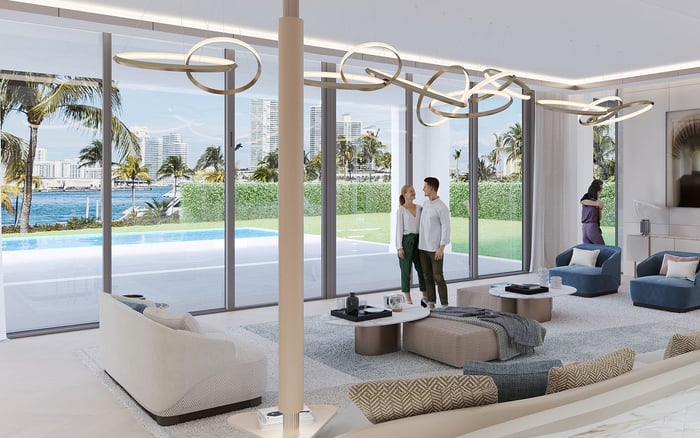
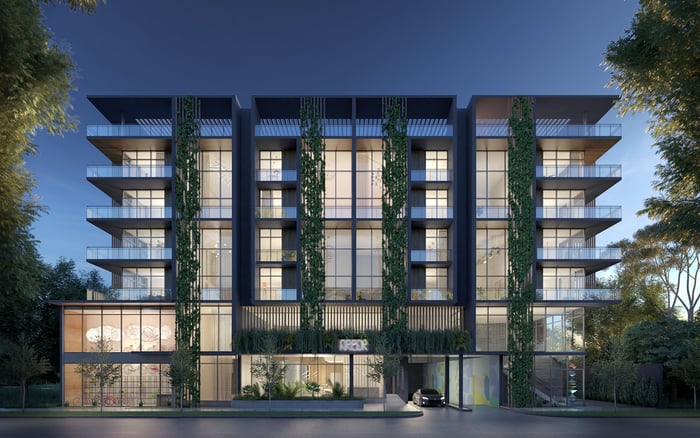
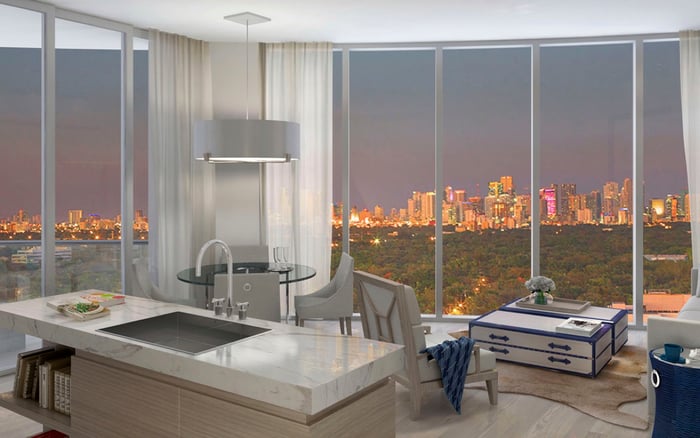
A privacy-first shortlist of five Miami residences, plus a discreet framework for evaluating arrival, circulation, exposure and day-to-day living before amenities.
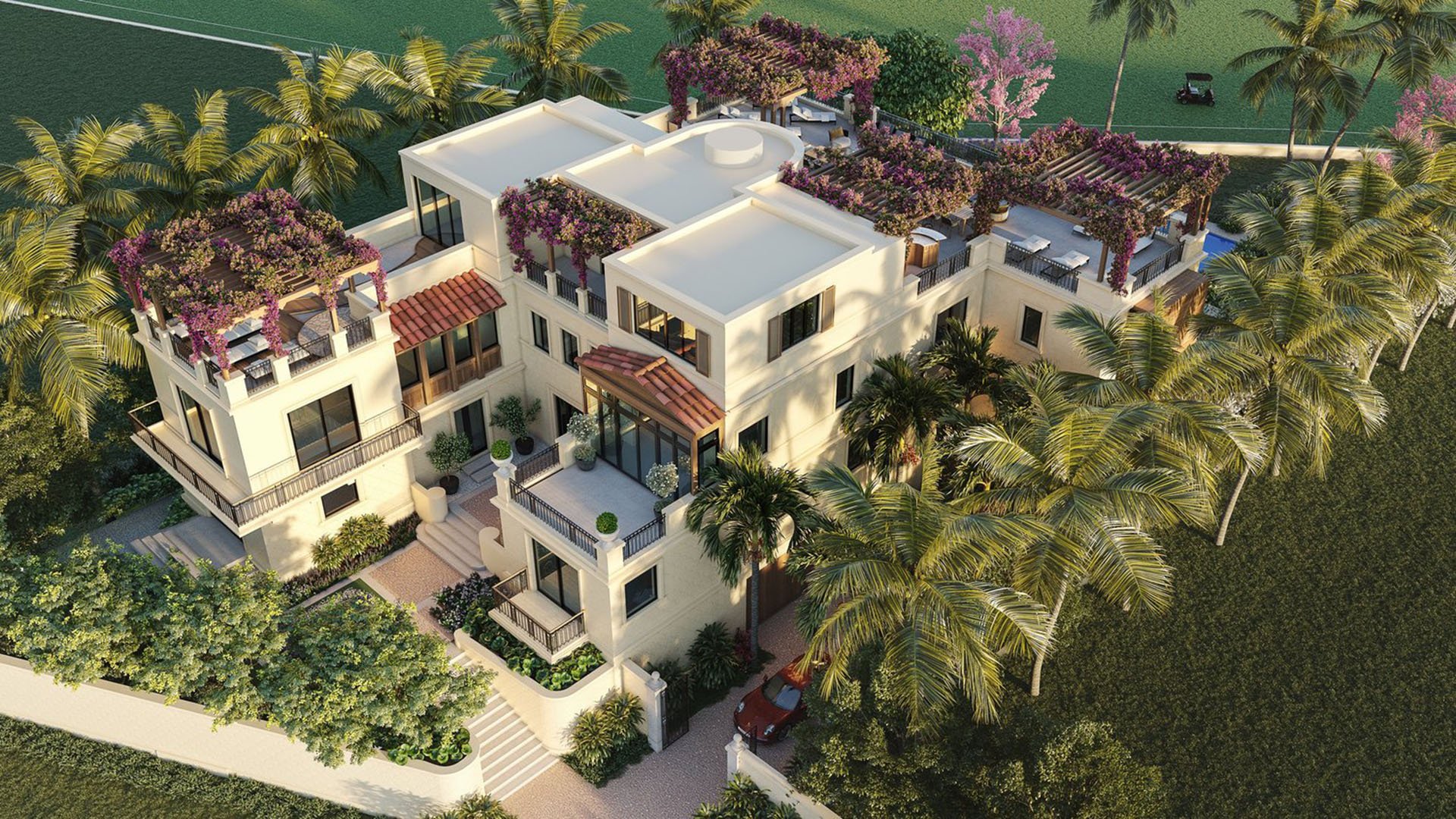
In Miami’s new-construction market, the most persuasive sales narratives often begin with pools, wellness suites, private clubs and hospitality. For buyers accustomed to exceptional service, however, the decisive question comes first: How quietly and securely does daily life unfold?
Privacy is not a single feature. It is the cumulative effect of arrival, access control, elevator circulation, residential density, interior sightlines, terrace exposure and the separation of residents from guests, staff and service activity. A beautiful amenity deck cannot compensate for a highly visible entrance or principal rooms that face neighboring terraces at close range.
This MILLION Buyer's Guides selection considers five Miami residences through a privacy-first lens. The ranking is an editorial starting point for private due diligence-not a substitute for reviewing plans, operating procedures and the precise position of an individual residence.
1. The Residences at Six Fisher Island - Fisher Island
Its island setting places this residence at the top of a privacy-focused search. Buyers should still examine the entire journey from arrival to front door, as well as the relationship between the selected home, shared spaces and neighboring residences.
2. The Delmore Surfside - Surfside
Surfside offers privacy-minded buyers a distinct coastal context. The essential review is residence-specific: approach, elevator use, exposure from adjoining buildings, terrace orientation and the extent to which social spaces intersect with residential circulation.
3. Vita at Grove Isle - Grove Isle
This Coconut Grove option belongs on the shortlist for buyers drawn to an island residential setting. Before prioritizing amenities, examine access procedures, visitor handling, service routes and views into the residence from common or exterior areas.
4. Four Seasons Residences Coconut Grove - Coconut Grove
For buyers considering a hospitality-associated residence, privacy depends as much on operational separation as on architecture. Confirm how resident arrivals, guests, deliveries, staff and shared facilities are managed throughout a typical day.
5. Onda Bay Harbor - Bay Harbor Islands
This waterfront candidate offers a geographic alternative to Miami’s larger urban districts. A rigorous privacy review should focus on the selected floor plan, neighboring sightlines, entry sequence and movement between parking, lobby, elevator and residence.
Geography can shape discretion, but it never guarantees it. Fisher Island, Surfside, Coconut Grove and Bay Harbor Islands each create a different relationship among water, roads, neighboring buildings and public activity. The more useful question is not whether an address feels exclusive in the abstract, but whether the exact residence is protected from unnecessary visibility.
At The Residences at Six Fisher Island, the island context should be considered alongside the practical mechanics of access and guest movement. In Surfside, The Delmore Surfside warrants close examination of coastal sightlines and the relationship between interior rooms, terraces and adjacent properties.
Coconut Grove presents a different rhythm. Compare the approach to Vita at Grove Isle with the resident experience proposed at Four Seasons Residences Coconut Grove. In Bay Harbor Islands, Onda Bay Harbor belongs in an equally detailed comparison of access, exposure and circulation.
Begin at the property line, not inside the sales gallery. Note where a vehicle pauses, who can observe an arrival and whether residents share that moment with visitors, deliveries or amenity users. Continue through the parking, lobby and elevator areas. Every transition either preserves discretion or creates another point of exposure.
Inside the home, stand at the entry and look toward the principal living areas. A well-considered plan should not reveal private rooms the moment the door opens. Then move to the windows and terraces. Examine direct views from neighboring buildings, amenity decks, waterfront paths and nearby balconies from different angles.
Ask how service is handled when the owner is present and when the residence is unoccupied. Deliveries, housekeeping, maintenance and invited guests all require clear protocols. Buyers should request precise explanations and ensure that any material expectation appears in the applicable documents rather than being assumed from presentation language.
Request the floor plate, not just the individual plan. It reveals the number and placement of neighboring entries, elevators, service areas and shared walls. Review the garage-to-residence route, visitor registration, elevator permissions, package handling and after-hours access. If privacy depends on technology, ask what happens during maintenance or an outage.
Distinguish visual privacy from acoustic privacy. Door placement, adjoining rooms, mechanical areas and shared amenity zones can influence quiet enjoyment. When possible, visit the setting at more than one time of day. Morning service patterns and evening guest activity may create markedly different conditions.
Finally, read the amenities as a circulation map. A private dining room or marina may appeal, but its location can alter traffic through the property. The strongest choice is not necessarily the residence with the longest feature list. It is the one whose architecture and operations make privacy feel routine.
What makes a new-construction residence privacy-first? Controlled arrival, limited exposure, thoughtful circulation and protected interior sightlines matter more than the volume of amenities.
Does a private island setting guarantee privacy? No. Buyers must still evaluate access procedures, visitor movement, neighboring views and the exact position of the residence.
Are private elevators enough to ensure discretion? Not by themselves. The garage, lobby, elevator controls, service routes and entry vestibule must function as one sequence.
Why should buyers review the full floor plate? It shows neighboring doors, shared walls, elevator locations and service areas that an individual plan may omit.
How should terrace privacy be evaluated? Study sightlines from adjacent buildings, balconies, amenity areas and public-facing spaces from several angles.
Can extensive amenities reduce residential privacy? They can increase guest and staff movement, making circulation design and operational separation especially important.
What should buyers ask about deliveries? Ask where items are received, screened, stored and transferred, including procedures for when the owner is away.
Is visual privacy more important than acoustic privacy? Both matter. Exposure affects discretion, while shared walls, doors and mechanical spaces can affect quiet enjoyment.
When should privacy due diligence occur? It should begin before reservation and continue through document review, plan analysis and residence selection.
Should amenities ever influence the final decision? Yes, but only after access, circulation, sightlines, service procedures and the home itself satisfy the buyer.
To compare the best-fit options with clarity, connect with MILLION.
If branded residences are on your mind — as a home or as an allocation — we would be glad to share what we are seeing, privately.
Begin a quiet conversation