A discerning buyer’s guide to separating parking rights from parking service, with practical tests for privacy, entertaining, household-staff access, charging, and liability.
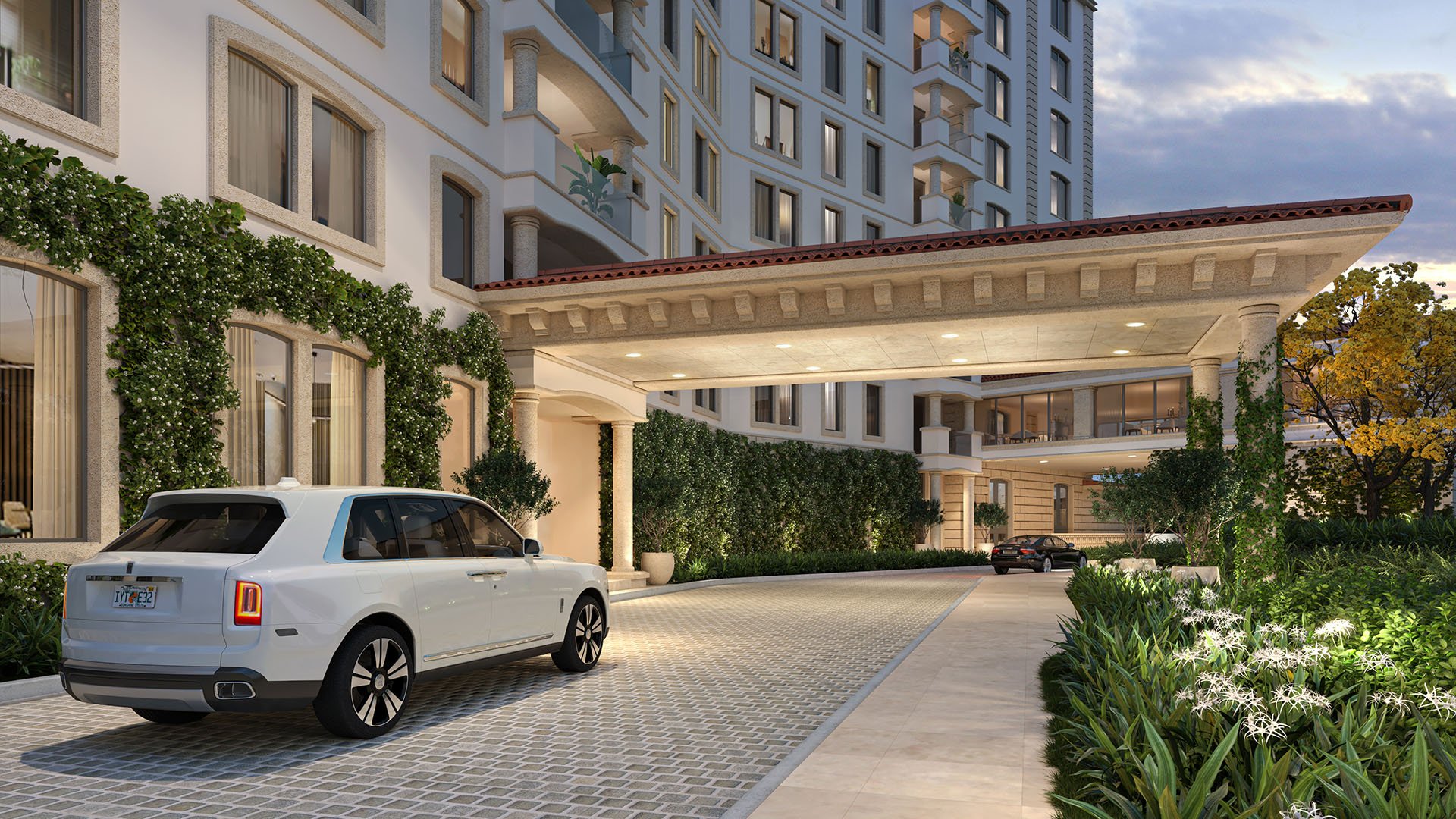
In a South Florida luxury residence, the arrival experience is part of the home. Yet the most important parking distinction is not architectural: it is the difference between what a buyer controls legally and how a vehicle is handled each day. Deeded parking concerns property rights; valet concerns service. They are not competing descriptions of the same thing.
A residence can combine protected parking rights with valet assistance, or offer an allocation that still requires an attendant to retrieve the car. The better question is not simply whether a building has deeded parking or valet, but whether the specific residence delivers the ownership rights, discretion, access, and operating flexibility your household requires.
A deeded space may appear on title, carry a separate folio, and, in some buildings, permit separate sale or leasing. None of those characteristics should be assumed for association-assigned parking. Nor should an enclosed garage automatically be treated as separately owned, or a stated space allocation as permission to self-park.
Have counsel reconcile the deed, declaration, parking agreement, and association rules. Confirm the space identification, any transfer or leasing restrictions, and whether the association can change the allocation. Separately, establish who may drive into the garage and whether attendant involvement is mandatory.
Elysee Miami illustrates the distinction: its parking arrangement includes two garage spaces per residence, resident and guest valet, and automated parking with an attendant. The allocation alone does not establish independent access. For a buyer who leaves without notice several times a day, that operational distinction deserves as much attention as the number of spaces.
Self-parking reduces routine key handoffs and attendant vehicle handling. That can suit owners who prefer fewer interactions around their movements. Privacy, however, also depends on garage entry controls, shared circulation, and the route from the space to the residence. An enclosed space is no substitute for evaluating the entire journey.
At Vita at Grove Isle in Coconut Grove, the combination of individual enclosed self-parking garages, EV-charging provisions, and 24/7 valet demonstrates that independence and service can coexist. Confirm the arrangement attached to the residence rather than treating a development-wide description as a contractual entitlement.
Valet introduces another privacy question: information custody. High-service operations may maintain vehicle profiles, household notes, and guest expectations. Ask what information is recorded, who can access it, and how access changes when employees leave. Discretion should encompass both the physical arrival and the information surrounding it.
Valet offers a clear convenience: residents and visitors can arrive at the entrance without searching for a space or walking through a garage. With luggage, groceries, or children, that difference can be meaningful. For entertaining, however, an elegant drop-off is only the beginning.
Guest parking may have capacity limits, time restrictions, and overnight charges. Ask how visitors are allocated spaces, how validation works, and what happens when several households entertain simultaneously. Establish whether overnight guests retain in-and-out privileges and whether their arrivals share the same queue as resident retrieval.
At The Surf Club Four Seasons Surfside, parking options include private arrival and valet entry alongside self-parking for select residences. For a Surfside buyer, the essential diligence is unit-specific: determine which option belongs to the residence and how its guests enter. A building-wide amenity description cannot resolve those details.
Vita’s guest registration, electronic guest keys, and valet requests also illustrate how closely parking and visitor access can be connected. Confirm how that coordination works for your own guest patterns.
An owner’s parking privileges do not resolve every question about household-staff access. Before purchase, map a normal day involving a housekeeper, caregiver, driver, or other employee. Ask which credentials each person needs, where they may enter, and whether service entrances or elevators affect their route.
Vehicle authorization demands particular precision. Can an employee collect the owner’s car? Who approves that permission, how is identity checked, and how quickly can authorization be withdrawn? Establish whether keys remain with the owner, an employee, or the valet operation, including after hours.
On Fisher Island, Palazzo del Sol Fisher Island offers valet with optional self-parking and garage parking for vehicles and golf carts. That hybrid warrants a practical household-access review: confirm authorized users and movement procedures for each vehicle type rather than assuming one permission covers every activity.
Test convenience at the hours you expect to use it. Observe morning and evening peaks, request a vehicle, and watch whether retrieval competes with guest arrivals or events. A calm midday visit cannot establish how the same operation performs under concentrated demand.
A general five-to-fifteen-minute retrieval range is a planning reference, not a promise for any building. Ask management what service expectations apply locally, how requests are prioritized, and what happens when staffing or equipment is unavailable. If self-parking is offered as a fallback, verify that residents may actually use it.
EV charging requires its own questions. Valet-managed charging can involve scheduled rotations and additional vehicle movements rather than a dedicated charger at the owner’s space. Confirm charger access, charging authorization, scheduling, costs, and who holds the keys while the car is being moved. A charging amenity alone does not establish ownership or uninterrupted availability.
Valet costs may sit within common expenses or be charged separately. Obtain written resident and guest fee schedules, including overnight terms, and establish what service is included. Compare the arrangement your household will use, not merely the availability of an attendant.
Neither deeded ownership nor a polished valet operation establishes who bears a particular loss. Request the valet contract, insurance details, damage-claim procedure, key-control policy, and outage contingency plan. Ask counsel and your insurance adviser to assess the documents rather than assuming that vehicle handling guarantees coverage.
Choose deeded rights for the control they actually convey, self-parking for the independence it genuinely allows, and valet for the service it demonstrably delivers. A hybrid can be compelling when those elements align. The strongest choice accommodates an ordinary day as convincingly as a formal arrival.
Explore South Florida residences with your household’s arrival priorities in mind at MILLION.
If branded residences are on your mind — as a home or as an allocation — we would be glad to share what we are seeing, privately.
Begin a quiet conversationNo. Deeded parking concerns property rights, while valet describes how vehicles are handled and retrieved; a residence can offer both.
Some buildings permit separate sale or leasing, but those rights must be confirmed in the governing documents. Do not assume an assigned space carries the same rights.
No. Verify ownership and access rights through the deed, declaration, parking agreement, and association rules.
No. It reduces routine key handoffs and attendant handling, but garage access controls and the route to the residence also matter.
No. Guest parking may have capacity limits, time restrictions, and overnight charges, so confirm the terms for your entertaining patterns.
Confirm credentials, permitted entrances and elevators, after-hours access, and vehicle-retrieval authorization. Establish who controls keys and how permissions can be withdrawn.
Five to fifteen minutes is a general planning reference, not a building-specific guarantee. Test retrieval during the hours your household expects to use it.
No. Charging may involve shared access or valet-managed rotations, so confirm scheduling, authorization, costs, and vehicle-movement procedures.
Vita at Grove Isle is marketed with enclosed self-parking garages and 24/7 valet, while Palazzo del Sol lists valet with optional self-parking. Confirm current services and residence-specific entitlements.
The parking arrangement alone does not establish liability. Review the valet contract, insurance details, and damage-claim procedure with appropriate advisers.