A discreet buyer’s guide to the South Florida condo towers where arrival is engineered for privacy: direct-to-residence elevators, controlled vestibules, and refined circulation that feels like a single-family front door in the sky.
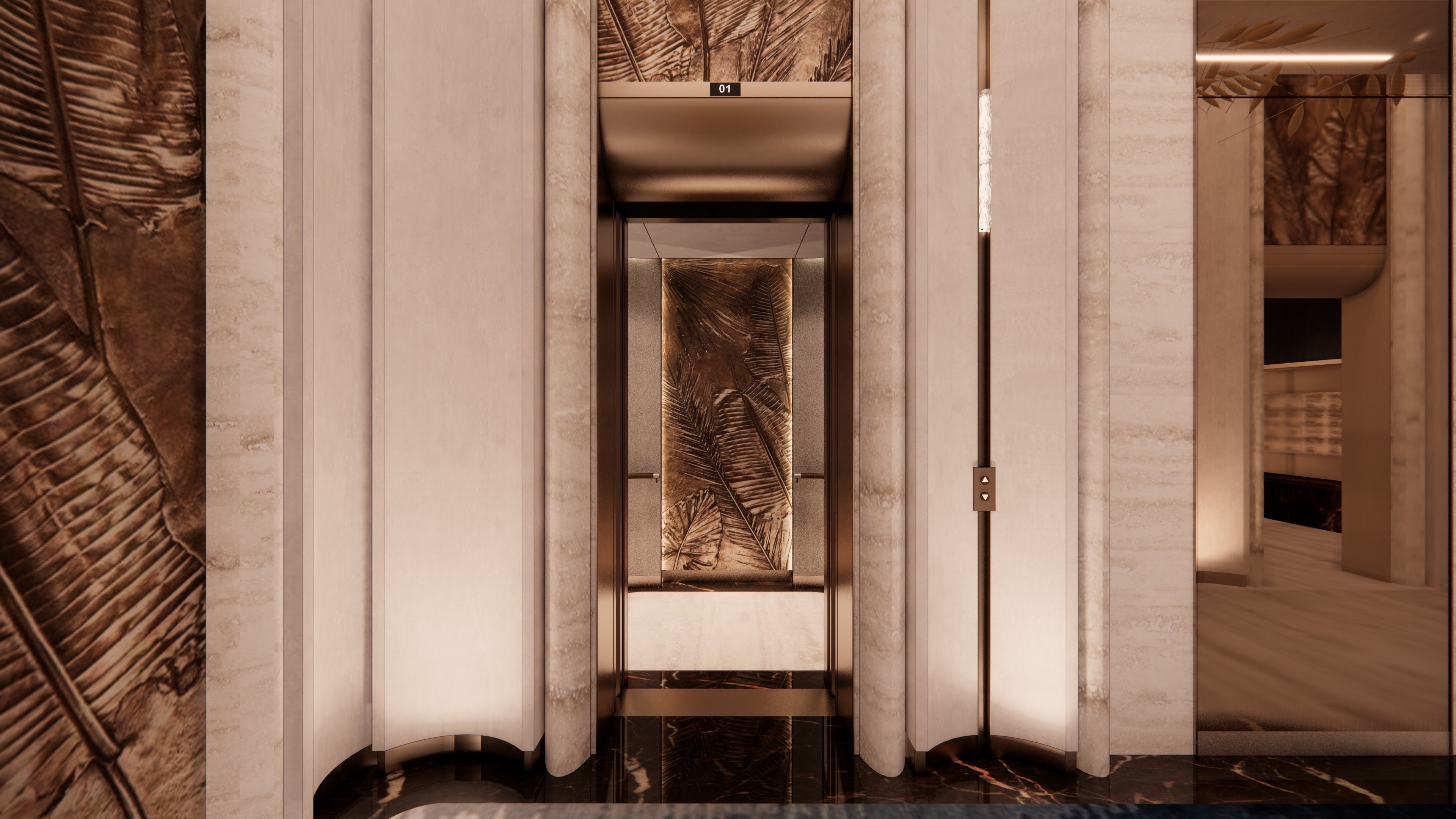
In South Florida’s ultra-premium market, “privacy” is no longer a vague promise-it’s a tangible, lived experience that starts at the curb and ends at your front door, with minimal friction in between. Private en-suite elevator access is the architectural move that makes that experience feel effortless: enter a dedicated cab, ascend, and arrive into a secured vestibule that reads less like a corridor and more like a private entry sequence.
For buyers who split time between multiple residences, travel with staff, or simply value discretion, the elevator becomes a front door in the sky. It reduces shared circulation, limits chance encounters, and helps keep daily rhythms quiet. Just as importantly, it can elevate the tone of the home itself. When your first moment is a private threshold, the residence can live like a standalone property-even in a high-rise.
That said, not all “private elevator” claims are equal. The strongest executions pair the elevator with a true entry vestibule, meaningful access control, and a plan that benefits from direct arrival-especially corner and flow-through layouts.
Private elevator access is a starting point, not the entire story. Before you anchor your decision to it, confirm how the building handles four fundamentals.
First, define what “private” means in practice. A dedicated landing can still fall short if the landing is exposed, if the cab is shared by multiple residences, or if the doors open directly into living space with no buffer. The most livable arrangement is a real foyer or vestibule-space that gives you a moment to arrive, set down items, and transition.
Second, scrutinize access control. Ask how the elevator is keyed, who can call it to your floor, and what the process looks like when guests arrive. The best systems align resident credentials with controlled destination access, while keeping guest workflows straightforward.
Third, map the service path. A luxury building is only as discreet as its delivery and staffing logistics. Understand how packages, catering, housekeeping, and move-ins are routed-and whether service elevators and corridors stay separate from the owner’s entry sequence.
Finally, evaluate the floorplan’s relationship to the elevator core. Direct entry is most compelling when the plan is designed around it, with sightlines that protect privacy and circulation that doesn’t push guests through private bedroom wings.
The developments below stand out because they deliver a buyer-preferred outcome: a quieter arrival, less shared hallway exposure, and a more residential sense of ownership. Specific configurations can vary by residence type and stack, so treat the concept as your point of comparison when you tour.
1. Bentley Residences Sunny Isles - private arrival as brand-level intent
Bentley’s positioning centers on elevated lifestyle, and the private-arrival narrative is fundamental to that promise. For buyers who want a personal entry sequence instead of a typical condo corridor, it’s a development to evaluate closely for how it manages resident and guest movement.
Sunny Isles, as a submarket, rewards privacy-forward features because many owners use residences seasonally. A well-executed en-suite elevator arrival supports lock-and-leave ownership with less day-to-day exposure.
2. The Estates at Acqualina Sunny Isles - ultra-luxury scale with resident-first circulation
At the top of the Sunny Isles conversation, the advantage isn’t just prestige. It’s the expectation of uncompromising circulation: owners want to step out of the elevator into an entry environment that feels deliberate, with separation from public-facing amenity traffic.
For multi-generational use, the benefit is practical. Private elevator access can help manage different schedules within one home-especially when entertaining and family life overlap.
3. Arte Surfside - boutique sensibility and a quieter threshold
Surfside attracts buyers who prefer calm over spectacle, and the strongest buildings treat arrival as a design moment rather than a logistical necessity. Boutique scale can also mean fewer neighbors per floor, which amplifies the value of en-suite access and reduces the “hotel hallway” feeling.
If you’re weighing Surfside against Miami Beach, focus on how the building delivers discretion: controlled entry, minimal shared circulation, and an arrival experience that feels residential.
4. Apogee South Beach - South of Fifth privacy, refined
In South of Fifth, buyers often know exactly what they’re paying for: a residential atmosphere with a deeply premium standard of discretion. A private elevator sequence supports that expectation-especially for owners who want to entertain without broadcasting arrivals.
Apogee’s context matters. In a neighborhood defined by walkability and high-profile dining, the ability to move from car to residence with minimal visibility can be a meaningful quality-of-life advantage.
5. The Perigon Miami Beach - new luxury with privacy engineered into the experience
New luxury towers in Miami Beach are increasingly judged on living logistics as much as views: arrivals, deliveries, guest handling, and separation of owner life from the building’s public energy. A private en-suite elevator concept signals a tower designed for residents who want the calm of a true home-not a transient atmosphere.
For buyers comparing newer beachfront options, pay close attention to how the elevator landing, vestibule, and front door are composed. The goal is a seamless threshold, not a feature buried in a marketing sheet.
Private en-suite elevator access can be valuable anywhere, but it becomes decisive in a few South Florida contexts.
In Brickell, density and pace make controlled arrival feel like a luxury in itself. If your lifestyle includes frequent dining, late meetings, or a calendar that shifts daily, returning home without shared hallways is a meaningful upgrade. Buyers exploring the area may also want to compare how different towers stage resident arrival-from porte-cochère to elevator lobbies-including newer concepts such as 2200 Brickell and fashion-forward vertical statements like 888 Brickell by Dolce & Gabbana.
In Miami Beach, privacy features help protect the residential experience from the island’s social energy. Buildings that execute private arrival well tend to feel calmer even when the neighborhood is lively. For a more intimate oceanfront address, 57 Ocean Miami Beach is worth understanding in the context of how boutique living can shape the day-to-day feel of access and circulation.
In Hallandale Beach and other coastal stretches where second-home ownership is common, private elevators reinforce a lock-and-leave lifestyle. The arrival experience is less about routine commuting and more about immediate decompression. Developments like 2000 Ocean Hallandale Beach sit in a market where buyers often prioritize quiet, secure arrival alongside views.
A truly premium en-suite elevator experience is choreographed. The doors open, and you don’t land in the middle of your living room. Instead, you arrive into a vestibule that offers pause, storage, and privacy.
The best plans treat that vestibule like a small gallery. It frames the first view, shields bedrooms from immediate sightlines, and creates a subtle sense of procession. In corner residences, this can be especially effective: you step in, turn, and reveal the view in a controlled sequence rather than an instant exposure.
Also consider acoustics and lighting. A vestibule with layered lighting and sound attenuation reads as calm and intentional. It’s the difference between “private elevator” as a feature and “private arrival” as a lived experience.
Discretion is rarely tested when you’re alone. It’s tested when guests arrive, when packages accumulate, and when your schedule intersects with building operations.
Ask how guest access works when you’re not home. Can guests be directed to a staffed lobby rather than straight to a private landing? Can you grant time-limited access without compromising security? For staffed households, confirm how housekeeping and service providers are routed. Ideally, service movement remains separate from owner arrival, preserving the residential atmosphere.
For deliveries, clarify whether package handling is centralized and whether refrigerated storage exists if that matters to your lifestyle. The goal is to keep your private elevator experience from becoming the default path for every box, bag, and drop-off.
In the ultra-luxury tier, privacy isn’t a trend; it’s a baseline expectation for many buyers. Private en-suite elevator access can differentiate a residence, particularly when paired with low-density floorplates, a true vestibule, and a plan that reads like a home.
However, resale value ultimately comes down to execution. A private elevator that opens to a shared landing or lacks an entry buffer is less compelling than a well-designed threshold that feels deliberate. As you evaluate, think like a future buyer: does the arrival feel materially more discreet than the next-best option in the same neighborhood?
What is “private en-suite elevator access” in a condo? It typically means an elevator can bring you directly to your residence or private vestibule, reducing shared hallway exposure.
Is a private elevator the same as a private elevator lobby? Not always. The strongest layouts include a dedicated vestibule or foyer that buffers the home from the elevator doors.
Does every residence in a building usually have private elevator entry? It varies by development and stack; some reserve it for larger homes, while others offer it more broadly.
What should I ask about security for private elevators? Ask how elevator calls are controlled, whether destination access is restricted, and how guest entry is managed.
Are private elevators only a “trophy” feature? No. They can meaningfully improve daily privacy, especially for second-home owners and frequent entertainers.
How do deliveries work in buildings with private elevators? Best-in-class buildings separate service circulation so packages and staff do not rely on the owner’s arrival path.
Will a private elevator make the residence feel more like a house? Often, yes-particularly when paired with a true entry vestibule and a floorplan that protects bedroom privacy.
Can private elevator entry affect interior design? Yes. It can enable a more dramatic arrival sequence and allow the foyer to function like a gallery-like threshold.
What’s the main downside to watch for? Poor execution: a door opening directly into living space, limited access control, or a landing that isn’t truly private.
How can I compare two buildings with “private elevator” claims? Tour the landing and vestibule, map guest and service routes, and confirm how access is controlled day to day.
If you'd like a private walkthrough and a curated shortlist, connect with MILLION Luxury.
If branded residences are on your mind — as a home or as an allocation — we would be glad to share what we are seeing, privately.
Begin a quiet conversation