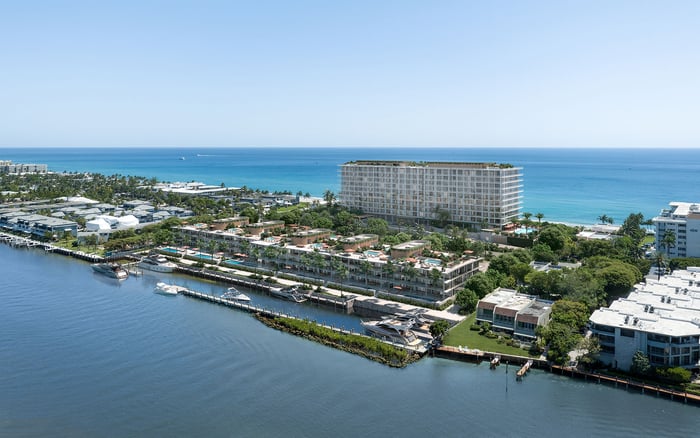
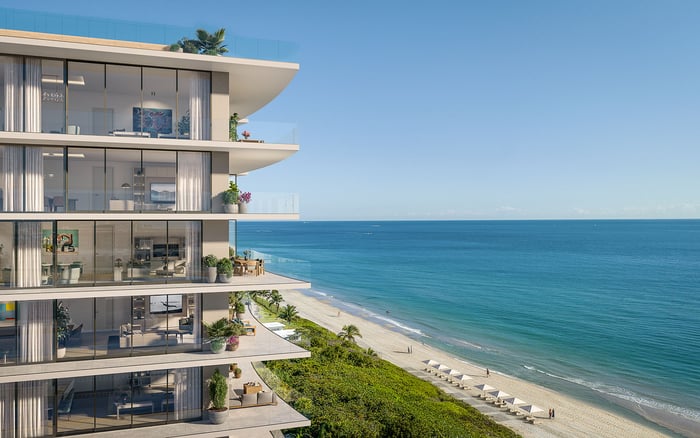
This Broward County shortlist considers branded service, coastal or urban positioning, waterfront priorities and the practical relationship between a residence and the buyer’s preferred private-aviation corridor.

For buyers who move regularly among residences, aircraft and yachts, a South Florida home is part of a broader transportation plan. Broward County occupies a central position between Miami-Dade and Palm Beach County, allowing buyers to compare MIA, Opa-locka, FLL and PBI while remaining focused on the Fort Lauderdale and Pompano Beach residential markets.
A branded residence can add a recognizable service culture and design identity to that equation. The most suitable choice, however, depends on more than the name attached to the building. Privacy, residence management, waterfront access, marina needs and the route to a preferred aviation facility all deserve equal attention.
The strongest residential choice is the one that fits an owner’s recurring pattern of flight, road and water travel.
Bahia Mar leads this editorial shortlist for buyers seeking a hospitality-branded experience connected to Fort Lauderdale’s waterfront lifestyle. Its appeal is clearest for an owner who wants aviation planning, yachting interests and coastal living considered together rather than as separate decisions.
Buyers should compare the current residence offering, service structure, marina arrangements and ownership documents before deciding whether the project matches their preferred level of privacy and operational support. The ground route to the selected airport or fixed-base operator should also be tested under realistic conditions.
This Pompano Beach option deserves attention from buyers evaluating northern Broward and the broader corridor toward Palm Beach County. The Ritz-Carlton name provides a clear branded-service reference, while the coastal setting makes the project relevant to owners who place waterfront living alongside aviation access.
The practical comparison should include the buyer’s preferred airport, aircraft base and marine requirements. Current details concerning residences, services, ownership costs and any marina access should be confirmed directly through up-to-date project materials.
A Fort Lauderdale address can suit buyers who want a central Broward base and a familiar hospitality identity. This entry ranks behind the two waterfront-led leaders because the final choice depends heavily on the specific residence, service offering and the owner’s preferred balance of beach access, privacy and airport convenience.
Prospective owners should evaluate how arrivals are handled, which residential services are included and how the building operates during busy periods. Those considerations may matter as much as the map when travel is frequent.
Viceroy offers a different branded proposition for buyers considering an urban Fort Lauderdale lifestyle. It may appeal to an owner who values access to the city and branded services more than a resort or marina-centered setting.
Because project details and availability can evolve, buyers should verify the current development plan, residence mix, service agreement and ownership structure. Privacy, operating intensity and the distinction between residential and hospitality functions warrant careful review.
Aileron appears here as an aviation-themed alternative rather than a conventional hospitality-branded residence. That distinction is important: buyers should not assume that an aviation identity provides the same service model as a recognized hotel brand.
Its relevance comes from the buyer profile addressed by this ranking. An owner focused on the FLL corridor may wish to compare the project with more traditional branded choices, while independently confirming current specifications, availability, delivery information and operating terms.
The ranking is a starting point rather than a universal answer. FLL will often be the first corridor considered for Broward residences, while Opa-locka and MIA may be relevant when an owner’s aircraft arrangements, business schedule or international travel pull south. PBI may enter the analysis for buyers concentrating on northern Broward and Palm Beach County connections.
Generic drive-time estimates are not enough. Buyers should test the route on the days and at the hours they expect to travel, including the precise entrance used for their terminal or fixed-base operator. A smooth midday trip may not reflect the conditions surrounding an early departure, evening arrival, major event or seasonal traffic period.
The aircraft’s normal base also matters. If the preferred facility differs from the most convenient commercial airport, the residential search should be organized around the actual aviation routine. Backup airports can be considered as part of the plan, but they should not obscure the route an owner expects to use most often.
Brand recognition does not by itself determine which residence is best. Buyers should compare staffing, arrival procedures, residence management, food and beverage access, beach operations, guest policies and the division between hotel-supported and residential services. The scale and composition of a property can also influence privacy and day-to-day atmosphere.
Waterfront buyers need a second layer of diligence. Marina access, vessel limitations, slip arrangements and pickup procedures should be verified in current documents rather than inferred from marketing language. An attractive waterfront position is not automatically equivalent to a private boating solution.
For another hospitality-led point of comparison in the same Broward coastal market, Four Seasons Hotel & Private Residences Fort Lauderdale can help buyers clarify whether they prefer an established resort-style environment, a new branded proposition or an aviation-themed alternative.
Project availability, pricing, construction schedules, service terms and marina arrangements can change. Before committing, buyers should request current floor plans, deposit terms, association materials, service agreements and any documents governing waterfront access. Legal, tax and financing questions should be reviewed with the appropriate advisers.
Private flyers should extend that diligence beyond the sales presentation. Testing routes, confirming aircraft arrangements and identifying the most practical arrival procedures can reveal whether a promising residence will work in repeated use. The winning choice is ultimately the one that combines the desired home environment with a dependable South Florida travel routine.
For discreet guidance on selecting a Broward residence around your aviation, service and waterfront priorities, connect with MILLION.
If branded residences are on your mind — as a home or as an allocation — we would be glad to share what we are seeing, privately.
Begin a quiet conversationSt. Regis® Residences Bahia Mar Fort Lauderdale leads the editorial ranking for its combination of branded hospitality and waterfront lifestyle appeal.
Pompano Beach gives buyers a northern Broward base from which to compare the FLL and Palm Beach County corridors.
No. It is included as an aviation-themed alternative and should be compared separately from hospitality-branded properties.
The framework considers MIA, Opa-locka, FLL and PBI.
No. They should test the actual route at realistic departure and arrival times.
Buyers should review staffing, arrival procedures, residence management and the division between hotel and residential services.
A waterfront location does not automatically guarantee a suitable private boating arrangement. Current marina documents and access terms should be verified.
The search should reflect the aviation facility the owner expects to use most often, not simply the nearest commercial airport.
They should request current floor plans, deposit terms, association materials, service agreements and applicable waterfront documents.
The best fit combines the buyer’s preferred home environment with a dependable routine for ground, air and, when relevant, water travel.