Before reserving a Broward oceanfront residence, distinguish today's outlook from legally protected views, investigate neighboring development rights, and examine construction logistics and noise exposure with parcel-specific precision.
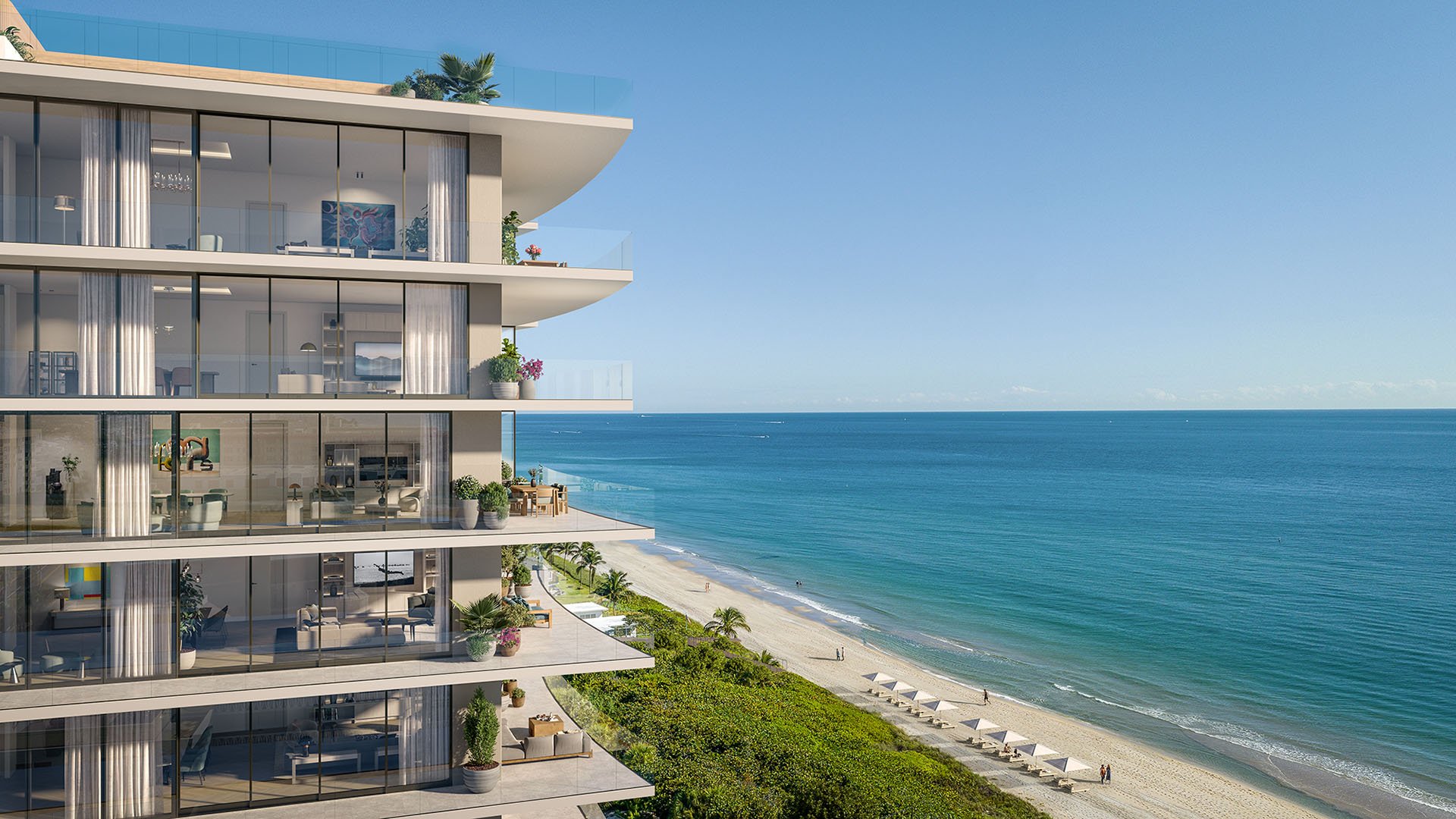
An ocean-facing residence offers more than a panorama. Its appeal rests on the relationship between the interior, the terrace, the horizon and the quiet expected of a private retreat. Before reserving in Broward, examine not only what exists today, but what neighboring owners may be entitled to build tomorrow.
Separate four questions: what can be developed nearby, whether any part of the view is legally protected, how construction would occupy surrounding space, and when disruptive work could occur. A persuasive rendering cannot answer all four. Nor can a reassuring conversation unless its material representations are documented and reviewed.
For buyers considering Four Seasons Hotel & Private Residences Fort Lauderdale, begin with a residence-specific inquiry rather than a general judgment about the neighborhood. Apply the same discipline throughout the coast. The examples here provide context for comparison; they are not assertions about adjacent construction, protected views or project-specific disruption.
First ask which municipality governs the residence-and which governs every parcel that could affect its outlook or access. Fort Lauderdale's zoning information covers properties within city limits. It is not a countywide substitute for investigating Pompano Beach, Hallandale Beach or Hillsboro Beach.
Countywide planning and GIS services are distinct from county zoning and code enforcement, which cover the Broward Municipal Services District. Establish the relevant jurisdiction before interpreting a map or discussing permissible building height.
Within Fort Lauderdale, confirm whether each relevant parcel lies in the Central Beach regulatory area. Its general boundaries are south of Sunrise Boulevard, west of the Atlantic Ocean, east of the Intracoastal Waterway and north of the southern Bahia Mar boundary. A coastal address does not automatically place a property within that area.
Central Beach zoning regulations were updated on May 17, 2022. Request an assessment under the operative rules rather than relying on an older description of what a nearby site could accommodate. When comparing Ocean 580 Pompano Beach with a Fort Lauderdale option, commission a separate, jurisdiction-specific review rather than carrying conclusions from one city to another.
Have a land-use professional examine potentially obstructing parcels, not just the condominium site. In Fort Lauderdale, parcel zoning checks and the Unified Land Development Regulations can inform questions about permitted height and the development envelope.
Ask what could be built under current regulations, what requires additional approvals, and what applications are already under review. These represent distinct categories of risk. A vacant parcel is not proof of lasting openness; a displayed proposal is not proof of an approved future building.
Fort Lauderdale's interactive 3D zoning map includes projects submitted for Development Review Committee consideration. Treat a displayed project as a prompt to verify its approval status, conditions and current design-not as evidence that its illustrated massing is final.
Distinguish land-use authorization from construction authorization as well. In Central Beach, a beach development permit authorizes an application for a building permit. A building permit authorizes construction and related work under the Florida Building Code. Ask which approvals exist, what remains pending and whether subsequent revisions could affect the outlook you are evaluating.
The essential question is direct: what recorded instrument, if any, protects this particular view? Request a title and land-use review covering view easements, covenants, height restrictions, air rights and public-access restrictions relevant to the surrounding parcels.
Today's open horizon and an enforceable restriction on future construction are not interchangeable. Ask counsel to explain the scope, beneficiaries and enforceability of any instrument identified. A broad description of an unobstructed outlook is no substitute for that review.
Then request a residence-specific visual assessment. Ask which neighboring development envelopes could enter the sightlines from the principal living space, bedroom windows and terrace. Distinguish the central ocean view from oblique coastal views and other aspects of the outlook that matter to you.
For a buyer evaluating Rosewood Residences Hillsboro Beach, the same questions require review under the applicable local rules and property documents. A project name, rendering or current outlook does not itself establish legal view protection.
A neighboring building's eventual form is only one part of the decision. Request construction logistics information identifying crane locations and swing radii, material-storage areas, truck routes, worker parking and delivery hours.
Ask where sidewalks or traffic lanes would be occupied, how residential arrivals would function and whether temporary arrangements would affect access during your anticipated use of the residence. Establish the status of each plan: preliminary, submitted, approved or subject to revision.
Fort Lauderdale maintains separate engineering and right-of-way permit forms. Ask whether staging, deliveries or sidewalk and lane occupation require approvals beyond the building permit. The existence of one permit should not end the inquiry into a separate operational issue.
When comparing a residence at 2000 Ocean Hallandale Beach, use the same logistics checklist, but confirm the applicable local approval requirements. The goal is a documented understanding of potential access disruption-not an assumption that every coastal municipality follows the same process.
Broward County's noise ordinance generally exempts construction, drilling, dredge-and-fill and demolition equipment from specified sound-level standards between 7:00 a.m. and 7:00 p.m. That does not mean all construction activity is unrestricted. Confirm applicable municipal provisions, permit conditions and any extended-hours authorization.
Request a phase-by-phase schedule identifying pile driving, vibratory work, excavation, dewatering, nighttime pours and weekend work. Ask which activities are anticipated, which hours are proposed and which authorizations have actually been obtained.
Align that information with your occupancy plans. A residence used for occasional holidays presents a different practical question from one intended for daily remote work. Ask about potential exposure at the terrace and in the principal rooms. Do not treat an anticipated schedule as a guarantee or an unmeasured noise level as established fact.
Before reserving, assemble a compact decision file: jurisdiction and zoning findings, neighboring approval status, title conclusions, available logistics plans and the anticipated construction schedule. Identify which answers are documented, which remain tentative and which are material to your decision.
Ask Florida real-estate counsel which written representations and cancellation or renegotiation rights can be negotiated. Do not assume those remedies arise automatically. The reservation discussion should distinguish documented commitments from expectations, especially when future views or construction timing influence the purchase.
For a discreet, residence-focused conversation about Broward coastal options, connect with MILLION.
If branded residences are on your mind — as a home or as an allocation — we would be glad to share what we are seeing, privately.
Begin a quiet conversationNo. Request a title and land-use review to determine whether recorded easements, covenants or other enforceable restrictions protect the particular outlook.
Investigate parcels whose future development could affect your sightlines or access, not just the condominium site. Confirm the jurisdiction and applicable zoning for each.
No. Fort Lauderdale's zoning information covers properties within city limits; other municipalities require their own jurisdiction-specific review.
It generally lies south of Sunrise Boulevard, west of the Atlantic Ocean, east of the Intracoastal Waterway and north of the southern Bahia Mar boundary. Confirm whether each relevant parcel falls within it.
Central Beach zoning regulations were updated on May 17, 2022. Evaluate neighboring development capacity under the operative regulations rather than relying on older descriptions.
Not necessarily. The map includes projects submitted for Development Review Committee consideration, so check approval status and the current design separately.
No. In Fort Lauderdale's Central Beach regulations, a beach development permit authorizes an application for a building permit.
Request crane locations and swing radii, storage areas, truck routes, worker parking, delivery hours and proposed sidewalk or lane closures. Ask whether separate right-of-way approvals are required.
No. It generally exempts specified construction equipment from particular sound-level standards during that period, rather than authorizing all activity without restrictions.
No. Ask Florida real-estate counsel what written representations and cancellation or renegotiation rights can be negotiated before reserving.