A buyer-focused guide to easements, riparian rights, dock assignments, boat-slip transfers, seawall access, and municipal rights at this inland waterfront address.
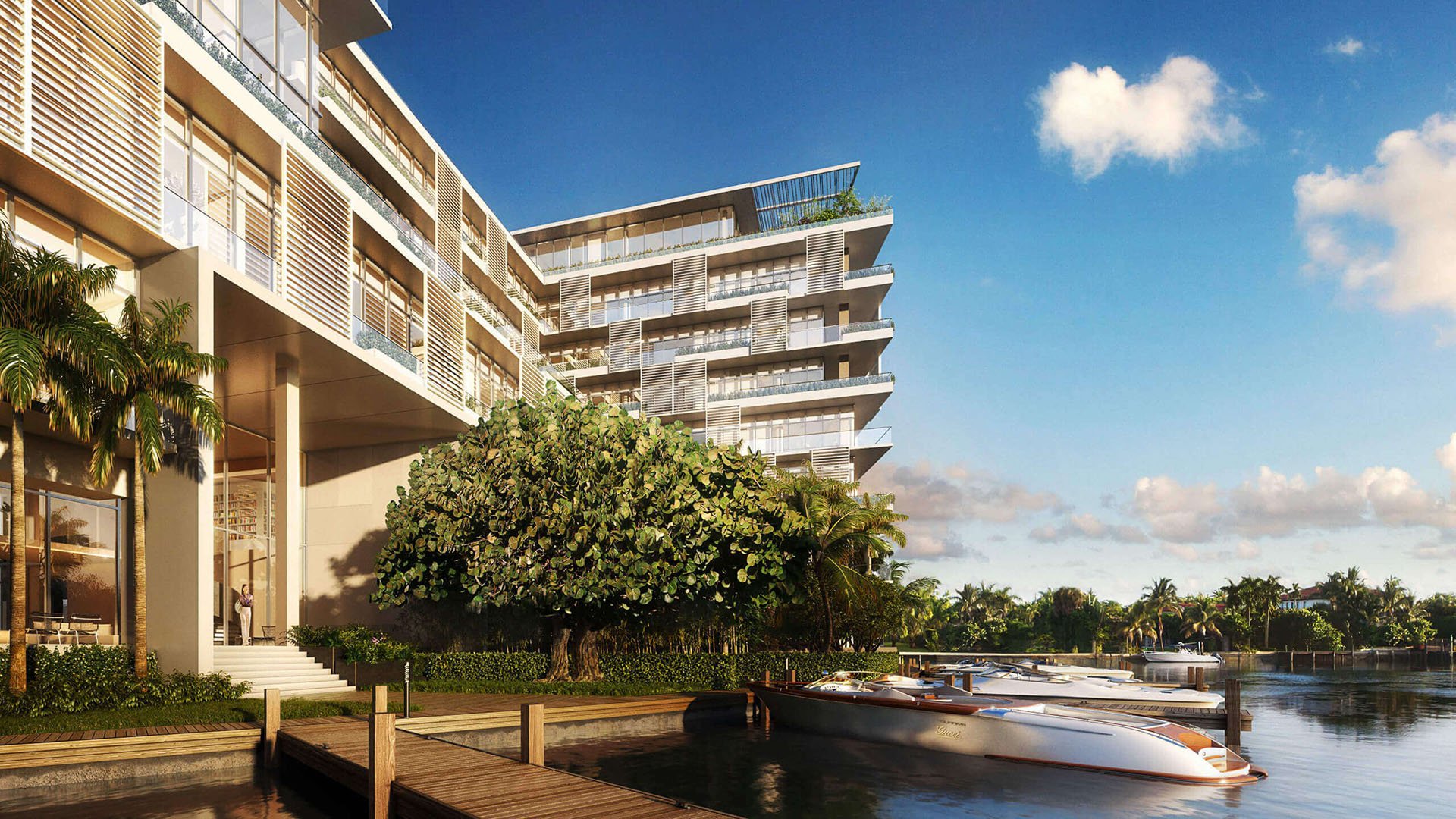
At 4701 North Meridian Avenue, The Ritz-Carlton Residences® Miami Beach comprises 111 waterfront condominiums and 15 stand-alone villas. Eight villas are waterfront homes with private boat dockage; seven are garden villas. The distinction matters: this is an inland waterfront development, not an open-Atlantic oceanfront condominium.
For buyers, the most relevant access questions therefore concern navigable water, docks, slips, seawalls, marina areas, waterfront paths, utility corridors, and emergency or municipal entry. A polished private setting can coexist with precisely defined access rights benefiting an association, government entity, utility, neighboring parcel, or the public.
That does not establish that a public pedestrian or waterfront-access easement crosses the property. It means the title record and municipal approvals should resolve the question before a purchaser relies on an impression of complete exclusivity.
At a waterfront residence, privacy is governed by documents as much as design.
Private amenities, controlled upland access, and resident-only dock privileges are not necessarily equivalent to exclusive control of adjacent navigable water. Buyers should ask counsel to distinguish rights associated with the waterfront parcel from the rights of others using the waterway lawfully.
This distinction is especially important for purchasers who equate private dockage with an entirely private waterscape. The dock and the route from the residence to it may be privately controlled, while passing vessels may still use the water beyond. The recorded documents, survey, and applicable approvals should clarify the practical boundary between private upland areas and the adjoining waterway.
An easement is more than a note in a title commitment. Its language can define who may enter, where access occurs, why it is permitted, when it may be exercised, and who must maintain or restore the affected area. Subtle drafting differences can have material consequences, so each instrument should be read in full rather than inferred from a short title exception.
Counsel should obtain the recorded plat and search the property record for public-access, pedestrian, waterfront-walkway, utility, emergency-access, and municipal-maintenance easements. Each item should be mapped against the specific residence, villa, parking route, amenity deck, shoreline, dock, and seawall. A right that appears remote in an exhibit may still affect sightlines, service circulation, construction staging, or periods of official entry.
The buyer should also review development orders and city approvals for provisions concerning seawall inspection, emergency service, public connections, and waterfront maintenance. These rights may be exercised rarely, yet they can matter during repair programs or future marina modifications. The review should identify the beneficiary, duration, notice requirements, maintenance obligations, insurance terms, relocation powers, and any right to widen or modify the access area.
This is a useful discipline across Miami Beach. At the separate The Ritz-Carlton Residences® South Beach project, public and private waterfront planning provides a broader comparison point. That comparison is contextual only-not evidence of an easement at North Meridian Avenue-and illustrates why a buyer must evaluate the documents for the specific property under consideration.
Boat-slip due diligence should begin with classification. Forty-foot slips have been marketed separately at 4701 North Meridian Avenue, but separate marketing does not determine the legal interest conveyed. The condominium declaration and its exhibits should establish whether a slip is a separate parcel, a common element, or a limited common element carrying an exclusive-use right.
The answer can affect transferability, financing, taxes, maintenance, insurance, association control, and available remedies if access is interrupted. Buyers should confirm whether a slip can be owned, sold, or leased independently and whether a nonresident is eligible to hold or use it. They should also verify vessel-size restrictions, operational rules, assessments, waiting-list provisions, and approval requirements strictly as those terms appear in the governing documents applicable to the transaction.
For a waterfront-villa purchase, “private boat dockage” warrants equally close scrutiny. The documents should state whether dockage is permanently assigned to the villa and whether the association or developer retained the power to relocate, expand, reconfigure, or reassign it. They should also clarify whether authority over dock construction, operation, and leasing belongs to the association or is granted directly to villa or slip owners.
The same questions matter when comparing inland-waterfront offerings such as Onda Bay Harbor and Vita at Grove Isle. The comparison should center on recorded rights and governance, not the assumption that similar water views create similar ownership structures.
A thorough closing file should include the current title commitment, complete easement instruments, recorded plat, condominium declaration, amendments, exhibits, association rules, slip or dock assignment, and relevant city approvals or development orders. A survey or mapped title review should show where each recorded corridor lies in relation to the home and amenities.
Counsel can then test practical scenarios: seawall inspection, utility repair, emergency response, marina work, dock relocation, slip leasing, or lawful navigation near the shoreline. Any conflict between marketing language and recorded documents should be resolved in writing before closing. Material ambiguity about access, dockage, or control should be addressed before the buyer commits to the intended waterfront lifestyle.
Buyer’s guides sometimes treat privacy as a checklist item. Here, it is better understood as a bundle of rights, restrictions, operating rules, and physical boundaries. The most valuable outcome is not a promise that no access right exists. It is certainty about what exists, who benefits, how it may be used, and whether that framework suits the purchaser’s expectations.
For discreet guidance on South Florida waterfront residences, connect with MILLION.
If branded residences are on your mind — as a home or as an allocation — we would be glad to share what we are seeing, privately.
Begin a quiet conversationNo. It is an inland waterfront development, so the central access issues involve waterways, docks, seawalls, marina areas, and waterfront paths.
The article does not establish that one does. Buyers should confirm the answer through the recorded plat, title documents, and city approvals.
Not necessarily. Buyers should distinguish private dock rights from lawful use of the adjacent navigable waterway.
The review should cover public-access, pedestrian, waterfront-walkway, utility, emergency-access, and municipal-maintenance easements.
The declaration and exhibits should identify it as a separate parcel, common element, or limited common element with exclusive-use rights.
Separate marketing does not answer that question. Eligibility and transfer restrictions must be confirmed in the governing and recorded documents.
Confirm whether dockage is permanently assigned and whether relocation, expansion, reconfiguration, or reassignment rights were retained.
The declaration should state whether that authority belongs to the association or is granted directly to villa or slip owners.
They may contain provisions for seawall inspection, emergency service, public connections, or waterfront maintenance that permit limited access.
Include the title commitment, easement instruments, plat, declaration, amendments, exhibits, association rules, dock assignments, and relevant city approvals.