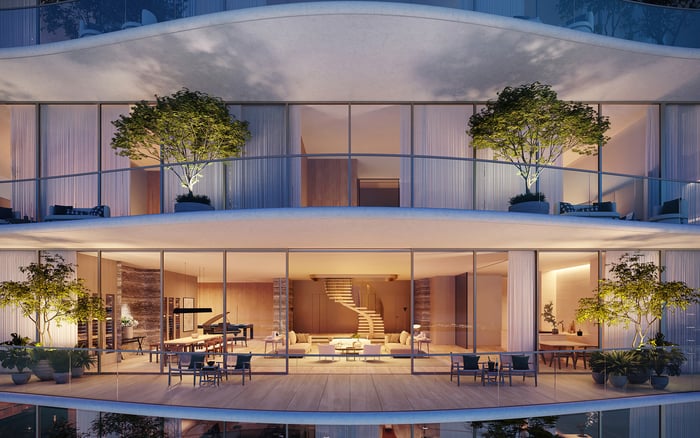
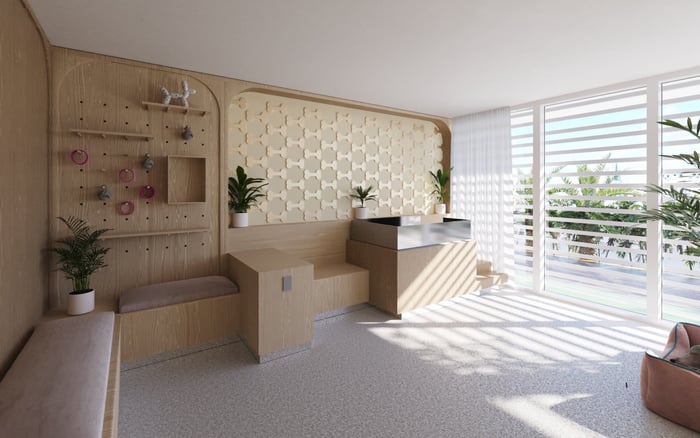
A discreet guide for Brickell buyers prioritizing acoustic comfort, private work zones, and residence-level due diligence for remote work.

For Brickell buyers, the home office is no longer a temporary corner with a laptop and a view. It is a daily performance space where privacy, concentration, and video-call polish must coexist with the energy of Miami’s most vertical business district. The most desirable residence is not simply the one with the most dramatic skyline outlook. It is the one that lets a buyer think clearly, speak naturally, and complete a demanding workday without feeling exposed to the city.
Acoustic comfort matters in Brickell because the neighborhood’s appeal is built on movement: restaurants, offices, transit, nightlife, and construction cycles. Buyers drawn to Brickell often want proximity to that energy, but they also expect the residence itself to feel composed. The right due diligence is therefore more nuanced than asking whether a building feels quiet during a brief showing. It requires studying exposure, window systems, door seals, elevator adjacency, mechanical rooms, amenity placement, and the position of the primary work area within the floor plan.
This is where luxury search language must become more precise. The Residences at 1428 Brickell and St. Regis® Residences Brickell may enter a buyer’s conversation, but the acoustic question remains residence-specific. A brand name, a view, or a high price point does not automatically guarantee a quiet workday. The best choice is the home that performs well during the hours when the buyer actually works.
1. High-floor residence with protected exposure - vertical separation
For many remote-work buyers, height is the intuitive starting point. High floors can create more distance from street-level activity, traffic rhythm, and the social pulse that defines Brickell. Yet elevation alone is not enough. The stronger profile is a high-floor residence with protected exposure, where the work zone is not placed directly against the most acoustically active side of the building.
During a showing, buyers should spend time in the exact room where calls will occur. Close every door, let the room settle, and listen for tonal noise rather than volume alone. A faint mechanical hum, elevator vibration, or recurring exterior sound can become more intrusive over a full workweek than it seems during a short tour.
2. Residence with an interior-facing study or den - plan depth
The strongest remote-work layouts often place the office away from the glass line. A den, library, or secondary room positioned deeper within the residence can create a calmer acoustic pocket, especially when separated from the kitchen, living area, and primary suite circulation. This allows a buyer to preserve the drama of the main rooms while keeping professional life insulated.
The test is whether the workspace can function as a true room, not simply a decorative alcove. A door matters. Wall depth matters. The ability to take a confidential call while another person uses the kitchen, media area, or balcony matters. In a luxury residence, acoustic comfort is as much about internal privacy as it is about exterior noise.
3. New-construction residence with reviewable envelope details - specification discipline
New-construction can appeal to buyers who want modern systems, contemporary layouts, and a more deliberate approach to building performance. For acoustic comfort, however, the central issue is not the marketing language. It is whether the buyer can review meaningful details about windows, doors, façade assemblies, and mechanical design before making a decision.
A polished sales environment should be followed by practical questions. What type of glazing is used? How are balcony doors sealed? Where are mechanical systems located in relation to the residence? Are amenity spaces above, below, or adjacent to the proposed home office? A serious buyer should treat these questions as standard due diligence, not excessive scrutiny.
4. Larger residence with a secondary-bedroom office - functional separation
A larger residence can solve acoustic problems by giving the buyer options. A secondary bedroom converted into a work suite may offer a better acoustic profile than an open den if it includes a solid door, a more private position, and distance from entertaining zones. This is particularly relevant for buyers who share the home with family, staff, guests, or another remote worker.
The most effective version of this profile provides enough spatial separation for one person to work while another lives normally. A luxury home should not require silence from everyone else in order for one person to take a call. The floor plan should carry some of that burden.
5. Residence where outdoor space complements, not compromises, quiet - balcony discipline
Private outdoor space is one of Brickell’s pleasures, but remote-work buyers should evaluate it carefully. A balcony can be restorative between calls, yet the door system leading to it becomes critical once calls begin. Buyers should test how the room feels with the balcony door fully closed and the air conditioning operating normally.
The ideal residence treats outdoor space as a lifestyle advantage without allowing it to dictate the acoustic quality of the interior. If the main work zone sits beside frequently used exterior doors, the buyer should consider how often those doors will open during the day and whether that pattern will interrupt concentration.
A quiet showing is useful, but it is not conclusive. Buyers should visit at more than one time of day when possible, including a weekday working window. They should stand silently in the proposed office, living room, primary bedroom, and any rooms adjacent to elevators or service areas. The goal is not absolute silence. In Brickell, the goal is a composed baseline that supports focused work.
Video-call testing is also revealing. A buyer can sit where the desk would be placed and speak at normal volume. If the room encourages raised voices, creates echo, or allows household sound to bleed in too easily, the design may need treatment. Rugs, drapery, bookshelves, and upholstered furniture can help soften interior sound, but they should not be expected to fix a fundamentally exposed location.
The best Brickell search begins with a clear work profile. A buyer who writes quietly for long stretches has a different acoustic need from a founder leading investor calls, a principal reviewing confidential matters, or a couple working in parallel. A residence that feels ideal for evening entertaining may not be the right choice for eight hours of concentrated work.
The conversation should also include future flexibility. A secondary bedroom that works as an office today may need to become a nursery, guest room, or caregiver suite later. A den that feels sufficient now may be too open if the household grows. The most resilient residences give owners more than one credible work location.
What makes a Brickell residence better for remote work? A strong remote-work residence offers separation, low sound transfer, reliable doors, and a workspace placed away from the most active parts of the home.
Are high floors always quieter in Brickell? Not always. Height can help, but exposure, glazing, neighboring uses, and mechanical placement can matter just as much.
Should buyers prioritize a den or a bedroom office? A bedroom office is often more flexible if it has a door and better separation, while a den can work well when it is deeply set into the plan.
Does new-construction guarantee better acoustic comfort? No. New-construction may offer modern systems, but buyers should still review window, door, façade, and mechanical details carefully.
Is a balcony a problem for acoustic comfort? Not by itself. The important issue is how well the balcony door seals and whether the work area sits beside a frequently used opening.
How should buyers test noise during a showing? They should close doors, turn off distractions, stand in the intended office location, and listen for recurring exterior or mechanical sound.
Can interior design improve acoustic comfort? Yes. Rugs, drapery, upholstered pieces, and fuller furnishings can soften echo, though they cannot replace strong construction basics.
What rooms should be avoided for a home office? Buyers should be cautious with rooms beside elevators, service areas, busy amenity zones, or open living spaces with constant household activity.
Should two remote workers choose a larger residence? Often, yes. Two serious work zones usually require more separation than a single den can provide comfortably.
What is the best way to shortlist comparable options for touring? Start with location fit, delivery status, and daily lifestyle priorities, then compare stacks and elevations to validate views and privacy.
If you'd like a private walkthrough and a curated shortlist, connect with MILLION.
If branded residences are on your mind — as a home or as an allocation — we would be glad to share what we are seeing, privately.
Begin a quiet conversation