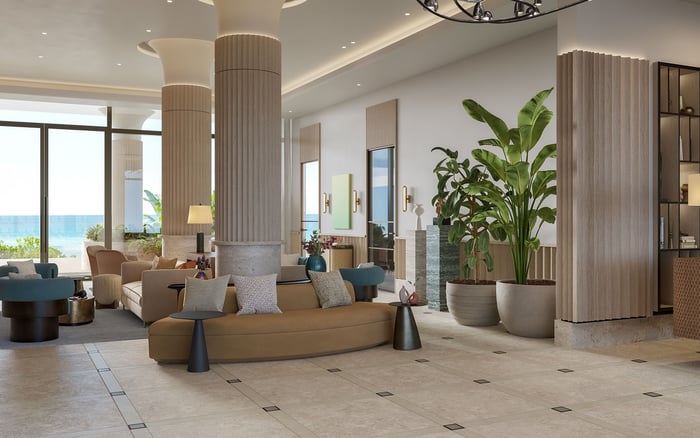
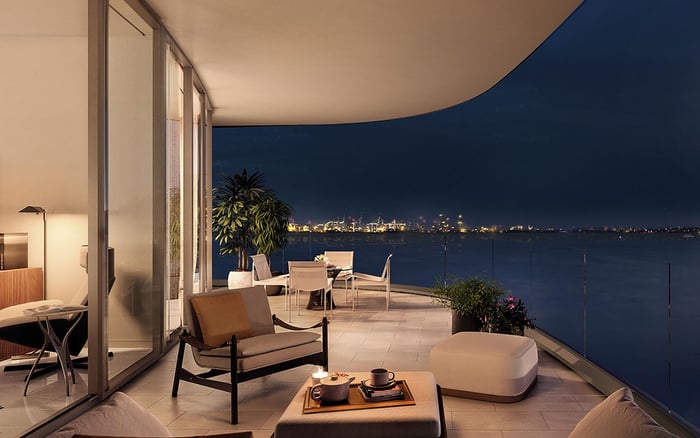
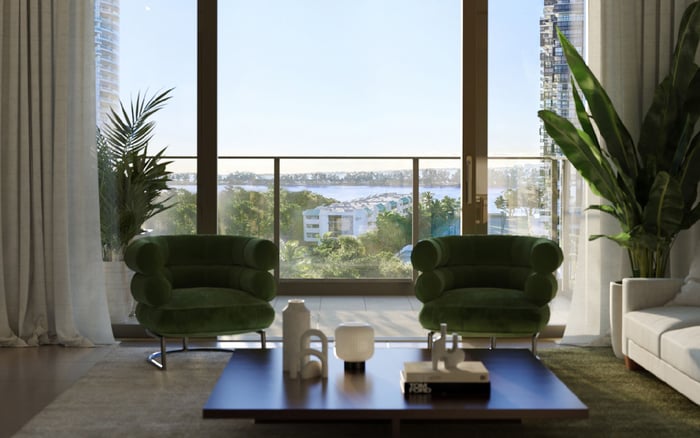
A privacy-led Brickell shortlist, framed around the questions discerning buyers should ask about density, arrival, circulation, staffing, and residence design before choosing a home.
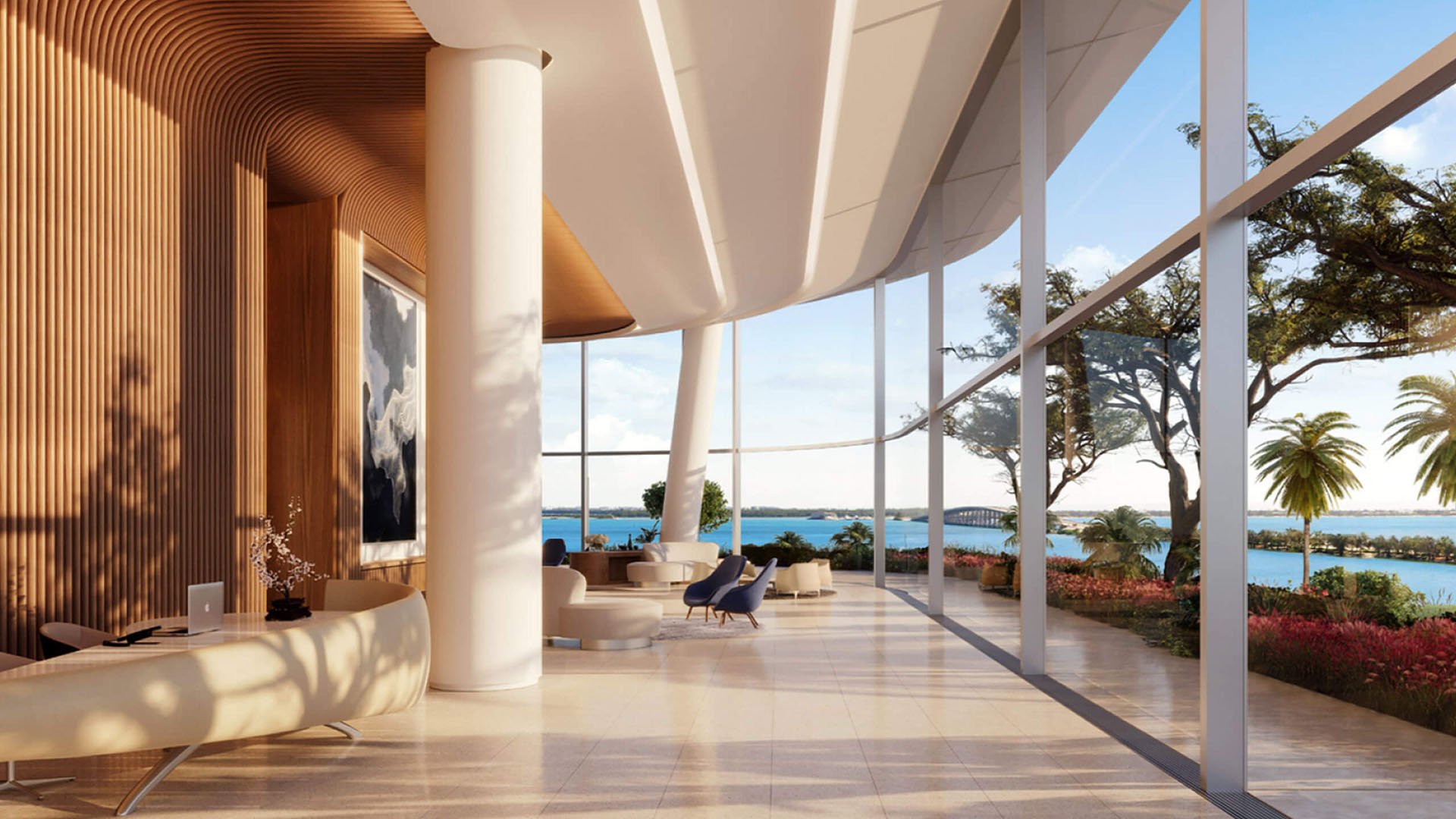
For a privacy-focused buyer, low-density living is not simply a number on a building summary. It is the cumulative result of how residents arrive, move through shared spaces, receive guests, use amenities, accept deliveries, and enter their homes. When these elements work together, a tower can feel composed; when circulation is poorly resolved, even a seemingly intimate property may feel busy.
This Brickell shortlist is best read as a buyer’s agenda, not a substitute for current offering documents. Each address warrants examination through the same discreet lens: the number of residences sharing a floor, elevator configuration, separation of resident and service movement, visibility on arrival, amenity traffic, staffing, and the transition from corridor to private interior.
A disciplined comparison might begin with 2200 Brickell, Colette Residences Brickell, and The Residences at 1428 Brickell. The essential next step is to verify the particulars of the specific residence and building rather than rely on a name, rendering, or broad category.
1. Colette Residences Brickell - the intimacy review
Place Colette first on a privacy-led tour, then test the experience from curb to front door. Request a clear account of shared-floor conditions, elevator access, guest handling, delivery protocols, resident entrances, and any routes used by staff or vendors.
2. 2200 Brickell - the circulation review
Evaluate 2200 Brickell through the lens of movement and exposure. Buyers should understand how many households may share each arrival sequence, where residents encounter amenity users, and whether the parking, lobby, elevator, and residential corridors create a controlled progression home.
3. The Residences at 1428 Brickell - the vertical privacy review
At The Residences at 1428 Brickell, place vertical circulation at the center of due diligence. Confirm the elevator arrangements for the residence under consideration, access-control procedures, guest routing, service movement, and the relationship between residential floors and shared destinations.
4. Una Residences Brickell - the residence review
At Una Residences Brickell, examine approaches, outdoor areas, glazing, terrace relationships, amenity access, and views into or from neighboring spaces at the precise elevation and orientation under consideration.
5. St. Regis® Residences Brickell - the service review
At St. Regis® Residences Brickell, focus on the relationship between service and discretion. Clarify staffing protocols, guest recognition, delivery handling, housekeeping access, event activity, and the boundaries between attentive assistance and everyday residential seclusion.
Test low density at three scales. At the building scale, review the overall residential program, shared facilities, entrances, and operating model. At the floor scale, confirm how many front doors, elevator stops, service points, and corridor sightlines surround the chosen home. At the residence scale, assess the entry sequence, bedroom placement, glazing, terraces, and acoustic separation.
The word boutique can be useful shorthand, but it is not proof of privacy. Likewise, a penthouse label does not establish exclusive elevator use, a private vestibule, protected outdoor space, or freedom from mechanical and amenity activity. Every meaningful feature should be identified in plans and governing materials.
Buyers comparing Una Residences Brickell with St. Regis® Residences Brickell should apply the same questions despite their distinct identities. A consistent review makes differences easier to recognize and reduces the influence of presentation.
Begin with a marked plan showing resident, guest, staff, delivery, valet, and emergency routes. Request the stack plan for the relevant floor and adjacent levels. Determine what is private, what is shared, what requires credentialed access, and what may change under building operations.
Next, review the lived environment. If access permits, visit at more than one time. Listen near elevators and service doors, observe lobby sightlines, consider waiting areas, and assess whether amenity arrivals cross the residential path. Study neighboring terraces, street approaches, exterior lighting, and the visibility created after dark.
Technology warrants equal scrutiny. Access credentials, cameras, visitor registration, package procedures, in-residence systems, and data governance can affect discretion. Ask who can authorize access, how permissions are recorded, and how residents manage household staff or recurring guests.
This buyer’s guide framework also applies when the finished experience is not yet observable. Plans, contracts, exhibits, rules, and written representations should guide the decision. Renderings can communicate intent, but they should not replace verification.
The most private home is not automatically the highest or largest. A lower-floor residence may offer a shorter route home, while higher-floor living may alter outlook, exposure, elevator time, and wind conditions. The right choice depends on personal rhythms, household size, staffing, entertaining, travel patterns, and tolerance for shared movement.
Study the exact line, not merely the building. Corner conditions, neighboring balconies, service rooms, elevator cores, refuse areas, amenity decks, parking access, and mechanical spaces can all influence how secluded a home feels. Buyers should also consider future resale: clearly legible privacy attributes may be easier to explain than subjective impressions.
Ultimately, privacy is as operational as it is architectural. Thoughtful management can preserve calm; unclear rules can dilute it. The strongest purchase decision aligns physical planning, contractual clarity, and daily service with the buyer’s own definition of discretion.
What does low-density living mean in Brickell? It generally describes fewer residential encounters, but buyers should verify density at the building, floor, elevator, and amenity levels.
Does fewer residences per floor guarantee privacy? No. Elevator access, sightlines, service routes, acoustics, and guest procedures also shape the experience.
Is a private elevator essential? Not always. The more important question is how access works from arrival through residence entry and who shares each stage.
Should buyers inspect service circulation? Yes. Delivery, housekeeping, maintenance, and vendor routes can materially affect discretion and convenience.
How should amenity density be evaluated? Ask who may use each space, its hours, event policies, reservation practices, and proximity to the residence.
Are higher floors inherently more private? Not necessarily. Consider floor height alongside elevator traffic, neighboring views, terraces, and nearby building functions.
What documents matter most during review? Examine current plans, contracts, exhibits, governing documents, budgets, rules, and written disclosures with qualified advisers.
Can building staff improve residential privacy? Well-defined access and guest protocols can support discretion, but buyers should understand how those procedures operate in practice.
What should be checked during a property visit? Observe arrival paths, lobby visibility, elevator waits, corridor acoustics, service doors, shared spaces, and terrace exposure.
How can a privacy-led Brickell search be structured? Compare residence selection, building operations, documentation, and personal priorities consistently across each shortlisted property.
For a discreet conversation and a curated building-by-building shortlist, connect with MILLION.
If branded residences are on your mind — as a home or as an allocation — we would be glad to share what we are seeing, privately.
Begin a quiet conversation