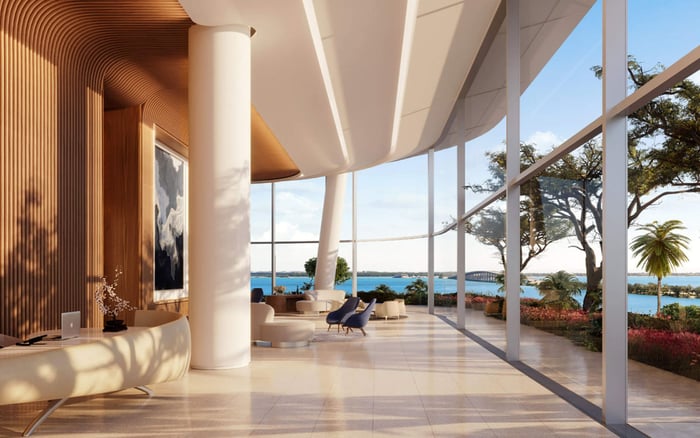
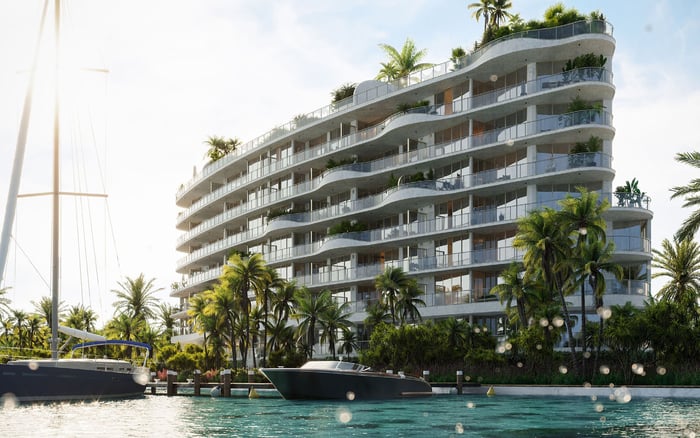
A discerning guide to South Florida bayfront residences where buyers can focus on privacy, residential rhythm, and careful review of rental governance.
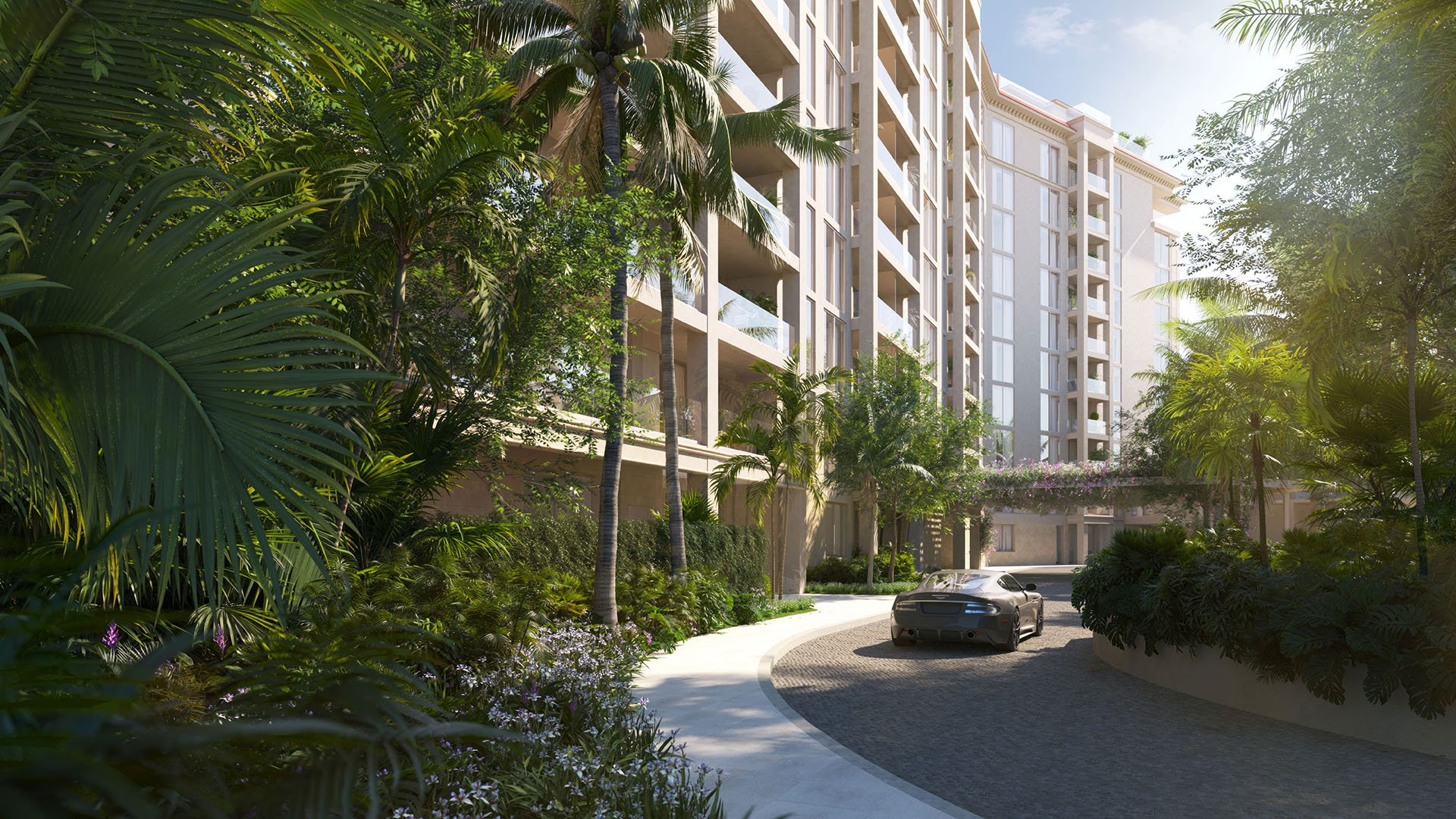
For many South Florida buyers, the most valuable amenity is no longer the most photographed one. It is the ability to come home without feeling as though the lobby is in constant rotation. Bayfront living still promises open water, sunset light, and a sense of removal from the city, but today’s most discerning buyers are also studying how a building feels on an ordinary Tuesday evening.
The concern is not simply noise. It is circulation. Who is entering the lobby, how often residences turn over, whether service elevators are overloaded, and whether amenity decks feel like extensions of a private club or a transient hospitality environment. For buyers seeking less exposure to short-term visitors, the conversation begins with governance and extends through design, access, scale, and neighborhood context.
No residence should be treated as a substitute for document review. Before committing, buyers should examine condominium declarations, rental minimums, guest registration procedures, association rules, and any future amendments. Still, certain bayfront addresses naturally invite a more residential lens because of their location, positioning, and appeal to long-horizon owners.
In search language, this is often a Bay Harbor and short-term-rentals conversation, but the deeper issue is quality of daily life. A buyer is not merely purchasing a view. The buyer is purchasing the character of arrival, the predictability of neighbors, and the quiet value of residential continuity.
1. The Residences at Six Fisher Island - island privacy
For buyers who place separation at the top of the brief, The Residences at Six Fisher Island belongs in the first conversation. Fisher Island’s fundamental appeal is its controlled, island-like atmosphere, which makes daily life feel distinct from mainland condominium corridors.
The key identifier here is not spectacle. It is discretion. Buyers drawn to this address are often seeking a residential environment where arrival, access, and waterfront living feel deliberately removed from the conventional visitor patterns of denser resort corridors.
2. Vita at Grove Isle - Coconut Grove waterfront seclusion
Vita at Grove Isle offers another compelling lens: a bayfront setting tied to Coconut Grove’s mature, residential character. For buyers who want water without sacrificing a neighborhood known for privacy, greenery, and established residential life, Grove Isle carries a softer, more settled tone.
The appeal is especially clear for those who want to remain near Miami’s cultural and commercial core while avoiding the constant visitor churn associated with more overtly tourist-facing districts. The emphasis is on residence, not throughput.
3. Onda Bay Harbor - Bay Harbor Islands boutique scale
Onda Bay Harbor fits buyers who prefer a more intimate island setting over a large vertical community. Bay Harbor Islands has long attracted residents who want proximity to Bal Harbour, Surfside, and Miami Beach while maintaining a quieter residential base.
The key identifier is boutique scale within a bayfront context. For buyers concerned about short-stay traffic, smaller buildings can make governance, recognition, and everyday familiarity easier to evaluate during diligence.
4. Una Residences Brickell - bayfront Brickell with residential intent
Una Residences Brickell speaks to the buyer who wants Brickell’s financial-district energy without a lifestyle dominated by nightly arrivals. The waterfront position creates a different experience from interior urban towers, and buyers can focus on how the building manages access, amenities, and resident privacy.
This is the most urban entry in the list, so diligence matters. Buyers should pay particular attention to rental rules, amenity protocols, valet and lobby circulation, and how the building distinguishes residents from guests.
5. Rivage Bal Harbour - Bal Harbour waterfront discretion
Rivage Bal Harbour belongs in the conversation for buyers drawn to one of South Florida’s most refined coastal enclaves. Bal Harbour’s appeal has always been tied to polish, restraint, and a sense of residential composure near the water.
For the privacy-minded buyer, the attraction is the possibility of combining bayfront or waterfront living with a village atmosphere that feels less dependent on short-term turnover. As always, the association framework should be reviewed carefully before making assumptions about visitor exposure.
The first document to examine is the rental framework. Minimum lease terms, approval processes, guest policies, and enforcement mechanisms determine how a building actually behaves over time. A beautiful lobby cannot compensate for weak governance if the buyer’s goal is residential calm.
The second factor is access. Buildings with clear front-desk protocols, thoughtful elevator separation, and disciplined amenity reservations often feel different from properties where guests move through the same spaces with little friction. Privacy is rarely accidental. It is designed, staffed, and enforced.
The third factor is ownership culture. A building with a high share of primary residents or long-term second-home owners may feel more settled than a building shaped around frequent turnover. This does not make one model universally better than another. It simply means the buyer should align the asset with the intended lifestyle.
Island and peninsula settings often appeal to buyers seeking calmer daily circulation. Fisher Island, Grove Isle, Bay Harbor Islands, and Bal Harbour all offer different versions of separation. Each carries its own personality, but all can help a buyer think beyond the unit itself and study the broader approach to privacy.
For example, The Residences at Six Fisher Island may appeal to buyers who value a highly private island environment, while Vita at Grove Isle draws attention to the quieter side of Coconut Grove waterfront living. These are not interchangeable choices. They answer different versions of the same desire: water, privacy, and a more composed residential tempo.
Bay Harbor Islands offers another path. Onda Bay Harbor places the conversation in a boutique island context, where buyers can study scale, access, and the rhythm of a smaller residential address. Nearby, the broader Bal Harbour market attracts those who prize a polished coastal identity with a more restrained public face.
Urban buyers should not automatically dismiss Brickell. The question is which Brickell residence, and under what rules. Una Residences Brickell gives privacy-minded buyers a way to evaluate bayfront living within the city’s business core, while still emphasizing the need to review rental and guest policies in detail.
The right questions are practical. What is the minimum lease term? How are tenants approved? Are guests registered in advance? How are amenity reservations controlled? Are service providers logged? Can owners lend units to friends without formal oversight? These details shape the lived experience more than any rendering or amenity description.
Buyers should also ask how rules are enforced. A declaration may read well, but enforcement history and association culture matter. In luxury buildings, the most effective governance is often quiet, consistent, and unambiguous.
Finally, buyers should consider resale. A residence with a disciplined rental posture may appeal to future purchasers who value privacy, security, and predictability. In a market where some buyers welcome flexible rental potential, others are willing to pay for the opposite: a building that feels like home, not inventory.
The strongest bayfront purchase is one where the water view and the building culture reinforce each other. A buyer who wants less exposure to short-term visitors should not rely on neighborhood reputation alone. The better approach is to combine location judgment with document review, on-site observation, and a clear understanding of how residents and guests move through the property.
That is why a residence such as Rivage Bal Harbour may sit beside Fisher Island, Grove Isle, Bay Harbor Islands, and Brickell in the same buyer conversation, even though each location offers a different lifestyle. The common thread is not sameness. It is the pursuit of a more intentional form of water-view living, where privacy is part of the asset.
Do bayfront residences automatically have fewer short-term visitors? No. The key factors are condominium rules, enforcement, building culture, and how access is managed.
What document should buyers review first? Start with the condominium declaration and rental rules, then review association policies on guests, approvals, and amenities.
Are boutique buildings always better for privacy? Not always. Boutique scale can help, but governance and enforcement matter more than size alone.
Why is Fisher Island attractive to privacy-minded buyers? Its island setting naturally appeals to buyers seeking separation, discretion, and a more controlled residential environment.
Can Brickell work for buyers who dislike transient traffic? Yes, if the building’s rental rules, access protocols, and resident services align with that buyer’s expectations.
Should buyers avoid buildings with flexible rental policies? Not necessarily. Flexible policies can suit investors, but they may not match a buyer prioritizing quiet residential continuity.
How can buyers assess building culture before purchasing? Visit at different times, observe lobby flow, ask about enforcement, and review association materials carefully.
Do guest policies matter as much as lease minimums? Yes. Guest registration, amenity access, and elevator protocols can strongly influence the everyday residential feel.
Is resale affected by stricter rental rules? It can be. Some buyers value rental flexibility, while others value privacy and stability enough to prioritize stricter rules.
What is the best way to shortlist comparable options for touring? Start with location fit, delivery status, and daily lifestyle priorities, then compare stacks and elevations to validate views and privacy.
For a discreet conversation and a curated building-by-building shortlist, connect with MILLION.
If branded residences are on your mind — as a home or as an allocation — we would be glad to share what we are seeing, privately.
Begin a quiet conversation