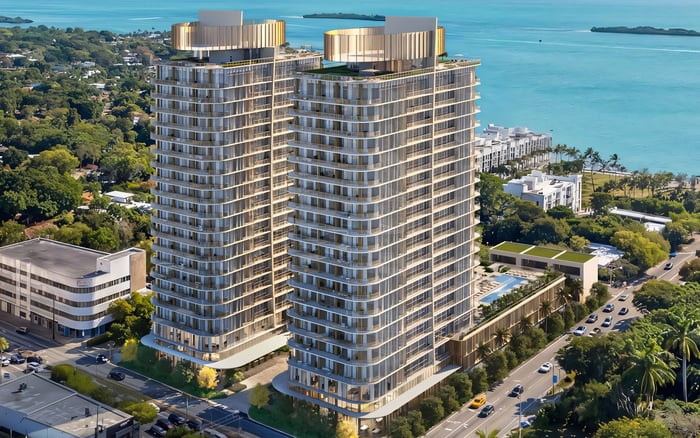
Before accepting a precompletion assignment, a buyer should understand the remaining contractual deadlines, the proposed title coverage, and the documents supporting access and intended use. Recorded rights and an acceptable survey deserve the same attention as the residence itself.

A South Florida residence can be beautifully conceived while the rights supporting its everyday enjoyment still warrant close examination. For a buyer taking an assignment before completion, the essential question is not simply what will be delivered. It is what the contract allows the buyer to investigate, what the title insurer proposes to cover, and what remains outside that protection.
Review the original purchase agreement, amendments, assignment terms, title commitment, exception documents, survey and prior title objections together. Each answers a different question. A commitment does not replace the contract, and a survey does not establish that every disclosed condition will be insured.
For a buyer considering Brickell options such as The Residences at 1428 Brickell, this framework can guide the evaluation of any proposed assignment. The project references here provide location context, not findings about title conditions or assignment availability.
Before committing to the assignment, ask counsel to map the operative deadlines in the original agreement and every amendment. Identify the inspection period, any separate title-objection procedure, applicable cure provisions and any remaining termination rights. Do not assume these periods are interchangeable or that accepting an assignment restarts them.
Request the history as well as the current documents. Earlier objections, responses and agreed resolutions may affect what the incoming buyer can still challenge. If a fresh review or cancellation window matters, have counsel determine whether it exists or must be negotiated with the necessary parties.
Due diligence should extend beyond finishes and construction progress to title, zoning and land-use concerns. The scope and timing of that investigation depend on the particular agreement, not a universal rule for developer contracts.
Schedule B-I identifies conditions the title insurer requires before issuing the policy. Schedule B-II identifies matters excluded from the proposed coverage unless removed or modified. Treating both schedules as one administrative checklist obscures that distinction.
The buyer's team should ask two separate questions: what must happen for the policy to issue, and what will remain uninsured afterward? Satisfying an issuance requirement does not, by itself, eliminate an exception elsewhere in the commitment.
Recorded easements, restrictive covenants and association declarations can appear as exceptions. Their presence in the public record does not mean losses arising from them are covered. Obtain and read the underlying instruments rather than relying on abbreviated descriptions.
Standard exceptions also deserve scrutiny. They can address current-year taxes, unrecorded possessory rights, survey matters, unrecorded easements and certain unrecorded construction liens. Ask which exceptions can be narrowed or deleted, what evidence is required, and how the resulting coverage will read.
An easement's importance depends partly on where it lies and what it permits. A right running along a property's edge may be manageable; one crossing an intended improvement area may interfere with a renovation or development plan. Consider the instrument and its mapped location together.
Where relevant, request the easement's legal description and sketch, then have the surveyor relate them to the property. Ask counsel to explain the permitted uses and restrictions. Do not treat an unfamiliar recorded instrument as harmless simply because it is longstanding.
For someone comparing Miami Beach residences such as The Perigon Miami Beach, beach access, parking and amenity use belong on the document-review agenda where relevant. The aim is to establish the legal basis for a valued feature, not to presume a defect.
Physical use also matters. Exceptions concerning parties in possession and unrecorded easements mean a public-record search alone may not answer every question about occupation or access.
A right of access is not ownership of the road, passage or waterway beside a property. Read the Schedule A land description alongside the policy's access provisions and applicable exceptions. Do not assume neighboring land or water is included simply because it appears integral to the arrival experience.
For a Surfside search that includes The Delmore Surfside, ask which documents support any access or use rights material to the purchase. Confirm the scope of those rights rather than inferring it from proximity.
The same distinction applies wherever private-road, dock, beach, parking or amenity rights influence value. Ask what is owned, what is available through another legal arrangement, and what the proposed policy actually covers. These inquiries are related, but none substitutes for another.
A broad survey exception can exclude encroachments, encumbrances, violations, variations and other adverse circumstances that an accurate, complete survey would disclose. The survey serves more than a visual purpose: it can help define the boundary between a physical condition and an insured risk.
Give the surveyor the relevant Schedule B documents, including easements, restrictive covenants, plats and declarations. Ask the insurer and surveyor what survey scope is appropriate for the transaction. An ALTA/NSPS survey should not be treated as mandatory for every residential purchase.
An accurate survey acceptable to the insurer may support deletion of the general survey exception. A problem it reveals, however, may become a specific exception. Removing broad language does not automatically secure coverage for every disclosed condition.
In Coconut Grove, a buyer evaluating Four Seasons Residences Coconut Grove can apply the same discipline to a proposed transaction: connect the documents, survey and intended use, then obtain confirmation of the insurer's position.
Before accepting the assignment, request a written disposition of material title matters. Distinguish between exceptions accepted knowingly, matters requiring resolution, and issues for which revised coverage is being requested. Identify what must occur before the buyer becomes committed and what remains to be addressed before closing.
Surveys and seller affidavits may support changes to standard exceptions, but delivery alone guarantees no change. Confirm the insurer's requirements and the resulting language. Ask how the proposed coverage will address the period between the title examination and recording rather than assuming that interval is protected.
The objective is not an exception-free document at any cost. It is a clear understanding of the rights being acquired, the restrictions being accepted and the protection actually available. That clarity deserves a place beside architecture, views and service in the purchase decision.
For a considered perspective on South Florida's luxury residential market, explore MILLION.
If branded residences are on your mind — as a home or as an allocation — we would be glad to share what we are seeing, privately.
Begin a quiet conversationThe incoming buyer should understand both the proposed insurance coverage and the contractual rights still available. Reviewing title alongside the original agreement and assignment terms helps identify unresolved matters before committing.
Schedule B-I identifies requirements for issuing the policy. Schedule B-II identifies matters excluded from the proposed coverage unless removed or modified.
No. A recorded easement can appear as an exception, leaving losses arising from it outside the policy's coverage.
Do not assume it does. Counsel should review the original contract and amendments to determine which rights remain and whether additional time must be negotiated.
Request the original purchase agreement, amendments, assignment terms, existing title commitment, underlying exception documents, survey and prior title objections. Review them together rather than as separate files.
Some can be deleted or narrowed with evidence such as an acceptable survey or seller affidavit. The insurer's requirements and resulting policy language must be confirmed.
No. A condition disclosed by the survey may become a specific exception and remain uninsured unless separately resolved or covered.
It should not be treated as universally mandatory. Ask the insurer and surveyor which survey scope is appropriate for the transaction.
No. Review the Schedule A land description separately from the policy's access provisions and any documents granting use rights.
Public records do not capture every potential claim. Exceptions for unrecorded easements and parties in possession make actual occupation and use relevant to diligence.