A discreet buyer’s guide for art collectors considering a South Florida purchase before year-end, with emphasis on timing, advisors, insurance, storage, and lifestyle fit.

For art collectors, moving to South Florida before year-end is rarely just a matter of finding a beautiful residence and signing before the calendar turns. It is a coordinated transition involving legal domicile planning, insurance review, fine-art logistics, property security, climate control, estate considerations, and the physical realities of relocating works that may be more sensitive than the furniture around them.
The luxury buyer who treats year-end as a hard finish line can easily miss the larger point. A closing date matters, but it is only one component of a wider move plan. The more refined approach is sequential: confirm personal advisory objectives first, identify the right property second, and allow sufficient time for art handling, installation, lighting, humidity assessment, and insurance documentation before the collection is moved.
This is especially important in South Florida, where lifestyle districts can feel close on a map yet perform very differently in practice. A Miami Beach residence may suit a collector who wants proximity to cultural events and private dinners. Brickell may appeal to buyers who prefer a vertical, service-rich environment with immediate access to finance, dining, and international travel corridors. Palm Beach offers a more residential cadence, often appealing to collectors who prioritize discretion, architecture, and legacy planning.
A year-end move often begins with the language of tax residency, but serious collectors should avoid reducing that conversation to a checklist. The central question is not merely whether a purchase can close before December 31. It is whether the buyer’s life, records, advisors, estate documents, travel patterns, and home use will align with the position they intend to take.
That is why a buyer should involve tax counsel and estate advisors before becoming emotionally committed to a residence. If the move is part of a broader relocation, the residence should be selected with enough practicality to support actual life in Florida, not just occasional occupancy. That may affect everything from bedroom count to private office needs, from storage planning to where family members, staff, and advisors will naturally convene.
For collectors, the residence must also support stewardship. Before closing, the buyer should understand where significant works might be placed, whether walls can accommodate weight and scale, how sunlight enters at different times of day, whether mechanical systems are appropriate for sensitive pieces, and whether private storage or off-site storage will be needed. These are not decorative questions. They are ownership questions.
The best address is the one that supports how a collector actually lives with art. Some buyers want a residence that can host salons, dinners, and foundation events. Others want a quiet retreat where the collection remains primarily private. Some require immediate access to private aviation, while others place greater value on walkable dining, beach access, or proximity to galleries and institutions.
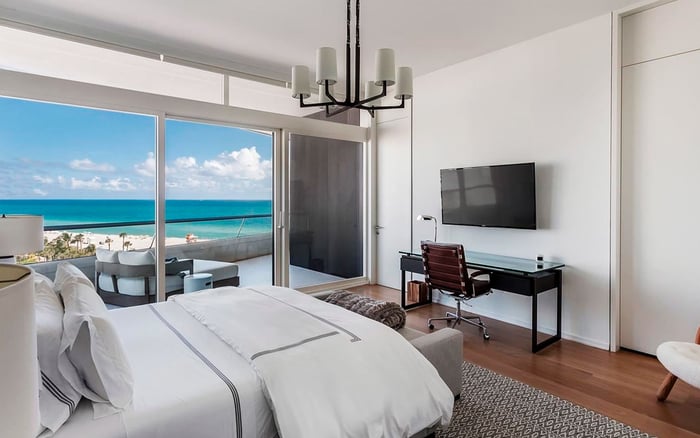
Miami Beach remains compelling for collectors who want cultural rhythm in a coastal setting. A residence such as The Perigon Miami Beach can be part of a broader Miami Beach lifestyle conversation, particularly for buyers weighing privacy, ocean proximity, and contemporary residential design. In these cases, art placement should be evaluated early, especially where glass, light, and views are central to the architecture.
Brickell serves a different buyer. It is more urban, more vertical, and often more convenient for those who want services, dining, and business access close at hand. For a collector who expects frequent advisor meetings or international travel, a project like The Residences at 1428 Brickell may enter the discussion because the neighborhood supports a highly connected daily routine. The art question in Brickell is often about elevator logistics, receiving protocols, service access, and how installation teams can work discreetly within a managed building.
Palm Beach and West Palm Beach appeal to buyers who prefer a more established residential tempo. For collectors thinking about a long-term Florida base, The Ritz-Carlton Residences® West Palm Beach can fit into a discussion about service, privacy, and access to the Palm Beach social calendar. The practical review remains the same: climate, security, installation conditions, and whether the residence can support both the collection and the life around it.
Collectors should not wait until after closing to think about transport. The buyer’s team should identify which works will move, which will remain elsewhere, which require conservation review, and whether any pieces need specialized crating or climate-controlled handling. If the residence is in a condominium, management protocols should be reviewed before the move date is set. Freight elevators, loading access, insurance certificates, delivery windows, and installation permissions can all affect the timeline.
The most successful moves are quiet because they are thoroughly planned. A registrar or collection manager can coordinate condition reports, photography, inventory updates, and insurance schedules. Lighting consultants and art installers can assess wall surfaces, ceiling heights, anchoring requirements, and glare. Security professionals can evaluate private access, cameras, alarms, and safe-room needs where appropriate.
Waterfront living adds another dimension. The word waterfront may describe a view, a lifestyle, or a complex set of exposure considerations. Buyers should evaluate how a residence manages humidity, storm preparation, window systems, mechanical resilience, and building protocols. The goal is not to avoid the water. It is to understand what living beautifully near it requires.
Insurance should be reviewed before the purchase contract becomes the entire focus. A collector may need separate policies or endorsements for fine art, jewelry, wine, cars, and other valuables. The residence itself must also be understood through the lens of property coverage, association requirements, deductibles, and any special conditions that could affect ownership costs.
Storm planning should be handled with the same composure as art logistics. Serious buyers ask how a building communicates before and after severe weather, how staff prepares common areas, how access is restored, how generators and mechanical systems are managed, and what responsibilities belong to the owner. For single-family homes, the review extends to shutters, generators, landscaping, drainage, and vendor availability.
Documentation is equally important. Before the collection is moved, owners should ensure that appraisals, invoices, condition reports, photographs, loan agreements, and storage records are current and organized. If works are owned by trusts, entities, or foundations, advisors should confirm how the move affects records and administration. The strongest plan is one that would make sense to an insurer, an estate attorney, a lender, and the owner’s own family office.
A year-end goal can be useful because it creates discipline. It encourages the buyer to assemble advisors, define priorities, and avoid drifting through the market. But urgency should not lower standards. The wrong residence, even if purchased on time, can create years of operational friction.
Collectors should distinguish between properties that are visually impressive and properties that can truly host a collection. A dramatic glass residence may be extraordinary, but certain works may require careful placement. A boutique building may offer privacy, but delivery access may need closer review. A service-rich tower may be convenient, but installation rules may require planning. In Surfside, Arte Surfside may be part of a conversation about intimacy, architecture, and coastal living, while still requiring the same practical questions around light, access, and climate.
The better buyer’s process resembles a private acquisition strategy. Identify the desired lifestyle. Confirm the advisory framework. Shortlist residences by neighborhood and building culture. Review the physical conditions for the collection. Negotiate with enough time for diligence. Then close only when the home, the advisors, and the logistics are aligned.
For buyers, the most important step is to appoint a lead coordinator. That may be a family office representative, attorney, collection manager, or trusted real estate advisor. Without one person managing the calendar, critical details can become fragmented.
The second step is to map the move backward. If the owner wants to be settled before year-end, the schedule should include contract negotiation, inspections, association review where applicable, insurance binding, art packing, installation planning, and any improvements needed before works arrive. A residence that requires meaningful customization may still be desirable, but it may not be suitable for immediate collection placement.
The third step is to protect discretion. Art collections attract attention, and so do high-value residential moves. Communications should be limited, vendors should be vetted, and delivery timing should be managed carefully. The goal is not secrecy for its own sake. It is stewardship.
Finally, the buyer should remember the cultural calendar. The Art Basel season may bring energy, visibility, and opportunity, but it can also compress travel, hospitality, and vendor availability. A collector planning a Florida move around that period should reserve specialists early and avoid assuming that premium service providers will be available on short notice.
Should an art collector close before year-end? It can be sensible if legal, tax, insurance, and collection logistics are aligned. The date should support the plan, not replace it.
What should be reviewed before moving art into a new residence? Review climate conditions, light exposure, wall structure, security, access, and insurance documentation. Installation planning should begin before closing when possible.
Is Miami Beach a strong choice for collectors? Miami Beach can suit collectors who value cultural access, coastal living, and private entertaining. The residence should still be tested for light, humidity, and installation needs.
Why might Brickell appeal to relocating collectors? Brickell can work for buyers who want an urban, service-oriented base with strong daily convenience. Elevator access and building protocols deserve early attention.
How should Palm Beach buyers think about timing? Palm Beach-oriented buyers often focus on discretion, seasonal use, and long-term planning. Advisors should coordinate residency, estate, and collection considerations early.
Should art be moved immediately after closing? Not always. It may be better to complete lighting, security, climate checks, and any construction work before the collection arrives.
What role does insurance play in the move? Insurance should address both the residence and the collection before transport begins. Coverage details should be confirmed with qualified advisors.
Are waterfront residences appropriate for major collections? They can be, provided humidity, storm planning, mechanical systems, and building procedures are carefully reviewed. The setting should be matched by operational discipline.
Who should be on the buyer’s advisory team? A tax advisor, attorney, insurance specialist, real estate advisor, collection manager, and art logistics provider may all be relevant. The mix depends on the buyer’s holdings and goals.
What is the biggest mistake collectors make when rushing year-end timing? The most common error is prioritizing the closing date over the quality of the overall transition. A well-timed move should still be a well-designed move.
For a tailored shortlist and next-step guidance, connect with MILLION.
If branded residences are on your mind — as a home or as an allocation — we would be glad to share what we are seeing, privately.
Begin a quiet conversation