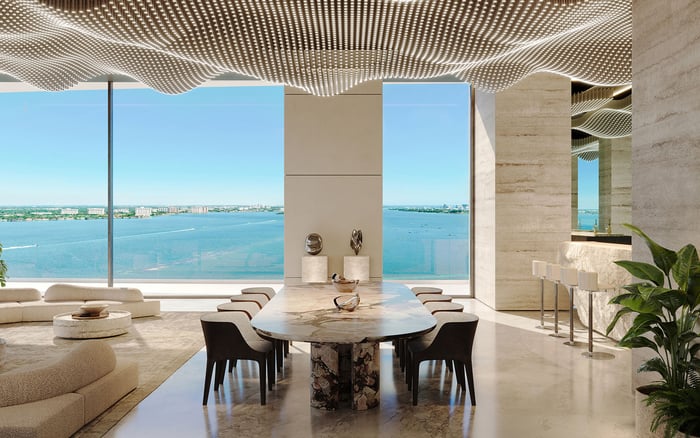
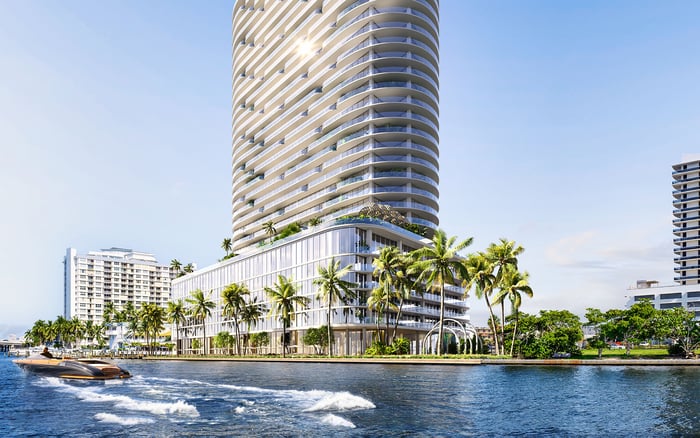
A discreet, buyer-oriented framework for evaluating up-and-coming waterfront neighborhoods in South Florida, with North Bay Village as a working example and Pagani Residences as a lens.
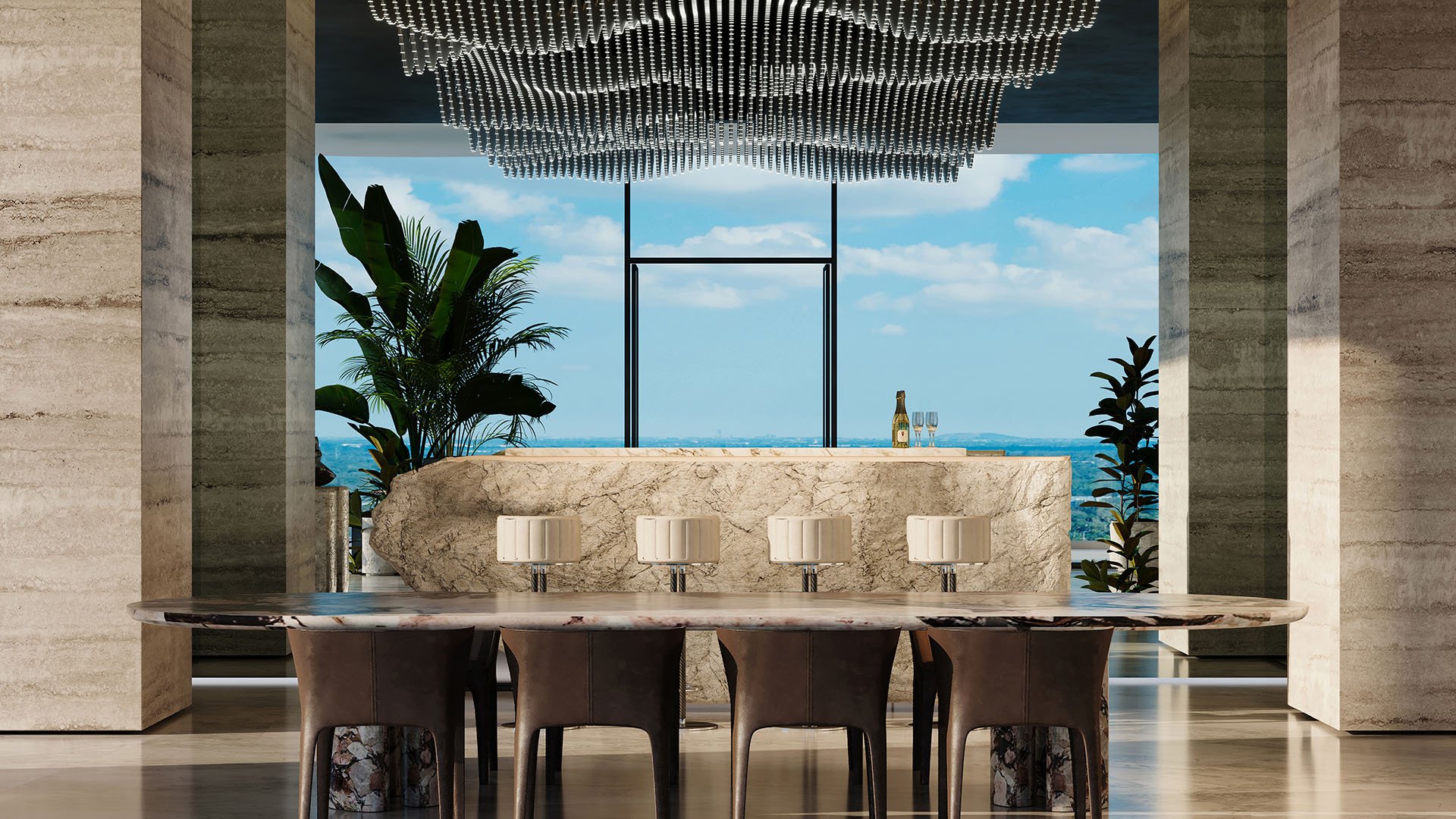
In ultra-premium real estate, the cleanest wins are often the least glamorous at the moment you commit. Buying in an up-and-coming neighborhood isn’t a wager on vibes; it’s a disciplined purchase of optionality. You’re paying today’s basis for tomorrow’s convenience, retail, infrastructure, and reputation-and managing the gap with patient holding power.
North Bay Village is a compelling case study because it offers a rare mix in Miami: a compact, water-wrapped geography positioned between major demand drivers. Done correctly, this strategy can deliver three outcomes luxury buyers prioritize: (1) a lifestyle you’ll actually use, (2) a defensible store of value, and (3) the ability to trade up or exit without being forced.
Pagani Residences, in particular, prompts a sharper question than “will this area appreciate?” The better question is: what is the neighborhood’s trajectory, and how do you structure a purchase so you benefit from it regardless of what the broader market does next?
The core advantage of neighborhoods like North Bay Village is adjacency. In South Florida, time is the true luxury currency: minutes to the beach, minutes to the office, minutes to dining, minutes to a marina. “Bridge” neighborhoods that connect major nodes can mature quickly once residential product, streetscape, and daily needs catch up.
A practical way to frame North Bay Village is as a waterfront alternative to locations that are already fully priced. Buyers who want proximity to Miami Beach without paying a pure beach premium-and who still want quick access to the mainland’s business corridors-tend to value this middle position.
When evaluating the thesis, separate the romantic from the measurable.
Romantic: sunsets, water views, the idea of being early.
Measurable: commute patterns, scarcity of waterfront parcels, quality of new residential product, and whether daily life feels effortless.
To calibrate what “mature” looks like, it helps to compare against neighborhoods already operating at full lifestyle velocity. For a buyer anchored in Miami Beach’s established luxury ecosystem, The Perigon Miami Beach is an example of a market where pricing is often about certainty and immediate prestige. The up-and-coming strategy targets a different value proposition: purchase at a lower certainty premium, then earn part of your return as certainty is built.
In an emerging pocket, the building you choose isn’t just a residence; it’s your risk-management tool. Branded or design-forward projects can help establish a new neighborhood’s “language of luxury” sooner, accelerating buyer acceptance. But the underwriting must stay sober.
At Pagani North Bay Village, the strategic angle is to treat the purchase as a portfolio position with multiple levers:
Lifestyle leverage: Will you live here often enough to justify the premium for views, privacy, and waterfront access?
Market-making leverage: In a neighborhood still defining its top-of-market, a standout project can become a pricing reference point.
Exit leverage: A distinctive product can be more resilient when buyers become selective-provided the HOA structure, unit layout, and finish quality read as timeless rather than merely trendy.
Where sophisticated buyers get hurt is confusing “design narrative” with “liquidity.” In luxury, liquidity is built on fundamentals: a clean unit mix, usable outdoor space, thoughtful storage, and a building culture that feels calm and well-managed.
In an up-and-coming market, upside is real only if you avoid overpaying for an unbuilt future. The cleanest approach is to decide, in advance, what you will pay for what already exists.
Think in layers:
Layer 1: The unit itself. Orientation, ceiling-height feel, terrace usability, and interior planning.
Layer 2: The building. Amenities, arrival experience, privacy, sound control, parking, and day-to-day service quality.
Layer 3: The block. How it feels on foot at 8 a.m. and 9 p.m., the convenience of coffee, groceries, fitness, and the sense of safety and order.
Layer 4: The neighborhood trajectory. Streetscape, retail maturation, and the arrival of complementary projects.
Your offer should fully price Layers 1 and 2, partially price Layer 3, and only lightly price Layer 4. If you find yourself paying a finished-neighborhood premium for an unfinished-neighborhood experience, you’ve inverted the strategy.
For context, consider how fully “priced in” a mature lifestyle corridor can be. In Brickell, projects such as 2200 Brickell often trade on immediate walkability and established patterns of demand. North Bay Village calls for a more conservative posture: you buy for what it is, plus a measured margin for what it can become.
Luxury buyers often ask for the one signal that confirms an area is turning. The truth is that neighborhoods shift through a sequence, and the best strategy is to track the signals in order.
Signal 1: Daily-need retail arrives.
Not trophy dining-quiet conveniences: nearby quality grocer options, reliable coffee, fitness, and services.
Signal 2: Streets start to feel designed.
Lighting, sidewalks, landscaping, crosswalks, and a more coherent public realm.
Signal 3: Residential demand broadens.
Early buyers are typically view-driven. The next wave is school-, commute-, and community-driven. That second wave is what supports price stability.
Signal 4: A second and third premium project launches.
One standout can be a novelty. Multiple premium projects create a market.
To see what “multiple premium projects” can look like within the same micro-market, note North Bay Village’s growing roster of new development conversations, including Continuum Club & Residences North Bay Village. Even if you don’t buy that product, the presence of additional top-tier development can shift buyer perception of the entire area.
The most sophisticated buyers treat an up-and-coming purchase like a private investment. Before you sign, run four stress tests.
If appreciation were flat for several years, would you still be happy owning it? If the answer is no, the purchase is speculation-not strategy.
Luxury is operational. Review what you can about governance, fee-trajectory logic, and rules that affect use. In emerging areas, consistency and calm management matter because they become part of the building’s reputation.
Ask yourself: who is the buyer after you? Is it a primary resident who wants ease, a second-home owner who wants lock-and-leave, or an investor who cares about leasing flexibility? Choose a unit whose appeal overlaps at least two of these profiles.
Prioritize layouts and exposures that remain desirable even as the neighborhood densifies. Water views can be an advantage, but also consider noise, traffic patterns, and how future construction could affect day-to-day serenity.
In an up-and-coming neighborhood, structure is a form of alpha. A few principles tend to serve luxury buyers well.
Target flexibility in use.
If you foresee evolving needs, consider a floor plan that can shift between second home and semi-primary use without feeling compromised.
Buy “quiet luxury,” not novelty.
Timeless materials, clean proportions, and a restrained palette typically age better. Future buyers pay for a sense of quality they can trust.
Focus on the line, not the hype.
In many towers, a small subset of lines will dominate resale demand because the view corridor, terrace usability, and natural light simply work.
Treat pre-construction with grown-up assumptions.
Even when timelines are widely discussed, assume delays and build them into your holding plan. If that makes the deal unattractive, it was never truly conservative.
For many MILLION Luxury clients, the smartest move isn’t choosing between “established” and “emerging,” but blending them. A mature address can be your certainty asset; an up-and-coming address can be your upside and lifestyle experiment.
Miami is especially suited to this barbell strategy because each micro-market has its own personality. A buyer could keep a pied-à-terre where demand is perennial and global, then add a waterfront-oriented residence in a neighborhood that is still improving.
The key is to treat your emerging-market purchase as an intentional complement. If your existing holdings are heavy in the most mature districts, North Bay Village can offer a different rhythm and a different value structure. If your holdings are already concentrated in transitional areas, you may prefer to diversify toward established corridors.
A purchase at Pagani Residences tends to make the most sense for buyers who:
Value proximity to Miami and Miami Beach while preferring a more residential cadence.
Want a waterfront lifestyle and are willing to be early to a neighborhood’s next chapter.
Understand that luxury liquidity is created by fundamentals, not by headlines.
Can hold through the natural volatility that comes with any “before and after” market.
Ultimately, the strategy is to buy an address you’ll enjoy now, in a building that can still command desire later, and in a neighborhood whose convenience and identity are moving in your favor.
Is buying in an up-and-coming neighborhood a good luxury strategy? Yes-when you underwrite lifestyle first and pay for today’s reality, not tomorrow’s promise.
Why do buyers look at North Bay Village specifically? Its waterfront setting and in-between position can offer proximity to major hubs, with room for neighborhood maturation.
What should I prioritize inside the unit in an emerging market? Choose a strong layout, light, and terrace usability, since those drivers tend to stay liquid across cycles.
Does a design-forward building reduce risk? It can help differentiate the asset, but it doesn’t replace fundamentals like governance, privacy, and resale-friendly plans.
How do I avoid overpaying for future upside? Price the unit and building fully, then assign only modest value to improvements that aren’t yet delivered.
Should I buy pre-construction or wait for resale? Pre-construction can offer selection and early entry, while resale offers certainty; the right choice depends on your timeline and tolerance.
What’s the biggest mistake buyers make in emerging areas? Buying a compromised line or layout because the neighborhood narrative sounds compelling.
How important are HOA rules for luxury value? Extremely important, since rules and fee logic shape buyer experience and long-term desirability.
Can I use an up-and-coming purchase as part of a portfolio? Yes-many buyers pair a mature “certainty” address with a second home positioned for neighborhood upside.
What indicates a neighborhood is truly turning? Daily-need conveniences, improved streetscape, and multiple premium residential projects that create a consistent market.
To compare the best-fit options with clarity, connect with MILLION Luxury.
If branded residences are on your mind — as a home or as an allocation — we would be glad to share what we are seeing, privately.
Begin a quiet conversation