A discreet South of Fifth buyer’s guide for art, wine, watch, and design collectors who need residential climate stability without sacrificing Miami Beach lifestyle.

For a certain South of Fifth buyer, a residence is not simply a place to watch the water. It is a private environment for objects that do not tolerate improvisation: contemporary works, photography, paper, couture, watches, rare books, design pieces, wine, and the quietly irreplaceable fragments of a life well collected.
That is why climate stability belongs near the top of the acquisition brief. In Sofi, the romance is immediate: Miami Beach light, bay and Oceanfront outlooks, morning walks, private dining, and a social rhythm that can be both glamorous and discreet. Yet the collector’s real question is more exacting. Can the apartment maintain a composed interior environment when heat, humidity, salt air, sun, entertaining, and travel schedules all intersect?
This Buyer’s Guide approach is less about chasing a label than asking better questions before closing. South of Fifth buyers should think like conservators, not tourists. The right home must support beauty, but it must also protect it.
South of Fifth has a distinct advantage for collectors: it is compact, walkable, and residential in feeling, with immediate access to the beach, marina edges, restaurants, and the South Beach cultural circuit. That concentration matters. A collector can live elegantly without requiring a large operational footprint, while still enjoying the Waterfront character that defines the neighborhood.
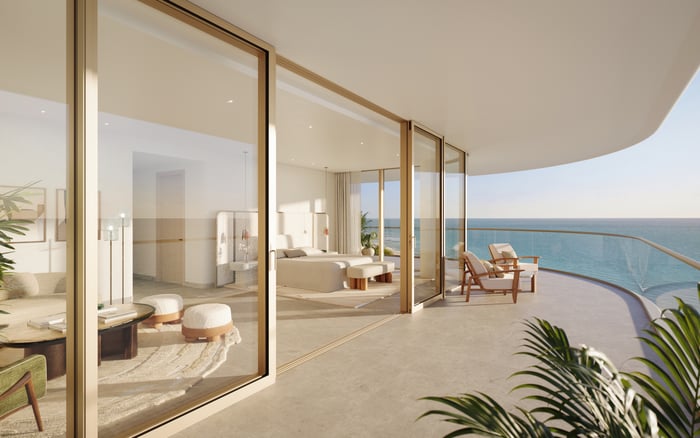
The best acquisitions here tend to balance exposure and control. Views are valuable, but direct sun can complicate the placement of delicate works. Terraces are desirable, but frequent opening and closing can challenge interior consistency. Large glass walls are seductive, but buyers should understand how the residence manages heat, glare, and condensation risk before placing sensitive pieces.
Established addresses such as Apogee South Beach and Continuum on South Beach are often part of the collector conversation because they sit within the precise geography many buyers want. The due diligence, however, should remain residence-specific. Even in a coveted building, one line, exposure, renovation history, or mechanical setup may be better suited to a serious collection than another.
Collectors should begin with the mechanical story. Ask how cooling is delivered, whether the system can be adjusted with precision, how consistently it performs across primary rooms, and whether any rooms run noticeably warmer or more humid. A beautiful gallery wall is only useful if it is not exposed to chronic heat, harsh sunlight, or inconsistent airflow.
Then study the envelope. Windows, balcony doors, seals, shades, and glazing are not decorative footnotes. They shape daily conditions inside the residence. A buyer should spend time in the unit at different moments of the day, noting glare, thermal comfort near the glass, and whether any area feels persistently damp, hot, or stale.
Storage deserves the same scrutiny as the living room. Many collectors focus on display, then discover that packing materials, frames, archival boxes, watch winders, wine, and seasonal pieces have no suitable home. A well-planned South of Fifth residence should have a quiet logistics strategy: protected closets, conditioned back-of-house zones, and enough service capacity to receive, inspect, and move objects without turning the main rooms into a staging area.
For buyers considering newer branded or hospitality-influenced residences near the broader South Beach market, The Ritz-Carlton Residences® South Beach may enter the search as part of a service-oriented lifestyle comparison. The same collector lens applies: service is valuable, but the residence must still be evaluated as a controlled interior environment.
Not every collection needs the same residence. Large-scale paintings call for wall height, balanced light, and circulation paths that allow movement without accidental contact. Photography and works on paper demand more caution around direct light. Sculpture may require floor-loading review, doorway clearance, and a thoughtful installation plan.
Wine is a separate discipline. Some buyers want a display cellar as a social centerpiece; others prefer discreet, stable storage outside the visual field. Watches and jewelry introduce another set of priorities: secure storage, privacy, lighting that does not create unnecessary heat, and an owner’s suite layout that supports daily use without exposure to household traffic.
Design collectors should be particularly attentive to sunlight. The same brightness that makes a Miami Beach room feel alive can affect textiles, leather, wood, lacquer, and vintage pieces. Automated shades, layered lighting, and a curated furniture plan can help, but they should be treated as part of the acquisition budget, not as afterthoughts.
Many South of Fifth buyers are comfortable renovating, but collector-grade renovation requires restraint. The goal is not to overbuild a private museum. It is to create a residence that feels natural, elegant, and livable while quietly supporting environmental control.
Before altering ceilings, lighting, millwork, or walls, assemble the right advisory circle. A designer, art handler, mechanical professional, lighting specialist, and insurance advisor may each see risks the others miss. Recessed lights, decorative fireplaces, poorly planned wine displays, and unventilated built-ins can all undermine stability if no one is coordinating the whole environment.
Collectors should also be careful with open-plan living. A seamless entertaining space may be ideal for hosting, but it can create challenges if the residence has zones with different needs. The better solution is usually subtle zoning: rooms that flow aesthetically, yet perform differently when required.
Climate stability is not only a building question. It is an ownership habit. Seasonal residents should decide who monitors the residence while they are away, how systems are checked, what happens before storms, and how quickly a specialist can access the home if an alarm or irregular reading appears.
Insurance expectations should be discussed early. Documentation, appraisals, photography, installation records, and storage protocols can affect the ease of future claims and the owner’s confidence. A collector who treats the apartment as an operating environment will generally be better prepared than one who treats it as a decorative shell.
The most successful South of Fifth purchase is the one where pleasure and discipline coexist. The rooms feel calm. The light is controlled but not deadened. The art breathes. The wine rests. The owner arrives from New York, London, São Paulo, or Palm Beach and finds the residence ready, quiet, and composed.
Before making an offer, ask one simple question: if the most delicate object in the collection had to live here for five years, what would need to change? If the answer is minor, the residence may be close. If the answer involves major mechanical uncertainty, uncontrolled sun, insufficient storage, or a service path that does not work, the view may be doing too much of the selling.
South of Fifth will always reward desire. For collectors, it should also reward restraint. The best home is not the loudest, newest, or most photographed. It is the one that protects value in silence.
What does climate stability mean for a South of Fifth collector? It means the residence can maintain a consistent, comfortable interior environment that supports sensitive art, wine, watches, books, textiles, and design objects.
Is an Oceanfront residence always harder for collections? Not always. The key is how the specific residence handles sun, humidity, glazing, airflow, and owner behavior.
Should collectors avoid glass-heavy apartments? No, but they should review glazing, shades, exposure, and placement plans before committing valuable works to sunlit walls.
What should I inspect first during a showing? Look at temperature consistency, humidity feel, direct sun, storage, mechanical access, balcony door performance, and service circulation.
Can a renovation solve most climate concerns? Sometimes, but buyers should understand building limits before assuming a renovation can correct every mechanical or envelope issue.
Do wine collectors need a dedicated cellar? Serious wine owners should plan for stable, purpose-built storage, whether displayed in the residence or handled discreetly elsewhere.
Are lower floors better for collectors? Floor height is less important than exposure, privacy, mechanical performance, access, and the condition of the particular residence.
How important is building service culture? Very important. Art deliveries, installers, maintenance visits, and emergency access all depend on a staff and building process that respects privacy.
Should collectors prioritize new construction or resale? Either can work. The better choice is the residence with verifiable control, thoughtful layout, and the least compromise for the collection.
What is the best first step for a climate-focused search? Build a written brief for the collection before touring, then evaluate each residence against that brief rather than the view alone.
For a discreet conversation and a curated building-by-building shortlist, connect with MILLION.
If branded residences are on your mind — as a home or as an allocation — we would be glad to share what we are seeing, privately.
Begin a quiet conversation