For weekly travelers, elevator redundancy is not a technical footnote. It is part of the daily reliability, privacy, service flow, and storm-season resilience that can determine whether a South Florida residence lives as effortlessly as it looks.
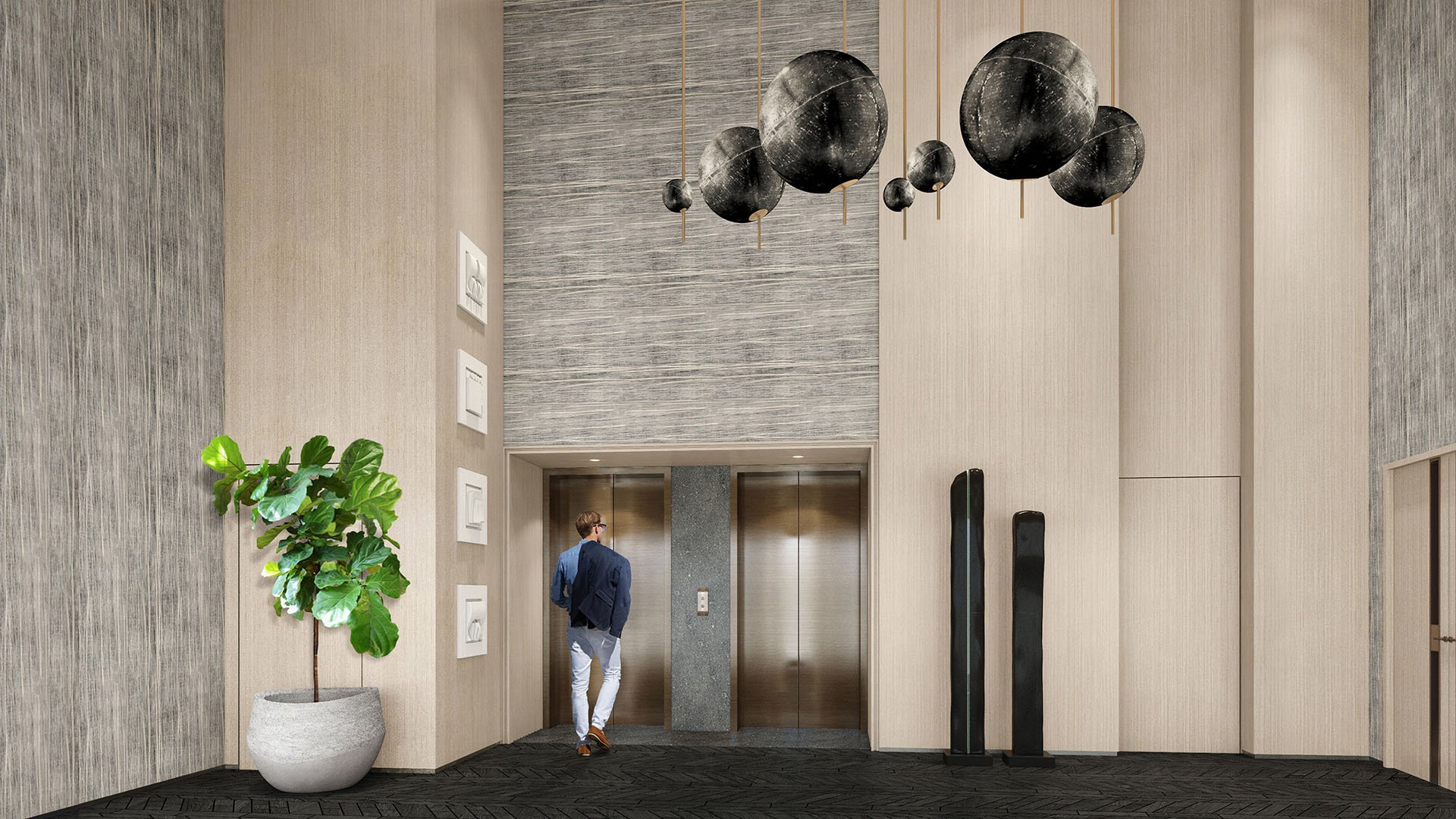
For buyers who board a plane every week, a South Florida condominium is often chosen for ease: a lock-and-leave lifestyle, a managed lobby, secure parking, hotel-caliber service, and an address that remains composed even when the owner is elsewhere. Yet one piece of infrastructure can quietly define that experience more than the stone in the kitchen or the panorama from the terrace: elevator redundancy.
In luxury real estate, elevator performance is rarely the opening line of a sales conversation. It should be. A buyer who spends Monday in New York, Wednesday in Chicago, and Friday back in Miami does not simply need a beautiful residence. That buyer needs predictable vertical access, service logistics that hold during peak moments, and a building team that understands the difference between inconvenience and disruption.
Elevator redundancy is not only the number of cars in a tower. It is the relationship between passenger elevators, service elevators, private or semi-private access, emergency planning, maintenance protocols, backup systems, and the way residents, staff, guests, vendors, deliveries, and movers share the building.
A building may feel serene during a midweek tour and very different during a holiday weekend, a storm-preparation period, a move-in cycle, or an evening when multiple residences are entertaining. For the weekly traveler, those pressure points matter because arrival and departure windows are often fixed. A delayed elevator is not just a delay. It can become a missed flight, a stranded housekeeper, a car-service problem, or a guest experience that feels less than private.
This is why a buyer comparing Brickell, Miami Beach, Sunny Isles Beach, and other vertical markets should ask operational questions early. In a high-rise environment such as The Residences at 1428 Brickell, the conversation should extend beyond the residence itself to the building’s movement patterns: who uses which elevators, how deliveries are routed, and what happens when one car is offline.
A useful way to evaluate a building is to imagine three real weeks in your life. First, the departure week: luggage, driver, valet, dry cleaning, pet care, and a flight that will not wait. Second, the away week: vendors may need access, staff may receive deliveries, and management may need to coordinate entry while you are not in town. Third, the return week: late arrival, tired children, guests, groceries, and perhaps a car waiting in the porte cochere.
The strongest buildings make these weeks feel uneventful. That does not happen by accident. It comes from elevator separation, staff training, clear management procedures, and equipment planning that can absorb ordinary interruptions. Weekly travelers should request a candid explanation of how the building operates during maintenance, service activity, and high-demand periods.
The point is not to turn purchasers into engineers. The point is to confirm that a residence can support the buyer’s actual rhythm. High floors may deliver exceptional views, but they also make elevator planning more central to daily life.
Private elevator entries and dedicated foyers are powerful elements of luxury design. They create a gracious arrival and a sense of discretion that many buyers value. But private access should not be confused with full operational resilience.
A private elevator arrangement can still depend on shared mechanical systems, shared service coordination, or a limited number of cars. Buyers should ask what is private, what is dedicated, what is shared, and what the procedure is when a component is down for service. The answers may be straightforward, but they should be obtained before signing.
In Miami Beach, where buyers often prioritize lifestyle, beach proximity, and architectural atmosphere, a project such as Five Park Miami Beach can prompt the right kind of due diligence: how does the building handle resident arrivals, service teams, hospitality-style demands, and after-hours coordination? The more refined the lifestyle promise, the more important the operating details become.
South Florida buyers also need to think about the coastal setting. Waterfront living is one of the region’s defining luxuries, but it also makes building systems and operational planning part of the value conversation. A buyer does not need to become a technical specialist, but should understand where critical systems are located, how they are protected, and how management communicates during unusual conditions.
Questions about backup power, elevator availability during building events, access after severe weather, and the chain of communication with residents are practical, not alarmist. In coastal towers, even a short interruption can feel larger when an owner is out of town and staff, family, or guests need access.
Sunny Isles Beach buyers, for example, often evaluate towers for views, privacy, and resort-style arrival. When considering a residence such as Bentley Residences Sunny Isles, the same attention should be given to vertical circulation, car access, and what the building can do when normal patterns are disrupted.
The best elevator questions are direct. How many passenger elevators serve the residential floors? Is there a separate service elevator? Are any elevators dedicated to particular floor zones? How are moves, deliveries, housekeeping, and maintenance scheduled? What is the plan when one elevator is out of service? How are residents notified? Who has authority after hours? What backup systems support elevator operation, and under what circumstances?
For boutique buildings, the questions may focus on capacity and staffing. For taller towers, they may focus on zoning, wait times, maintenance windows, and service traffic. For branded or hospitality-influenced residences, they may focus on coordination between residential privacy and service intensity.
In West Palm Beach, where many buyers are balancing primary, seasonal, and second-home use, a residence such as Alba West Palm Beach invites the same lens. The most elegant ownership experience is not only about the unit. It is about the building’s ability to function smoothly when the owner is present, away, or returning unexpectedly.
A sophisticated buyer should tour the lobby, garage, service areas, loading zones, and elevator banks with the same attention normally reserved for finishes. Watch how staff communicates. Notice whether service circulation feels discreet or improvised. Ask whether management can explain procedures with confidence. Operational clarity is itself a luxury signal.
This is especially important for buyers who travel with staff, art handlers, chefs, stylists, security, or extended family. The more complex the household, the more the elevator system becomes part of the residence. In the ultra-premium market, privacy is not only visual. It is logistical.
The right building does not promise that nothing will ever go wrong. It demonstrates that ordinary interruptions have been anticipated. For the weekly traveler, that distinction is essential.
Why does elevator redundancy matter more for weekly travelers? Weekly travelers operate on fixed arrival and departure windows, so elevator disruption can affect flights, staff access, deliveries, and guest coordination.
Is a private elevator enough? Not always. Buyers should understand whether the elevator is fully dedicated, how it is supported, and what happens during maintenance.
Should I ask about service elevators? Yes. Service elevators affect moves, housekeeping, vendors, deliveries, and the separation between residential privacy and building operations.
Do lower floors reduce elevator risk? They may reduce dependence, but they do not eliminate the need to understand building operations, service access, and backup planning.
Are high floors a concern for frequent flyers? High floors can be excellent for views and privacy, but they make elevator reliability and response planning more important.
What should Brickell buyers ask first? Ask how elevators are zoned, how service traffic is separated, and how the building communicates during outages or maintenance.
What should Miami Beach buyers focus on? Focus on guest arrivals, service coordination, coastal readiness, and how hospitality-style demands are managed during peak periods.
Does waterfront living change the conversation? Yes. Waterfront buyers should ask about system protection, backup planning, and resident communication during unusual conditions.
Can elevator questions affect resale quality? They can. Buildings that feel reliable, discreet, and well managed tend to support a more confident ownership experience.
What is the best way to shortlist comparable options for touring? Start with location fit, delivery status, and daily lifestyle priorities, then compare stacks and elevations to validate views and privacy.
To compare the best-fit options with clarity, connect with MILLION.
If branded residences are on your mind — as a home or as an allocation — we would be glad to share what we are seeing, privately.
Begin a quiet conversation