A buyer-focused examination of how service delivery, resident privacy, and recurring costs should be assessed across three ultra-premium oceanfront residential options near Surfside.
At the highest end of the Surfside and North Beach market, buyers rarely choose on architecture or ocean frontage alone. They are selecting an operating environment: how service is delivered, how privacy is protected, and how the experience is funded year after year.
That lens is particularly useful when considering Eighty Seven Park Surfside, The Delmore Surfside, and The Surf Club Four Seasons Surfside. These residences are not interchangeable. An informed comparison begins with shared questions, then examines how each property answers them through staffing, circulation, amenities, governance, and current financial documents.
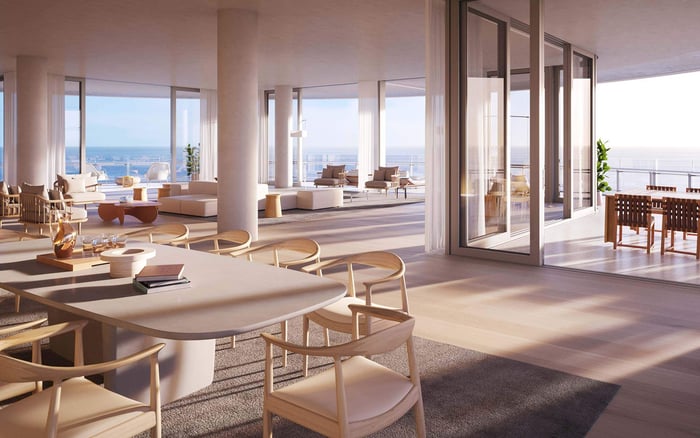
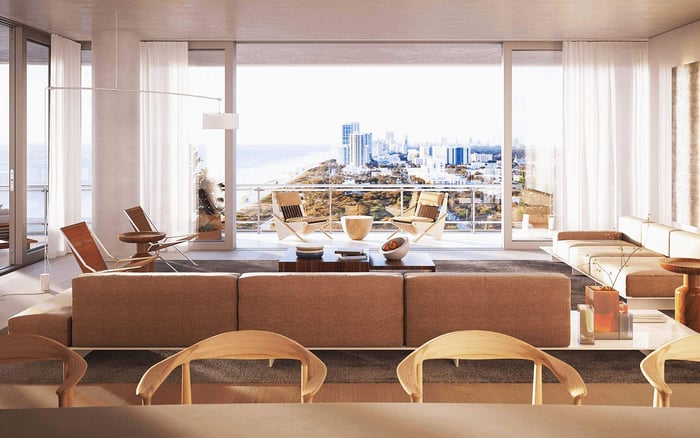
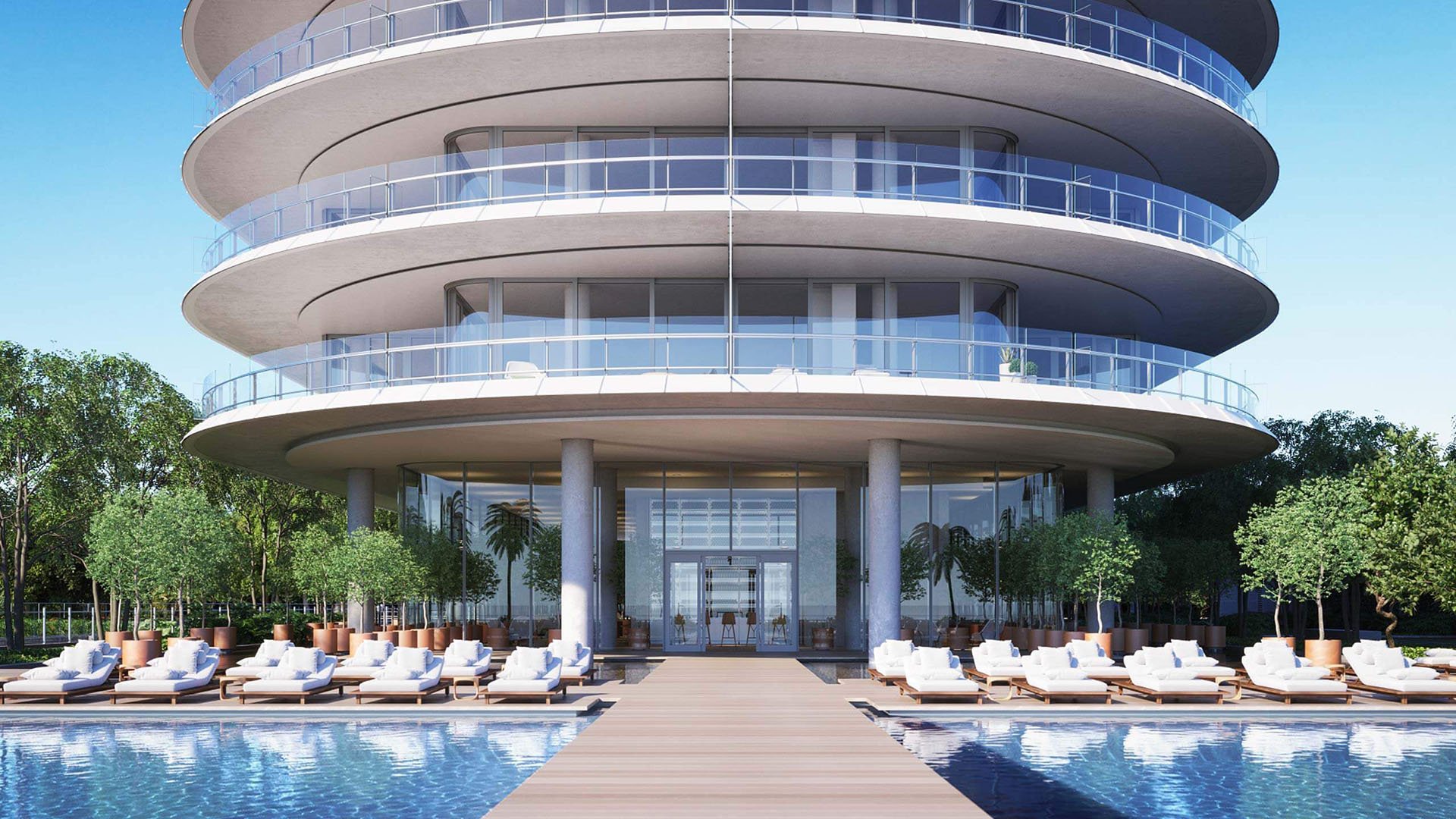
Eighty Seven Park sits at 8701 Collins Avenue in Miami Beach’s North Beach area, immediately south of Surfside. Its service proposition extends well beyond a conventional concierge desk. Butler service, 24-hour concierge and security, valet, a program director, and pool and beach service form a platform designed to support daily life as well as occasional requests.
Concierge functions can encompass reservations, entertainment tickets, babysitting arrangements, transportation coordination, grocery delivery, and assistance with car washing or maintenance. At the shoreline, chairs, cabanas, umbrellas, towels, and valet-style attention make hospitality a recurring operation rather than a static amenity.
For a buyer, the central question is not simply whether a service exists. It is how consistently that service is delivered, what is included in mandatory charges, what carries a separate fee, and whether staffing levels meet the resident’s expectations during peak and quieter periods alike.
Privacy in an oceanfront residence is often discussed as though it were synonymous with controlled lobby access. The more revealing test follows the resident throughout the day: arrival, elevator use, outdoor circulation, pool access, dining spaces, beach service, visitors, deliveries, and staff interaction.
At Eighty Seven Park, a private garden and resident-only outdoor areas reinforce privacy. Its private sculpture garden has been characterized as approximately two acres, while landscaped grounds, picnic areas, a library gallery, children’s space, and beach and boardwalk access expand the private realm.
At The Delmore Surfside, buyers should ask how future daily operations will distinguish among residents, guests, vendors, deliveries, and service personnel. At The Surf Club Four Seasons Surfside, the relevant inquiry is how a Four Seasons-branded service environment balances recognition and responsiveness with discretion. Branded residences can provide an elevated service vocabulary, but buyers still need to understand the practical protocols governing their own home.
An amenity schedule carries an operating consequence. At Eighty Seven Park, two oceanfront pools, cabanas, a full-service spa, an ocean-view gym, direct beach access, an enoteca, and the Fugo Bar are supported by extensive staffing. Wellness spaces include a hammam, sauna, steam rooms, treatment areas, and fitness facilities. Programming also encompasses a salon, juice bar, curated art, botanical exhibitions, and an on-site botanist.
These features may be central to the lifestyle a buyer wants, but they should not be treated as cost-free additions. Their upkeep can involve personnel, equipment, landscaping, food-and-beverage operations, security, insurance, and long-term capital planning.
A defensible comparison begins by separating mandatory association charges from unit-specific expenses and optional services. It should then account for assessments, reserves, insurance, utilities or services allocated to the residence, and any club-related fees identified in current documents. A reliable current maintenance figure for Eighty Seven Park is not established, and the available details do not support an apples-to-apples recurring-cost comparison with The Delmore. Current budgets, association records, contracts, reserve information, and unit disclosures are therefore indispensable.
For Eighty Seven Park, diligence should focus on the cost and consistency of an already broad service ecosystem. Buyers can examine which functions are embedded in common charges, which are usage-based, and how the substantial landscaped, wellness, pool, and beach areas are maintained.
For The Delmore, the prudent approach is to test its proposed luxury positioning against the governing and financial documents available at the time of purchase. The key questions concern final service scope, mandatory versus optional costs, reserve planning, insurance allocations, and the rules shaping privacy and access.
For The Surf Club, brand-managed service is central to the comparison. Buyers should distinguish condominium obligations from optional hospitality or club-related expenses and review how management standards, staffing, access, and residential governance intersect.
The strongest choice is not necessarily the residence with the longest amenity list. It is the one whose service rhythm, privacy structure, and ownership obligations align with how the buyer intends to live.
Before committing, request the most current financial and governing materials, identify every mandatory and elective charge, and map each desired service to its actual provider and payment structure. Then assess privacy in person, tracing the route from vehicle arrival to residence, pool, wellness areas, and beach. This turns an abstract luxury comparison into a disciplined ownership decision.
Is Eighty Seven Park actually in Surfside? It is at 8701 Collins Avenue in Miami Beach’s North Beach area, immediately south of Surfside.
What distinguishes Eighty Seven Park’s service offering? Its platform includes butler, concierge, valet, security, programming, and pool and beach service, with support extending to errands, reservations, and transportation coordination.
Does a longer amenity list necessarily mean higher ownership costs? Not automatically. Buyers need current budgets and contracts to understand how staffing, maintenance, reserves, insurance, and optional services affect total cost.
Can the three properties be compared using a single maintenance figure? No reliable comparison should rest on one headline number. Mandatory charges, assessments, reserves, insurance, unit expenses, optional services, and club-related fees should be separated.
What privacy features matter beyond lobby security? Review elevators, guest and vendor routes, delivery procedures, outdoor spaces, beach access, amenity circulation, and staff protocols.
What private outdoor space is associated with Eighty Seven Park? The residence includes private landscaped areas and a resident sculpture garden characterized as approximately two acres, along with beach and boardwalk access.
Why does branded management matter at The Surf Club? Four Seasons branding makes service delivery a core consideration. Buyers should clarify how hospitality standards relate to residential governance, access, and fees.
How should buyers approach The Delmore’s recurring costs? They should rely on the latest governing documents, budgets, disclosures, insurance allocations, and service details available for the specific purchase.
Which documents are most important before buying? Review current budgets, governing documents, reserve information, assessments, insurance details, management agreements, service schedules, and unit-specific disclosures.
What is the best way to compare service value? Identify the services the household will genuinely use, determine which are included or optional, and assess whether their delivery justifies the associated obligations.
For a tailored shortlist and next-step guidance, connect with MILLION.
If branded residences are on your mind — as a home or as an allocation — we would be glad to share what we are seeing, privately.
Begin a quiet conversation