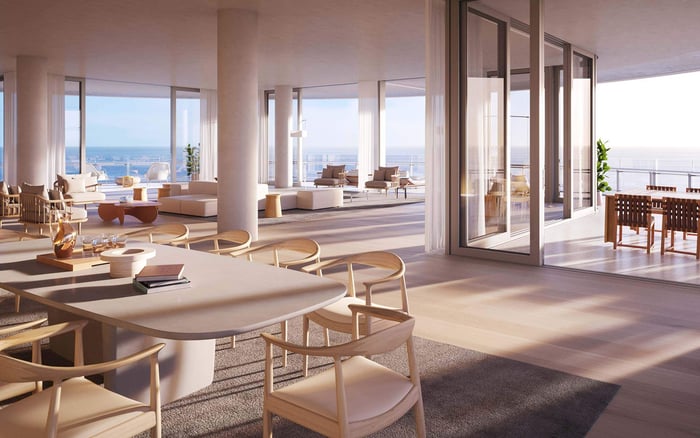
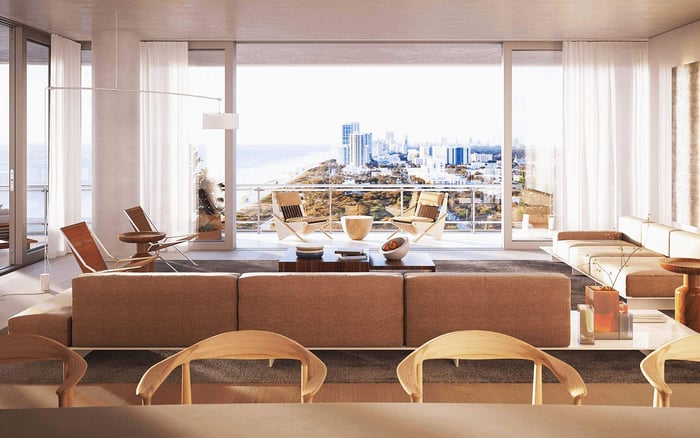
At Eighty Seven Park, post-storm readiness should be evaluated through written protocols, not assumptions based on age, amenities, or full-service positioning. Buyers should verify re-entry credentials, generator-supported systems, fuel plans, staffing coverage, vendor agreements, and association documents before closing.
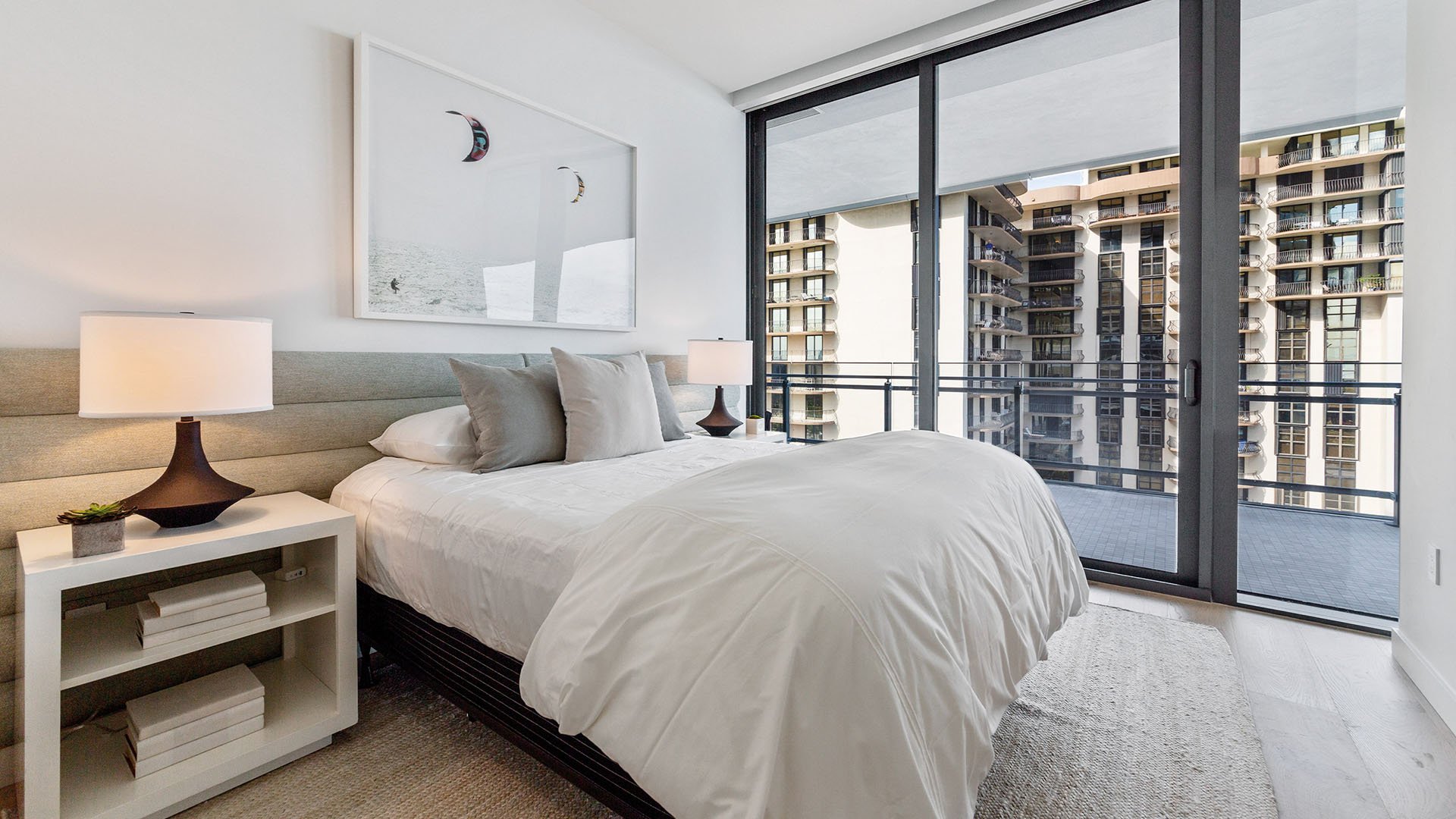
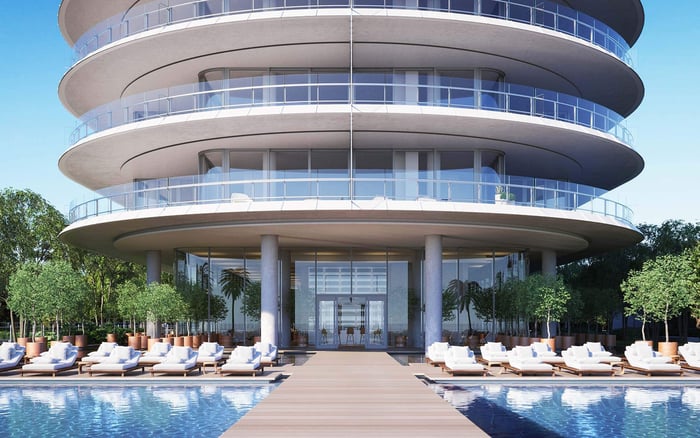
Eighty Seven Park Surfside occupies 8701 Collins Avenue, between the Atlantic Ocean and North Shore Open Space Park near the Surfside and Miami Beach boundary. Designed by Renzo Piano Building Workshop for Terra Group and Bizzi & Partners, the approximately 70-residence, 18-story tower offers the privacy and low-density character many buyers seek. Its setting includes a 35-acre public park to the south and a two-acre residents-only garden to the north.
The building’s customary hospitality profile includes concierge, security, valet, butler, pool, and beach services. Amenities extend to two oceanfront pools, cabanas, a spa, fitness facilities, a wine bar, gardens, and private beach access. Yet those qualities do not resolve the practical questions that follow a major storm. A buyer must determine how access, power, staffing, communications, and essential systems function when normal operations are interrupted.
Post-storm readiness is defined by documented operating capability, not the amenity list.
This distinction matters across the oceanfront market, including nearby residences such as Arte Surfside and The Surf Club Four Seasons Surfside. Each condominium has its own infrastructure, policies, contracts, and emergency plan. Comparisons can sharpen a buyer’s questions, but they cannot replace building-specific documentation.
Surfside’s emergency framework contemplates controlled access after a hurricane, with coordination among emergency personnel, essential employees, law enforcement, utilities, and residents. That does not mean every owner, guest, employee, or vendor will pass through a checkpoint on the same terms or at the same time.
Ask management for the current written re-entry protocol. It should identify the credentials accepted for owners and tenants, such as government identification, proof of residence, active key fobs, or a management-issued letter. It should also explain how guests, domestic staff, private property managers, drivers, and restoration contractors are handled. A key fob may open a building door, but buyers should not assume it will satisfy a municipal or police checkpoint.
Because the address appears in both Surfside and Miami Beach contexts, buyers should obtain a direct answer on which jurisdiction’s police or emergency-management checkpoint is expected to control access to 8701 Collins Avenue. The protocol should include a contact method for updates if cellular service, email, or the resident portal becomes unreliable.
Absentee and second-home owners need an additional layer of planning. Confirm whether an owner can remotely authorize a unit inspection, pre-register household employees, and approve a restoration contractor before arrival. The process should address expiring identification, replacement fobs, tenant documentation, vehicle access, and after-hours entry. Buyers comparing the evolving Surfside landscape, including The Delmore Surfside, should request the same answers from every association rather than presume a neighborhood-wide standard.
Eighty Seven Park’s generator capacity, fuel autonomy, covered circuits, and any backup power within residences require direct verification. Buyers should not infer performance from the tower’s completion era or luxury positioning. The correct next step is to request a written generator schedule.
That schedule should identify which elevators operate, whether domestic-water and fire pumps remain powered, and what coverage exists for corridors, stairwells, emergency lighting, gates, cameras, intercoms, access control, and mechanical rooms. It should state clearly whether any in-unit outlets, refrigeration, lighting, or air-conditioning circuits are connected. Buyers should also ask whether communications equipment supporting building access and security has its own backup power.
Capacity is only part of the inquiry. Request the expected runtime at full load, details of on-site fuel storage, refueling arrangements, testing frequency, and the procedure followed when equipment does not transfer correctly. Confirm whether water pressure can be maintained on upper floors and whether common-area cooling, residential cooling, or neither is available during an extended outage.
A useful way to evaluate the answer is to distinguish re-occupancy from comfort. Safe access, emergency lighting, fire protection, water, and at least limited elevator service may support basic use. They do not necessarily restore ordinary living conditions. Pools, spa operations, valet, beach service, wine service, and cooled amenity areas may return later. Buyers examining other coastal properties, such as 57 Ocean Miami Beach, should apply the same system-by-system test rather than treat the word “generator” as a complete specification.
Normal staffing is not hurricane staffing. Request the association’s written storm roster or staffing protocol, including anticipated engineering and security coverage during the first 24-72 hours. The document should show who has the authority to inspect life-safety systems, control access, communicate with residents, coordinate vendors, and determine when the property can safely reopen.
Ask where critical team members are expected to be before, during, and after the event, without seeking personal information. The operational issue is whether designated roles have alternates and whether staff can reach the property under controlled-access conditions. Engineering and security typically warrant priority in a buyer’s analysis because concierge, valet, butler, pool, spa, and beach operations may be restored in a different sequence.
Vendor readiness is equally important. Review whether the association has priority-service arrangements for elevators, electrical systems, mechanical equipment, plumbing, landscaping, and access control. A contact list is weaker than a current agreement defining response procedures. Determine who can authorize emergency work, how unit-specific damage is escalated, and how owners receive status reports while away.
The condominium association is 8701 COLLINS AVE CONDO. Request the resident emergency manual, business-continuity plan, wind and flood insurance summaries, named-storm deductibles, reserve studies, and recent structural or building-systems reports from the association or management. The goal is to understand both physical readiness and the financial mechanics of recovery.
Read these documents together. Generator maintenance may appear in operating records, while future replacement needs may appear in reserve materials. Insurance summaries may define deductibles and coverage structure, while emergency procedures explain immediate decision-making. Engineering reports may identify recommended work relevant to water intrusion, electrical reliability, vertical transportation, or other systems, but conclusions should follow the documents rather than assumptions.
The most useful closing condition is simple: obtain written answers that are current, specific, and formally confirmed through official management channels. If representations materially affect a purchase decision, buyers should review them with appropriate legal, insurance, engineering, and inspection professionals.
Eighty Seven Park offers a distinctive architectural and coastal proposition, but storm resilience is an operational question. A careful buyer verifies five connected elements: who may return, which systems remain powered, how long backup operations can continue, who will be on site, and which vendors have priority pathways to respond.
The strongest file will distinguish essential re-occupancy from the restoration of full service, address both resident and absentee-owner scenarios, and establish a clear communications chain. That level of precision protects more than convenience. It helps a buyer determine whether the residence aligns with the household’s expectations for continuity, access, and oversight after a severe weather event.
For discreet guidance on South Florida luxury real estate and building-specific due diligence, connect with MILLION.
If branded residences are on your mind — as a home or as an allocation — we would be glad to share what we are seeing, privately.
Begin a quiet conversationEighty Seven Park is at 8701 Collins Avenue beside the Atlantic Ocean and North Shore Open Space Park, near the Surfside and Miami Beach boundary.
Public descriptions do not specify whether residences receive backup power. Buyers should obtain a written generator schedule from management or the association.
It should identify powered elevators, pumps, corridors, emergency lighting, access-control equipment, mechanical rooms, and any covered in-unit circuits.
Buyers should ask about runtime at full load, fuel storage, refueling contracts, testing frequency, and the systems that remain operable.
Possible requirements include identification, proof of residence, key fobs, or management letters, but buyers should confirm the current written protocol.
Absentee owners should ask whether domestic staff, property managers, and restoration contractors can be registered or authorized before a storm.
Because the address appears in both Surfside and Miami Beach contexts, buyers should ask management which jurisdiction is expected to control checkpoints.
Request the written hurricane staffing protocol, including engineering and security coverage during the first 24–72 hours and the service-restoration sequence.
Review the emergency manual, continuity plan, insurance summaries, named-storm deductibles, reserve studies, and recent engineering or building-systems reports.
No. Essential access, water, fire systems, lighting, and limited elevator service may return before valet, pools, spa, beach, or other hospitality services.