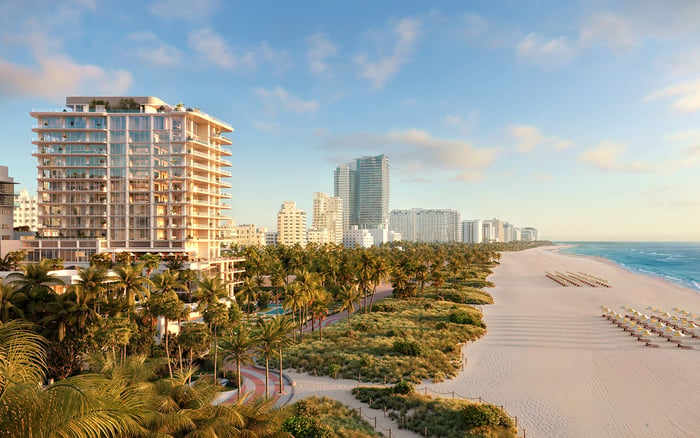
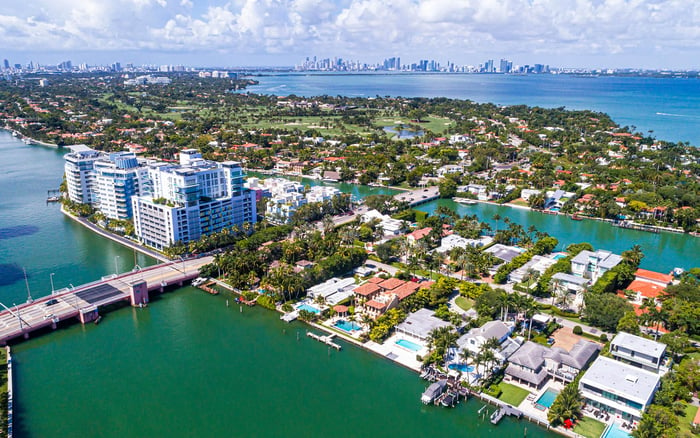
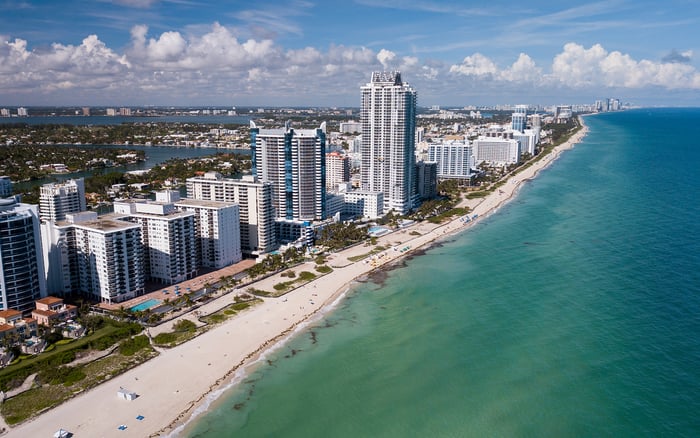
A disciplined Shoma Bay purchase begins by separating project financing from association borrowing. This checklist examines reserve balances, potential repayment exposure, mixed-use allocations and the documents that should define an owner’s obligations.
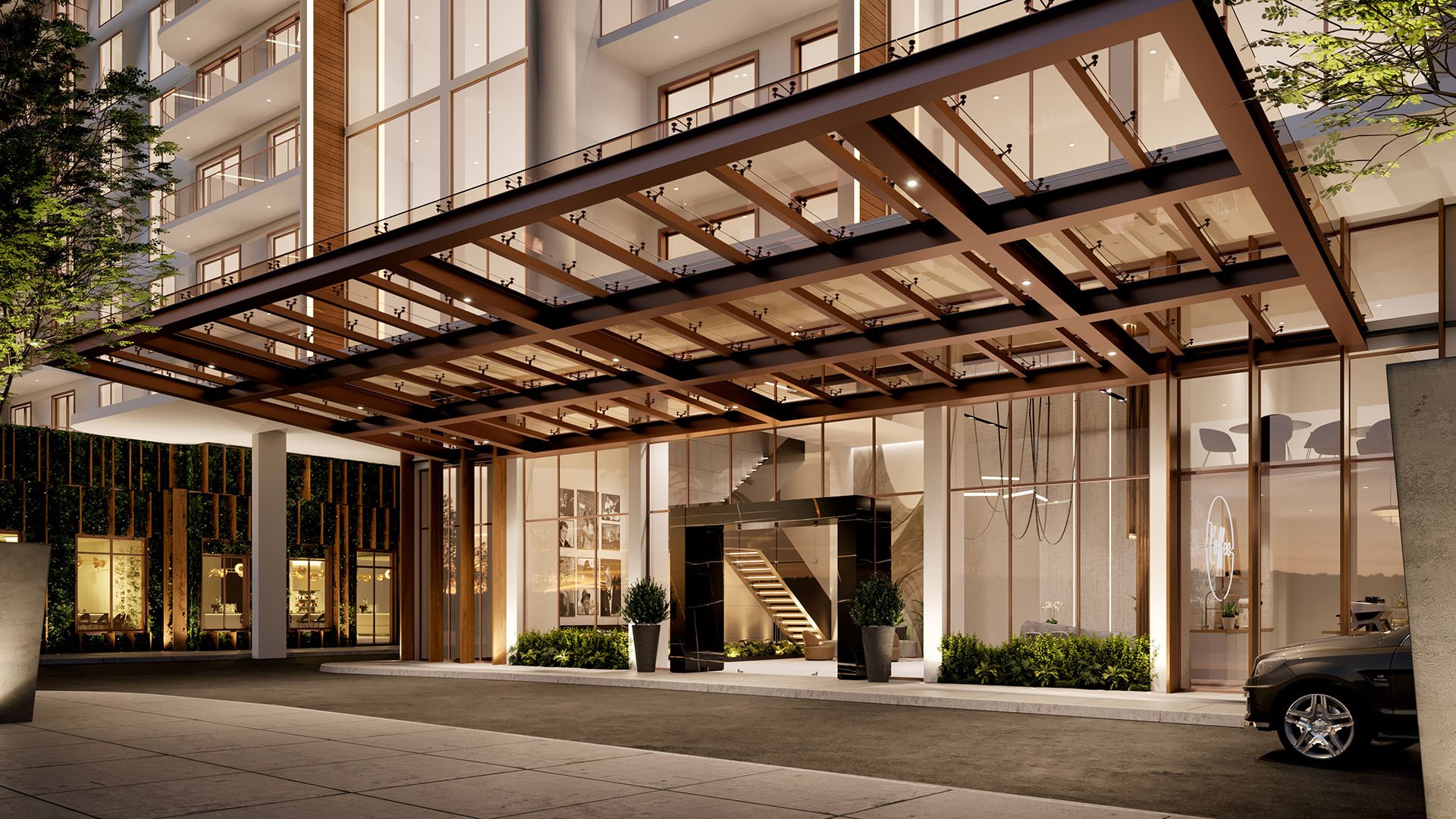
For a serious buyer, luxury includes knowing what the residence will require after closing. At Shoma Bay North Bay Village, presented as a planned 24-story, 333-residence condominium at 1850 John F. Kennedy Causeway, that means examining the financial structure as closely as the floor plan.
The essential distinction: the available information does not establish an association line of credit for reserves. Its adoption, authorization or use should not be presumed. The question is conditional: if such borrowing were introduced, what repayment obligations might fall to future owners?
Credit availability and funded reserves are different financial conditions. A buyer should understand both before treating an opening maintenance figure as a reliable measure of ownership costs.
Shoma Bay’s publicly disclosed financing includes $172.5 million in C-PACE financing, described as replacing traditional bank construction debt. That disclosure does not establish an association reserve-credit facility or a particular residential owner obligation.
The document request should be specific: obtain the recorded assessment agreement, repayment schedule, allocation provisions and any payoff or release requirements. Counsel should identify which property is affected and what, if anything, remains applicable to the residence after closing. Do not estimate an owner’s exposure by dividing $172.5 million by 333 residences.
Separately, approximately $29.9 million in predevelopment financing was disclosed in August 2025. It was intended to repay an existing loan secured by property at 1872 79th Street Causeway, an address distinct from the tower’s marketed address. These disclosures do not establish that both obligations remain outstanding simultaneously.
The buyer’s objective is not to reconstruct a capital stack from headlines. It is to obtain a document-backed explanation of the obligations relevant to the purchase.
If reserve borrowing appears in a budget, sales discussion or contract supplement, request a complete written package rather than a verbal assurance that financing is available.
Proposed budget: Separate operating expenses, reserve contributions and any debt-service amounts. Ask whether the presentation assumes borrowing, developer support or later contribution increases.
Reserve schedule: Identify the assets covered, anticipated expenditures and funding assumptions. Reconcile the schedule with the amenities and building systems actually planned.
Opening reserve balance: Distinguish cash expected to be deposited from an undrawn borrowing commitment. Request the timing and responsibility for each contribution.
Borrowing authorizations: Obtain the governing provisions and any approvals authorizing the facility, its use and changes to its terms.
Credit agreement: Review interest, fees, maturity, collateral, draw conditions, repayment sources and approval requirements. Confirm whether borrowing is merely contemplated, committed or already drawn.
Each request answers a different question. A stated credit limit does not reveal the outstanding balance. An interest provision does not explain how principal will be repaid. A budget entry does not, by itself, establish that the lender must advance funds when needed.
Ask condominium counsel to assess the arrangement under applicable law rather than assuming credit can substitute for cash reserves.
If an association borrowed instead of collecting equivalent cash earlier, the immediate contribution burden could appear lighter while repayment remained ahead. Depending on the agreement and governing documents, later budgets or assessments could need to accommodate principal, interest and fees. This is a conditional financing consequence, not a finding about Shoma Bay.
Several terms warrant close scrutiny. A variable rate could introduce payment uncertainty. A maturity date could concentrate repayment into a narrower period. Renewal conditions could make continued access to credit uncertain. Counsel should explain any security or pledged repayment source in plain language.
Request two separate illustrations: ownership costs without reserve borrowing and ownership costs under any documented facility. Use the facility’s actual terms, not an assumed rate or invented allocation. Compare the payment path over time, not simply the first year’s dues.
Shoma Bay’s mixed-use program has included a 35,037-square-foot Publix and 15,628 square feet of additional retail. For a residence buyer, the financial issue is how residential and commercial responsibilities are divided.
Review the declaration and shared-facility agreements for structural, parking, roof, mechanical, insurance and reserve expenses. Ask which costs belong exclusively to each component, which are shared and how shared percentages are calculated. Have counsel check whether allocation provisions can change and whose approval would be required.
The planned pool deck, cabanas, spa/Hammam, golf simulators, children’s facilities, pet spa and lounges also belong in the reserve review. The question is whether the budget and reserve schedule address the delivered assets and clearly assign responsibility for their upkeep and replacement.
Project specifications have evolved. In February 2022, the project was described as a 21-story, 327-unit apartment proposal, materially different from the planned condominium presentation. Buyers should request the latest approved plans, condominium documents and contract amendments rather than rely on launch-era specifications.
A contemplated density increase from 119 to 150 units per acre could have added approximately 53 residences, alongside roughly 40 additional feet of height. These were proposed changes, not verified final approvals. Ask whether any revision affects unit count, common interests, shared expenses or amenity capacity.
Likewise, the historical October 31, 2025 deadline to secure the master building permit does not establish subsequent permit status. An advertised 2026 completion date should not be treated as a verified delivery commitment. Obtain current permit information and the contract’s delivery provisions.
When evaluating Shoma Bay alongside Continuum Club & Residences North Bay Village, apply the same document checklist to each candidate. This is a comparison standard, not a suggestion that their financing arrangements are alike.
If the search extends to Miami Beach and The Ritz-Carlton Residences® Miami Beach, keep the categories consistent: operating dues, reserve contributions, insurance exposure and any confirmed debt-related assessments. Do not count an expense twice if it is already included in dues.
Rental flexibility requires separate verification. Shoma Bay’s stated rental policy permits monthly rentals while prohibiting shorter terms, but the binding condominium restrictions should govern purchase assumptions. Do not use a proposed rental strategy to offset uncertain ownership expenses before reviewing those restrictions.
Before committing, seek a reconciled package: current plans, the proposed budget, reserve funding details, mixed-use allocations and a written explanation of any financing relevant after closing. Turn unresolved questions into document requests, not assumptions of either liability or protection.
The strongest purchase decision connects the residence’s appeal to a clear understanding of who funds the building today and who could be responsible tomorrow.
For a considered approach to South Florida luxury ownership, explore MILLION.
If branded residences are on your mind — as a home or as an allocation — we would be glad to share what we are seeing, privately.
Begin a quiet conversationAvailable information does not establish that an association reserve line of credit has been adopted, authorized or drawn. Any discussion of its consequences must remain conditional.
No such equivalence is established. The disclosed C-PACE financing is project financing and does not, by itself, establish an association reserve facility or a specific owner obligation.
Request the recorded assessment agreement, repayment schedule, allocation provisions and payoff or release requirements. Counsel should determine what, if anything, remains applicable to the residence after closing.
No. A per-residence division would not establish liability because the applicable allocation, repayment and release provisions must first be reviewed.
Obtain the proposed budget, reserve schedule, opening reserve balance, borrowing authorizations and any credit agreement. Distinguish deposited cash from an undrawn credit commitment.
If borrowing were used, later budgets or assessments could need to cover principal, interest and fees, depending on the documents. This is a conditional risk, not a confirmed Shoma Bay obligation.
The mixed-use plan includes a Publix and additional retail, making residential–commercial expense allocation important. Review responsibility for structural, parking, roof, mechanical, insurance and reserve costs.
The contemplated density change could have added approximately 53 residences, but final approval is not established. Buyers should obtain the latest approved plans and related amendments.
The advertised 2026 completion date is a historical marketing figure, not a verified delivery commitment. Review current permit information and contractual delivery provisions.
The stated policy permits monthly rentals and prohibits shorter-term rentals. Buyers should verify the binding restrictions in the condominium documents.