A disciplined buyer’s guide to separating THE WELL Bay Harbor Islands’ advertised maintenance rate from documented operating costs, with a checklist for budgets, reserves, insurance and wellness-club obligations.

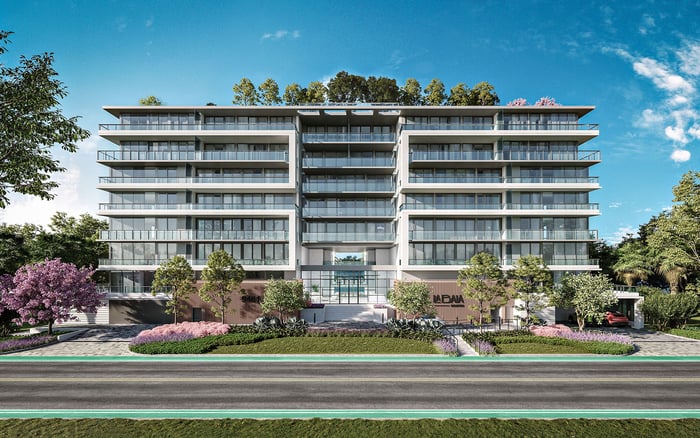
At The Well Bay Harbor Islands, the appeal is residential life organized around wellness. Developed by Terra Group, with architecture by Arquitectonica and interiors by Meyer Davis, the condominium is marketed at 1177 Kane Concourse. For a serious buyer, that design proposition warrants an equally deliberate financial review.
The central distinction is straightforward: a projected maintenance rate estimates an owner’s charges; stabilized operating costs require evidence of actual expenses under normal occupancy and service levels. A developer’s pro forma is a planning document, not proof that those conditions have been reached.
The advertised monthly maintenance rate of $2.00 per square foot provides a starting point. It does not, by itself, establish an adopted association budget, adequate reserve funding or the recurring cost of delivering the promised services. The question is not whether the number is attractive, but what supports it.
For a hypothetical 2,500-square-foot residence, the advertised rate translates to $5,000 monthly, or $60,000 annually, in maintenance alone. That arithmetic is useful for an initial affordability check. It is not a verified assessment for a particular residence.
Advertised unit-level figures illustrate why precision matters: monthly HOA dues are $2,750 for residence #809 and $6,560 for #304. Neither figure proves a building-wide stabilized rate. Nor does the difference establish an increase. These are different residences; their assessment allocations and listing dates must be reconciled before comparison.
Request the exact assessment for the residence under consideration and the governing allocation schedule. Confirm whether the square footage used in the sales presentation is also the basis for calculating charges. Do not substitute simple multiplication for the association’s actual assessment methodology.
A useful budget review connects assumptions, current obligations and actual spending. Request these materials together so the buyer’s advisers can reconcile them rather than review each in isolation.
The original pro forma and latest adopted budget.
Compare service assumptions and expense categories line by line. Identify the period each document covers and whether it reflects a partial operating year or the intended full-service operation.
Actual-versus-budget financial statements.
Request available operating statements, audited financials and explanations of material variances. Establish how much operating history exists and whether staffing, occupancy and amenity use during that period represent normal conditions. A favorable early result does not automatically establish a durable annual cost.
The residence-specific assessment schedule.
Obtain written confirmation of recurring charges, their effective dates and the allocation applicable to the selected unit. Reconcile that schedule with the sales presentation and any advertised HOA amount.
Insurance premiums and deductibles.
Request current policy information, premiums, coverage periods and deductibles. Identify which figures are contractual costs and which remain estimates. Have an adviser explain the exposure separate from routine premiums.
Reserve funding and supporting studies.
Review the budgeted reserve contribution, available balances and any reserve study. Ask how anticipated replacement obligations are reflected. The advertised maintenance rate alone establishes neither adequate funding nor a shortfall.
Management and service contracts.
Review contract terms, renewal provisions, staffing assumptions and any developer support or temporary concessions, if applicable. Determine whether the expenses reflect ongoing arrangements rather than introductory conditions.
The aim is to reconcile projected spending, adopted assessments and observed costs. Where operating history is limited, preserve that uncertainty in the ownership model rather than treating an estimate as settled.
Residence #809 is advertised with THE WELL Club membership included in its HOA fee, with a 13,000-square-foot wellness and fitness center. The described offering includes expert practitioners, a medical director, daily fitness classes, curated wellness programs and private beach-club access in Bal Harbour.
That is a meaningful lifestyle proposition, but membership and unlimited consumption are different commitments. Obtain the membership agreement and a written schedule identifying included services, separately billed treatments, guest privileges and any limits on beach-club access. Confirm whether the advertised inclusion applies to the residence being purchased.
Ask who funds each component and which obligations rest with the association, the owner or a third-party operator. Review the duration and renewal terms of the relevant agreements. The objective is not to discount the wellness experience, but to understand precisely what the recurring assessment buys and which discretionary expenses belong in a separate household budget.
A shortlist that includes Bay Harbor Towers should apply the same document requests to each candidate. Compare the scope of included services, reserve contributions, insurance treatment and contractual obligations before comparing headline assessments. Do not assume operating-cost equivalence between the projects.
The same discipline applies if Alana Bay Harbor Islands enters the search. A lower quoted monthly charge is not inherently better value, just as a higher charge does not establish superior financial preparation. The useful comparison is the documented cost of the ownership experience the buyer actually wants.
Obtain THE WELL’s governing condominium documents to confirm the residence count and expense-allocation structure rather than using marketing totals to estimate each owner’s burden.
For the hypothetical 2,500-square-foot residence, a sensitivity rate of $2.50 per square foot monthly would produce $6,250 in monthly maintenance. At $3.00, the result would be $7,500 monthly. These are stress tests, not documented forecasts for THE WELL.
Their purpose is personal: would the residence remain comfortable to own if recurring charges differed from the advertised starting point? Keep maintenance separate from other ownership expenses so the exercise does not imply an all-in carrying cost.
Nothing in the advertised figures establishes underfunded reserves, insufficient staffing, insurance shortfalls or inevitable post-turnover increases. Equally, those figures cannot establish long-term stability. Both reassurance and concern should rest on documents, not assumptions about new construction or wellness branding.
Before committing, seek a coherent explanation of the selected residence’s assessment, the services it covers, the reserves it funds and the contractual expenses behind it. Have the relevant financial and legal advisers identify unresolved assumptions and explain their practical significance.
A buyer can value the architecture, privacy and wellness offering while remaining exacting about operating economics. The standard is not a promise that costs will never change. It is sufficient evidence to distinguish a marketing estimate from a documented ownership obligation.
For a discreet conversation about your South Florida residence search, connect with MILLION.
If branded residences are on your mind — as a home or as an allocation — we would be glad to share what we are seeing, privately.
Begin a quiet conversationThe advertised estimate is $2.00 per square foot monthly. It is not itself an adopted association budget or evidence of stabilized operating expenses.
A pro forma projects expenses using assumptions. Stabilized operating costs require evidence of actual expenses under normal occupancy and service levels.
The hypothetical maintenance cost would be $5,000 monthly, or $60,000 annually. A particular residence’s actual assessment must be confirmed separately.
No. The advertised monthly amounts of $2,750 and $6,560 concern different residences and do not establish a chronological increase or a common assessment basis.
Request the original pro forma, latest adopted budget, actual-versus-budget statements and residence-specific assessment schedule. Also review insurance, reserve information and management contracts.
Residence 809 is advertised with membership included in its HOA fee. Buyers should confirm the inclusion and applicable terms for their selected residence in writing.
The advertised membership does not establish that every treatment or guest benefit is included. Request the membership agreement and a schedule of included services and separate charges.
No. Advertised maintenance figures establish neither a shortfall nor adequate funding; reserve and insurance documents require separate review.
No, they are sensitivity assumptions only. For a hypothetical 2,500-square-foot residence, they produce monthly maintenance costs of $6,250 and $7,500.
Review the governing condominium documents to confirm the residence count and assessment-allocation structure. Do not use marketing totals alone to estimate an individual owner’s burden.

.jpg&width=700&height=438&fit=cover)