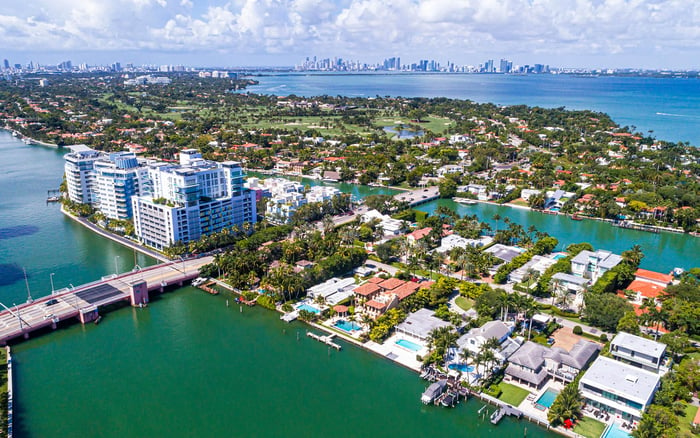
A planning guide for a Geneva owner evaluating a Miami Beach primary residence, with emphasis on practical occupancy, coordinated record changes, and professional verification of filing dates and eligibility requirements.

For a buyer moving from Geneva, a Miami Beach acquisition can be evaluated not only for design, location, and long-term value, but also for how well it supports the intended pattern of residence. The property decision and the administrative transition should be planned together rather than treated as separate workstreams.
Before selecting a home, the buyer’s advisers should confirm which ownership, occupancy, filing, and documentary requirements apply. Closing alone should not be assumed to resolve domicile, homestead, immigration, or tax-residence questions.
The transaction calendar should identify the proposed closing date, possession date, move-in plan, credential updates, insurance arrangements, and any relevant filing deadlines. Each date should be confirmed with the appropriate Florida, federal, immigration, and Swiss advisers before action is taken.
This review is particularly important when construction, furnishing, or renovation could delay actual use of the residence. A buyer considering new construction should compare the anticipated delivery and occupancy schedule with the intended relocation timeline.
A prospective primary residence should be assessed for the buyer’s ordinary routines as well as entertaining. Relevant considerations may include privacy, storage, workspace, parking, household staffing, pet needs, and access to services.
Miami Beach options for comparison include The Ritz-Carlton Residences® Miami Beach, The Perigon Miami Beach, and Shore Club Private Collections Miami Beach. Inclusion in the search should not be treated as evidence that a particular property satisfies the buyer’s legal, tax, insurance, or occupancy requirements.
Building-level diligence remains essential. The buyer’s team should review the residence, governing documents, insurance considerations, assessments, reserves, condition, and transaction terms applicable to the selected property.
The buyer should obtain current advice on whether a Florida driver license or identification credential is applicable and, if so, what documentation and timing rules govern the change. The analysis may differ depending on citizenship, immigration status, existing credentials, and the facts of the relocation.
Any applicable address update should be coordinated with the genuine move and the broader residence file. The buyer should not rely on an unverified deadline or assume that a property purchase automatically starts or completes every administrative requirement.
Voter-registration questions should be handled only after eligibility and applicable procedures have been confirmed. A buyer who is not eligible to register should not use voter registration as part of the residence plan.
Where voter registration is applicable, the buyer’s advisers can help assess how the address should align with other records. Where it is not applicable, the residence file can be organized around other lawful and relevant documents without treating any single item as conclusive.
The continued availability of a Geneva residence, family arrangements, business ties, immigration status, and tax reporting may affect the wider analysis. These matters should be reviewed across the relevant jurisdictions before addresses or formal declarations are changed.
Florida domicile, property-tax treatment, immigration status, and tax residence should not be assumed to be interchangeable. The buyer should request coordinated advice that addresses each issue separately and identifies any dependencies among them.
After closing, the buyer can maintain an organized record of documents relevant to the move. Depending on the advice received and the buyer’s eligibility, the file may include housing documents, identification records, vehicle records, insurance materials, banking information, utility accounts, tax correspondence, and lawful civic records.
Names, unit numbers, and address formats should be reviewed for avoidable inconsistencies. The objective is an accurate record that reflects the buyer’s actual circumstances, not a collection of documents created solely for appearance.
Does buying a Miami Beach property by itself establish Florida domicile? A buyer should not assume that the purchase alone resolves domicile. The applicable test and supporting evidence should be confirmed with qualified advisers.
How should a buyer plan around a possible homestead filing? The buyer should verify eligibility, occupancy requirements, assessment dates, and filing procedures before setting the closing and move-in calendar.
When should a Florida driver-license or identification address be changed? The applicable timing and documentation should be confirmed under the rules in effect when the move occurs.
Can a Geneva credential affect the Florida licensing analysis? It may be relevant to the buyer’s circumstances, so the buyer should seek advice tailored to the existing credential and immigration status.
Should voter registration be part of every residence plan? No. It should be considered only when the buyer is legally eligible and after the applicable procedure has been verified.
What records may be reviewed for consistency? Depending on the buyer’s circumstances, advisers may review identification, vehicle, insurance, banking, utility, tax, housing, and lawful civic records.
Is a declaration of domicile enough on its own? The buyer should not treat any single document as conclusive without advice on the applicable legal standard.
How can construction timing affect the property decision? A delayed delivery, renovation, or furnishing schedule may not match the intended relocation calendar and should be evaluated before contract commitments are made.
Why should Swiss and U.S. advisers coordinate? Coordinated advice can help the buyer address separate property, domicile, immigration, and tax questions without assuming that one decision controls the others.
What should guide the final property selection? The residence should fit the buyer’s intended use, practical routines, diligence standards, and adviser-confirmed relocation plan.
If you'd like a private walkthrough and a curated shortlist, connect with MILLION.
If branded residences are on your mind — as a home or as an allocation — we would be glad to share what we are seeing, privately.
Begin a quiet conversation