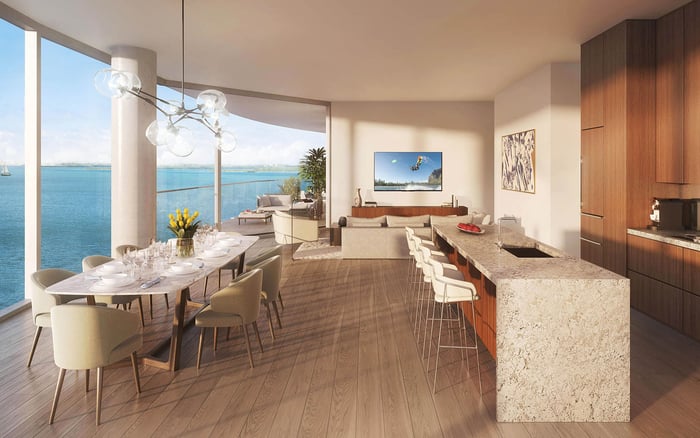
A Brickell penthouse deserves scrutiny beyond its skyline views. Verify the legal status of rooftop spaces, separate terrace responsibilities by component, investigate mechanical access, and ground the purchase price in documented rights and property-specific valuation evidence.
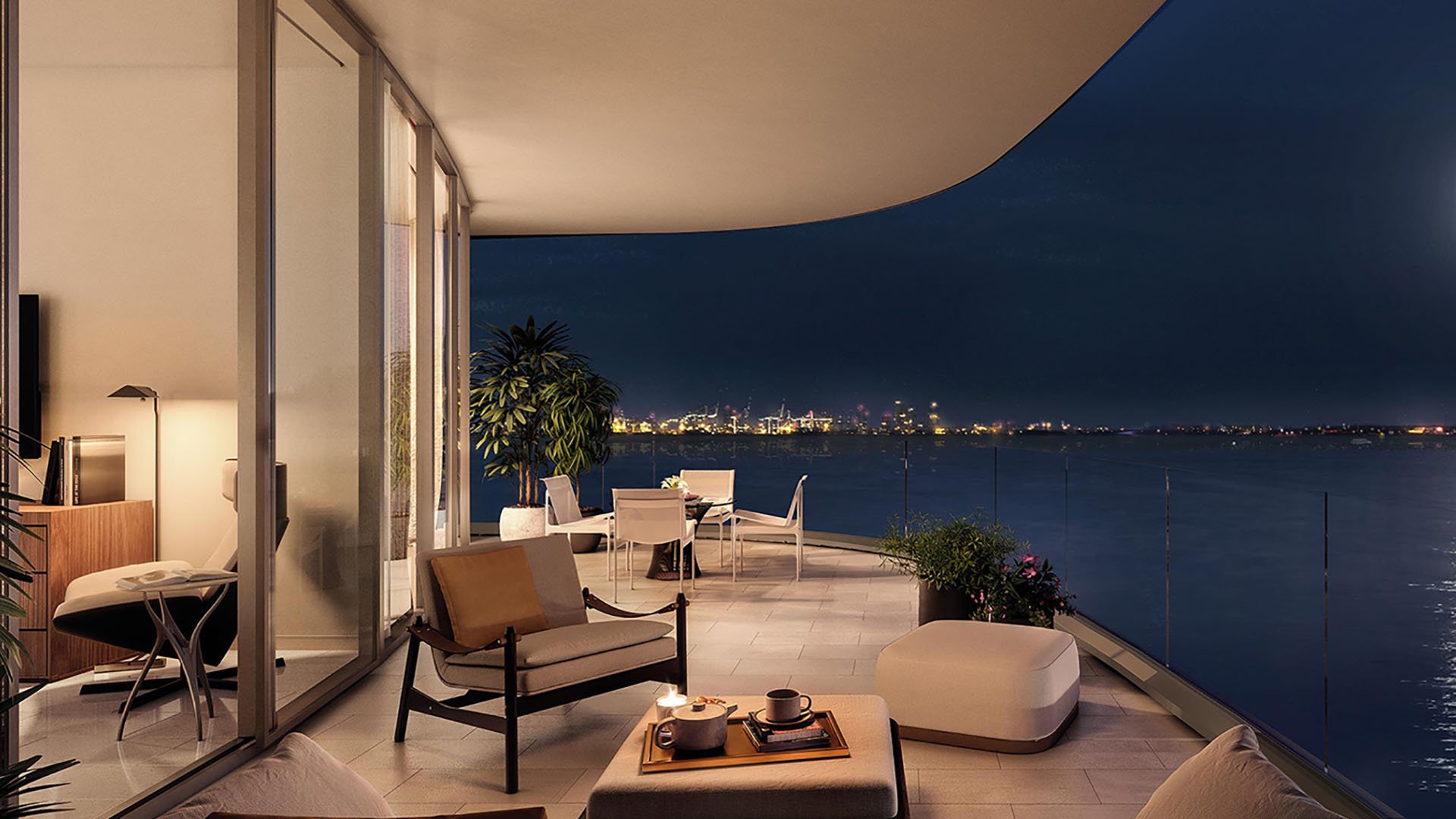
A Brickell penthouse invites an emotional response: open sky, a terrace for entertaining, the promise of privacy above the city. A disciplined purchase begins elsewhere-with the documents that establish what belongs to the residence, what is reserved for its use, and what remains part of the building.
Exclusive use, ownership, maintenance responsibility, repair-cost allocation, and access rights are separate questions. A clear answer to one does not settle the others. Before assigning value to a rooftop lifestyle, establish exactly which rights accompany the purchase and which obligations come with them.
For buyers considering residences at The Residences at 1428 Brickell, that principle is a starting point, not a statement about any particular unit. The same document-led review belongs in every penthouse evaluation, regardless of branding or architectural appeal.
Start with the declaration, recorded amendments, and unit-boundary exhibits. Ask counsel to identify the legal status of each relevant surface and space: the roof structure, rooftop deck, terrace, and any connecting areas. Evaluate each as unit property, a common element, or a limited common element rather than grouping them under the marketing phrase “private rooftop.”
Limited common elements are common elements reserved for specified units’ use, to the exclusion of other units, as stated in the declaration. That reservation does not, by itself, establish ownership of the underlying roof structure.
Request a written explanation tied to the relevant provisions and exhibits. If a sales description appears inconsistent with the governing documents, resolve the discrepancy before relying on that description in your offer. A terrace that you alone may use can still sit above building infrastructure you do not own outright.
Distinguish existing rights from desired future uses, too. Ask counsel to verify restrictions and approval requirements before assigning value to proposed rooftop improvements.
Ask counsel to establish the association's common-element maintenance obligations and whether the declaration assigns any limited-common-element responsibilities to the benefiting owner. Exclusive use should never be read as a promise of association-paid upkeep.
Have counsel and the inspecting professional prepare a component-by-component responsibility schedule rather than accepting a single answer to “Who maintains the terrace?” Address:
Waterproofing and membranes, including responsibility for investigation and replacement.
Drains, including routine maintenance and repairs.
Railings and pavers, distinguishing upkeep from replacement.
Structural elements and any required structural repairs.
Owner-installed improvements, including their removal and reinstatement during building work.
For each component, ask who performs the work, who authorizes it, and who pays. Keep maintenance, repair, and replacement separate. Have counsel identify any provisions allocating limited-common-element expenses to the owner of the residence under consideration.
A buyer reviewing Una Residences Brickell should request the same clarity for any terrace under consideration. Neither the project's name nor the appearance of its outdoor finishes establishes the underlying allocation of responsibility.
Rooftop mechanical equipment raises a due-diligence question, not an automatic finding of compromised livability. Ask counsel to identify any easement provisions addressing rooftop HVAC or other mechanical equipment and determine whether they affect the target residence.
Identify the equipment, whom it serves, who maintains it, and who holds access rights. Request the applicable plans and easement language, then reconcile those documents with an on-site inspection. Where access passes through or near an exclusive-use area, clarify the permitted route and the circumstances in which it may be used.
Consider requesting an inspection while relevant equipment is operating. Have a qualified professional assess actual concerns about sound or vibration rather than inferring them from proximity alone. Nor should a quiet viewing stand in for a complete investigation.
An equipment easement alone does not prove noise, vibration, obstructed views, or service traffic at a particular penthouse. Those conditions require property-specific verification.
A terrace reserved for one residence may still be subject to association access for necessary maintenance and repairs. Confirm the applicable rights even when the outdoor area is described as exclusive or private.
Ask management and counsel to explain how those rights operate under the governing documents: the access route, any notice provisions, and any emergency exceptions. Clarify whether work could require moving owner-installed improvements and how the documents allocate the resulting costs.
The objective is not to eliminate necessary building access. It is to understand what privacy means in practice. That distinction is equally useful when considering Cipriani Residences Brickell, without presuming that any particular access arrangement applies there.
An immaculate outdoor room is no substitute for reviewing the building's repair obligations. Investigate whether roof, façade, or pool-deck work is planned rather than treating the terrace's appearance as evidence of the building's financial condition.
Request the target association's repair history, reserve information, and assessment documentation. Ask about planned roof and exterior work, and whether any terrace-related scope overlaps with those projects. Separate an owner's direct limited-common-element expenses from potential exposure to association-wide costs.
The question is not simply whether the terrace looks maintained today. It is whether you understand the work ahead, the allocation of responsibility, and the financial information supporting the purchase.
Do not build the acquisition case around an assumed standard penthouse premium, mechanical-adjacency discount, or percentage adjustment for uncertain roof rights. None should be treated as a default. Ask the appraiser to evaluate the actual residence and explain the evidence supporting its valuation.
Provide the verified boundaries, exclusive-use provisions, access rights, and responsibility schedule. Ask how relevant comparable sales differ in interior space, outdoor rights, and documented obligations. Keep terrace area distinct from interior area in the materials you provide; do not let an ambiguous total shape the comparison.
For a financed purchase, discuss with the lender and counsel how an appraisal below the contract price would be handled. For a cash purchase, retain the same discipline: personal enjoyment and valuation support answer different questions.
Before committing, seek alignment among the legal review, physical inspection, association finances, and valuation. The goal is a penthouse whose appeal is supported by rights and responsibilities you understand-for both ownership and eventual resale.
Explore Brickell residences with a more considered perspective at MILLION.
If branded residences are on your mind — as a home or as an allocation — we would be glad to share what we are seeing, privately.
Begin a quiet conversationNo. Exclusive use of a rooftop terrace does not, by itself, establish ownership of the underlying roof structure; the declaration and boundary exhibits need review.
It is a common element reserved for specified units’ use, to the exclusion of other units, as stated in the condominium declaration.
Ask counsel to establish the association's obligations and identify any limited-common-element responsibilities assigned to the owner. Do not assume exclusive use includes association-paid upkeep.
Review waterproofing, membranes, drains, railings, pavers, structural elements, and owner-installed improvements. Clarify who performs, authorizes, and pays for maintenance, repair, and replacement.
Exclusive use does not eliminate the need to verify association access rights for necessary maintenance and repairs. Review the applicable provisions and access arrangements with counsel.
Identify whom the equipment serves, who maintains it, and who holds access rights. Reconcile the relevant plans and easements with a property-specific inspection.
Do not assume an automatic discount. An easement alone does not establish a nuisance, and any valuation treatment should be supported by property-specific evidence.
Review the declaration, recorded amendments, and unit-boundary exhibits. Ask counsel to resolve any apparent differences between those documents and the sales description.
Roof and terrace questions can overlap with building-wide repairs and assessments. Review repair history, reserves, and assessment exposure alongside the owner's direct obligations.
Give the appraiser verified rights, boundaries, access provisions, and maintenance allocations, and request evidence supporting the valuation. Avoid assuming a standard penthouse premium or a fixed adjustment for uncertain roof rights.