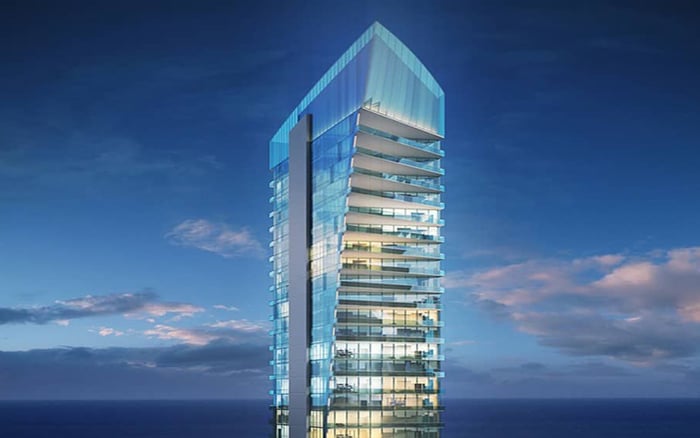
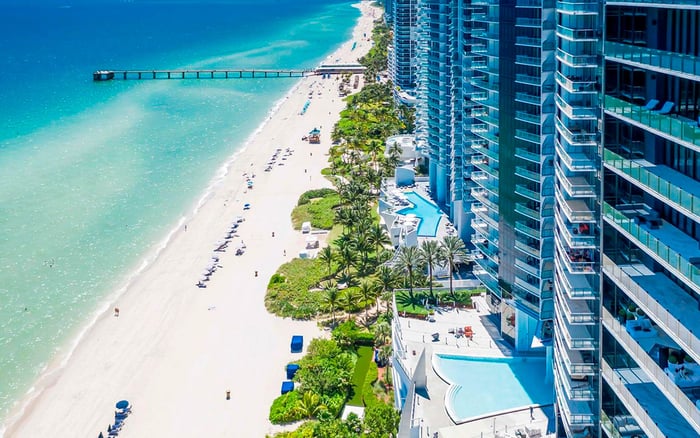
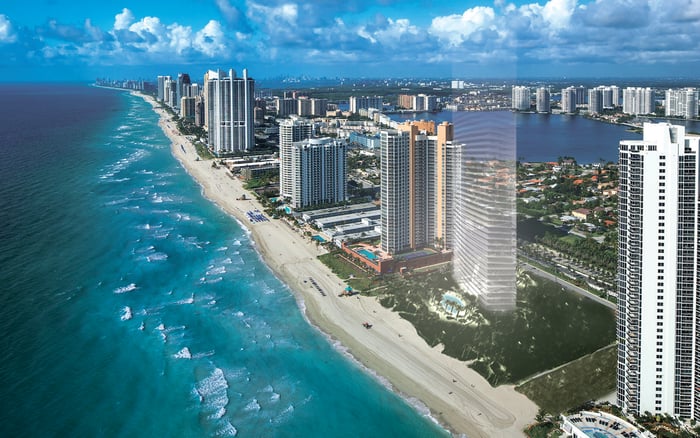
At Sunny Isles Beach condominiums, beachfront convenience, cabana privileges, and public passage are separate legal and operational questions. Buyers comparing Armani/Casa and Jade Signature should examine recorded instruments, association documents, physical circulation, nearby access points, and the precise nature of any cabana interest before assigning value to privacy-oriented language.
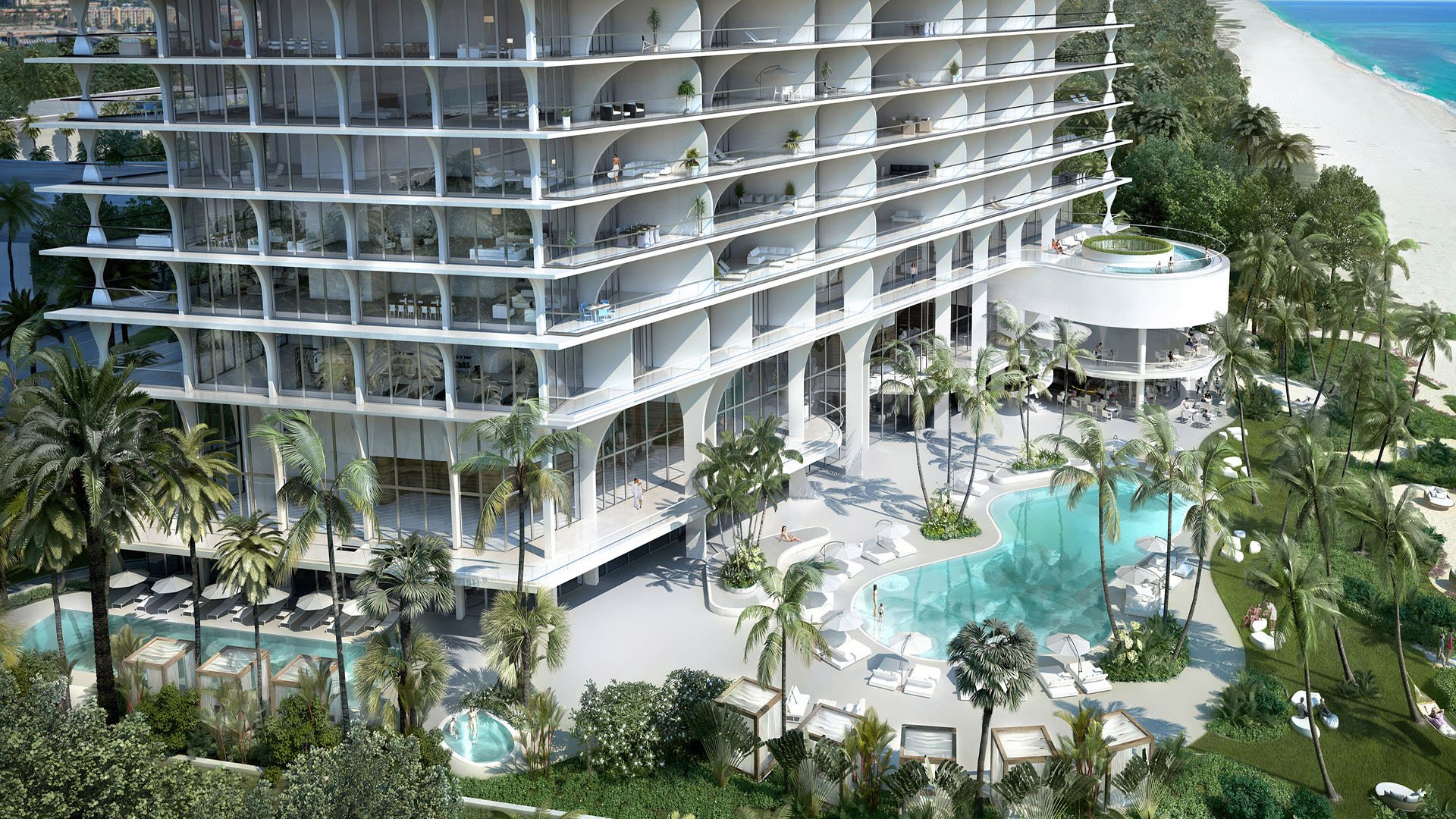
At an elite oceanfront condominium, the walk from residence to sand may feel seamless. Legally, however, several distinct rights can converge along the same narrow beachfront edge. Resident access, association-controlled decks, cabana privileges, the public beach, and a public-access easement should never be treated as a single concept.
In Sunny Isles Beach, beach access is a nonexclusive, publicly accessible easement connecting Collins Avenue with the oceanfront beach. The easement permits passage across private land without transferring ownership of that land to the public. Direct access from a condominium therefore does not, by itself, establish an exclusively private shoreline.
This distinction is especially important when comparing Armani Casa Sunny Isles Beach at 18975 Collins Avenue with Jade Signature Sunny Isles Beach at 16901 Collins Avenue. Each warrants a parcel-specific review rather than assumptions based on the broader promise of oceanfront living.
Beachfront convenience, cabana control, and public passage are separate rights.
Public beach-access walkways are required for most oceanfront development parcels. The defined corridor is open-air, unenclosed, landscaped, hard-surfaced, at least 15 feet wide, and positioned within a required side setback. It should sit on the side closest to a signalized Collins Avenue crosswalk and, where practicable, align with an adjoining property's access route.
Those requirements can place public pedestrian movement beside grounds that otherwise read as private. The practical issue is not simply whether an easement exists, but where the corridor lies relative to gates, pool areas, cabanas, service functions, ground-level residences, and resident circulation.
A serious beach-access review should begin with the recorded easement, its legal description, and its site sketch. Buyers should ask association counsel which gates, surveillance measures, operating rules, or barriers may lawfully apply without obstructing required nonexclusive access. Marketing descriptions cannot answer that question.
A resale offering at Residences by Armani/Casa has presented Beach Cabana #14 as a separate purchase and included the phrase “Deeded Beach Access.” That language should prompt document review, not a conclusion about the scope of ownership.
A prospective purchaser should confirm the cabana's deed, legal description, maintenance charges, transfer restrictions, guest rules, and any requirement that its owner also hold a condominium residence in the development. The buyer should determine whether the interest is separately deeded, designated as a limited common element, or provided only through a revocable use right. Those structures can produce materially different outcomes for governance, resale, and control.
Cabanas are accessory uses incidental to an apartment, condominium, or hotel rather than independent dwelling units. A cabana cannot be sold to someone who is not an owner in the same development, and rentals or leases are limited to owners or guests within that development. “Deeded Beach Access” must likewise be evaluated as a specific property right. It should not be read as conferring control over a separate public corridor.
Jade Signature has a beach-level oceanfront resort deck with a zero-entry pool, secluded cabanas, and a hot tub. Its amenities also include private cabanas and a beachside bar and grill with food and beverage service. These features help define the resident experience, but “private” and “secluded” remain operational descriptions until the governing documents establish the underlying rights.
The same restrictions on outside cabana sales, rentals, and residential use apply even when project language emphasizes privacy. A buyer should ask whether cabanas are owned, assigned, licensed, reserved, or made available under association procedures. Rules governing guests, booking, food service, operating hours, charges, and transferability should be read alongside the declaration and amendments.
For context within the same coastal market, buyers may also place Bentley Residences Sunny Isles and The Ritz-Carlton Residences® Sunny Isles in their comparison set, while applying the same property-specific discipline to every building.
The physical inspection should trace two independent paths. First, walk the resident route from the lobby through controlled amenity areas and onward to the sand. Note gates, elevator transitions, staffing points, beach-service areas, and the relationship between the pool deck and shoreline.
Second, identify the public route from Collins Avenue to the beach. Inspect both sides of the parcel and any adjoining access corridor. Observe its proximity to cabanas, deck seating, ground-level windows, service areas, and security positions. A high-traffic weekend visit can reveal sightlines, noise, queuing, and pedestrian patterns that may not be evident during a private showing.
Nearby public access points also matter because surface type, accessibility features, parking, and amenities can influence pedestrian volumes around a tower's beachfront edge. Buyers should distinguish activity governed by public beach rules from conduct controlled by the condominium association within its pool, deck, and cabana areas.
For either property, request the recorded public beach-access easement, legal description, site sketch, condominium declaration, amendments, current rules, and relevant cabana instrument. Review association charges and confirm whether cabana expenses can change independently of residential assessments. Written clarification should address transfer eligibility, guest use, rental limitations, reservation procedures, and the consequences of selling the associated residence.
The most useful buyer's-guide approach is to compare the legal file with the lived experience. The recorded map shows where passage is permitted. The declaration and rules show what the association controls. A site visit reveals whether circulation, landscaping, gates, staffing, and sightlines produce the degree of separation the buyer expects.
At Armani/Casa and Jade Signature, the premium question is not merely “Is there beach access?” It is whether the resident route is convenient, the cabana right is as durable and transferable as expected, and public movement is positioned in a way that fits the purchaser's privacy threshold. Those answers should be established before the amenity is assigned value in an offer.
For discreet guidance on evaluating Sunny Isles beachfront ownership, connect with MILLION.
If branded residences are on your mind — as a home or as an allocation — we would be glad to share what we are seeing, privately.
Begin a quiet conversationNo. Sunny Isles beach access can include a nonexclusive public easement connecting Collins Avenue to the beach.
No. It grants passage through private property without transferring ownership of the underlying land.
The corridor must be at least 15 feet wide, as well as open-air, unenclosed, landscaped, and hard-surfaced.
Request the deed or governing instrument, legal description, transfer restrictions, charges, guest rules, and any unit-ownership requirement.
A resale offering describes a separately purchasable cabana, but the title structure should be confirmed through recorded and association documents.
No. City code prohibits selling a cabana to anyone other than an owner in the same development.
No. Sunny Isles treats cabanas as accessory uses rather than independent dwelling units.
Confirm whether the cabana is owned, assigned, licensed, reserved, or governed by another association-controlled use arrangement.
The exercise reveals how public circulation relates to gates, cabanas, decks, residences, service areas, and the resident path to the beach.
A high-traffic weekend can make pedestrian patterns, noise, queuing, and sightline conditions easier to evaluate.