An ownership-focused review of Continuum Club & Residences North Bay Village, distinguishing marketed lifestyle features from the air-filtration, filter-supply, and testing details buyers should request in writing.
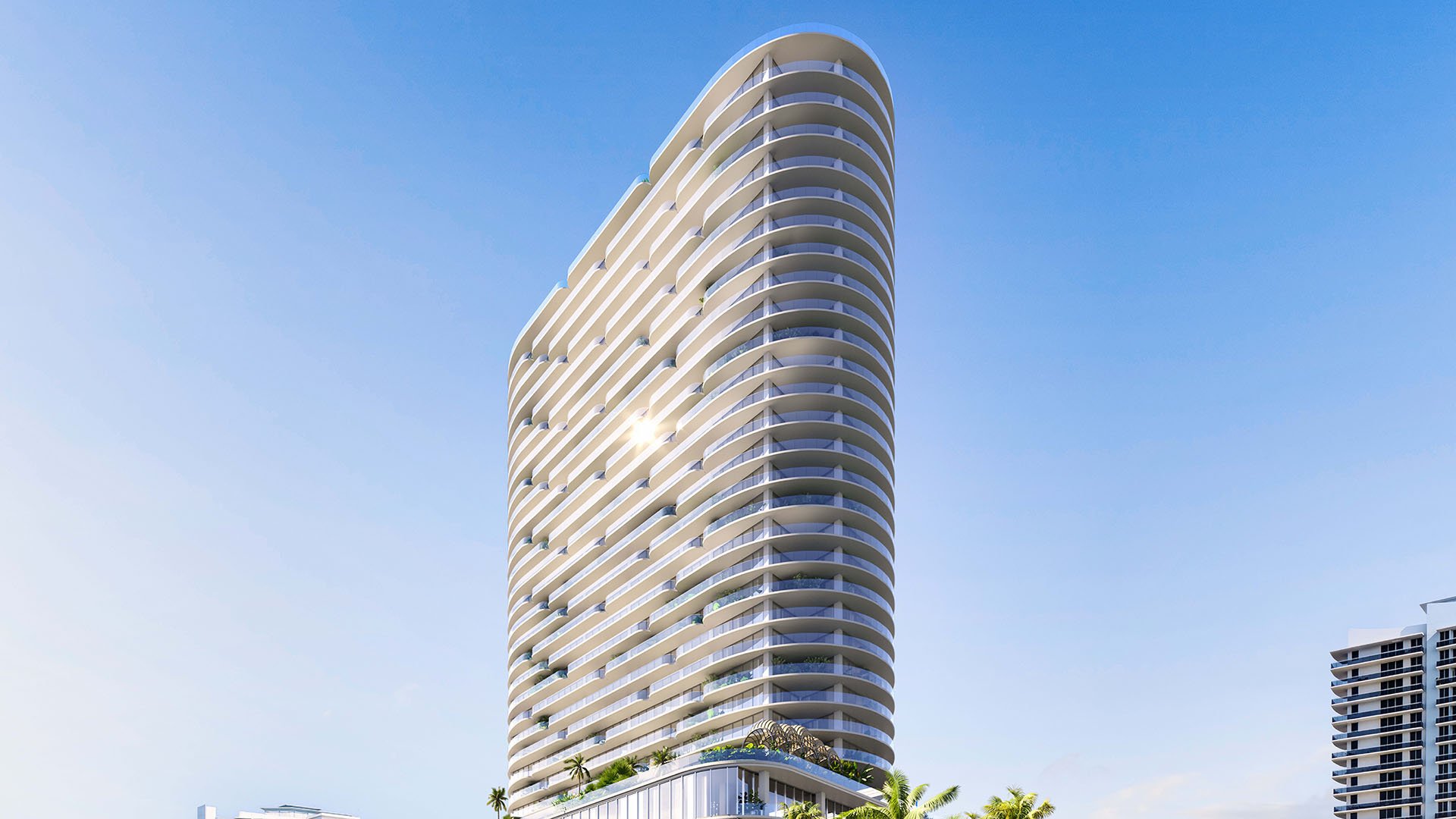
The appeal of Continuum Club & Residences North Bay Village begins with its waterfront setting, residential finishes, and club amenities. For an owner, however, comfort also depends on less visible details: the equipment serving the residence, the filters it accepts, and the arrangements for maintaining it after handover.
Marketed at 1755 79th Street Causeway, North Bay Village, FL 33141, the development is described as a 32-story condominium with approximately 198 residences, including one- through four-bedroom homes and penthouses. The available details do not establish its residential air-filtration package.
That distinction is a starting point, not a negative verdict. An undisclosed specification is not proof that a feature is absent. The practical task is to translate broad expectations of comfort into written equipment details, clear maintenance responsibilities, and documented performance.
The residences are described as featuring floor-to-ceiling impact windows, ceilings up to 14 feet, and Sub-Zero/Wolf kitchens. These details describe the home, but none establishes its filtration rating, ventilation arrangement, or humidity-control configuration.
The available specifications do not identify the HVAC manufacturer or clarify whether an individual residence will use an air handler, fan-coil unit, or another equipment configuration. They also do not establish a MERV rating, HEPA capability, ultraviolet treatment, or bipolar-ionization system. Buyers should not interpret the project's luxury positioning as a promise of whole-home purification.
Request the mechanical schedule for the particular residence rather than relying on a building-wide description. Ask for equipment models, design airflow, filter-rack details, controls, humidity-control provisions, and condensate protection. The objective is a coherent description of the installed system, specific enough for an independent mechanical professional to review.
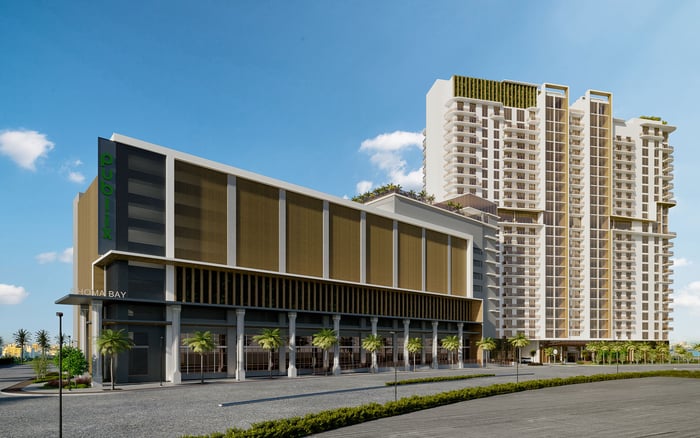
If your North Bay Village shortlist also includes Shoma Bay North Bay Village, use the same document requests for both properties. This is a comparison framework, not an assertion that either project has a particular mechanical specification.
The available specifications do not confirm a residential ventilation rate, a dedicated outdoor-air system, or a separately ducted fresh-air supply. Keep those questions separate from the request for a filter rating; neither answer should substitute for the other.
Ask the project team to identify any outside-air connections serving the residence and explain their controls. Have the equipment supplier or engineer clarify how the proposed filtration, airflow, and humidity-control arrangements work together. Request written answers tied to the residence's equipment schedule, including any differences between layouts.
A higher-rated replacement filter is not an automatic upgrade. Before choosing a higher-resistance product, ask the equipment supplier or engineer whether it is approved for the installed system. The ownership decision is not which filter sounds most impressive, but which approved product belongs in the specified equipment.
The available details do not specify replacement-filter dimensions, quantities per residence, installation locations, or maintenance access. They also do not establish whether the owner, condominium association, management team, or a contractor will supply replacements.
Before delivery, request a written filter schedule covering approved dimensions and rating, the number required for each service visit, and the recommended replacement interval. Ask for a product identifier and a procedure for approving an alternative if the specified filter becomes unavailable. These are proposed diligence questions, not confirmed project arrangements.
Then establish the service chain. Who orders the filters? Who holds stock? Who enters the residence and performs the change? Who records completion? Ask whether replacement products can be sourced directly or must be obtained through a designated provider, and request any applicable pricing in writing.
Routine replacement charges and their inclusion in maintenance fees remain unverified. Do not assume an extensive amenity program includes in-residence consumables. Once the terms are available, an ownership budget should distinguish filter materials, installation labor, and any separate service arrangement.
For a residence used intermittently, request a maintenance arrangement that does not depend on the owner being present. Clarify access authorization, scheduling, and how completed work will be communicated. These are practical management preferences to discuss, not established services at Continuum.
The development is described as including a 60,000-plus-square-foot Continuum Club, with pools, spa and fitness facilities, a dining pavilion, a golf simulator, and waterfront spaces. Common-area filtration ratings and air-change requirements for fitness, spa, and dining spaces remain unconfirmed in the available details.
Ask management for the applicable common-area mechanical specifications and maintenance responsibilities separately from the residence-level information. A residential equipment answer should not be used to characterize the club, nor should an amenity description be read as evidence of an indoor-air-quality standard.
The available details do not confirm residence-level testing, adjusting, and balancing, often abbreviated as TAB, commissioning documentation, or independent post-construction indoor-air-quality testing. That does not establish that these activities will be omitted.
Request HVAC startup records, applicable TAB and commissioning documentation, unresolved deficiencies, operating manuals, and warranties. Ask which records will identify the specific residence and how outstanding work will be documented through completion. The aim is to understand what was installed, what was checked, and what remains open at handover.
For air-quality testing, discuss an appropriate scope with a qualified inspector. Potential measurements include particulate matter, carbon dioxide, temperature, and relative humidity, with VOCs and formaldehyde considered where warranted. Ask about testing after construction cleaning under normal operating conditions, with those conditions documented alongside the results.
Keep this request distinct from any claim that testing is included in the purchase or contractually required. Ask the inspector to explain the findings and whether follow-up investigation or retesting is appropriate. A single result should not be treated as a blanket assurance.
Completion expectations differ, including Q1 2027 and 2028, leaving a consistent delivery date unestablished. Confirm current timing directly and coordinate document review, inspection access, and any proposed testing with the actual handover schedule.
For buyers also considering Miami Beach, including Five Park Miami Beach, the same discipline applies: compare documented equipment, service obligations, and closeout information rather than assuming equivalent performance from comparable lifestyle positioning.
Continuum's ownership review should ultimately resolve three questions: what equipment and filtration serve the home, how approved replacements will be supplied and installed, and what documentation or testing supports handover. Until those answers are available, precision means leaving the specification unresolved rather than assigning it either a premium or a deficiency.
For a discreet perspective on South Florida ownership and residential comparisons, explore MILLION.
If branded residences are on your mind — as a home or as an allocation — we would be glad to share what we are seeing, privately.
Begin a quiet conversationThe development is marketed at 1755 79th Street Causeway, North Bay Village, FL 33141.
The development is marketed as a 32-story condominium with approximately 198 residences, including one- through four-bedroom homes and penthouses.
A MERV rating was not identified in the reviewed public specifications. That does not establish that filtration is absent.
The reviewed public specifications do not identify HEPA capability, ultraviolet treatment, or bipolar ionization. Buyers should request the residence-specific mechanical details.
The reviewed specifications do not confirm a ventilation rate, dedicated outdoor-air system, or separately ducted fresh-air supply.
The reviewed materials do not establish whether owners, the association, management, or a contractor will supply filters. Obtain written confirmation of sourcing and installation responsibilities.
Routine replacement charges and their inclusion in maintenance fees remain unverified. Ask for written confirmation of material and labor costs.
Ask the equipment supplier or engineer whether the proposed higher-resistance filter is approved for the installed system before making a change.
Third-party post-construction indoor-air-quality testing is not confirmed in the reviewed public information. Buyers can discuss an appropriate testing scope with a qualified inspector.
Published expectations include Q1 2027 and 2028, so a consistent delivery date is not established. Confirm the current schedule directly before coordinating inspections or testing.