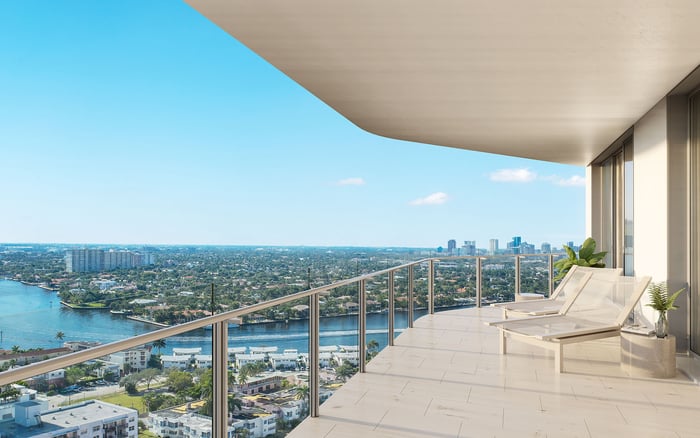
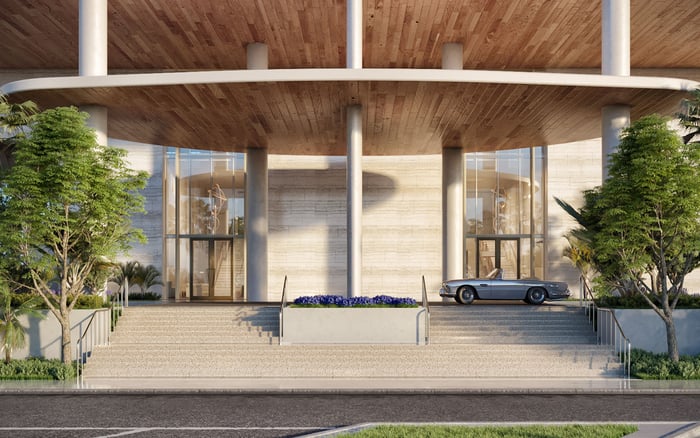
A discreet comparison of two branded South Florida residences through the lens of privacy expectations, residential circulation, access control, and guest screening rather than brand recognition alone.

The comparison between The Residences at Mandarin Oriental Boca Raton and Four Seasons Hotel & Private Residences Fort Lauderdale should not begin with logos. For ultra-premium buyers, the more important question is quieter and more technical: how does each property manage the movement of residents, guests, service teams, hotel patrons, restaurant visitors, and event traffic?
Branding can signal service culture, design ambition, and an elevated hospitality vocabulary. It does not, on its own, confirm privacy. In a branded residential environment, discretion is created by architecture, staffing protocols, elevator control, residential entrances, valet sequencing, amenity separation, and rules that determine who can go where, when, and under whose approval.
For a Boca Raton buyer and a Fort Lauderdale buyer alike, the luxury issue is not simply whether the property feels prestigious. It is whether the operating environment matches the buyer’s risk tolerance, public visibility preferences, and expectation of anonymity. A second-home owner who arrives periodically may evaluate guest screening differently from a full-time resident with family, staff, and frequent private visitors.
The Residences at Mandarin Oriental Boca Raton should be evaluated as a branded luxury residence first, and only then as a Mandarin Oriental address. Its appeal for security-focused buyers depends less on amenity language than on the physical organization of the property.
The central diligence question is separation. Are residential entries distinct from hotel or public-facing uses? Are residential elevators controlled in a way that limits non-resident movement? Are amenity zones, service corridors, delivery routes, and back-of-house pathways arranged so residents are not constantly crossing paths with patrons who are on the property for another purpose?
A buyer seeking discretion should pay close attention to how the property routes people. Visitors, service personnel, restaurant patrons, hotel guests, and residents should not be casually blended if privacy is the priority. The more clearly the residential component operates as its own controlled world, the more aligned the property may be with buyers who want branded service without unnecessary exposure.
This does not mean one should assume isolation. It means the buyer should verify it. Architectural plans, condominium documents, residential access rules, guest policies, and any available operator security protocols are the documents that matter. In a condo-hotel or mixed-use context, the private residential pathway is often more important than the most polished lobby rendering.
Four Seasons Hotel & Private Residences Fort Lauderdale presents a different privacy equation. The Fort Lauderdale option should be assessed through its physical and operational risk profile, not only through the Four Seasons name. An active hotel-and-residence setting can deliver high-touch services and a vibrant hospitality environment, but it also introduces more non-resident movement.
The constant flow of hotel guests makes guest screening, surveillance coverage, valet discipline, and controlled residential access especially important. Restaurant traffic, event activity, hotel arrivals, and semi-public circulation can change the feel of a property throughout the day and evening. Buyers who enjoy that energy may see it as part of the appeal. Buyers who want near-invisibility may experience it as operational friction.
The key question is not whether a hotel-residence lifestyle is desirable. It is whether the building creates meaningful distinctions between hotel life and residential life. Buyers should review how hotel, residence, valet, service, amenity, and event circulation are separated before assuming the brand alone guarantees privacy.
For some residents, the tradeoff is acceptable and even preferred. The convenience of hotel-level services, established hospitality infrastructure, and a more animated beachfront or urban atmosphere can justify higher public interaction. For others, the same advantages may feel like exposure.
Security technology matters, but it should not be treated as a magic layer placed over a poorly organized property. Cameras, access systems, elevator controls, visitor logs, and screening procedures can support privacy only when the building’s circulation plan makes sense.
A sophisticated buyer should ask how the technology interacts with daily behavior. Are guests pre-cleared before arrival? Are residential floors physically restricted from hotel guests? Are service corridors monitored and controlled? Do private elevators serve residential areas without requiring residents to pass through public hospitality zones? How are deliveries, staff, vendors, and family offices handled?
Just as importantly, buyers should avoid assuming specific technology exists unless it is confirmed in governing documents or directly by the developer or operator. The right question is not, “Does the brand have security?” The better question is, “What is the documented access pathway from curb to residence, and who can interrupt it?”
In that sense, both properties require disciplined review. The Residences at Mandarin Oriental Boca Raton may suit a buyer who prioritizes discretion if its residential entries, elevators, amenity zones, and service routes are meaningfully separated from public-facing operations. Four Seasons Hotel & Private Residences Fort Lauderdale may suit a buyer comfortable with hotel-residence life if resident-only areas remain well controlled despite a more active guest environment.
The Mandarin Oriental Boca Raton profile is strongest for buyers who want the elegance of a branded residence while placing heavy emphasis on anonymity, controlled arrivals, and predictable movement through the property. The buyer most likely to favor this option will ask about entrances, elevator banks, amenity segregation, and staff routing before discussing finishes.
The Four Seasons Fort Lauderdale profile is strongest for buyers who appreciate the rhythm of a hotel-residence setting and are comfortable with a higher level of public interaction in exchange for service intensity and hospitality infrastructure. This buyer may welcome the energy, provided residential access is clearly protected from hotel guests and event traffic.
Neither choice should be reduced to a brand contest. The more refined comparison is personal. How visible do you want to be? How often will guests visit? Do you employ private staff? Will the residence function as a primary home, a seasonal base, or a second home? Are you comfortable with restaurant and hotel guests sharing parts of the property experience, or do you want a more residential cadence from arrival to elevator?
Before committing, buyers should request and review the materials that reveal how each property actually works. For Mandarin Oriental Boca Raton, that means architectural plans, condominium documents, residential access rules, guest policies, and available operator security protocols. For Four Seasons Fort Lauderdale, the review should focus on hotel, residence, valet, service, amenity, and event circulation.
The best diligence conversations are practical. Ask where an invited guest waits. Ask whether a hotel guest can enter a residential elevator lobby. Ask how a private driver, nanny, chef, assistant, or contractor is cleared. Ask whether resident amenity spaces are distinct from hospitality areas. Ask what happens during peak restaurant, event, or seasonal traffic.
Luxury privacy is rarely accidental. It is designed, documented, staffed, and enforced. The buyer who looks past branding and studies circulation will understand the true difference between these two South Florida residences.
Is Mandarin Oriental Boca Raton automatically more private than Four Seasons Fort Lauderdale? Not automatically. Its privacy profile depends on how residential entries, elevators, amenities, and service routes are separated from public-facing uses.
Is Four Seasons Fort Lauderdale too public for a privacy-focused buyer? Not necessarily. It may work for buyers who accept hotel activity if residential access, screening, and circulation are well controlled.
What is the most important privacy question to ask? Ask how a person moves from curb to residence, and which non-residents can physically intersect that path.
Should buyers rely on brand reputation for security comfort? No. Brand reputation should be secondary to documented access rules, building plans, and actual operating protocols.
What documents matter most before purchase? Architectural plans, condominium documents, residential access policies, guest rules, and operator security protocols are essential.
Why does hotel activity matter in a residential comparison? Hotel activity increases transient movement, which makes screening, elevator control, and resident-only circulation more important.
Are private elevators enough to ensure privacy? Private elevators help only if access to them is controlled and if non-residents cannot reach residential floors casually.
Which property better suits a second-home buyer? It depends on the buyer’s comfort with visibility, guest traffic, and whether they value quiet discretion or hotel-service energy more.
How should staff and vendors be evaluated? Buyers should ask how private staff, contractors, deliveries, and service personnel are approved, routed, and monitored.
What is the core decision between these two residences? The core decision is whether the buyer prefers a more discretion-oriented residential environment or a more active hotel-residence lifestyle.
For a tailored shortlist and next-step guidance, connect with MILLION.
If branded residences are on your mind — as a home or as an allocation — we would be glad to share what we are seeing, privately.
Begin a quiet conversation