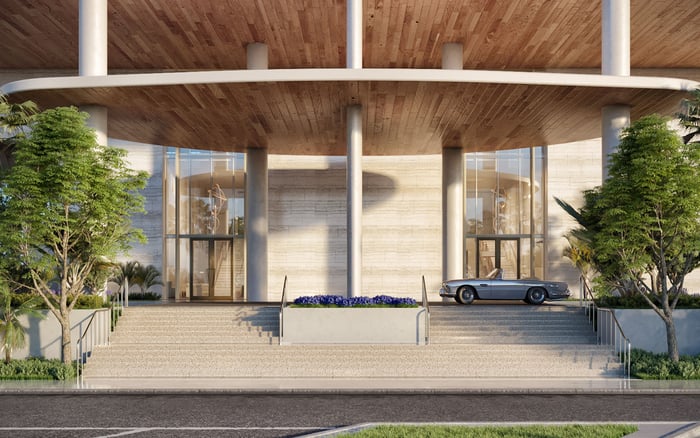
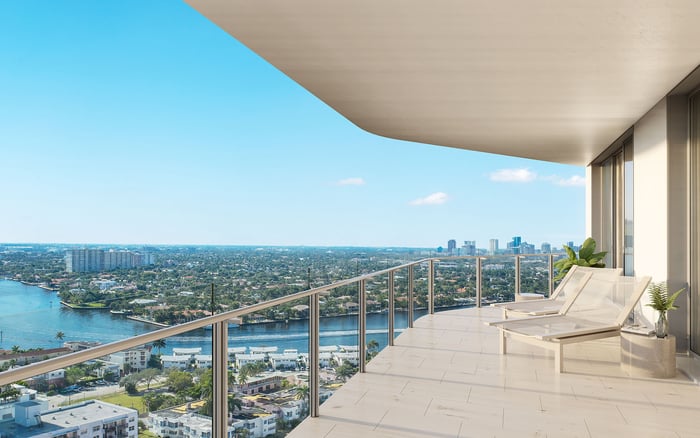
A buyer-focused guide to evaluating multi-car parking at Four Seasons Hotel & Private Residences Fort Lauderdale, from daily routines and guest needs to valet protocols, EV readiness, and resale positioning.

At the upper end of the Fort Lauderdale market, parking is not a secondary convenience. It is part of how a household lives, entertains, travels, and protects its time. For buyers considering Four Seasons Hotel & Private Residences Fort Lauderdale, the question is not simply whether a car can be accommodated. It is whether the full rhythm of ownership feels effortless.
Multi-car households are rarely simple. One spouse may commute regularly, another may keep a weekend convertible, a family member may rely on an SUV for airport runs, and guests may arrive for the season. Add drivers, service providers, visiting children, and luggage-heavy departures, and parking becomes a choreography. In a luxury setting, that choreography should feel quiet, predictable, and dignified.
The right approach is to treat parking as a residence attribute, alongside views, terrace depth, closet space, and elevator experience. A parking plan can shape the value of a home, the ease of daily life, and the degree of privacy a household enjoys. For a buyer with more than one vehicle, it should be evaluated before finalizing a preferred line, floor, or ownership structure.
The most useful parking conversation begins with a practical inventory. How many vehicles are used weekly? Which are used daily? Are any seasonal, collectible, oversized, electric, or chauffeur-driven? Is the household likely to add a car within the next several years? These questions are more revealing than a simple count.
Two daily drivers require a different solution than one daily driver and one rarely used weekend car. A household with visiting family may value guest parking access more than a household that relies on private drivers. A buyer who travels frequently may prize secure, low-friction vehicle retrieval. A buyer who entertains often may care about arrival sequencing and valet efficiency.
At Four Seasons Hotel & Private Residences Fort Lauderdale, the residential decision should be framed around both private ownership and hospitality context. A home connected to a hotel environment can offer a polished arrival experience, but buyers should still understand how residential parking protocols function in everyday use. The goal is to align the household's actual behavior with the building's operating rhythm.
Luxury buyers should ask precise questions about the parking arrangement. Is parking assigned, licensed, deeded, valet-managed, or handled through another structure? Can spaces be transferred with the residence? Are there separate rules for residents, hotel guests, visitors, and service providers? If additional parking is needed, is there a formal path to request it?
These details matter because not all parking rights behave the same way over time. Some arrangements may feel sufficient at closing but become less flexible as a household changes. Others may work beautifully for a two-car couple but feel strained for a family that keeps multiple vehicles in South Florida for seasonal use.
The buyer should also understand whether parking is tied to a specific residence, subject to association rules, or governed by operational procedures. None of these structures is inherently better in every case. The correct answer depends on how much control, flexibility, and predictability the household expects.
For a Fort Lauderdale buyer, parking is connected to broader lifestyle criteria: Broward location, condo-hotel context, beach access, and second-home use. The more often the residence will be used, the more important those criteria become.
In South Florida, the phrase multi-car can mean many things. For some buyers, it means two vehicles for year-round use. For others, it means a primary SUV, a sports car, a visiting family car, and occasional chauffeur arrivals. The difference changes everything.
Buyers should map three scenarios: normal weekday use, peak family occupancy, and entertaining. Weekday use reveals convenience. Peak occupancy reveals capacity. Entertaining reveals guest friction. If the parking plan works only in the quietest scenario, it may not be robust enough for the way the residence will actually be enjoyed.
It is also wise to consider the future. Children age into driving. Retired buyers may spend more time in Fort Lauderdale than originally planned. A household that begins with one car may later decide to keep a second vehicle locally. The best parking decisions preserve options without forcing a lifestyle compromise.
A refined parking plan should account for vehicle type, not merely vehicle count. Oversized SUVs, low-clearance sports cars, electric vehicles, and collectible automobiles each create different questions. Buyers should confirm height, access, turning comfort, charging expectations, and how specialty vehicles are handled.
Electric vehicles deserve special attention. Even if the household does not currently own one, EV readiness may become more relevant during the ownership period. The key question is not only whether charging exists, but whether access, scheduling, billing, and future expansion are practical for residents.
Specialty cars raise another issue: handling preference. Some owners are comfortable with valet systems. Others want to know exactly how keys, retrieval, staging, and long-term storage are handled. These are lifestyle questions as much as operational ones. A collector-grade car is not merely transportation, and the parking plan should respect that distinction.
In an ultra-premium residence, arrival is part of the architecture of privacy. The experience begins before the elevator and before the front door. For multi-car households, the valet and arrival sequence should feel intuitive, not theatrical or crowded.
Buyers should ask how resident arrivals are separated or prioritized, how frequent-use vehicles are managed, and how guests are received. If a household relies on drivers, assistants, or security personnel, those routines should be discussed before purchase. The most elegant parking solution is the one that disappears into daily life.
Privacy is particularly important in a branded residential environment. A household may welcome hospitality polish, but still want discretion. The best questions are practical: Who sees the vehicle? Who handles the keys? How quickly can a car be retrieved? What happens during peak hotel activity? How are visiting family members directed?
These answers will not appear in the glamour language of a residence. They emerge through careful review and direct conversation. For a buyer at this level, that diligence is not excessive. It is part of protecting the ownership experience.
Parking can influence resale even when it is not the headline feature. A residence with a strong multi-car solution may appeal to a wider pool of affluent buyers, especially families, collectors, seasonal residents, and households relocating from single-family homes. Conversely, a parking plan that feels too narrow may require a more specific buyer later.
The premium buyer often compares condominium living against the autonomy of an estate home. Parking is one of the areas where that comparison becomes tangible. If the residence offers the convenience of services without making vehicle access feel constrained, the transition is easier.
For Four Seasons Hotel & Private Residences Fort Lauderdale, buyers should think about parking as part of the branded living proposition. The name may establish expectations for service, but the parking plan determines whether those expectations hold up during everyday moments: school pickups, airport departures, dinner arrivals, storm preparations, and weekend hosting.
Before committing, a multi-car household should review its current vehicles, expected future vehicles, guest patterns, service needs, and tolerance for valet handling. It should ask how parking is documented, what is included, what may be requested, and what rules apply to residents and guests.
It should also test the plan against real life. Imagine arriving with luggage after a delayed flight. Imagine two residents needing different cars within ten minutes. Imagine guests arriving during dinner service. Imagine an EV that needs charging overnight. If the answers feel graceful in those scenarios, the parking plan is likely aligned with the residence.
This is where expert representation is valuable. Not because parking is complicated for its own sake, but because the finest homes often turn on details that are easy to overlook when the view is beautiful and the brand is compelling.
How many cars should a buyer plan for at Four Seasons Hotel & Private Residences Fort Lauderdale? Buyers should plan around actual household behavior, not just the number of current vehicles. Future family needs, guests, and seasonal use should be included.
Is valet parking always sufficient for a multi-car household? Valet can be highly convenient, but buyers should understand retrieval procedures, key handling, peak-time service, and rules for specialty vehicles.
Should parking be reviewed before choosing a residence? Yes. Parking can affect daily comfort, privacy, resale appeal, and whether the home fits the household long term.
What should EV owners ask before purchasing? EV owners should ask about charging access, scheduling, billing, and whether the system can support changing resident demand over time.
Do oversized SUVs require special review? Yes. Height clearance, turning comfort, access routes, and valet handling should all be confirmed before closing.
Can guest parking matter as much as owner parking? For households that entertain or host family often, guest arrival can be central to the ownership experience. It should be discussed early.
Why does parking affect resale? A flexible parking solution can broaden the buyer pool, especially among families, collectors, and seasonal owners with multiple vehicles.
Should collectors treat parking differently? Yes. Collectible and low-clearance vehicles may require special attention to handling, storage, access, and security preferences.
Is parking more important for a second-home buyer? It can be, especially if the residence will host visiting family or keep a vehicle in place between stays.
What is the best first step for a multi-car buyer? Build a written vehicle and usage profile, then compare it against the residence's parking structure and operating rules.
If you'd like a private walkthrough and a curated shortlist, connect with MILLION.
If branded residences are on your mind — as a home or as an allocation — we would be glad to share what we are seeing, privately.
Begin a quiet conversation