A discreet buyer’s guide to choosing a Fisher Island pied-à-terre over a house, with practical considerations for lock-and-leave living, privacy, service, waterfront orientation, and long-term ownership fit.

Choosing a pied-à-terre on Fisher Island is rarely a compromise. For the right buyer, it is an exercise in precision: the exact measure of space, service, privacy and maintenance responsibility that suits a South Florida life already lived across several homes, cities or continents.
A house can offer land, autonomy and a sense of emotional permanence. A condominium residence, by contrast, can deliver a more streamlined version of luxury: arrival without orchestration, departure without anxiety and daily living supported by a building structure designed for absence as much as presence. On Fisher Island, where the address itself signals discretion, that distinction matters.
This perspective is for buyers who are not asking whether they can own a house, but whether they should. The more refined question is whether a pied-à-terre delivers more freedom than a larger property that requires constant attention.
A pied-à-terre works best when the buyer’s South Florida rhythm is intentional. Some owners arrive for long weekends, holidays, art season, school visits, yachting, golf or extended winter stays. Others want a private base near Miami Beach without the responsibilities of a full-time estate. In both cases, the apartment is not secondary in quality. It is secondary only in maintenance burden.
The appeal is strongest for buyers who value lock-and-leave living. Elevators, staff access protocols, building management, shared amenities and structured maintenance can reduce the friction that often accompanies a house. Instead of managing landscaping, exterior upkeep and household staffing every time travel plans change, the owner can focus on how the home feels at arrival.
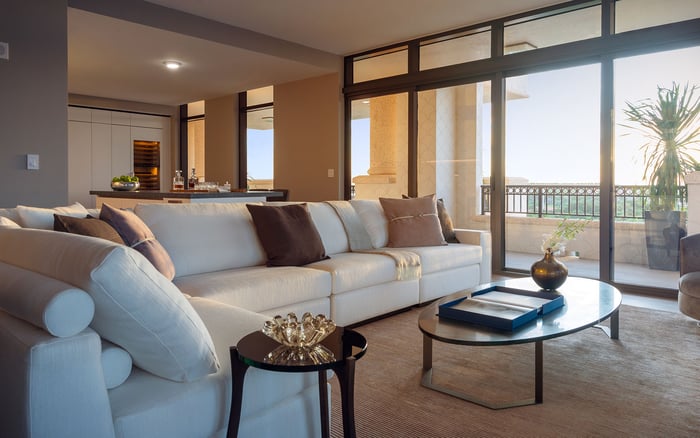
Second-home ownership also changes the meaning of square footage. A grand salon, generous terrace, well-composed primary suite and proper guest accommodations may matter more than bedrooms that sit unused. For many buyers, a highly finished residence in Palazzo del Sol Fisher Island speaks to that preference for finish, privacy and ease, without requiring the operating mindset of a standalone estate.
Waterfront exposure should be evaluated with both romance and discipline. The view is emotional; the decision is practical. Consider how the residence handles light, glare, privacy from neighboring buildings, outdoor dining, morning routines and evening entertaining. A terrace that looks extraordinary for ten minutes may not be the best terrace to use every day.
Service is equally central. In a pied-à-terre, the building becomes part of the household. Buyers should understand the front-of-house experience, package handling, guest access, valet procedures, maintenance response and the general tone of the residence. The best luxury buildings feel calm, not theatrical. They protect the owner’s time without making service feel performative.
A buyer considering Palazzo della Luna, for example, should look beyond the visual impression of the residence and ask how the building supports daily life when the owner is away. Who has access? How are vendors managed? What is the procedure before arrival? How quickly can the residence be prepared for a spontaneous trip? These details separate a beautiful apartment from a true pied-à-terre.
The house-versus-residence decision is ultimately a question of temperament. A house can offer a larger domestic canvas: more private outdoor space, more control over interiors and grounds, and a stronger sense of singular ownership. That may be ideal for a family planning extended stays, multi-generational visits or a year-round South Florida base.
A pied-à-terre is different. It asks the buyer to edit. What rooms are genuinely needed? How often will the owner host? Will guests stay overnight, or is the residence primarily for a couple? Is a staff room necessary, or is building support sufficient? Does the buyer prefer to control every detail, or delegate the operating environment to a high-service condominium?
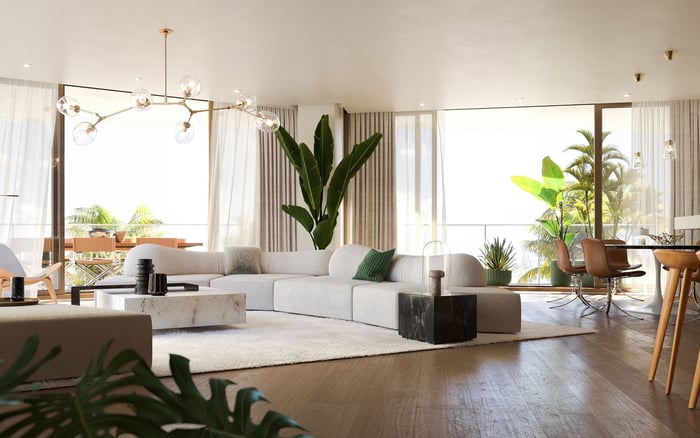
For estate-minded buyers, The Links Estates at Fisher Island represents the other side of the conversation: the appeal of a house-scale environment within the Fisher Island context. That comparison is useful even for buyers leaning toward a pied-à-terre, because it clarifies what they are choosing not to manage.
Before focusing on finishes, test the week. Imagine arriving late, hosting friends the next evening, taking calls from the terrace, leaving again for ten days and returning without advance notice. Does the residence support that rhythm? Is there enough storage for clothing, sports equipment, luggage and entertaining pieces? Can the kitchen function for real use, not merely presentation? Are the guest areas gracious without consuming unnecessary space?
The strongest pied-à-terre is neither too small nor too ceremonial. It should feel complete when occupied and effortless when empty. Buyers often overbuy because they fear regret, then discover that unused rooms create cost, complexity and emotional distance. A well-chosen residence can feel more personal because every room has purpose.
At The Residences at Six Fisher Island, a buyer should apply that same test with particular care: not simply whether the residence impresses, but whether it improves the owner’s specific pattern of living. The most successful purchase is the one that feels intuitive after the novelty fades.
Pied-à-terre buyers should be especially attentive to building governance, monthly ownership costs, renovation policies, insurance structure, pet rules, rental restrictions, storage availability, parking arrangements, staff access and guest procedures. None of these topics is glamorous, yet each can affect daily enjoyment.
Interior condition deserves the same rigor. A residence that appears turnkey may still require upgrades to lighting, automation, closets, window treatments or mechanical systems. For a seasonal owner, even modest work can become disruptive if approvals, deliveries or contractor access are not clearly understood in advance.
The most important discipline is to avoid buying only the view. A great view can justify a premium, but the plan, ceiling height, arrival sequence, privacy, storage and building culture determine whether the home remains satisfying. Fisher Island rewards patience. The right pied-à-terre should feel rare, but never rushed.
For the ultra-premium buyer, restraint can be a luxury strategy. Choosing a pied-à-terre over a house may free capital, time and attention for travel, art, philanthropy, family offices or other residences. It can also simplify the emotional contract of ownership. The home is there when needed, composed when entered and uncomplicated when left behind.
That is the essence of the Fisher Island pied-à-terre: not a smaller life, but a more deliberate one. The right residence should make South Florida feel immediately accessible while preserving the privacy and control that drew the buyer to Fisher Island in the first place.
Is a pied-à-terre on Fisher Island mainly for seasonal use? It can be seasonal, occasional or part of a multi-home lifestyle. The key is matching the residence to how often, and how spontaneously, the owner expects to use it.
Why choose a condominium residence over a house? A condominium can reduce exterior maintenance and household management. For many buyers, that makes ownership easier without sacrificing privacy or comfort.
What should I prioritize first when comparing residences? Start with lifestyle rhythm, then evaluate layout, terrace use, service standards, storage and building rules. Finishes matter, but daily function matters more.
Does waterfront exposure automatically make a residence better? Not always. The best waterfront residence balances view, privacy, light, terrace usability and interior comfort throughout the day.
How much space does a Fisher Island pied-à-terre need? Enough for the owner’s real pattern of living, including guests, storage and entertaining. Extra rooms are valuable only if they will be used.
Should I compare apartments with houses before buying? Yes. Comparing both options clarifies whether you value autonomy and land, or prefer service, simplicity and lock-and-leave ease.
Are building rules important for a part-time owner? They are essential. Access, renovation, pets, guests, rentals and vendor procedures can all shape the ownership experience.
Can a pied-à-terre still feel like a primary-quality home? Yes, if the plan, materials, storage and service level support real living. A smaller footprint does not require a lesser standard.
What is the most common mistake buyers make? Many buyers focus too heavily on the view and underweight building culture, layout and practical arrival-to-departure routines.
Is Fisher Island better suited to residences or houses? It depends on the buyer’s desired level of control and responsibility. Residences suit ease, while houses suit those who want a larger private domain.
To compare the best-fit options with clarity, connect with MILLION.
If branded residences are on your mind — as a home or as an allocation — we would be glad to share what we are seeing, privately.
Begin a quiet conversation